Often viewed as the least prestigious option in the study-abroad hierarchy, many choose Australia for graduate school not only for its lower entry thresholds but also with hopes of securing permanent residency post-graduation.
For students who already completed their bachelor’s in Australia, continuing to a local master’s is especially seamless. For them, there is hardly a more cost-effective route to PR than the Aussie bachelor’s-to-master’s pathway.
But as the number of would-be immigrants grows, state governments constantly shift policies, changing as unpredictably as Melbourne’s weather, causing widespread frustration.

In fact, just late last month, the Australian government officially announced drastic cuts to state quotas, by as much as 75%...
Immigration Struggles, International Students Sigh
For international students, visas to immigrate to Australia generally fall into three categories: skilled migration, state nomination, and employer sponsorship. While there seem to be many options, each comes with critical hurdles.
Visa 189 – Skilled Independent Visa
This applies to master’s graduates and some bachelor’s graduates whose fields are on the Medium and Long-term Strategic Skills List (MLTSSL). Applicants must go through the SkillSelect EOI and a skills assessment.
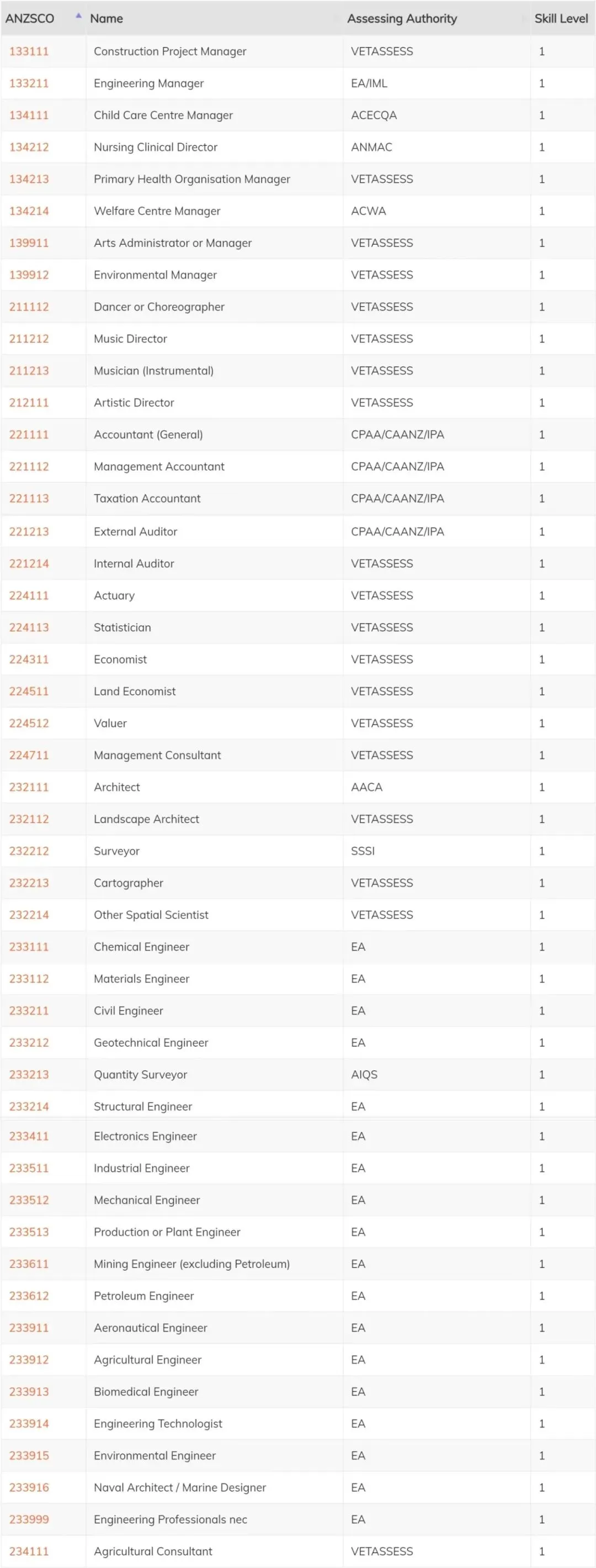
For the full version, reach out to a CheersYou(清柚教育) advisor.

Although the quota for 189 is relatively generous, aside from specific occupation requirements, the biggest pain point is the ever-rising EOI points threshold.
For example, in IT, popular states like NSW and Victoria require at least 85 points; even in relatively 'regional' Queensland, 80 points are needed.
According to the points system, a single master’s graduate aged 25–32 with IELTS 7 in all bands scores only 70 points, still far from the minimum.
Visa 482/186 – Employer Sponsored
To apply for the 482/186 visa, you need at least two/three years of experience in an occupation on the MLTSSL and a skills assessment; no points test is required.
As the name suggests, besides the skills assessment, you need an employer to sponsor you.
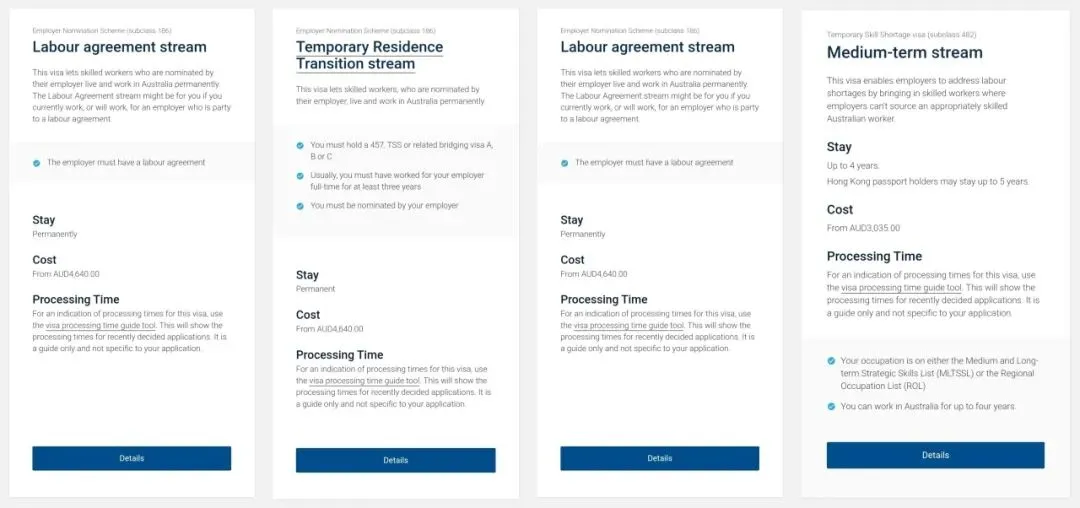
But not all employers are eligible to sponsor. Qualifying employers must be of a certain size, offer a relevant position, and be ready to cooperate with the application process.
The complexity is self-evident, and much can go wrong.
Visa 190/491 – State Nomination / Regional Migration
These visas are also forms of skilled migration, but because state and regional policies differ and offer nomination points, both the 190 and 491 require far lower EOIs than the 189.

Clearly, this is the route most international students hoping to immigrate take.
But in late August this year, the Australian government announced massive cuts to 190 and 491 quotas.
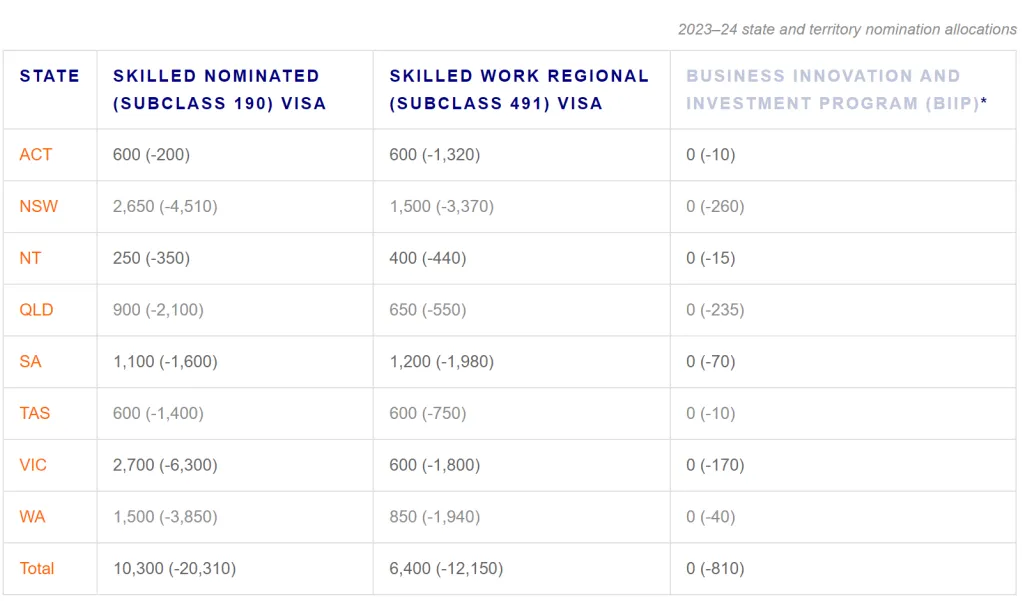
As the chart shows, the cuts are staggering: NSW and Victoria, the two largest states, are slashed by over 70%, leaving almost no quotas.
In short, whatever immigration pathway, for Australian international grads planning to settle, the road ahead is long and arduous.
UK, US, Hong Kong: New Graduate Study Options for Aussie Undergrads?
Given the policy climate, Aussie undergrads who originally planned to continue to a local master’s are having second thoughts. Even those who already hold graduate offers find it hard not to consider alternatives.

And practical questions arise: Is a three-year degree recognized elsewhere? How to convert and benchmark grading systems? How to plan graduate applications with a December graduation? Should one pursue Honours, and so on.
Though it may seem confusing, once you clear up the information gaps, these questions are not hard to answer.
On Recognition
The UK, US, Hong Kong, and other major study destinations have become increasingly accepting of Australian three-year bachelor’s degrees (without Honours). Many schools explicitly state they accept three-year Aussie degrees.
For those that don’t specify, you can email admissions to explain your situation and still get admitted.
Click text or image for details

Moreover, these three regions place different weight on applicant backgrounds. Leveraging this can greatly improve your chances.
The UK and Hong Kong emphasize grades more, suiting students with very high WAMs; the US cares less about GPA and gives strong applicants with decent GRE, research, internships, etc., a good shot at top schools.
· US: Cumulative GPA + WES; wide GPA range, broad acceptance, transfer-friendly
· UK: CGPA + Major GPA; strict on grade bands, background, and university tiers
· Hong Kong: CGPA + Major GPA; wide GPA range, preference for strong backgrounds, transfer-friendly

On Grade Conversion
US
Australian universities calculate GPAs differently. Some use a 7-point scale, like University of Queensland and Macquarie University; others like USyd/UNSW only show HD/D/C/P grades on transcripts, requiring separate GPA calculation; University of Melbourne uses H1/H2A/H2B/H3 standards.
For Aussie undergrads applying to US graduate programs, WES conversion to a 4.0 scale is necessary, which is also crucial for early school selection.
For detailed conversion methods, refer to the notes below or scan the QR code at the end to consult a CheersYou(清柚教育) advisor.

UK/Hong Kong
Compared to the US, aligning grades for UK and Hong Kong graduate applications is simpler; university websites often clearly state requirements for Australian undergrads:
· LSE
First Class: High Distinction, H1, 80%+, 6.5/7
Upper Second Class: Distinction, H2A, 75%+, 5.5/7
· UCL
With Honours: Distinction, H2A, 75%+
Without Honours: High Distinction, 80%+/85%+, 7/7, 4/4, 8/10
· CUHK
Second Class or "B"
On Application Planning
Taking Fall 2024 applications as an example, Aussie undergrads should confirm recommenders before the June holidays or after classes resume in August, at the very latest by October.
Finalize your essays in September, complete standardized tests in October, and then dive into the long but fast-paced online application process.

As we know, Australian bachelor’s degrees have two graduation dates: Semester 1 and Semester 2. For Semester 2 finishers, the application timeline is similar to Semester 1, with the main difference being an extra half-year gap.
Many may ask, what can you do with this gap semester?
Boost Soft Background
For those lacking internship experience, use the gap half-year to strengthen your profile and enhance overall competitiveness:
· Secure strong recommendation letters
· Address other application weaknesses (e.g., low GPA, GRE score, etc.)
· Reaffirm overall skills (networking, communication, problem-solving)
Conquer Standardized Tests
For data-oriented programs or those with high English requirements, test scores matter. If you haven’t prepared or haven’t reached target scores, use the gap year for full-time test prep.
Determine Your Application Direction
If unsure what to apply for, use this time to research programs, including curricula and admissions preferences. For programs that may or may not accept three-year Aussie degrees, email to inquire, or add the QR code at the end to consult a CheersYou(清柚教育) advisor.
On Honours
Whether to pursue Honours really depends on your future plans and career choices.
When Honours is recommended:
• Planning a PhD: You may skip a master’s and enter a doctoral program directly, saving a year and tuition fees.
• Aiming to work/secure PR in Australia: Employers prefer Honours graduates over bachelor’s holders.
When Honours is not recommended:
• Applying to US/UK/Hong Kong graduate schools: These regions increasingly accept three-year Aussie degrees, and Honours courses could lower your average, doing more harm than good.
• Planning to return to your home country: Honours is entirely unnecessary.

Past Admission Examples
UniMelb high achiever, applying US/UK for Psychology
Major: Psychology
WAM: 82+ GRE: 320+
Honours: None
Admits: Columbia University, University of Pennsylvania, LSE, King’s College London, etc.
UniMelb average performer, mainly applying US
Major: Computational Biology
WAM: 74+ GRE: None
Honours: None
Admits: Duke University, Cornell University, New York University, Washington University in St. Louis, etc.
UQ undergrad, applying US
Major: Economics
GPA: 6.5/7 GRE: 330+
Honours: None
Admits: Yale University, University of Chicago, Columbia University, Johns Hopkins University, etc.
USyd lower GPA, applying UK & HK
Major: Business Analytics
WAM: 72+ GRE: 315+
Honours: Yes
Admits: Imperial College London, LSE, University of Hong Kong, etc.
Whether you choose to stay in Australia for your master’s or venture elsewhere for a new chapter, give it your all and leave no regrets.