Recently, a lawsuit that has lasted a year accusing elite U.S. universities of "colluding to inflate tuition" has finally seen new developments.
The case began in January of last year when five undergraduates from Duke University, Northwestern University, and Vanderbilt University sued 16 top U.S. universities, including Yale University, Cornell University, and the Massachusetts Institute of Technology.
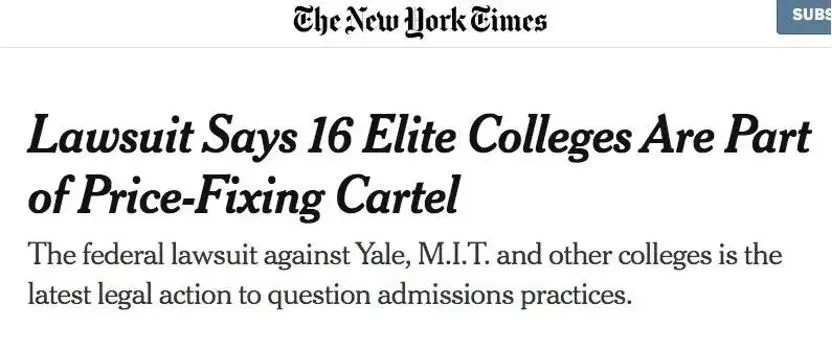
The lawsuit alleges that these 16 schools "conspired" within an organization called the "568 Presidents Group" to use a common method to calculate how much financial aid students should receive. This effectively artificially inflated the cost of attendance for all students receiving financial aid.
The universities mentioned in the lawsuit include Yale, Brown, Caltech, University of Pennsylvania, University of Chicago, Columbia, Cornell, Vanderbilt, Dartmouth, Duke, Emory, Georgetown, MIT, Northwestern, Notre Dame, and Rice.

16 Elite Universities Accused of Colluding on Tuition
In fact, this is not the first time schools have engaged in such practices. Back in the 1990s, multiple universities were accused of manipulating tuition.
That case eventually settled, and these schools were permitted to cooperate on financial aid programs under Section 568 of the Higher Education Act, which states: "Schools may use a common formula to calculate the financial aid needed by applicants."
This regulation is also the origin of the name "568 Presidents Group."
However, the prerequisite for this provision was that future admissions must adopt a "Need-Blind" policy, meaning that applicants' financial circumstances would not be considered as a factor, and only their essays, transcripts, and other materials would be reviewed.
This regulation to some extent maintained fairness in admissions, and last year's lawsuit stemmed from these schools repeating their old tricks and violating the previously agreed-upon "Need-Blind" policy.
The accused schools not only favored students from wealthier families in the admissions process but also caused over 170,000 students who should have received financial aid to be overcharged by hundreds of millions of dollars.
This has, to some extent, aroused public discontent, which is why they were taken to court.
The U.S. Department of Justice's allegations state that "these universities colluded with each other, so that when several schools offered admission to the same student, the scholarships they offered would be largely the same. This reduces the cost of recruitment for these institutions."
According to lawyers' estimates, over the past 20 years, about 200,000 students have been harmed by such practices. The "568 Presidents Group" faced public pressure due to these allegations and announced its disbandment at the end of last year.
UChicago Pays Huge Settlement; Other Schools Silent So Far
The Need-Blind policy leads to a higher proportion of admitted students requiring financial aid, putting more financial pressure on universities. This is why these schools resorted to such "schemes."
According to the lawsuit, nine institutions clearly violated the Need-Blind policy, and other schools, though not directly involved, were also "conspirators":
-
When admitting from the waitlist, the University of Pennsylvania prioritizes students who can pay full tuition over those needing financial aid.
-
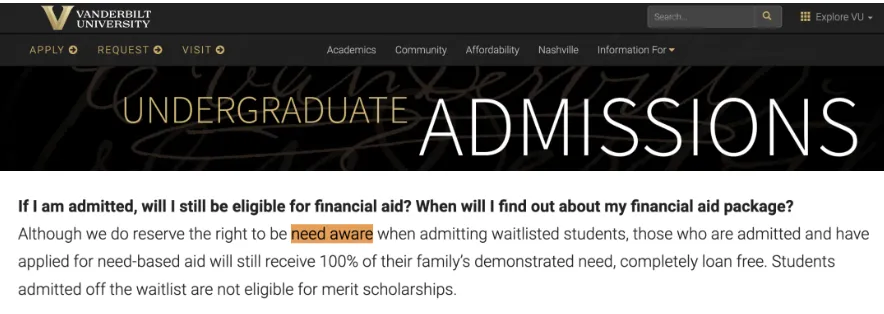
Vanderbilt University explicitly states on its website that it is "need-aware."
-
Duke University gives "special" attention to several hundred students each year because they are children of potential donors.
-
Georgetown University's admissions dean once said, "Children of Supreme Court justices, senators, etc.... receive special consideration because it may bring more opportunities."
-
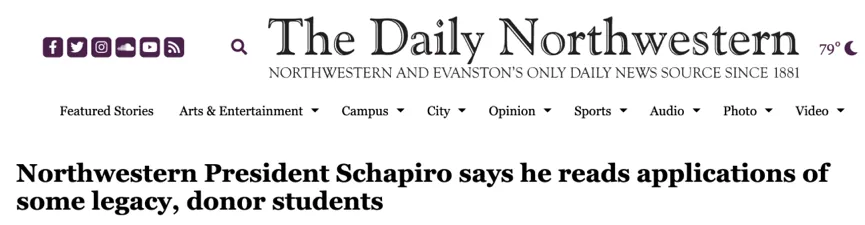
Northwestern University's president personally reviewed about 550 applications, including those from "wealthy donor families."
In response to these allegations, many of the sued schools denied them in court and sought to dismiss the case. Yale University spokesperson Karen Peart even stated directly that the school's "financial aid policy is 100% compliant with all applicable laws."
The Department of Justice then intervened, asking the judge to allow the case to proceed.
A turning point in the case came on August 16 this year when the University of Chicago became the first to agree to pay $13.5 million (approximately 98.42 million yuan), with the settlement agreement pending formal court approval.
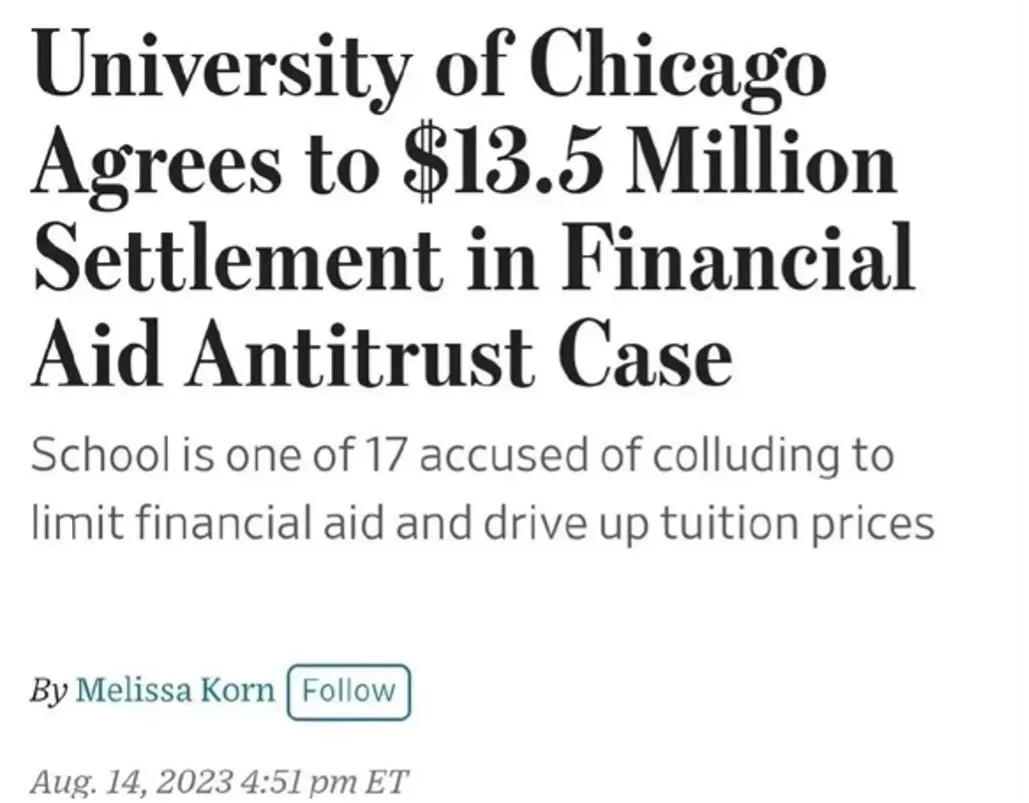
But at the same time, UChicago made it clear that entering into the settlement was not an admission of guilt, but merely a way to avoid litigation.
Other schools have yet to respond, but given the negative impact of the case, it is estimated that they will also settle and pay compensation like UChicago.
U.S. University Tuition Rises Year After Year
This development has stirred up a heated debate about U.S. university tuition.
According to data released by U.S. News, over the past 20 years, tuition at both private and public U.S. universities has increased significantly.
Private university tuition has risen by 134%, out-of-state tuition at public universities by 141%, and in-state tuition at public universities has seen a staggering 175% increase.
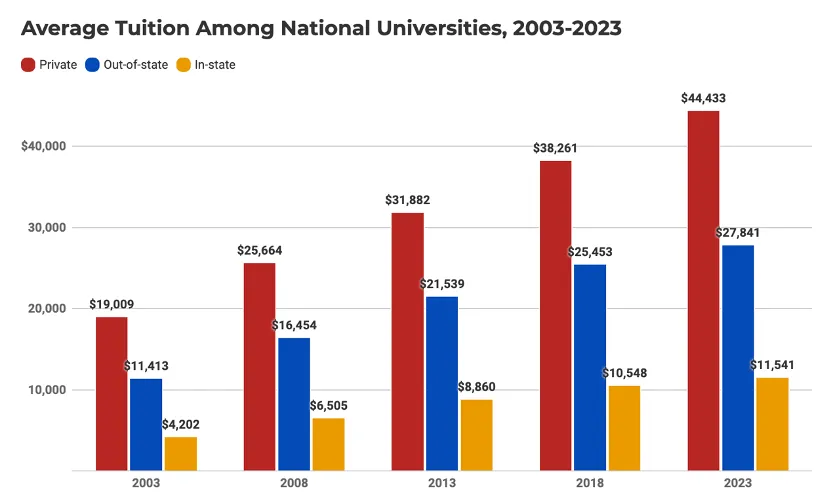
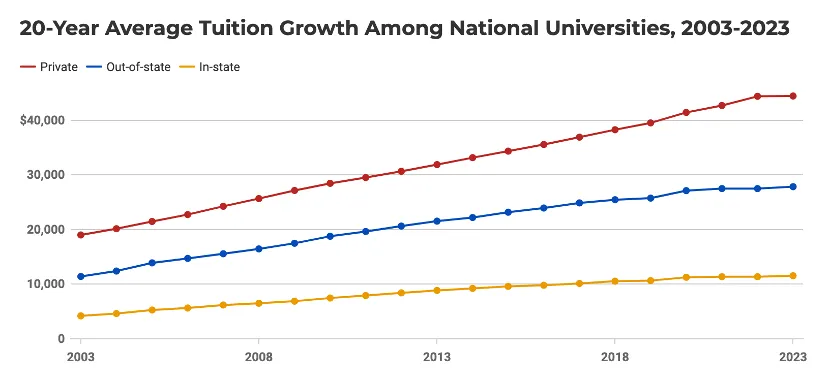
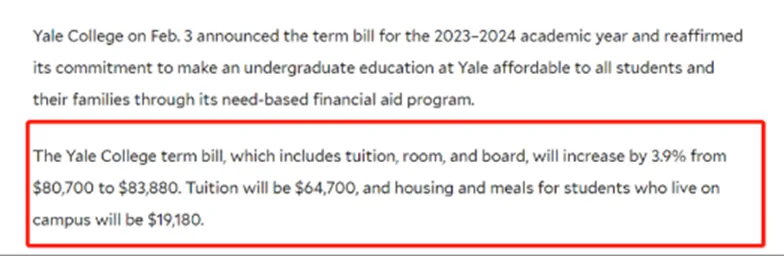
And there is no sign of stopping. For instance, Harvard University raised its undergraduate tuition this year from $52,659 to $54,269, and Yale University increased the cost of attendance by 3.9%.
While tuition increases are frustrating, the reason is ultimately "the wool comes from the sheep's back." Since most U.S. schools are non-profit universities, the high tuition fees are used to better improve teaching facilities.
So you'll see U.S. colleges periodically renovate academic buildings, update teaching equipment, have high-end decor and lounges comparable to five-star hotels, offer affordable and delicious buffet dining halls, and provide free access to many paid software...
How to Make the Most of High Tuition Costs
Since there's no way to change the high tuition, it's better to figure out how to maximize the value of your study abroad experience—make the most of the school's various resources: learn knowledge, broaden your horizons, and take advantage of every perk, nothing should be left out!
Free Software
Schools provide students with many free software options. You can search for the software you need on the school's IT support web page, such as Microsoft Office, Visio, Adobe, Tableau, MATLAB, etc. The software offered varies by major. And try everything you can think of to see if it's free.
On-campus bookstore
The on-campus bookstore can provide services such as renting and buying back textbooks, and many campus bookstores sell electronics. During the start of the semester, there are often educational discounts and various promotions.

Library
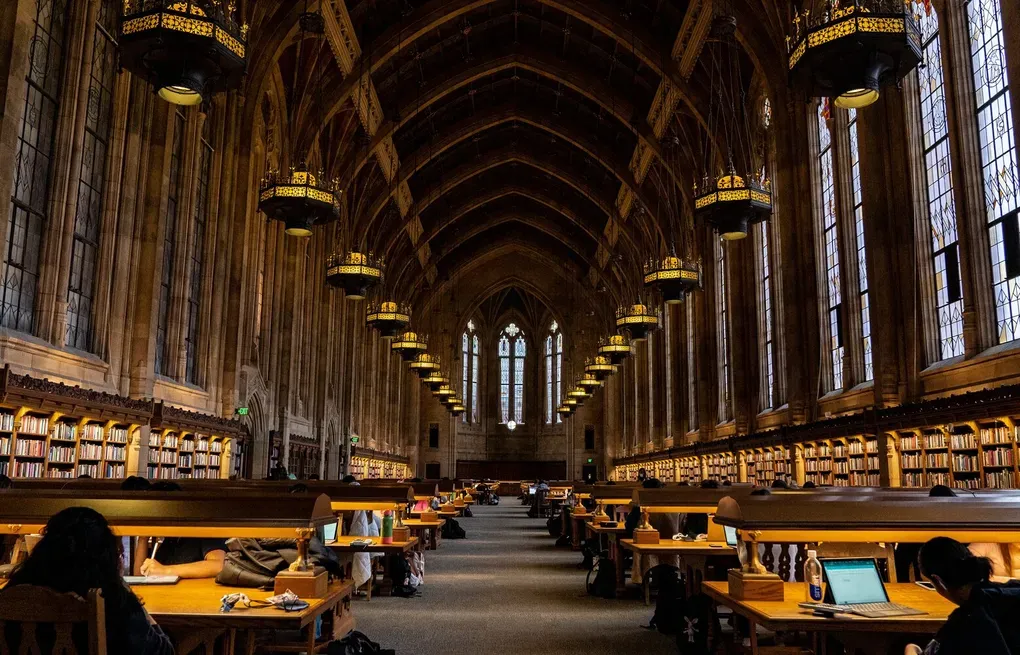
The school library can definitely be called a treasure trove. Not only does it have many classic books, but it also provides students with free access to many academic resource websites, and it also shares resources with libraries of other schools.
Electronic Devices
The school's library, academic buildings, and dormitory areas have electronic zones with computers, printers, and scanners. Generally, computers and scanners can be used for free, while printers may charge a few cents per page as a cost fee, though some are free to use.
Campus Gym
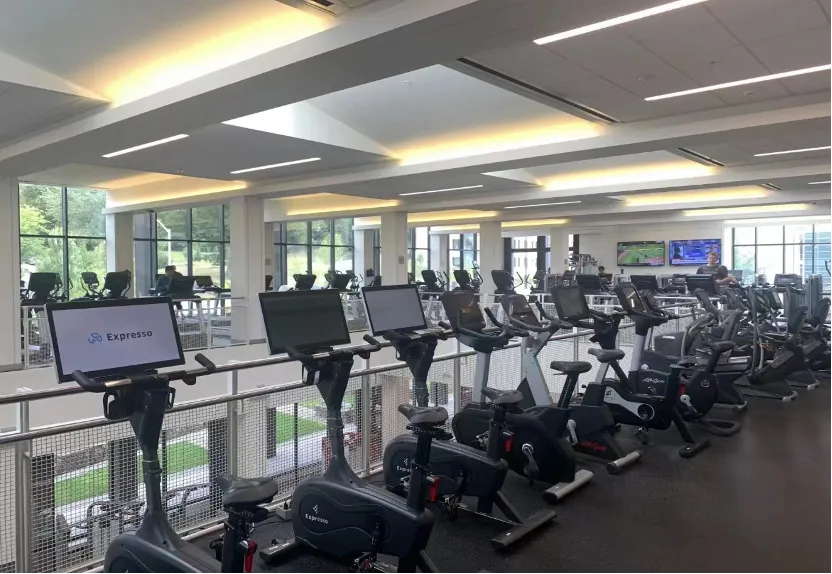
University fitness centers offer many different workout classes. At the beginning of each semester, check the class schedule to find one that suits you. You can also try out as many classes as possible to find the best fit. Campus fitness centers are generally open early in the morning and late at night to accommodate class schedules, so you don't have to worry about time conflicts.
Psychological Counseling Center
Many international students may experience psychological issues due to being alone in a foreign country. If these are not effectively resolved, they can consider visiting the school's psychological counseling center to consult with professional counselors.
In addition to these infrastructure "perks," the most important one is the "academic perk."
Don't forget you're here to study abroad. Give your all in class, actively seek advice from professors, and also strive to join labs to gain research experience. After all, "learning is earning!"