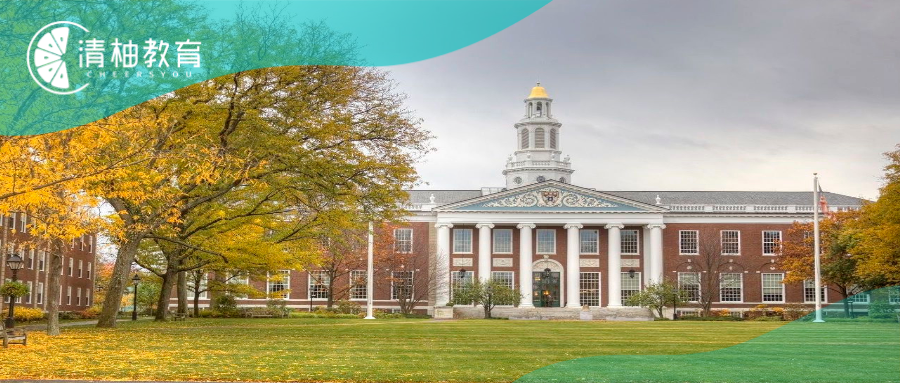
Master's in Education programs in the U.S. are relatively accessible to apply for, among which Harvard Graduate School of Education (HGSE), University of Pennsylvania Graduate School of Education (GSE), and Vanderbilt Peabody College stand out with their exceptional academic strength. In this article, we will analyze HGSE, GSE, and Peabody in terms of rankings, reputation and recognition, program structure, etc., to provide students with a clearer direction for school selection. For more application details, you can add a CheersYou(清柚教育) advisor via WeChat: qingyouge23!
.png?x-oss-process=style/opt-webp)
When it comes to the specific dimension of "Master's in Education," it is essential to consider factors such as professional strength, school reputation and recognition, program structure and core courses, school career support, and the employment environment in the city where the school is located.
1. School Rankings
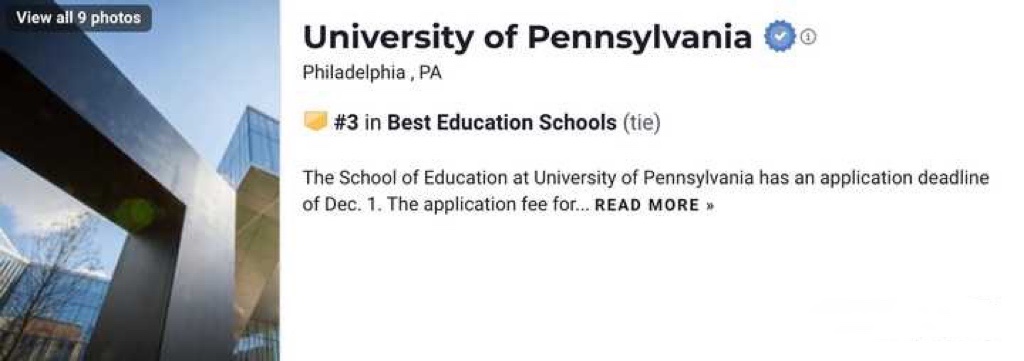
According to the 2024 US News Education School Rankings, the University of Pennsylvania ranks third, Vanderbilt University ranks sixth, and Harvard University ranks ninth.
.png?x-oss-process=style/opt-webp)
.png?x-oss-process=style/opt-webp)
The ranking is quite straightforward—University of Pennsylvania (UPenn) > Vanderbilt University (Vandy) > Harvard University (Harvard). It seems Harvard is the least preferred among the three, but in reality, people do not strictly follow the rankings. This brings us to the other influencing factors mentioned earlier.
2. Reputation and Recognition
First and foremost is reputation and recognition. In this regard, undoubtedly, Harvard University (Harvard) > University of Pennsylvania (UPenn) > Vanderbilt University (Vandy). After all, Harvard is the Ivy among Ivies, standing at the pinnacle of higher education in the U.S. On the other hand, UPenn, as an equally historic Ivy League institution, holds its ground, leveraging Wharton's extraordinary global recognition and high rankings in both specialized and overall categories to remain invincible.
From this perspective, Vanderbilt University clearly does not have as much of an advantage.
Vanderbilt's campus is relatively small, and its location in Nashville is not a typical university city. Although Vandy ranks 14th in US News and 6th in education, its QS ranking is outside the top 200, which is a significant disadvantage for those planning to return to China to work in corporate jobs at universities or to secure household registration in first-tier cities. Of course, Peabody's professional strength is formidable enough, making it more suitable for those who wish to pursue a research path or aim for long-term development abroad.
3. Program Structure
In terms of program structure, a quick glance at the official websites reveals that each of the three schools has distinct features in their program offerings.
Harvard University's programs lean more toward education itself. HGSE's offerings include educational theory, education policy, teaching methods, human development, etc. These aspects are comprehensively integrated into concentrations based on target learners and instructional content.
Official website: https://www.gse.harvard.edu/
UPenn adopts an interdisciplinary approach, blending education with other subjects. Penn's unique education programs include SMART (quantitative teaching methods), ICC (international education), etc., suitable for students with clear career goals and an interest in educational innovation.
Official website: https://www.gse.upenn.edu/
Vanderbilt Peabody is the most traditional among the three, offering not only macro-level programs like education policy and human development but also special education, early childhood education, educational diversity, etc. Vandy would be the best fit for those wanting to choose a highly specialized subfield.
Official website: https://peabody.vanderbilt.edu/
In summary, if you aim to pursue a research path, Vanderbilt University (Vandy) is the most recommended. But if you focus on employment, then choose between Harvard University (Harvard) and University of Pennsylvania (UPenn) based on your preference for the program.
The above provides suggestions for students weighing these three schools. In fact, the No. 1 education school in the U.S. is currently Columbia's TC—the so-called "notorious water factory" Teachers College.
.png?x-oss-process=style/opt-webp)
.png?x-oss-process=style/opt-webp)
.png?x-oss-process=style/opt-webp)
.png?x-oss-process=style/opt-webp)
.png?x-oss-process=style/opt-webp)
For more application details and school selection consultations, feel free to scan the QR code below~
.png?x-oss-process=style/opt-webp)