
Recently, QS released the 2024 Global Business Master's Rankings, covering five major business master's specialties: Business Analytics, Finance, Management, Marketing, and Supply Chain Management!
In addition, the 2024 QS Global Full-Time MBA Rankings have also been unveiled, covering 315 global MBA and business master's programs across 48 countries and regions this year.
Without further ado, let's dive into the results with CheersYou(清柚教育)!
QS Business Master's Rankings Analysis
.jpg?x-oss-process=style/opt-webp)
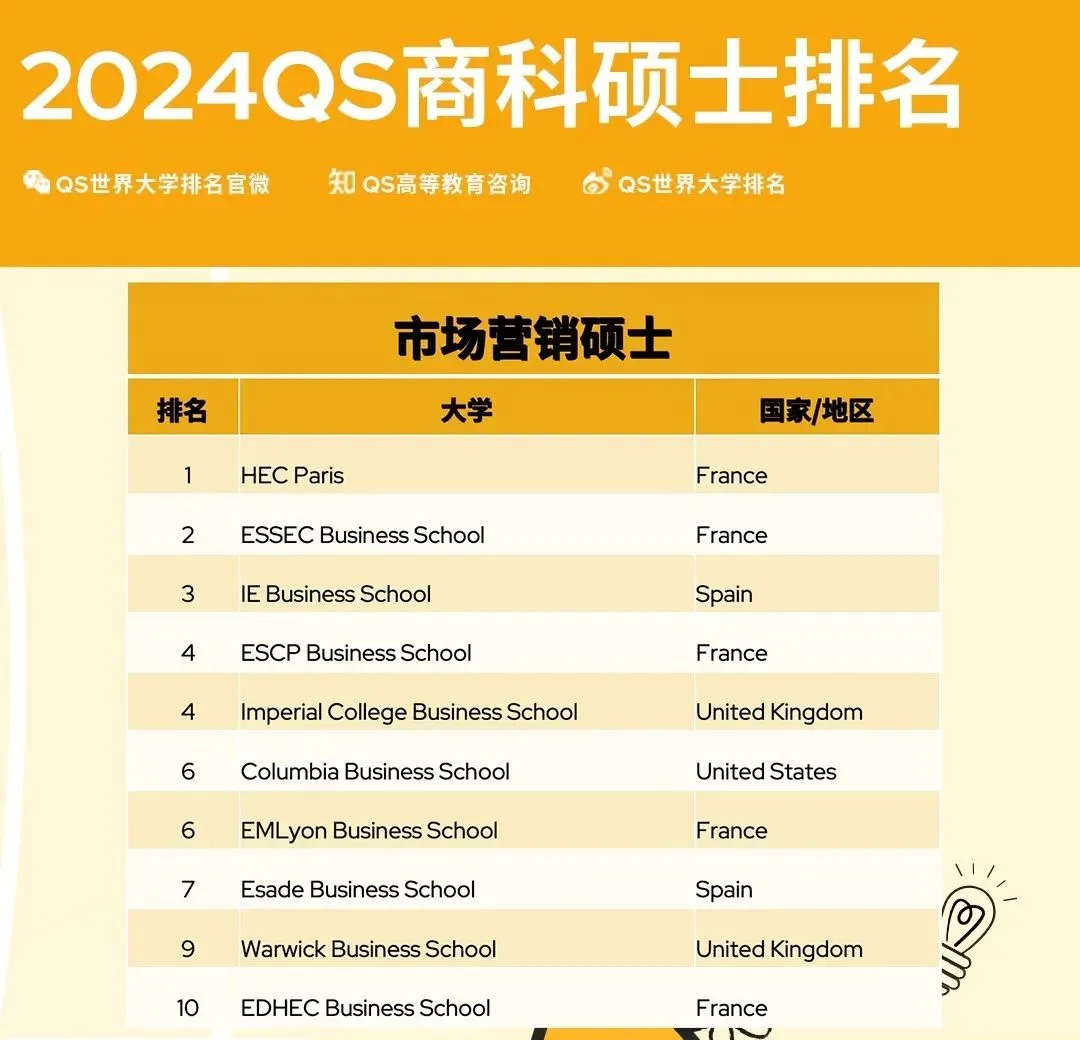
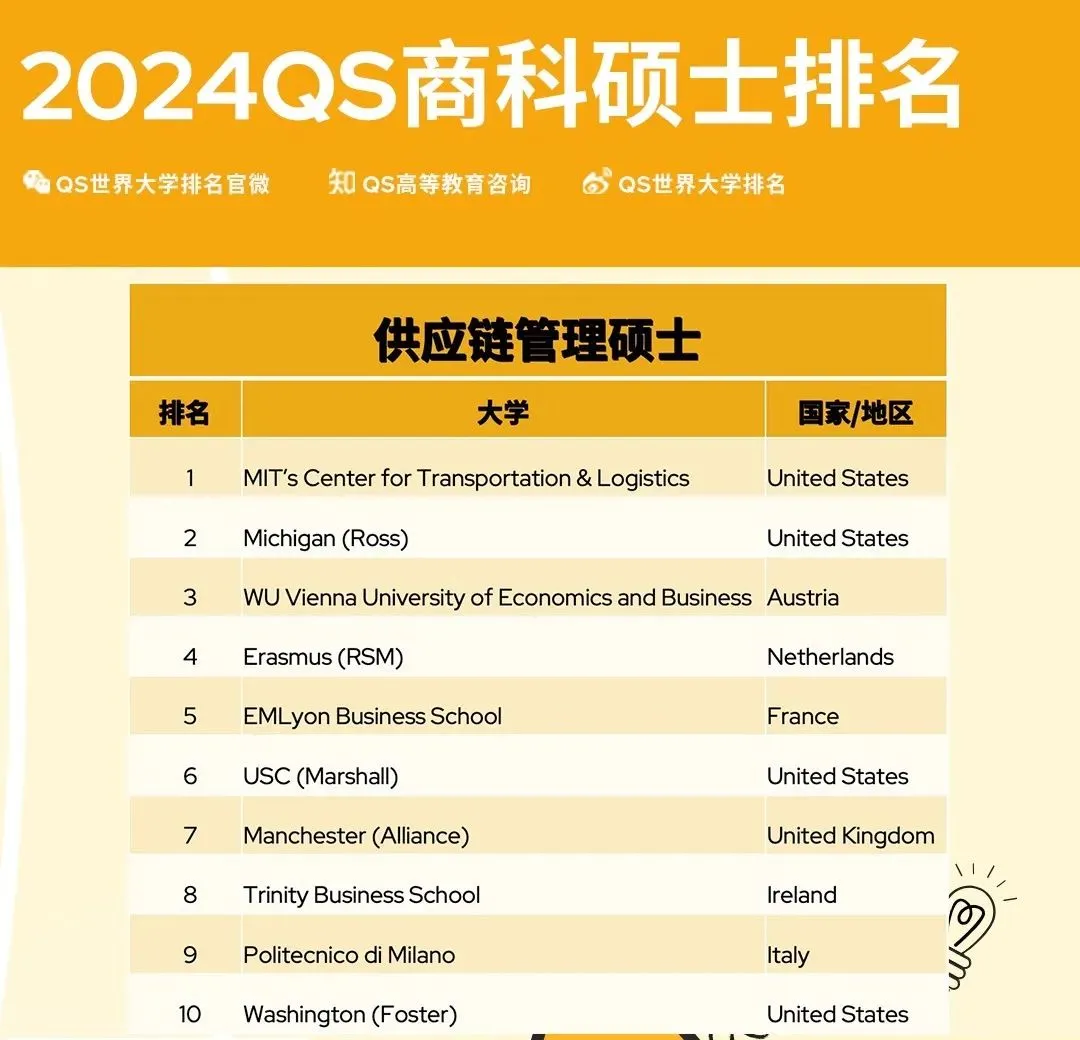
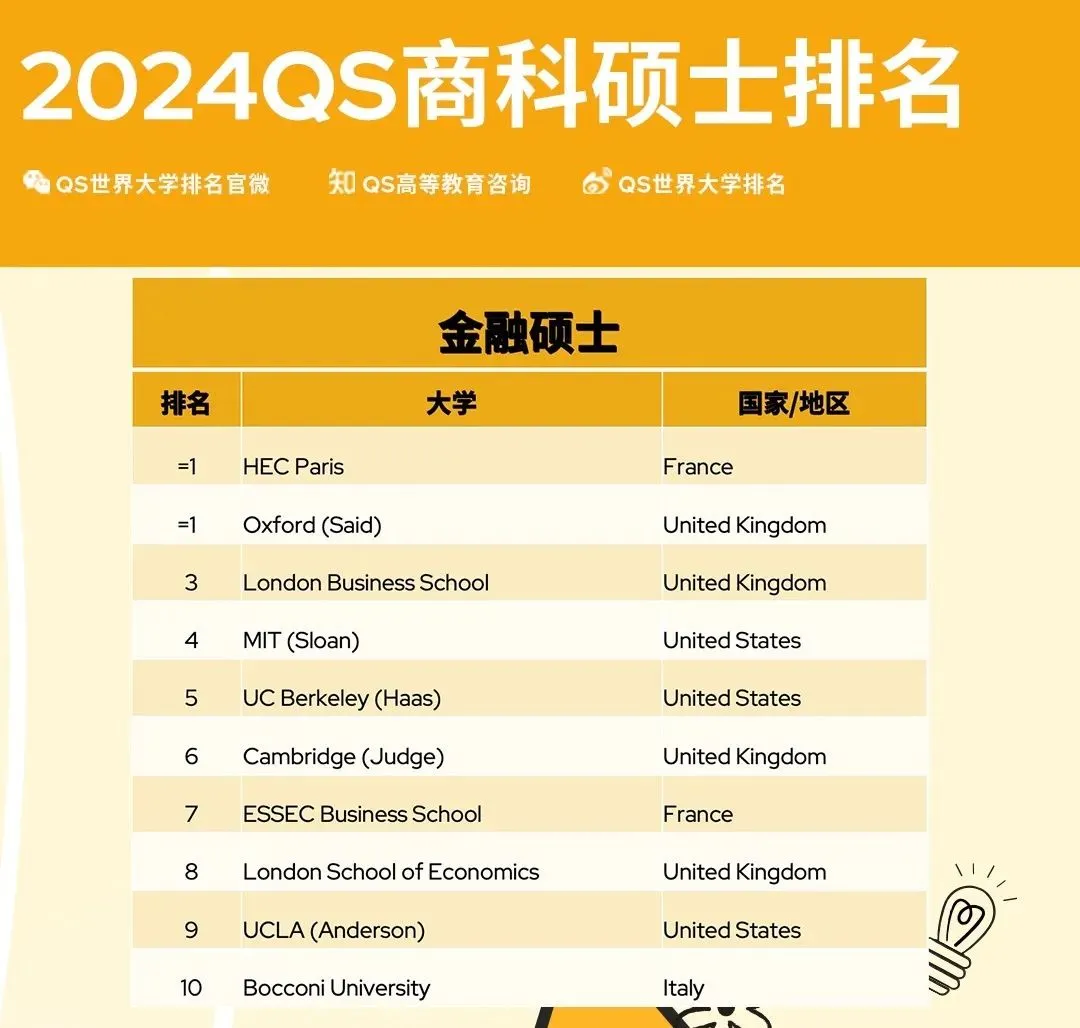
1. Among the five QS Business Master's Rankings for 2024, HEC Paris leads in three major master's rankings: Management, Marketing, and Finance.
2. UCLA Anderson School of Management and MIT Center for Transportation & Logistics top the Business Analytics and Supply Chain Management master's rankings, respectively.
QS Business Master's Rankings Methodology
These business master's rankings are also based on three surveys and five key indicators.
Three surveys:
1. QS Global Employer Survey
2. QS Global Academic Survey
3. Survey completed by each business school
Five key indicators:
1. Employability – 35% (Finance/Business Analytics – 30%)
2. Alumni Outcomes – 15% (Finance/Business Analytics – 20%)
3. Economic Value – 20%
4. Thought Leadership – 20%
5. Class & Faculty Diversity – 10%
To be included in the 2024 QS Business Master's Rankings, programs must be primarily taught on-campus (not distance learning); full-time (or equivalent to full-time), with an average class size of at least 15 students; and the school must hold accreditation from AACSB, AMBA, or EFMD (EQUIS).
QS MBA Rankings Analysis
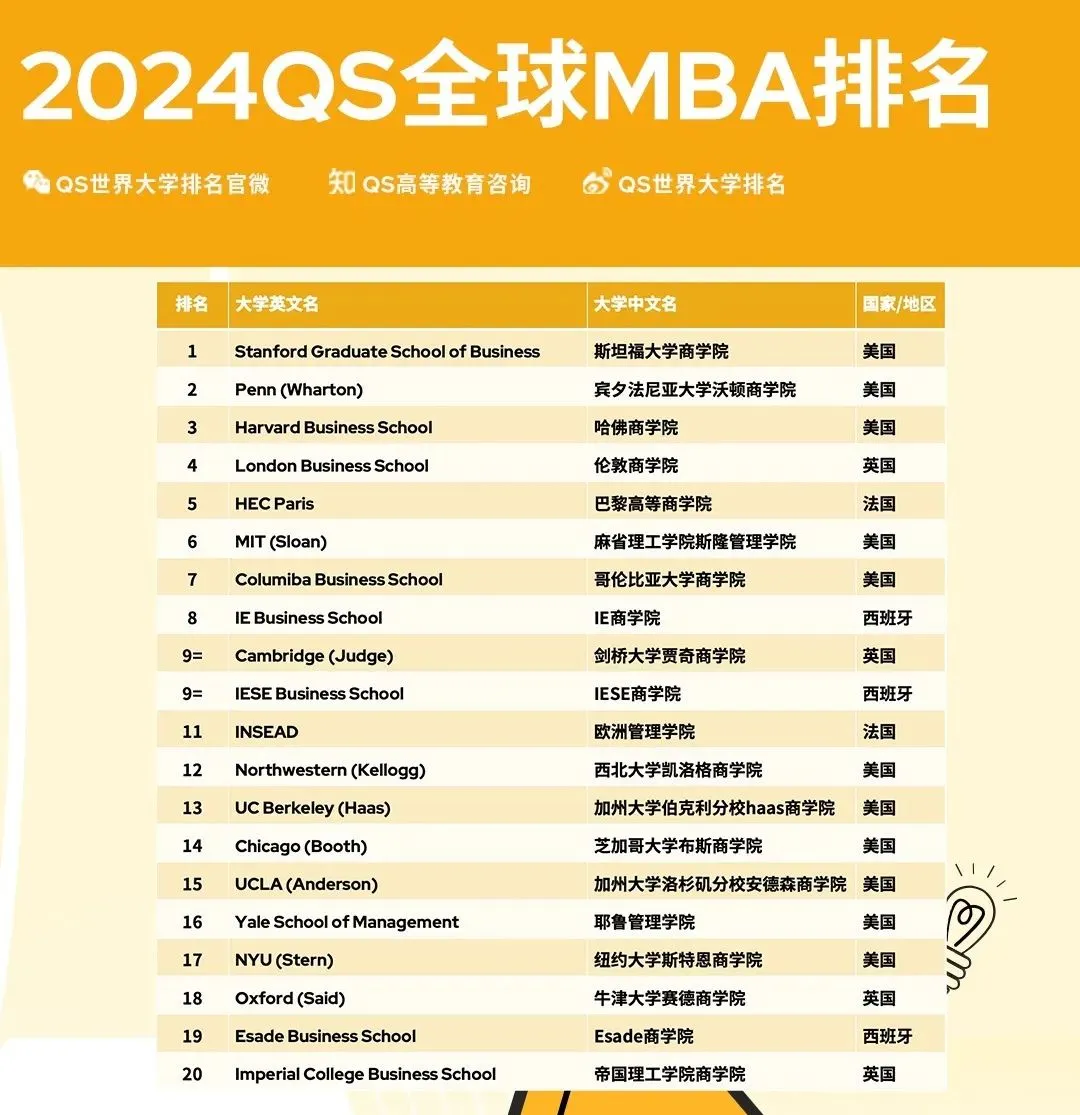
1. Stanford Graduate School of Business once again ranks first in the global full-time MBA ranking, holding the top spot for three consecutive years.
2. As in previous rankings, U.S. business schools continue to dominate the top spots on the list.
3. The best MBA program in continental Europe is at HEC Paris, ranked 5th overall this year.
4. The UK has two MBA programs in the top ten this year: London Business School and Cambridge Judge Business School, ranked 4th and 9th respectively.
5. The best MBA program in Australia and Oceania is at Melbourne Business School, ranked 30th.
6. The best MBA program in Asia is from the National University of Singapore, ranked 24th this year.
7. Canada's best MBA program is at the University of Toronto's Rotman School of Management, ranked 40th globally this year.
QS MBA Rankings Methodology
This year's QS Full-Time MBA Rankings are based on three surveys and five key indicators.
Three surveys:
1. QS Global Employer Survey
2. QS Global Academic Survey
3. Survey completed by each business school
Five key indicators:
1. Employability – 40%
2. Alumni Outcomes – 15%
5. Return on Investment – 20%
4. Thought Leadership – 15%
5. Class & Faculty Diversity – 10%
The rankings are for reference only and should not be the sole basis for university applications.
When choosing a university, you should also consider factors such as curriculum, school culture, cost of attendance, location, and campus life to make a more rational and personalized choice.
.png)