This year's U.S. News Best Colleges rankings set off a storm of controversy, sparking heated debates across the study-abroad community.

Even more absurdly, less than two months later, U.S. News officially announced that the 2024 rankings had errors...

.png)
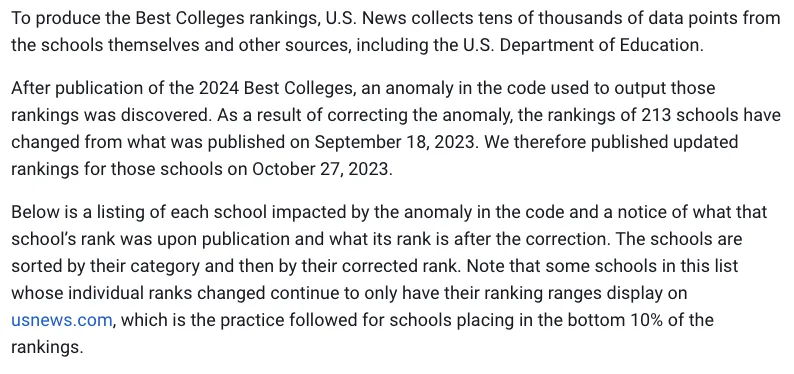
U.S. News Code Glitch Causes Errors for 213 Schools
According to an official U.S. News statement, due to a code anomaly, the previously calculated rankings for 213 universities were incorrect and have since been corrected.
In terms of overall rankings, the error had little impact on the top 100 but mainly affected universities ranked beyond 200.
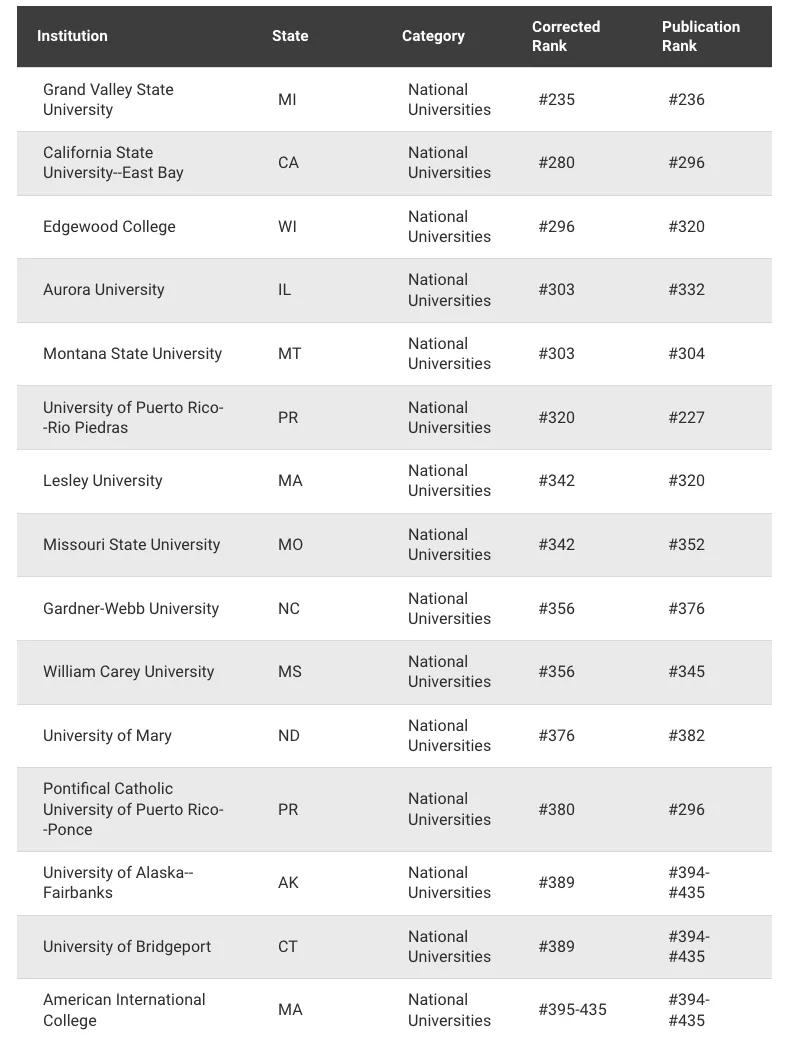
The rankings of two well-known liberal arts colleges were noticeably affected. Colorado College dropped from its previous No. 29 to No. 33, and Bard College fell from No. 63 to No. 73.
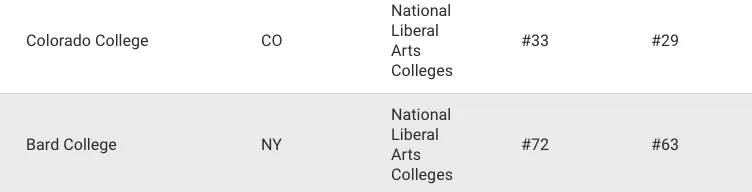
Although the mistake was not entirely “fatal,” this episode has once again called the authority of U.S. News rankings into question.
Universities Withdraw, U.S. News Credibility Continues to Erode
It is worth noting that this is not the first time U.S. News rankings have faced a credibility crisis.
This year, Columbia University officially announced it would no longer participate in the U.S. News undergraduate rankings, becoming the first major university to refuse to provide information to the ranking body.
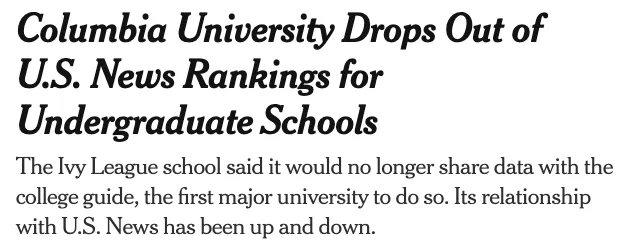
Despite Columbia’s unilateral decision to “permanently withdraw,” U.S. News still ranked the university, placing it at No. 12.
Last November, Yale Law School and Harvard Law School announced their withdrawal from the rankings, openly challenging U.S. News.
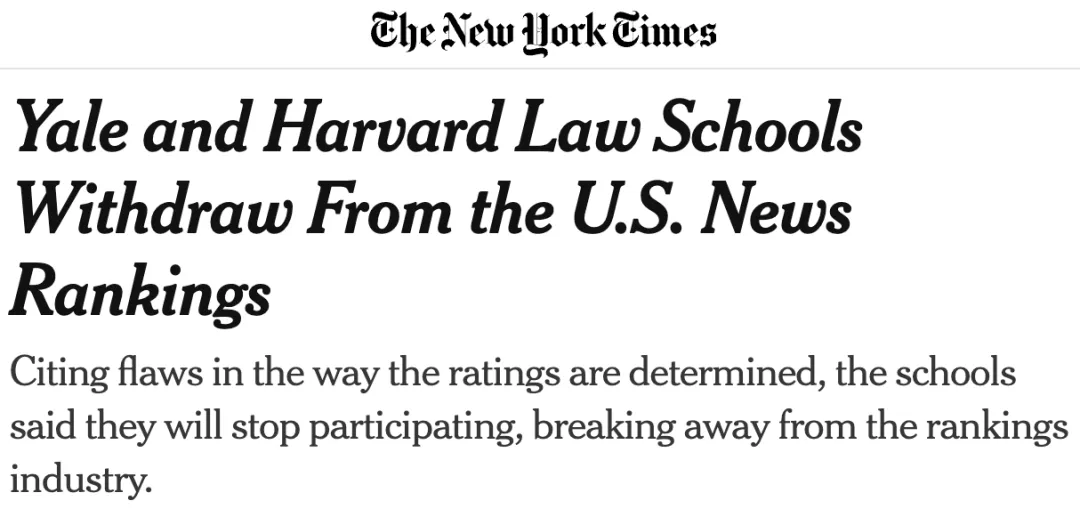
The institutions stated that U.S. News’ ranking methodology is flawed and inconsistent with their educational philosophies. After unsuccessful talks with the organization, they chose to withdraw.
Following Harvard and Yale, several top law and medical schools also withdrew from the rankings, including Stanford, Georgetown, UC Berkeley, Penn, and Duke.
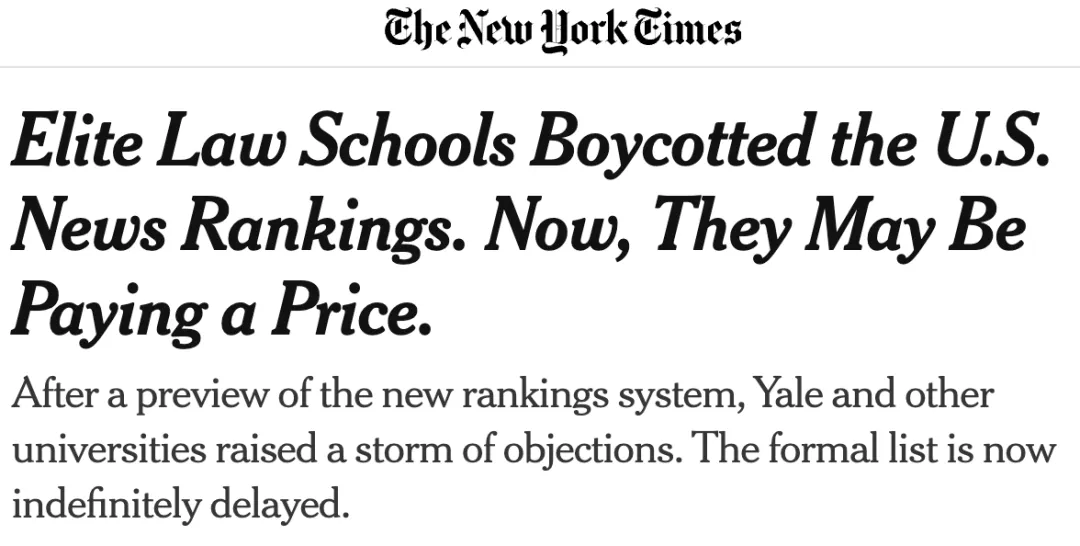
Despite this wave of withdrawals, U.S. News maintained a superficial nonchalance—“You withdraw, we’ll rank anyway.” However, in the methodology released for the 2024 Best Colleges, it quietly adjusted its ranking criteria.
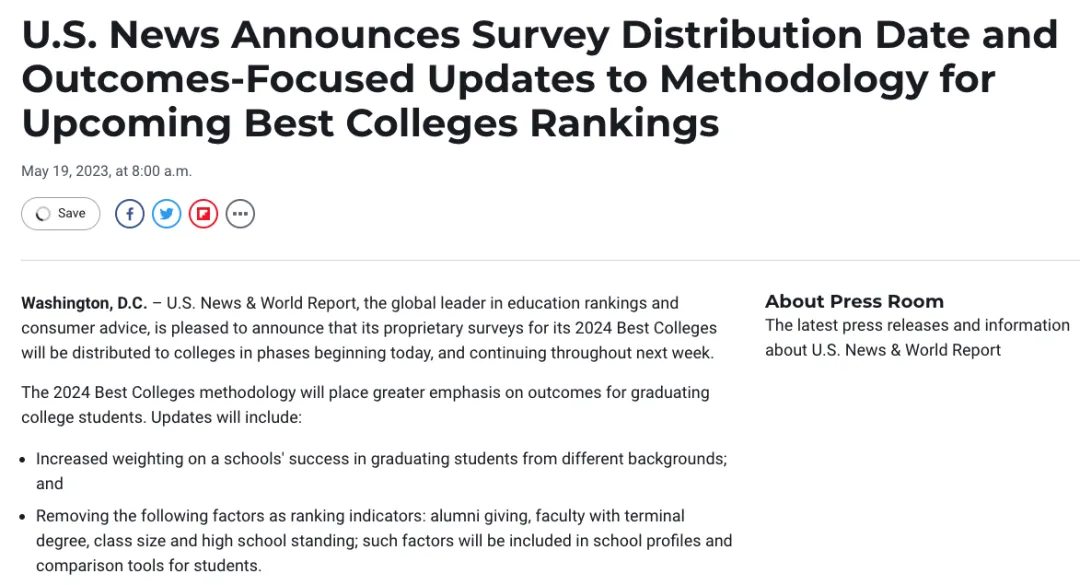
Yet, in the end, it still stumbled at the ranking output code stage...
Data Errors in University Rankings Are Nothing New
Honestly, U.S. News making “data errors” is not a recent phenomenon.
Columbia Ranking Data Challenged, Prompting Withdrawal from U.S. News
In 2022, a Columbia professor “reported his own institution,” publishing a lengthy report of tens of thousands of words that directly accused the university of submitting false data to U.S. News to boost its ranking.
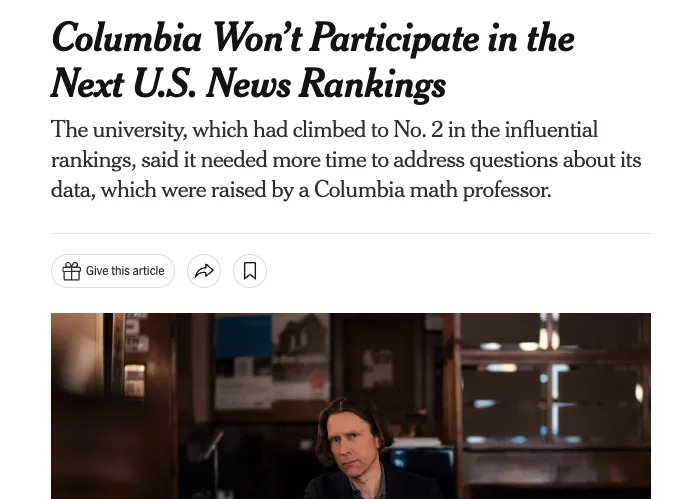
He also pointed out that the questionable data and rankings involved shared responsibility with U.S. News itself. If even an institution like Columbia has unclear and inaccurate data, it is easy to question the authenticity and reliability of the entire ranking system.
After episodes of delisting and withdrawal, the Columbia drama has continued well into this year with no signs of stopping.
UC Berkeley Removed for Ranking Data Fraud
In 2019, U.S. News issued a statement confirming that five American universities, including UC Berkeley, admitted to misreporting data used for the 2019 Best Colleges rankings.
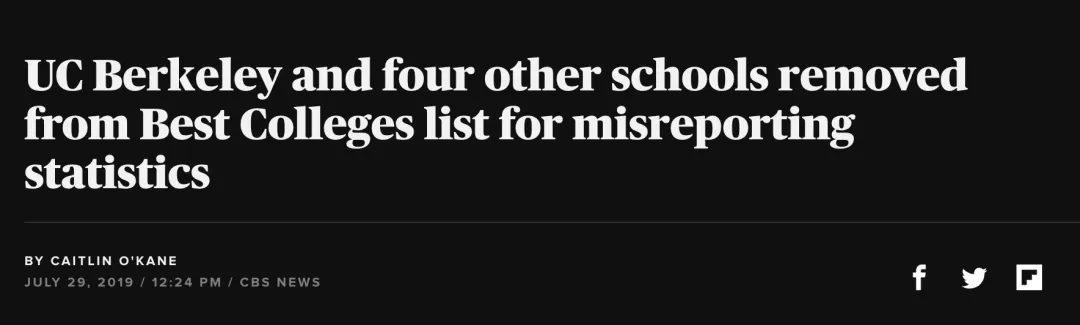
U.S. News noted that Berkeley initially reported an alumni giving rate of 11.6% for 2016 and 2017 but later revised it to 7.9%. Berkeley officials quibbled that the 11.6% figure included “alumni pledges,” but U.S. News had clearly stipulated that “pledges” should not be counted.
Consequently, U.S. News urgently removed these five universities from the 2019 Best Colleges rankings.
Emory University Misreported Data for at Least a Decade
In 2012, an internal investigation at Emory University revealed that staff and administrators had intentionally misreported data for at least 10 years, passing off information on admitted students’ SAT/ACT scores, class rank, and GPA as if it represented enrolled students, thereby generating more favorable figures.
These erroneous data were also provided to third-party organizations, including the U.S. Department of Education and U.S. News. Although investigations later showed that the misreported data had little impact on Emory’s ranking, the university’s actions were widely condemned.

View Rankings Rationally – Avoid “Ranking Obsession”
For years, annual rankings like U.S. News and QS for American or global universities have been key reference points for parents and students selecting schools.
Some domestic companies even explicitly stipulate that they only recruit graduates from the world’s top 50 universities, fueling a pervasive “ranking obsession.” But in reality, rankings are merely one reference point and cannot prove whether a school is the best fit for you.
While these rankings aggregate various indicators across different dimensions, cold quantitative data alone may not fully capture a school’s true value.
Beyond rankings, factors to consider in study-abroad applications should be multidimensional and comprehensive, including curriculum, faculty, location, campus culture, international student ratio, and more.
Each student and parent should have their own internal measure, weighing the factors that matter most to them in order to holistically evaluate universities and programs and ultimately choose the one that fits them best.
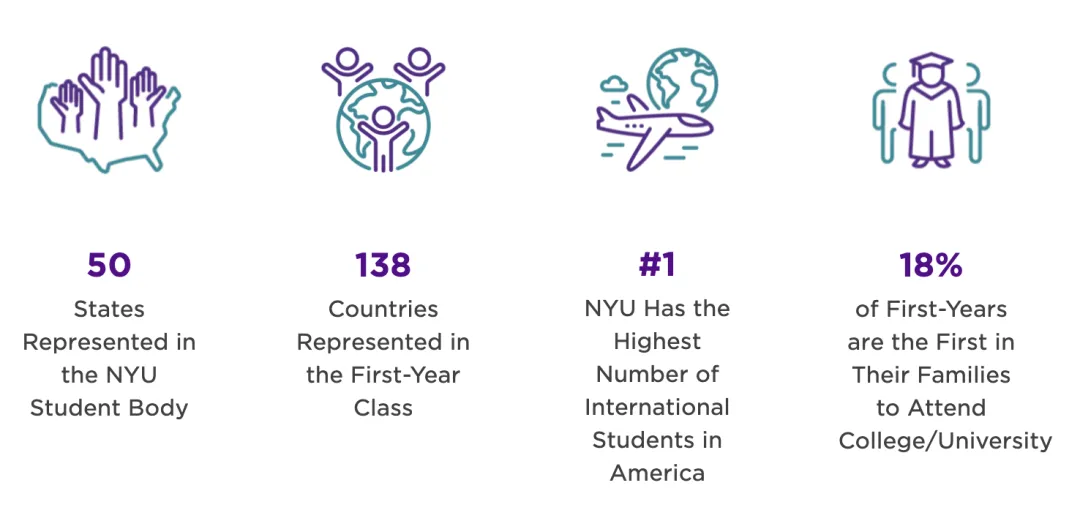
When consulting rankings for school selection, it is essential to examine each institution’s strengths in your intended field of study or interest, rather than blindly following the numbers.