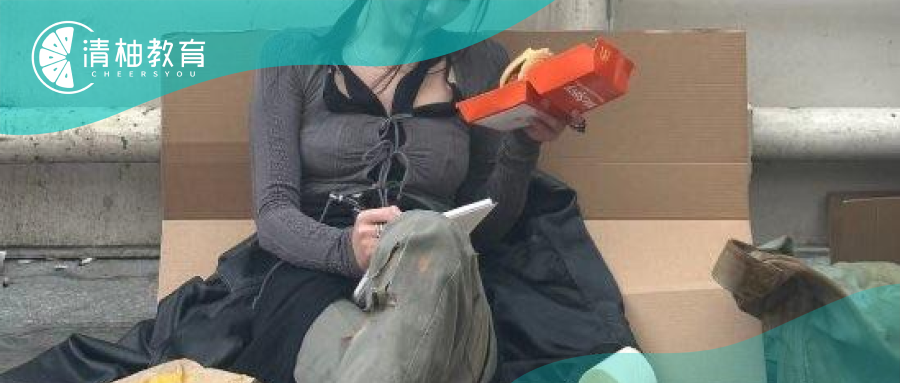
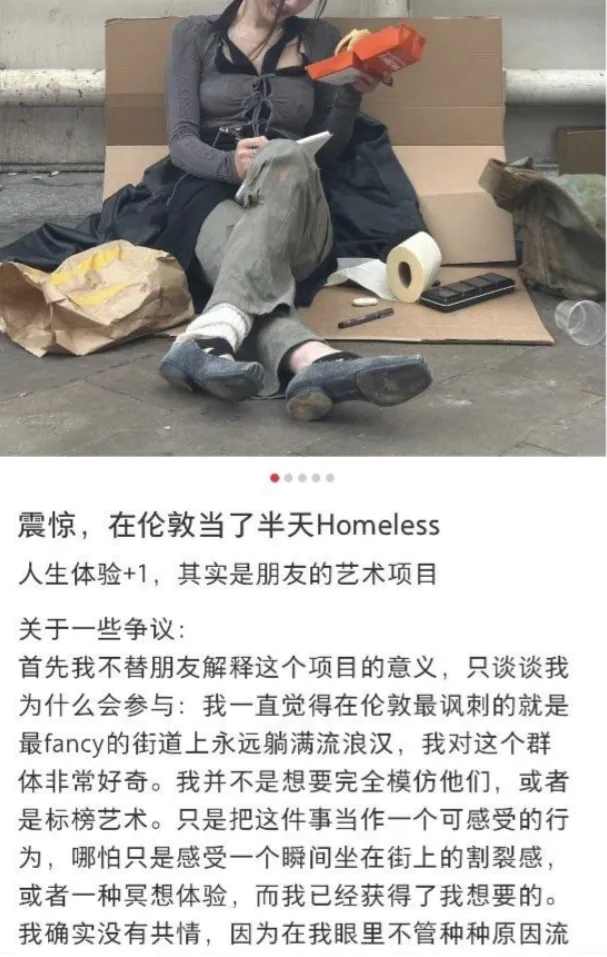
Recently, a post on Xiaohongshu about a "Chinese student posing as a homeless person in London" was shared on Reddit, causing an uproar internationally.
"This isn't homelessness at all; she can go home anytime."

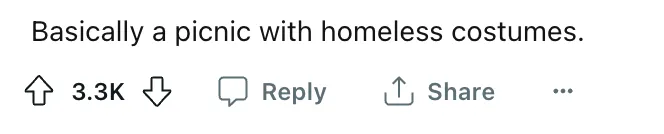
"Is Halloween not over yet? She's just having a picnic in a homeless costume."
"Half a day is called homelessness? Thanks, we call that going out."

"Reminds me of that song: 'Trying Hard to Live Like an Ordinary Person.'"

"Just a call to dad and poof, poverty gone. Sorry, rich girl can never be ordinary."

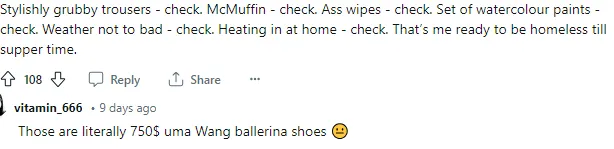
"Wearing $750 Uma Wang to be homeless? Redefining homelessness."
"This outfit could feed a homeless person for months."

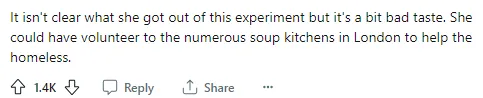
"I don't get her motive, but she clearly has a supportive dad. Instead of playing fairy descending to earth, she could hand out food at a shelter."
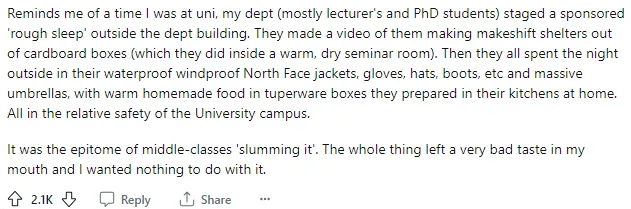
"Our university did this kind of performance art too. Everyone wore North Face down jackets, full gear, and slept on the floor in a warm conference room. You call this homelessness; I call it middle-class life experience."
"The global pandemic may be over, but stupidity is not"😅

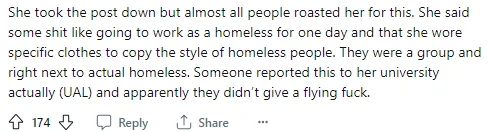
Netizens responded with mockery and sarcasm, and some even reported her to her school, UAL. The Xiaohongshu post has since been deleted by the blogger.
The reason for the outrage is understandable. Life for the truly homeless is hellish, especially for women—hardly imaginable.

When someone shows up on a London street in an outfit worth thousands, pretends to be homeless for a few hours, and casually says homelessness is just another life experience +1, it's hard not to get mocked.

The whole thing was more of a performance—a Xiaohongshu influencer checking a slum off her bucket list.
Out of six pictures, three are glamour shots, and one is an extreme close-up.

Friends even commented calling her "the prettiest homeless person." Just asking, is wearing Uma Wang while pretending to be homeless some new kind of irony? ❓

However, on Xiaohongshu, there were also supportive voices, claiming the blogger was conducting a social experiment and that homeless people abroad don't really suffer.
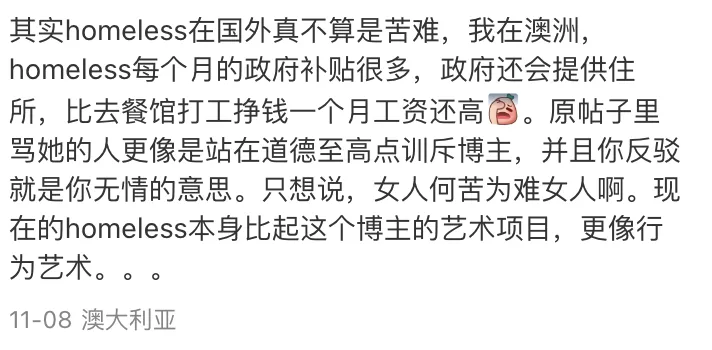
Alright, maybe being homeless in California is manageable, but in the UK, 3 people froze to death outside a school gate one winter.

Any sociology students want to weigh in on what level this "project" is on?
Probably without any need for netizen criticism, if her teachers or classmates were even slightly mean, she'd have ended the presentation in tears.

This kind of half-day trip neither fosters empathy in her nor improves the situation for vulnerable groups. Out-of-touch, romanticizing suffering—that's probably what netizens are criticizing.

International Students Playing Homeless: Not the First Time
This isn't the first time international students have pretended to be homeless.
Reasons vary: some out of boredom, wanting to experience life in rags, scavenging for spoiled vegetables.

On Xiaohongshu, there are also groups of students in Australia organizing "homeless" experiences, checking off sleeping rough.

Though, sleeping overnight at a Sydney lookout in a group is more like camping than homelessness 😅

Someone wrote a cringey essay titled "Spending a Month as a Homeless Person in Melbourne," when it was just sleeping on a friend's couch 😅

Hard to judge—kind of pitiful, but not much.

If Australian students are all about survival challenges, then UK students are into performance art.
For instance, a Central Saint Martins student set up a street stall offering consultations at £1 per session.
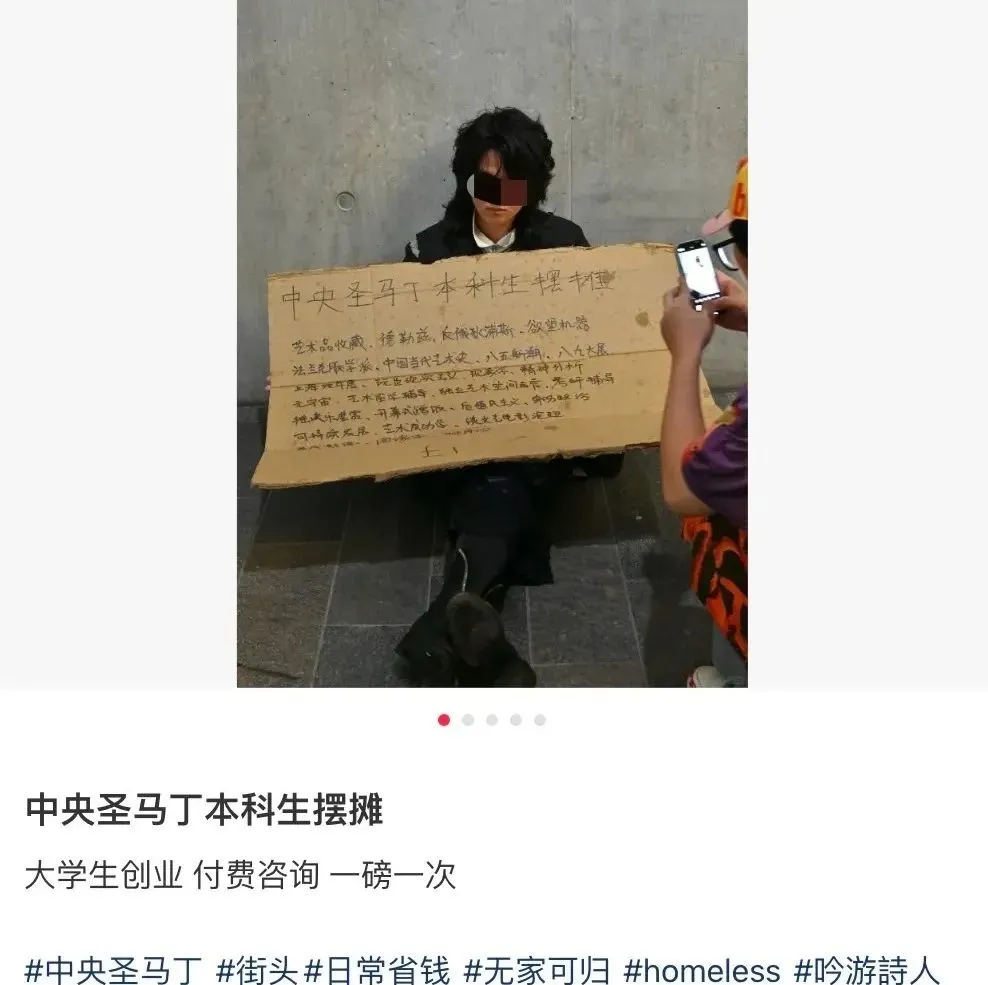
Even an LCF student would find this abstract. Glad we're done with design school—dodged a bullet.

Perhaps art students all have a wandering heart; earlier, that "21-Day Survival Challenge Posing as a Socialite" also went viral.

Unlike the pretend-poor students above, this Central Academy of Fine Arts student pretended to be a rich girl, seeing how a wealthy young woman could live in Beijing without spending a penny.

She ate and slept in airport first-class lounges, showered at five-star hotel gyms, and even sipped afternoon tea at auctions.
You could say, without that background and confidence, no one could pull off such a freeloading strategy.
.gif)
Pretending to Be Homeless: Serious Consequences
In recent years, with the pandemic and economic downturn, homelessness in Western countries has surged.

According to The Guardian, the number of rough sleepers in London has risen by 1,700 this year, a 21% increase to over 10,000.
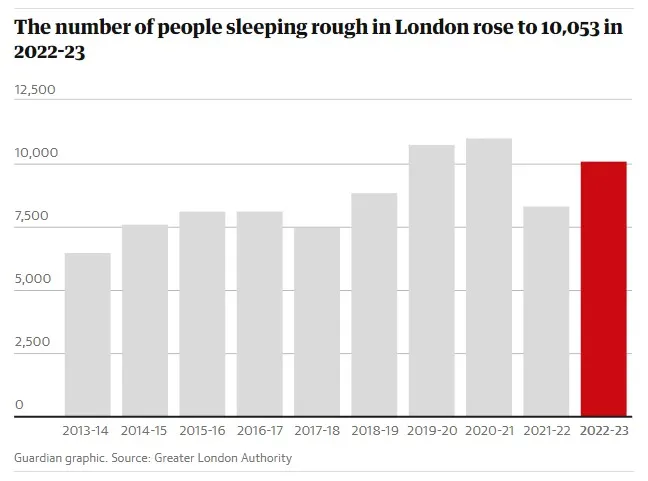
California is also a hotspot; downtown LA is full of tents, and San Francisco at night looks like a zombie apocalypse.
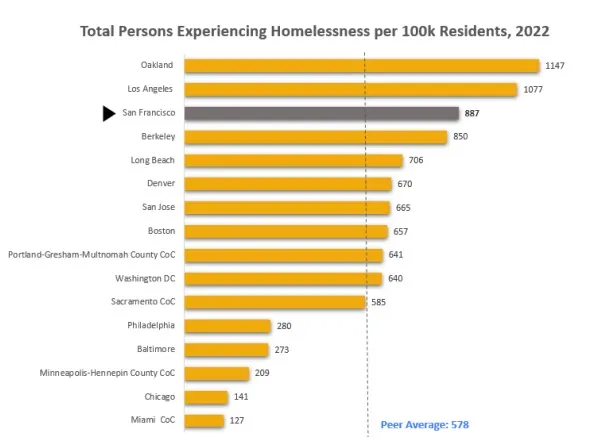
Homelessness has become a phenomenon. "Understand the homeless, become the homeless" has turned into a joke among some students.

It's one thing to joke about being homeless; it's absurd to actually pretend.
Of course, many people abroad also fake homelessness, for various reasons.
Some are lazy and freeload, earning over $1,000 a month on a good streak.

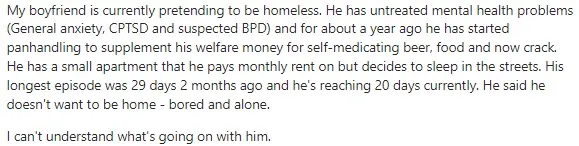
Others have mental health issues and prefer sleeping on the streets instead of going home.
There are also unknown actors, using absurd "LV beauty falls for a roadside homeless" scripts to gain TikTok traffic and find work.
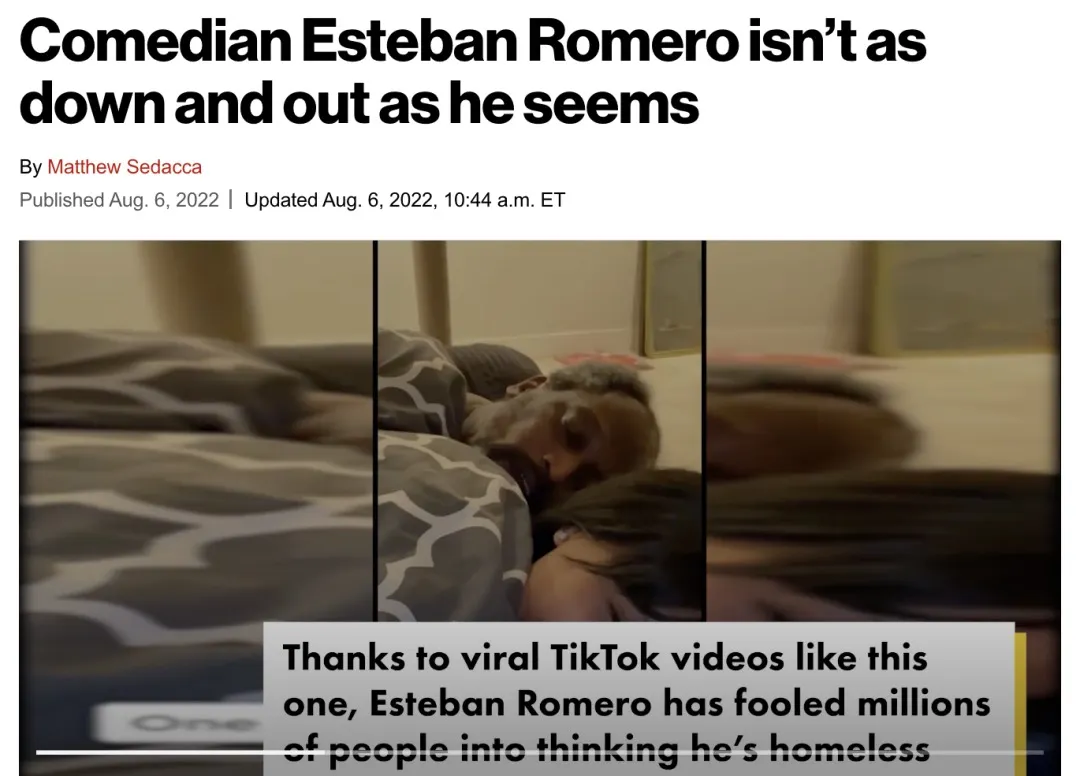
And influencers grabbing attention for clout.
(7).gif)
As well as performance art, like this high schooler pretending to be homeless for a drama class performance.

A few years ago, the BBC published an article titled "Who Really Begs on the Streets," revealing that about 80% of beggars on London streets are not actually homeless.

This kind of pretending to be homeless is like crying wolf, demonizing the homeless and eroding public trust in those truly in need.
(4).gif)
Therefore, police in some areas have started taking action.
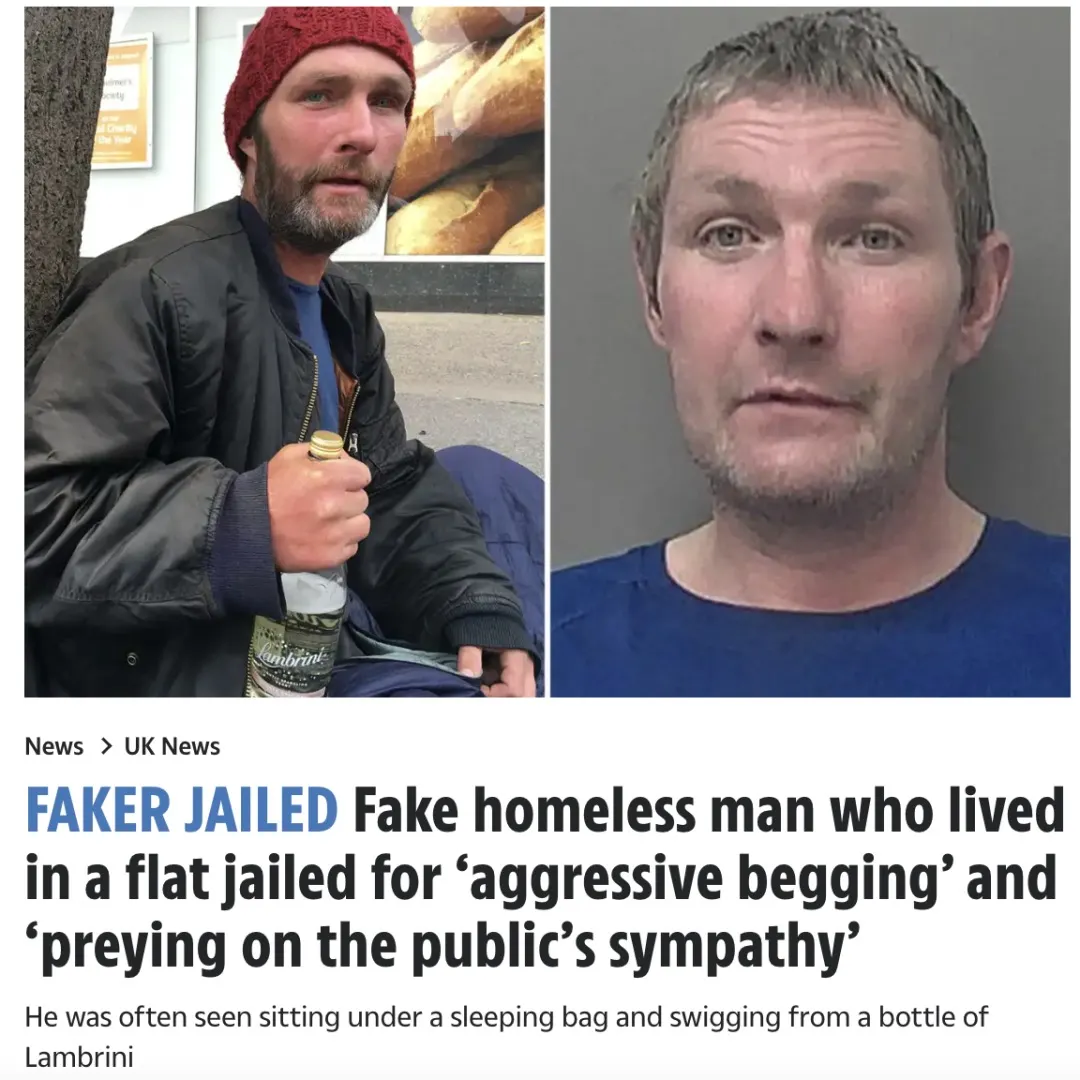
UK police previously arrested a beggar who openly sold drugs and harassed pedestrians. He refused food handouts, demanding cash for alcohol.
Pickier than a paying customer, this beggar ended up spending half a year in jail after ignoring multiple warnings.
Someone even fabricated a heartbreaking story about a "homeless veteran" and scammed $400,000 on GoFundMe—a serious criminal offense.

Among the genuinely homeless, some may be lazy, others forced by circumstances.
But if given the choice, no one would choose not to live with dignity.

Pretending to be homeless for attention is not only controversial and bound to attract criticism, it also carries risks.
There have been instances of attacks on the homeless, and if something happens, no one may help.
Playing at "experiencing life"? Life will teach you a lesson quickly.
Now, with endless meaningless clickbait on Xiaohongshu and TikTok, we advise netizens, including international students, not to engage in such performative, reckless behavior and to learn to respect others.
If you truly want to conduct a social experiment, at least do it with sincerity.
.png)