Just a few days ago, it was reported that Harvard President Gay had been accused of plagiarism. Now, barely into the new year, she has officially announced her resignation.
As Harvard's first Black president, Gay has also become the shortest-serving president in Harvard's history.
From her triumphant inauguration last July, to becoming embroiled in the antisemitism controversy, and now her humiliating resignation, this marks the first big scandal of the year for the Ivy League.

Harvard President Resigns in the New Year
Last Tuesday, Harvard President Gay announced her resignation, stating that it was "the best choice for the interests of the university."
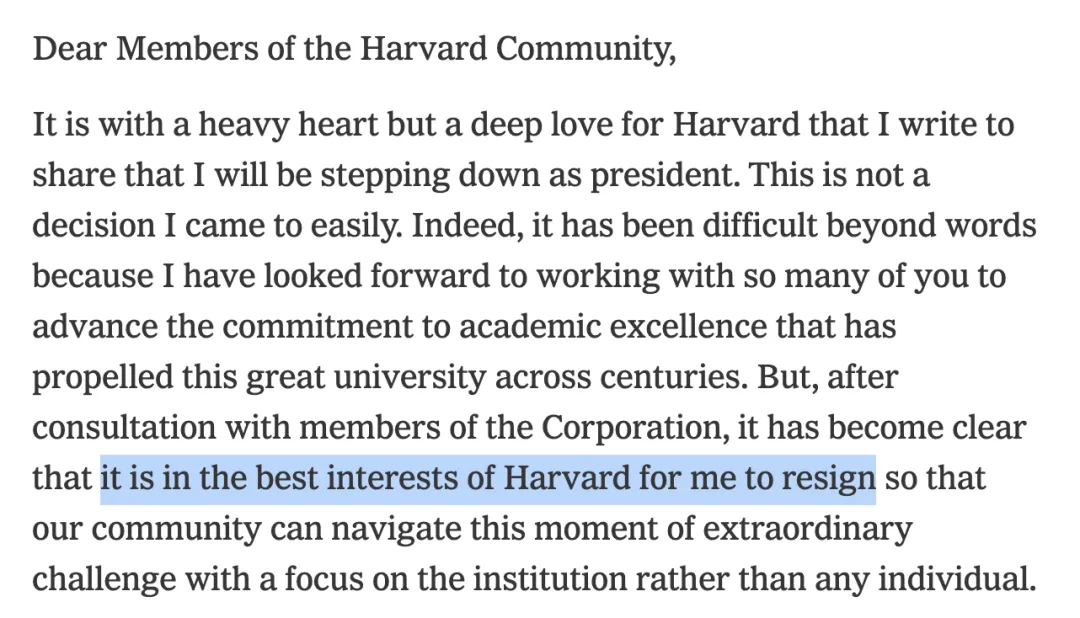
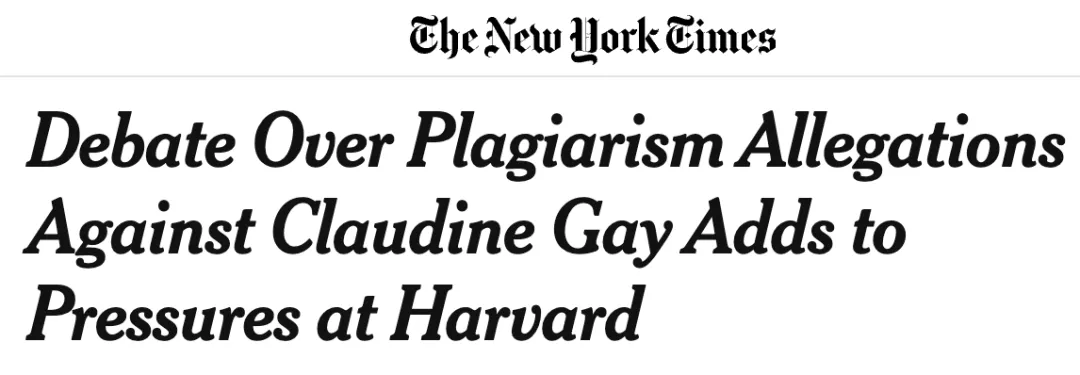
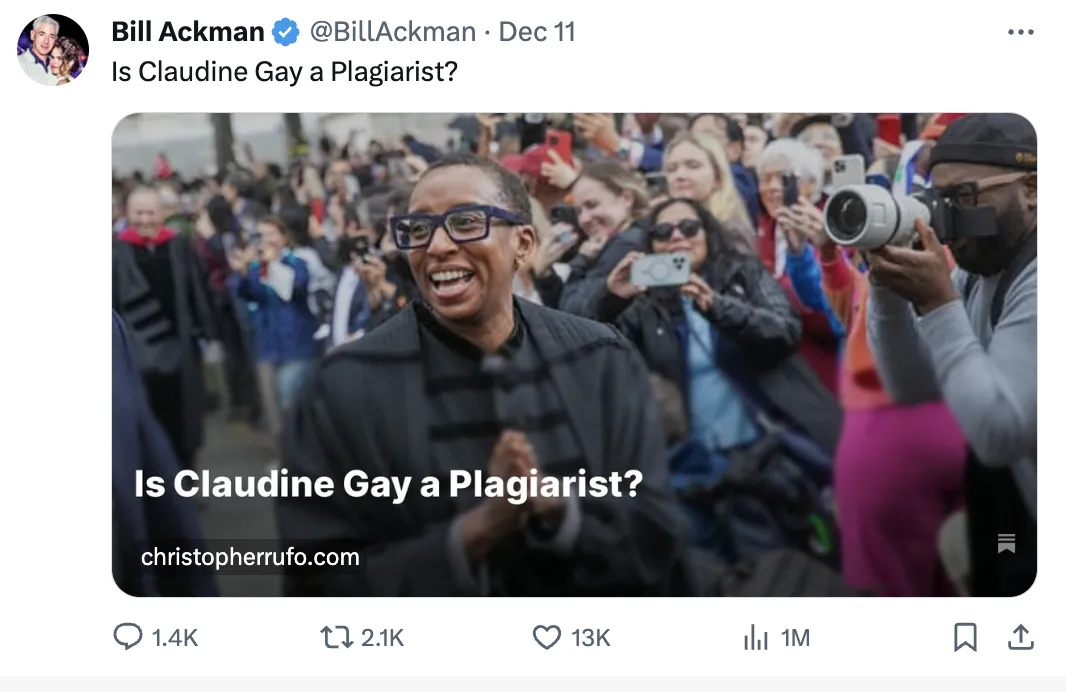
Since taking office last July, Gay has been dogged by controversy, particularly the antisemitism uproar and plagiarism scandal.
Gay is not the first Harvard president to resign under pressure. In 2006, former US Treasury Secretary Larry Summers was also forced to step down as Harvard president. He said, "Gay's move is for the greater good."

Civil rights leader Al Sharpton expressed deep disappointment over Gay's departure in an interview with CNN: "The retaliatory attacks on Gay by people like Jewish billionaire Bill Ackman have dimmed the spotlight on African American women breaking the glass ceiling."

Now 53, Gay is Harvard's first Black president and second female president. Born to Haitian immigrants, she holds a bachelor's degree in economics from Stanford and a PhD from Harvard.
Three weeks after the plagiarism scandal broke, Gay decided to resign as Harvard president and will only continue as a faculty member.
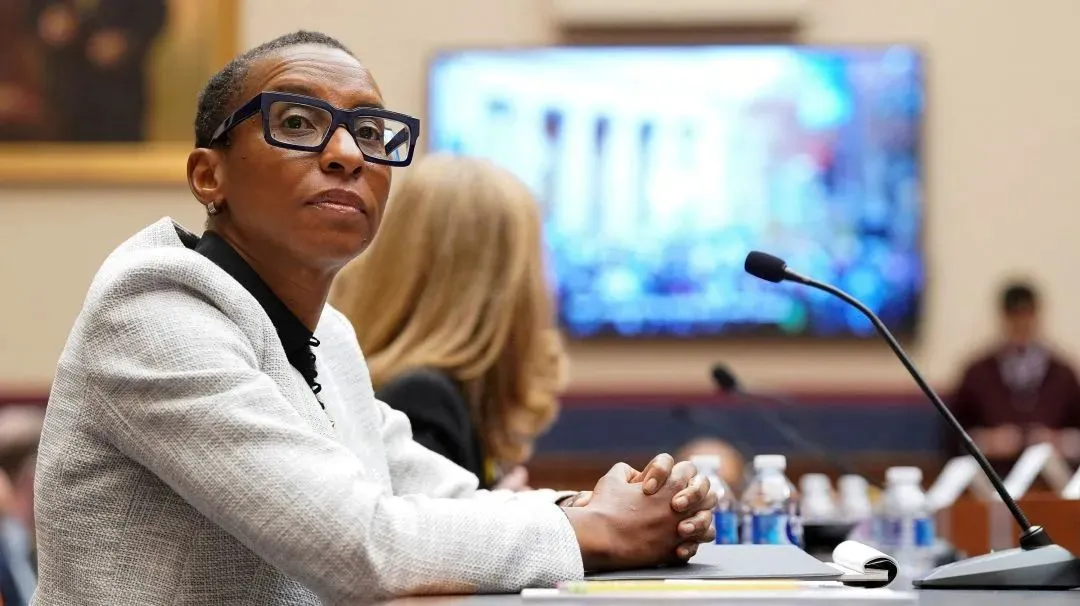
President's Resignation, Right-Wing Celebration
Gay's resignation is a cause for celebration among right-wing factions.
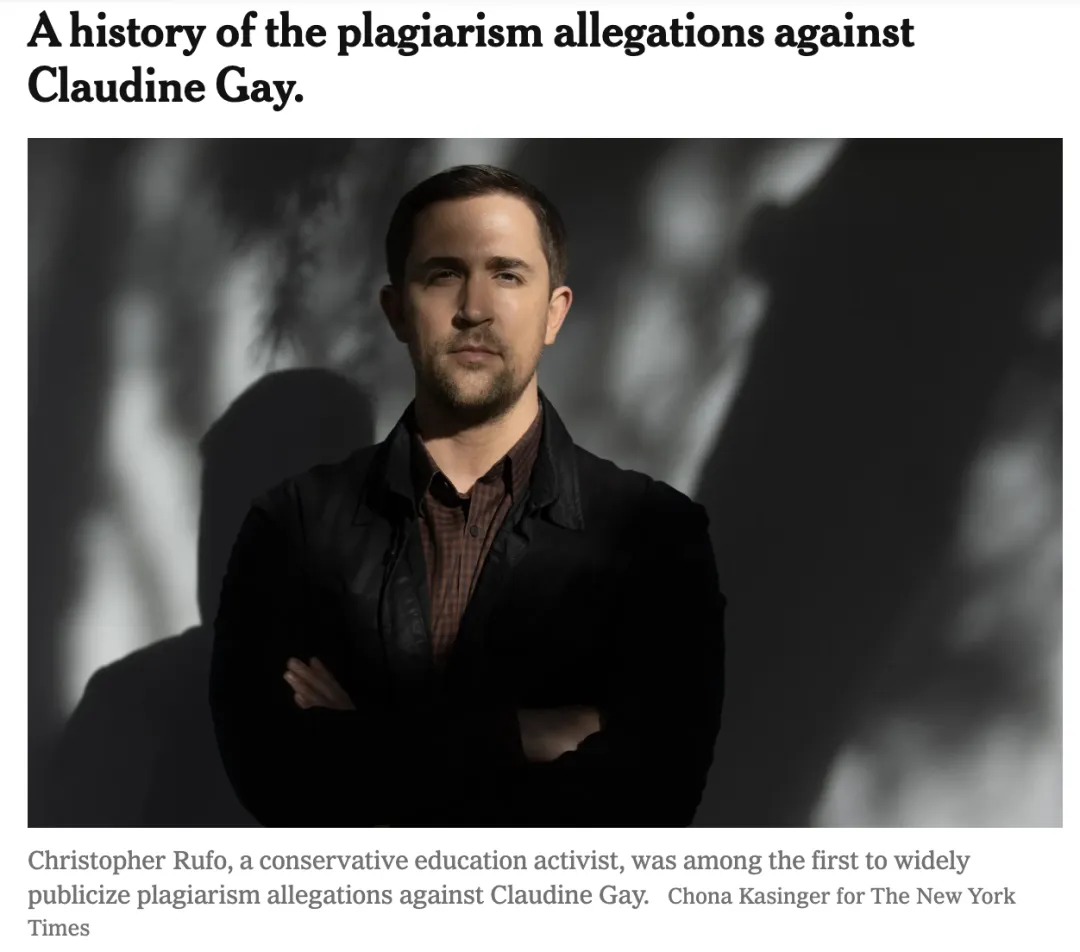
Conservative influencer Christopher Rufo, a key figure in the plagiarism accusations against Gay, said that Harvard's president stepping down proves his success in exposing corruption, shifting public opinion, and driving change.
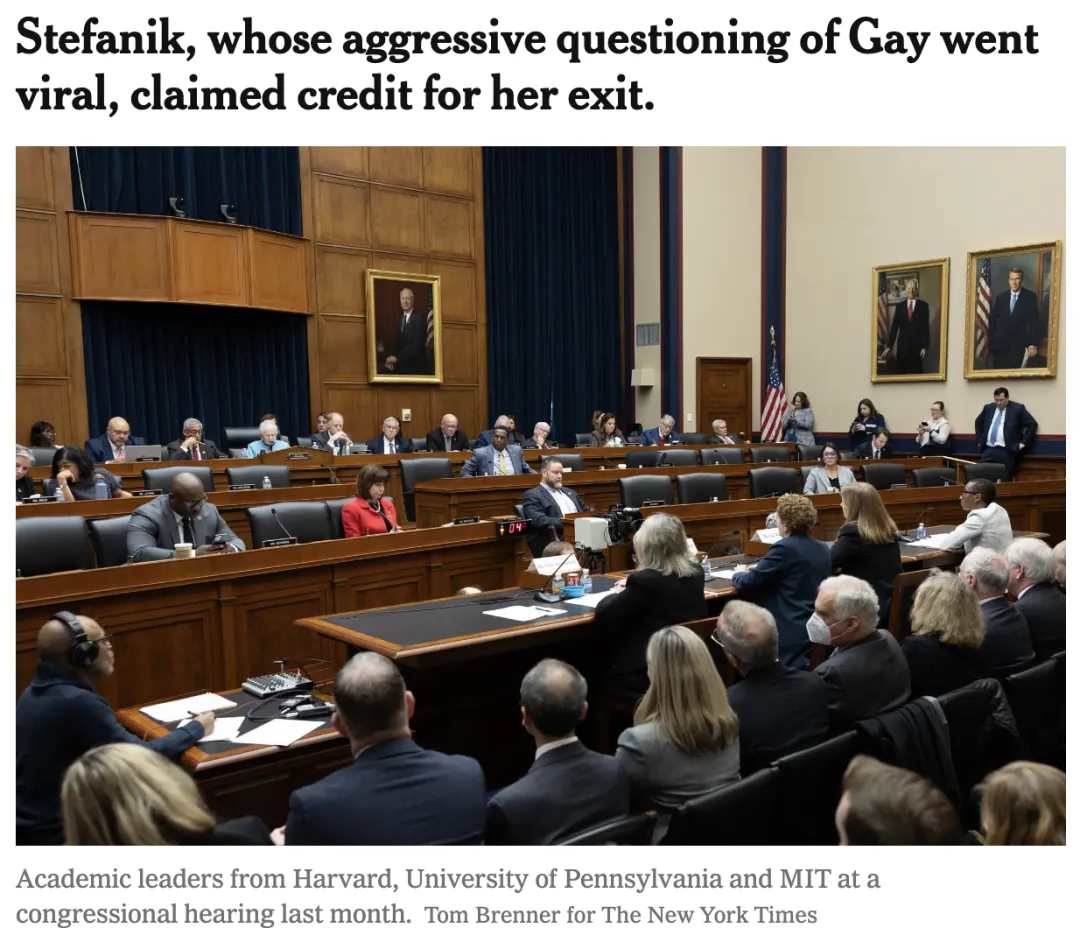
Democratic congresswoman Elise Stefanik also rose to fame overnight—after all, one hearing "took down two university presidents."
One Democratic lawmaker even declared: Gay's resignation is just the beginning, there will be a thorough investigation into antisemitism on Harvard's campus.
Supporters of Gay argue that her resignation is Harvard's capitulation to external pressure. This storm stirred up by right-wing media has made plagiarism allegations merely a tool of partisan strife. This will suppress free speech in higher education and further squeeze the space for pro-Palestinian voices.
Since the war between Israel and Hamas erupted, the flames have also swept across campuses. Jewish students feel the university has been weak in responding to antisemitism, ignoring their fears and safety concerns.
A Harvard sophomore welcomed President Gay's resignation: "This is a good start for Harvard. We look forward to the next president restoring the school's image and combating campus hate."
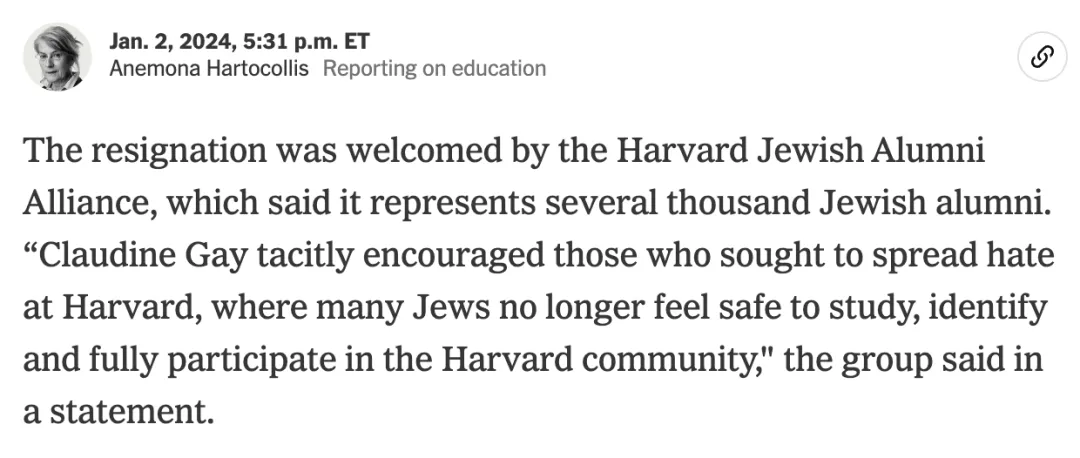
The university announced that Harvard's provost, economist Alan M. Garber, will serve as interim president.

A Hearing, a Trap
Early last month, the presidents of Harvard, MIT, and the University of Pennsylvania, who attended the US congressional hearing on antisemitism, were blasted by public opinion for their ambiguous political stances and controversial remarks.
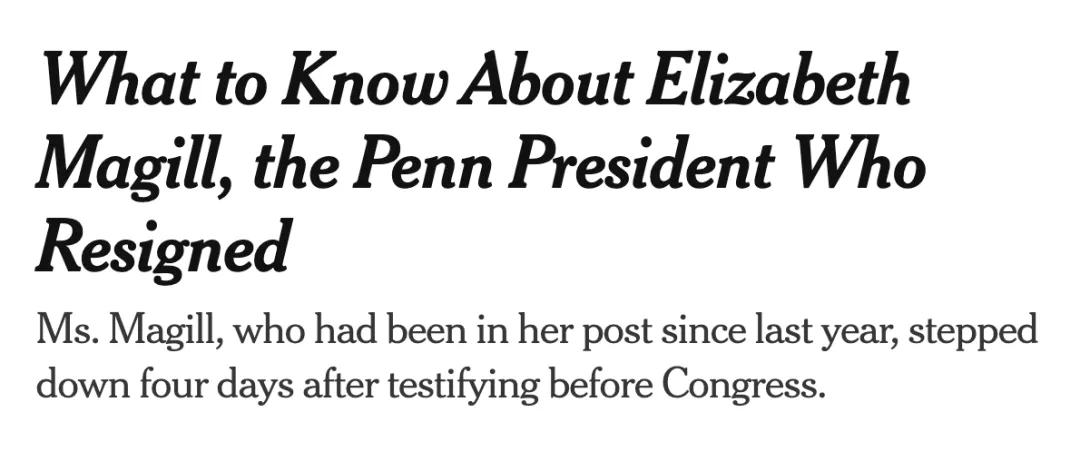
Over 70 members of Congress called for the three presidents to step down. Subsequently, UPenn President Elizabeth Magill was the first to announce her resignation.
Harvard's president, meanwhile, was exposed by a prominent influencer for multiple cases of plagiarism, adding to Gay's already controversy-plagued tenure.
Gay tried to strike a balance in today's political climate, but amidst the Israel-Palestine situation, donors demand clear positions.
As is known, the president of a US private university is not only an academic and educational leader but also the school's chief fundraiser. After Gay became embroiled in antisemitism disputes, Harvard lost several major donors.

With an endowment of $50 billion, Harvard is as wealthy as a nation. But wielding wealth is a double-edged sword, and it inevitably means there is little true freedom of speech; in a sense, the major donors' stances become one's own stances.

Especially for Ivy League schools heavily reliant on alumni and wealthy donors, stabilizing these big donors is an issue the president, as the school's spokesperson, cannot ignore.
Unlike previous public support, Harvard students and faculty now avoid discussing the president's resignation. One staff member joked that he "can't comment on this because I don't have tenure yet."
Rabbi Hirschy Zarchi, director of Harvard Chabad, unequivocally condemned antisemitism on campus, believing that the lack of clear leadership statements allowed antisemitic sentiment to spread. He "hopes Gay's resignation will serve as a wake-up call for other university leaders."

Of the three presidents who attended the antisemitism hearing, two have stepped down within a month—who says this isn't meant to serve as a warning to others?
Choosing between clear political alignment and upholding free speech is a dilemma that even top US universities cannot escape.
Wisconsin President Fired for Making Porn
Of course, freedom of speech cannot be abused. The recent departure of another president is rather unsavory.
Late last month, University of Wisconsin President Joe Gow was fired for uploading pornographic videos with his wife.

We've seen people have side hustles, but taking it to Pornhub is a bit outrageous.
It is reported that the president posted multiple explicit videos of himself and his wife, and has been removed by the university's board of regents.
The university strongly condemned this behavior. In a statement, the school said Gow's actions had severely damaged its reputation and were even "disgusting."
Gow has tenure at the University of Wisconsin system. He was one of the longest-serving chancellors at UW-La Crosse, holding the position for 16 years.
He had planned to retire gracefully and transition to a teaching position in communications at the university, but suddenly he was fired, much to his chagrin.
Gow and his wife appeared on a show called "Sexy Healthy Cooking," interviewing adult film stars, cooking vegan meals together, and engaging in sexual acts.

Gow insists this was just a side gig, that the university had no right to "spy" on him, and that his firing violates his free speech.
He argues that the videos could only be viewed on adult websites, never mentioned the university or his role there, and the filming was not for profit but a personal hobby.
However, freedom of speech must be considered in context. A university president routinely making programs with porn stars, appearing in videos and uploading them to Pornhub—that freedom might be going too far.
Board of Regents President Rothman said that freedom of speech is not a license to do whatever one wants, and university leaders must exercise restraint.
University Presidents Step Down in Succession
In recent years, scandals have frequently rocked prestigious US universities, and even Ivy League schools are not immune to major upheavals.
Whether it's academic fraud, personal misconduct, or political factors, they all severely damage a university's reputation.
Stanford University
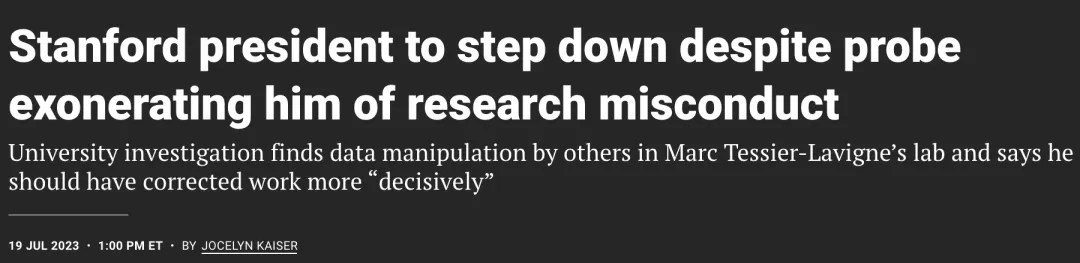
Stanford President Marc Tessier-Lavigne resigned last year over faked research papers.
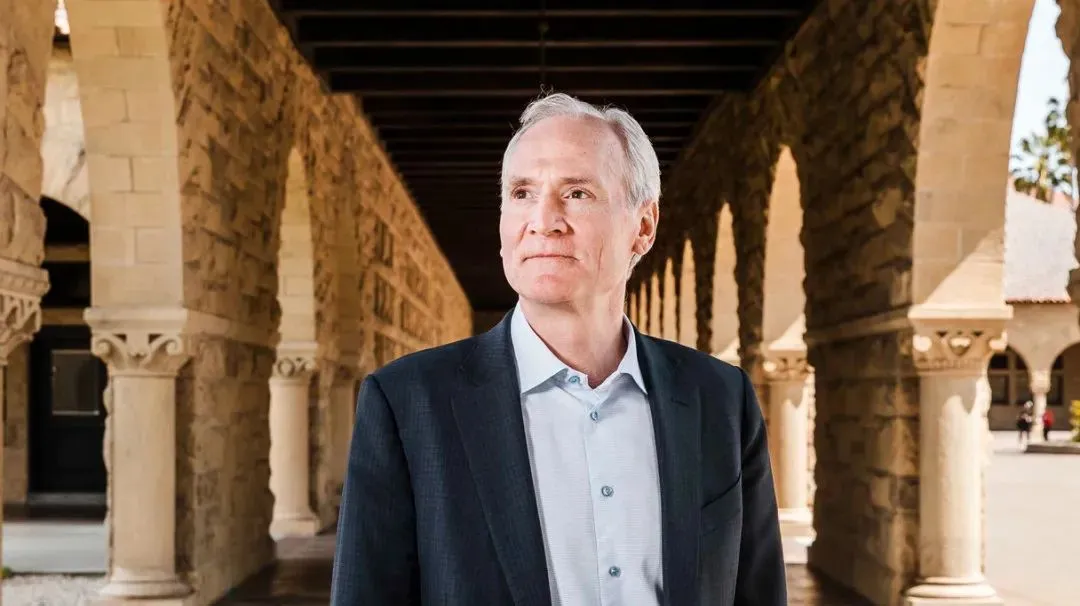
It was initially exposed by renowned "academic fraud buster" Elisabeth Bik that many of Lavigne's papers published in Science, Nature, and EMBO Journal contained fabricated data, with numerous signs of Photoshop manipulation in the figures.
Stanford's board of trustees began investigating in 2022, and last July announced the results: in several papers co-authored by Lavigne, "others manipulated the research data."
Although there was no evidence that Lavigne directly participated in the fraud, he still chose to resign.