They say studying abroad is the best way to cross social classes.
Yin Shihang, who dropped out of middle school and went from being a vulgar influencer banned for 630 years to a study blogger in the UK…
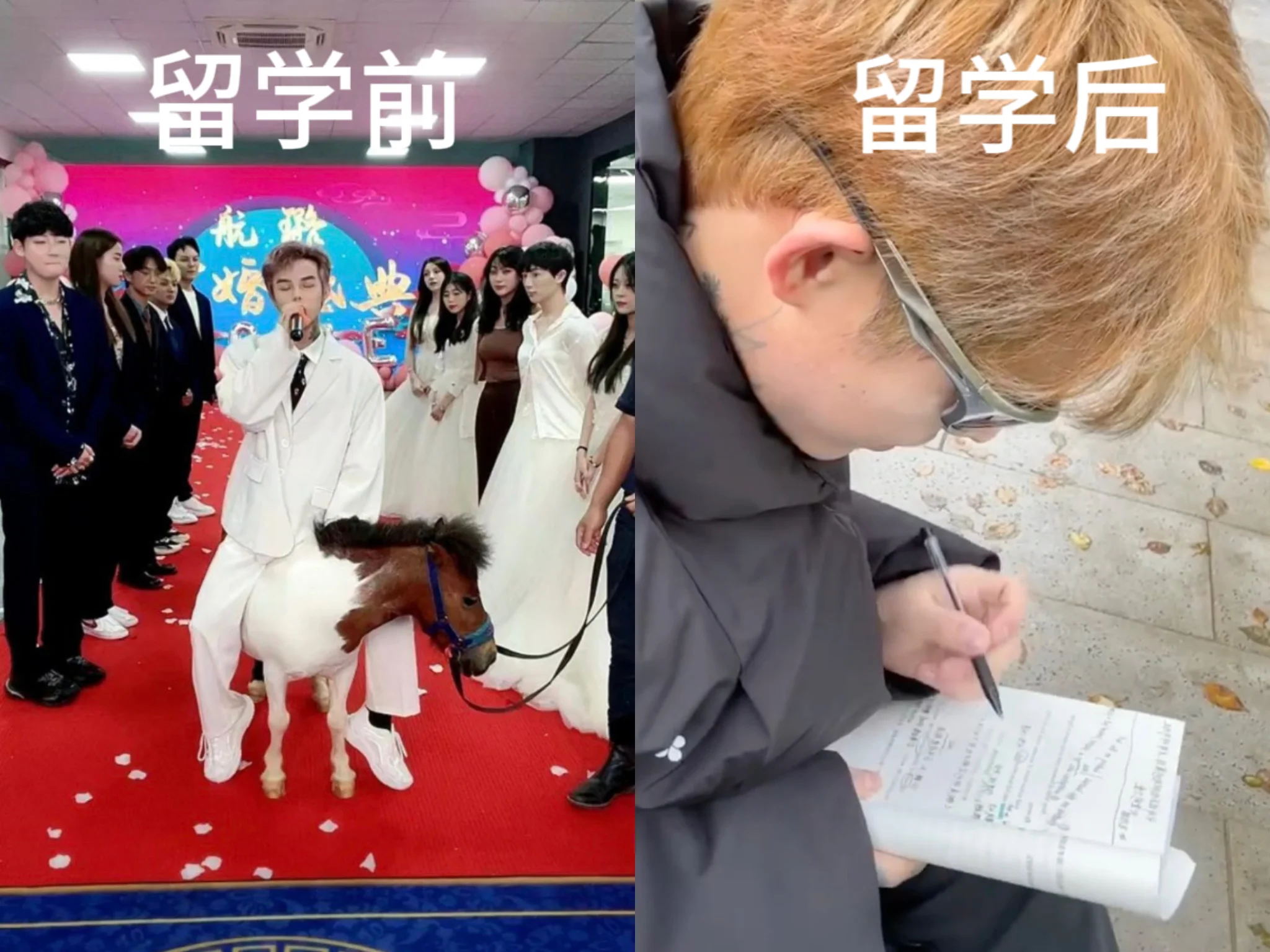
Many others also ride the study-abroad wave to gain traffic on Xiaohongshu (RED), either as management trainees at LV experiencing Challenge Day, or partying non-stop after studying overseas.
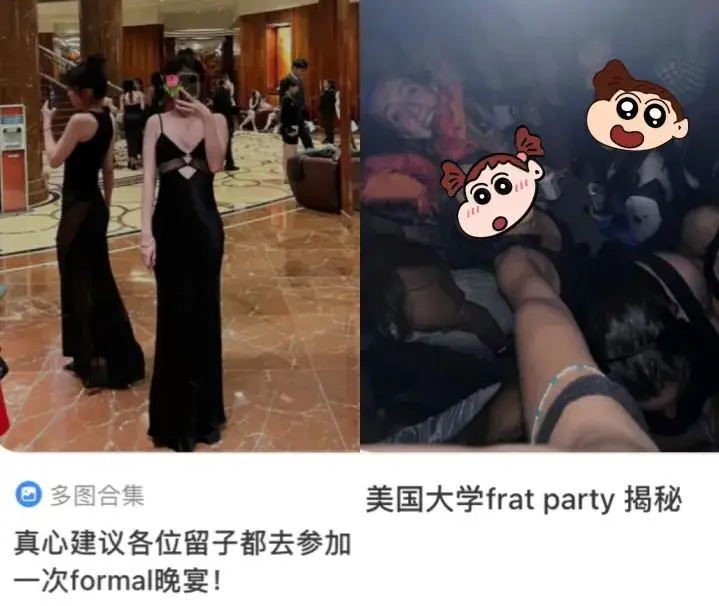
The internet is flooded with similar life paths, as if studying abroad is the best way to achieve a life leap, changing one's predetermined fate and reaching the peak of life.
But in the real world, crossing classes isn't always an upward move…
Some people live out a real-life version of "My Fair Princess" — a lost princess wandering the streets begging; some turn into a master chef, unlocking over 10,000 ways to cook noodles;
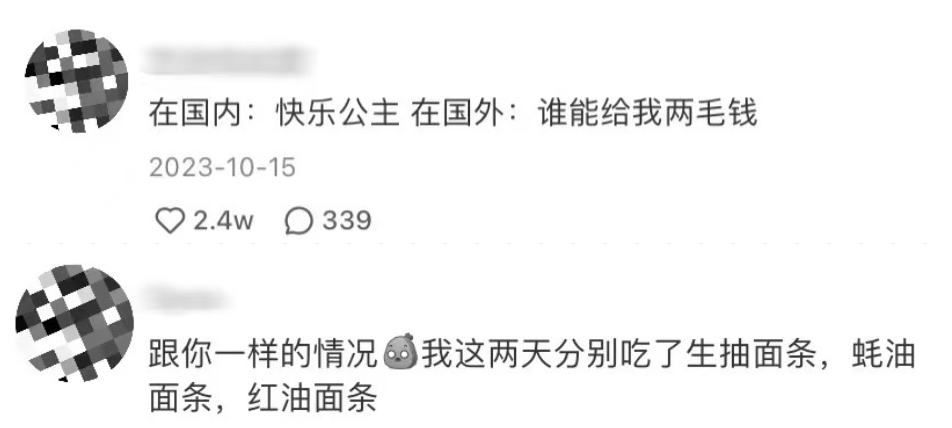
Some successfully join the Beggars' Sect; some become "Popeye";
.png)
Some start "experiencing life"; some discover their talent for repairs...
.png)
Yes, studying abroad really does cross classes — just in the reverse direction.

For international students, life overseas is not only inconvenient but also full of career challenges. The real stories of studying abroad don’t have so many flashy chapters.
This is one reason why many graduates choose to return home.
Moreover, the fierce battle for top talent in major first-tier cities not only encourages international students to settle down but also offers a series of benefits and policies for housing, jobs, car purchases, etc. More and more international students are returning to develop their careers and start businesses.
So, just how "sweet" is the status of an international student?
.png)
Household Registration in First-tier Cities
International students who have studied abroad for ≥365 days (based on passport entry/exit records) can apply for preferential household registration as long as they meet the requirements of the corresponding city. However, specific policies vary by city.
Beijing

Beijing has always been a popular city for returning students to settle. The 2024 latest policy is largely the same as last year's.
The only difference is that Beijing has reinstated the duration requirement that was removed last year, requiring at least one year of study abroad and that the application be submitted within two years of returning to China after graduation.
So comparatively, the threshold for settling in Beijing this year has been slightly raised.
Beijing Household Registration Policy
1. Have obtained a master's (or higher) degree abroad; or had a domestic doctoral degree before going abroad and conducted postdoctoral or visiting research abroad;
2. Studied abroad for more than one year;
3. Submit application materials through a Beijing employer within two years of returning to China after completing studies;
4. Age 45 or below;
5. Have terminated the employment relationship with the previous domestic work unit before going abroad;
6. Have established a formal employment relationship with a Beijing-based unit and paid Beijing social insurance as required;
7. The personal information of the international student must be consistent with that during the study period;
8. Those who studied in Hong Kong, China or Macau, China shall be handled under the conditions for international students.
Shanghai

Recently, Shanghai's Human Resources and Social Security Bureau has updated the list of top 100 global universities in the incentive conditions for the settlement system!
Following last year's tangible improvement in processing efficiency — all applications can now be completed on the Shanghai "Government Online-Offline Platform" — an additional 15 universities have been added on top of the 2023 list.
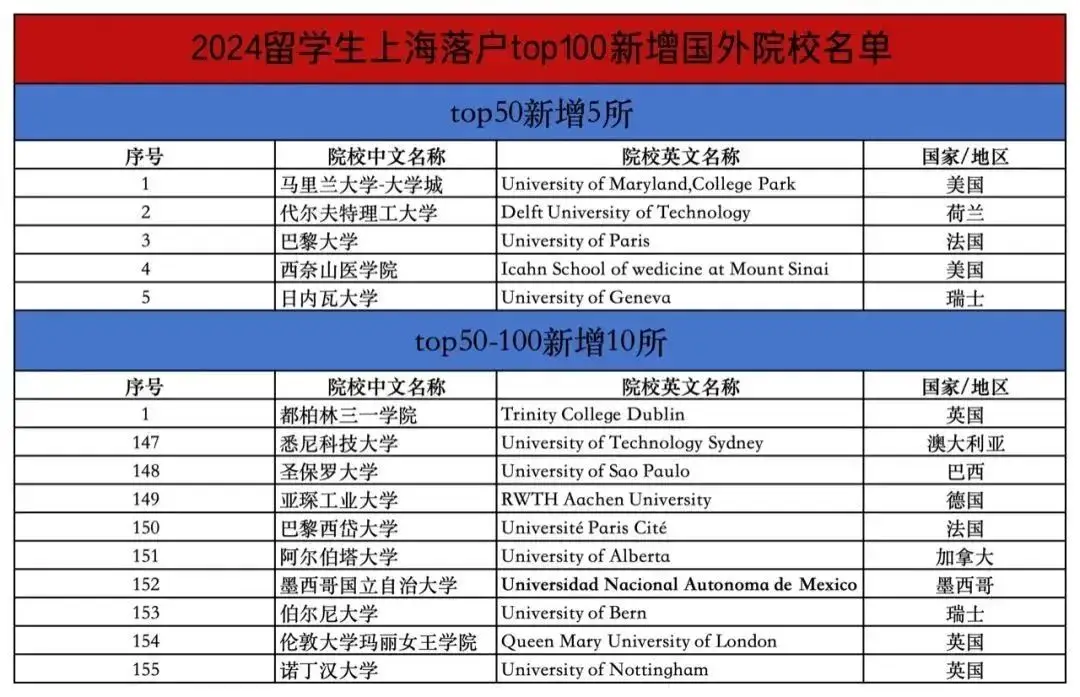
However, the specific settlement policy in Shanghai is closely tied to the ranking of the graduate's institution. The difficulty of settlement varies according to the ranking.
For instance, international students graduating from overseas institutions ranked in the top 50 of QS, if they work in Shanghai within two years of returning, can directly settle in Shanghai without any requirements on social insurance or accumulation period, as long as they start working in Shanghai within two years of entry.
For graduates from institutions ranked after QS top 50, different social insurance accumulation periods and requirements apply. The overall settlement requirements are as follows:
Shanghai Household Registration Policy
1. Doctoral degree from an overseas university, with cumulative overseas study period not less than 1 year; for graduates of Sino-foreign cooperative education, joint training, etc., cumulative overseas study period not less than half a year. Among them, PhD graduates from overseas high-level institutions (top 500 universities) do not need social insurance or individual income tax requirements and can directly apply for Shanghai settlement;
2. Bachelor's degree from a domestic "Double First-Class" university + master's degree from overseas; or bachelor's from a non-"Double First-Class" domestic university + master's from an overseas high-level university; or overseas bachelor's + overseas master's;
3. Bachelor's degree from an overseas high-level university;
4. Domestic master's degree or above + further study or visiting scholar at an overseas university or research institution for 1 year;
5. International students who have paid social insurance and individual income tax for 1 year at 1.5 times the salary can apply for settlement.
Guangzhou

Unlike Shanghai, Guangzhou has eliminated the social insurance duration limit in 2024, meaning that as long as international students find a job in Guangzhou and start paying social insurance, they can settle.
Guangzhou Household Registration Policy
1. International students with a bachelor's degree from an overseas institution, aged 40 or below;
2. International students with a master's degree or equivalent overseas master's qualification, aged 45 or below;
3. International students with a doctoral degree or equivalent overseas doctoral qualification, aged 50 or below;
4. International students with a master's degree or above from overseas must have a Guangzhou social insurance record at the time of application;
5. International students with an overseas bachelor's degree, within the job-seeking period (undergraduate job-seeking period starts from the graduation date on the diploma for 2 years), must have a Guangzhou social insurance record when applying; outside the job-seeking period, must have 6 consecutive months of Guangzhou social insurance record:
6. Supplementary payment cases will not be considered as continuous social insurance payments.
Shenzhen
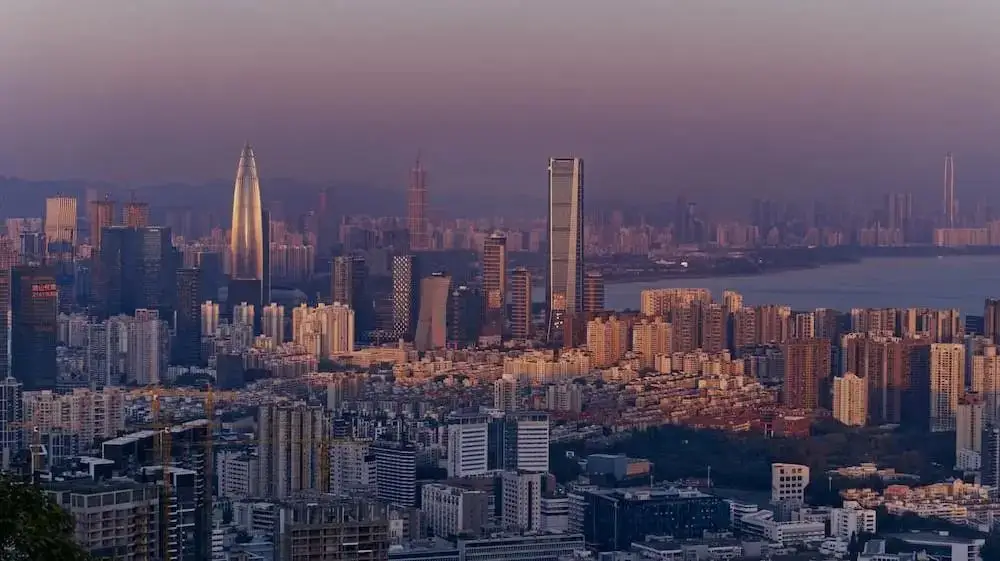
Shenzhen's settlement policy remains unchanged from previous years. It is worth noting that Shenzhen has also improved processing efficiency, and settlement can be successfully completed within 7 days.
Shenzhen Household Registration Policy
1. International students who have studied abroad and obtained a bachelor's degree or higher, or visiting scholars and postdoctoral fellows who have worked or studied in overseas higher education or research institutions for more than one year and achieved certain results;
2. Aged 45 or below; obtained the Shenzhen "Qualification Certificate for Overseas Returnees" with no accompanying family members to relocate;
3. Pass the system credit check. No participation in organizations or activities prohibited by the state, and no criminal record.
Tax-free Car Purchase
For students accustomed to driving their own cars abroad, the tax-free car purchase is a benefit that returning students must take advantage of!
International students who return to settle and work within two years of graduation qualify for a tax-free car purchase, which means exemption from customs duties on imported parts and components, and exemption from about 10% of the vehicle purchase tax, generally subsidizing RMB 30,000-130,000 per person.
.png)
Requirements for Applying for a Tax-free Car Purchase for International Students:
1. For the purpose of study or further training, enrolled in regular universities/colleges or research institutions overseas, including Hong Kong, Macau and Taiwan, to pursue degrees, further studies, or conduct scientific research and academic exchange for more than one academic year;
2. Actually spent 270 days or more abroad during the study period, and returned to China within two years of completing studies or further training;
3. First entry after graduation or further training does not exceed one year.
According to the tax-free car models published by "China Automotive Industry Corporation" (Zhongqi Zong), the current models supporting the international student tax-free car policy include FAW-Volkswagen Audi, BMW Brilliance, Beijing Benz, FAW-Volkswagen, FAW Toyota, Dongfeng Infiniti, and more than 20 other brands, offering a very wide range of choices.
.png)
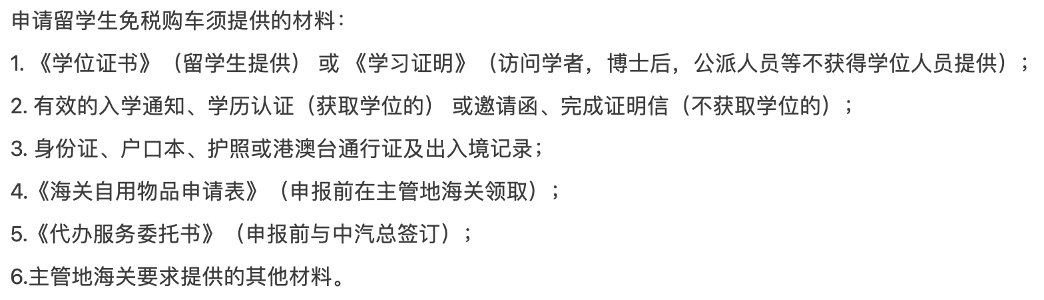
When returning students apply to the filing customs office to purchase a tax-free domestically made car, they should submit the application through the China International Trade "Single Window" or the "Internet + Customs" platform to the competent customs office, and submit electronic data along with the following documents and certificates:
Entrepreneurship Subsidies
To encourage returning students to start businesses, local governments have introduced corresponding subsidy policies.
Beijing
1. International students coming to Beijing to start businesses or work are not restricted by their pre-departure household registration location, and can stay long-term or work short-term freely. For those who start businesses in Zhongguancun Science Park and meet the park's development needs, they can apply for a "Work Residence Permit" or permanent household registration according to Beijing regulations, without being subject to quota restrictions. Additionally, international students enjoy Beijing citizen treatment in terms of children's schooling, housing purchases, etc.;
2. The "Beijing Overseas Talents Entrepreneurship Award" and "Returned Overseas Talents Entrepreneurship Special Fund" have been established to reward international students who have made outstanding contributions to the capital's economic development;
3. International students coming to Beijing to start enterprises can register directly with their passport, and the registered capital can be implemented according to the minimum standards stipulated by national laws and regulations. For those approved by the Beijing Overseas Talents Center, the government provides RMB 100,000 as enterprise start-up fees.
Shanghai
1. "One-stop, streamlined" service for international students to establish enterprises;
2. Implementation of the "Shanghai Residence Permit" B-type system to promote flexible mobility of overseas talents;
3. Launching the "Shanghai Pujiang Talent Program for Returning Students Management Measures" to fund recently returned overseas students and teams working or starting businesses in Shanghai, with potential government grants of RMB 500,000.
Guangzhou
1. International students who come to Guangzhou for development and have settled can receive a one-time settling-in allowance; their children's kindergarten and school placements are uniformly arranged by the education department, with no temporary schooling fees;
2. International students' projects reported to the Science and Technology Commission can receive a one-time start-up fund subsidy of RMB 100,000;
3. Issue "Green Booklet" providing one-stop services for household registration, enterprise establishment, etc.
Shenzhen
1. Returned enterprises stationed in the Shenzhen Overseas Student Entrepreneurship Park can receive a one-time start-up expense subsidy of RMB 50,000-150,000;
2. Returned enterprises in the park engaged in scientific research and development, once recognized as high-tech projects, can receive a one-time scientific research start-up fund of RMB 100,000-150,000.
Academic Research Benefits
For those who study abroad and obtain a PhD, they can be given priority for university teaching positions upon return. There will also be some support for academic research work (varies by institution). Publishing more papers during the PhD period leads to more support upon return.
For specialized research talents, the state will also provide research start-up funds and various other subsidies, such as housing subsidies, and arrangements will be made for the families of returnees.

In addition, some professional certificates are also eligible for national subsidies, such as common financial certificates like FRM and CFA. Especially for international students holding a CFA certificate, they can apply for over RMB 1,000 in benefits at the entry level!
Housing and Living
Some cities have implemented a series of housing and living subsidy policies to attract returnee talent for employment. Moreover, most of these policies provide direct cash payments! The payments are processed quickly, making them very friendly for fresh graduates.

Beijing
Can apply to rent short-term transitional housing at preferential rates; or the employer can provide housing through contractual arrangements.
Shanghai
In districts such as Hongkou, Baoshan, Yangpu, Xuhui, Minhang, Songjiang, and Pudong, rental subsidies of RMB 7,000-30,000 per month can be applied for for 6 months.
Guangzhou
-
Nansha District: Opens talent apartments with rent no higher than 50% of market price;
-
Huangpu District: Undergraduates can apply for a living allowance of RMB 20,000, master's degree holders RMB 30,000, doctoral degree holders RMB 50,000. Outstanding talents and excellent talents can receive an annual allowance of up to RMB 200,000 for three consecutive years, with a maximum monthly housing subsidy of RMB 10,000;
-
Panyu District: Rental subsidy is 50% of rent (capped at RMB 1,500/month) for 24 months;
-
Yuexiu District: Innovation and entrepreneurship leading talents can receive RMB 5,000/month, senior talents in key enterprises RMB 2,500/month; professional top-notch talents and young maker emerging talents RMB 1,500/month.
Shenzhen
The subsidy amounts are RMB 15,000/person for undergraduates, RMB 25,000/person for master's graduates, and RMB 30,000/person for PhDs, paid as a one-time lump sum.
.png)
Besides Beijing, Shanghai, Guangzhou, and Shenzhen, other new first-tier cities are also becoming popular employment choices for returning students.
Students planning to return after graduation can learn about the various welfare policies for international students in their target cities in advance, and combined with their own majors and interests, choose the most suitable city for career development.