
The Master of Science in Business Analytics and Risk Management (MS in Business Analytics and Risk Management) at Johns Hopkins University's Carey Business School is a highly specialized graduate program designed to equip students with advanced skills in data-driven decision-making, risk assessment, and strategic planning. This program integrates multiple disciplines such as business intelligence, statistics, financial engineering, and risk management, enabling students to identify, analyze, and mitigate potential risks in complex and volatile business environments. CheersYou(清柚教育) admissions consultants have compiled relevant information about this program. Students who wish to learn more or have other questions can also scan the QR code below to add a consultant for a one-on-one consultation.
.png?x-oss-process=style/opt-webp)
1. Program Overview
Although JHU's Carey is a newly established school and has not yet entered some mainstream business school ranking systems, JHU's overall ranking and location speak for themselves, and Carey is bound to become a highly valued school. Moreover, in certain ranking systems, it has already made a name for itself. In the authoritative Eduniversal Business School Palm League Rankings, Carey ranks 5th in the U.S. and has been awarded the 4 Palmes of Excellence, praised as "one of the top business schools with significant international influence."

Official Website: https://carey.jhu.edu/programs/master-science-programs/ms-business-analy...
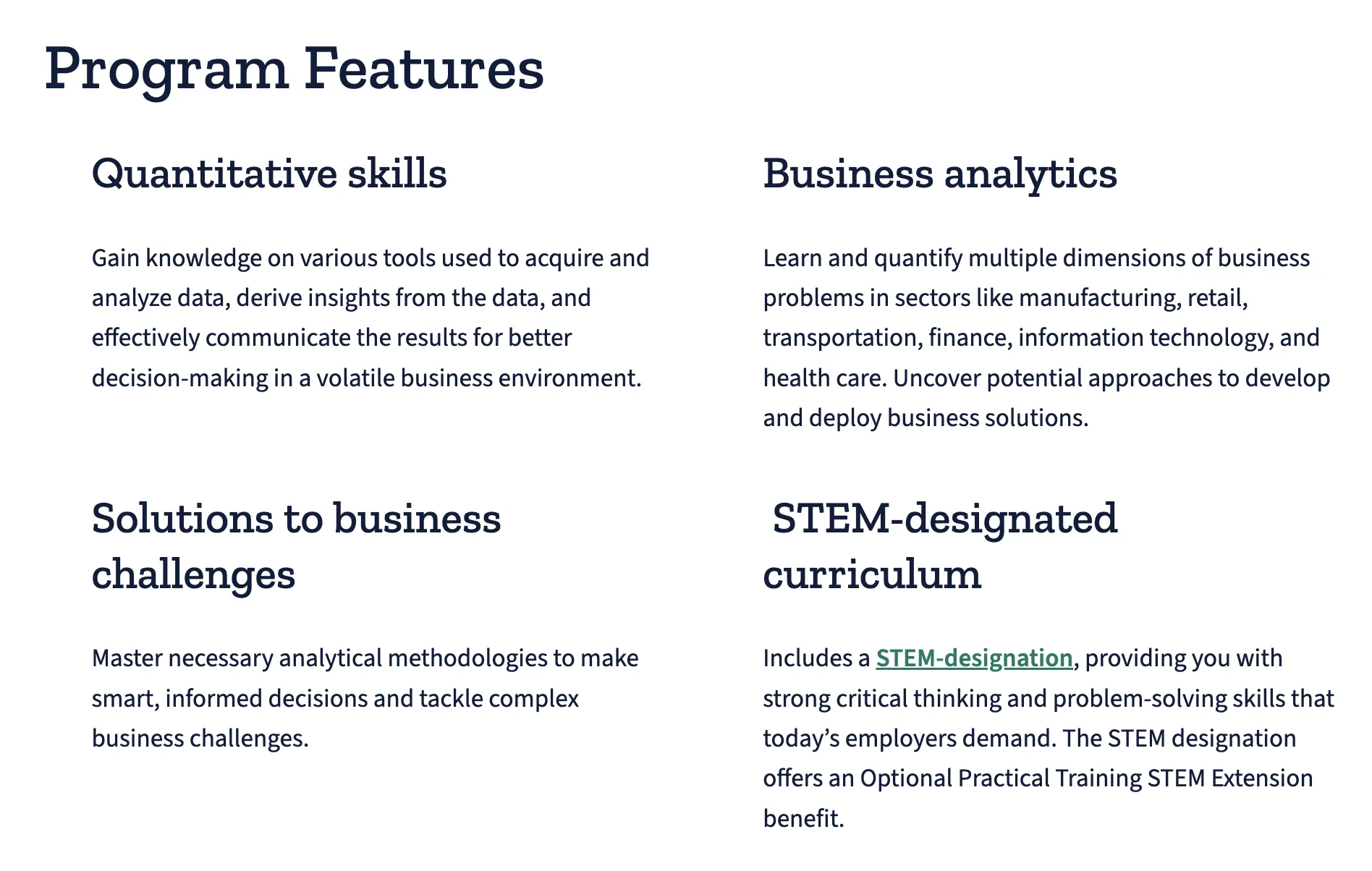
The Master of Science in Business Analytics and Risk Management program is a graduate course that combines business intelligence with risk insight. This program is dedicated to developing students' abilities to conduct efficient data analysis and risk assessment in complex business environments. The curriculum integrates multiple disciplines such as business intelligence, statistical analysis, and financial engineering, enabling students to gain a comprehensive grasp of the data logic and risk control strategies behind business decisions.
2. Curriculum
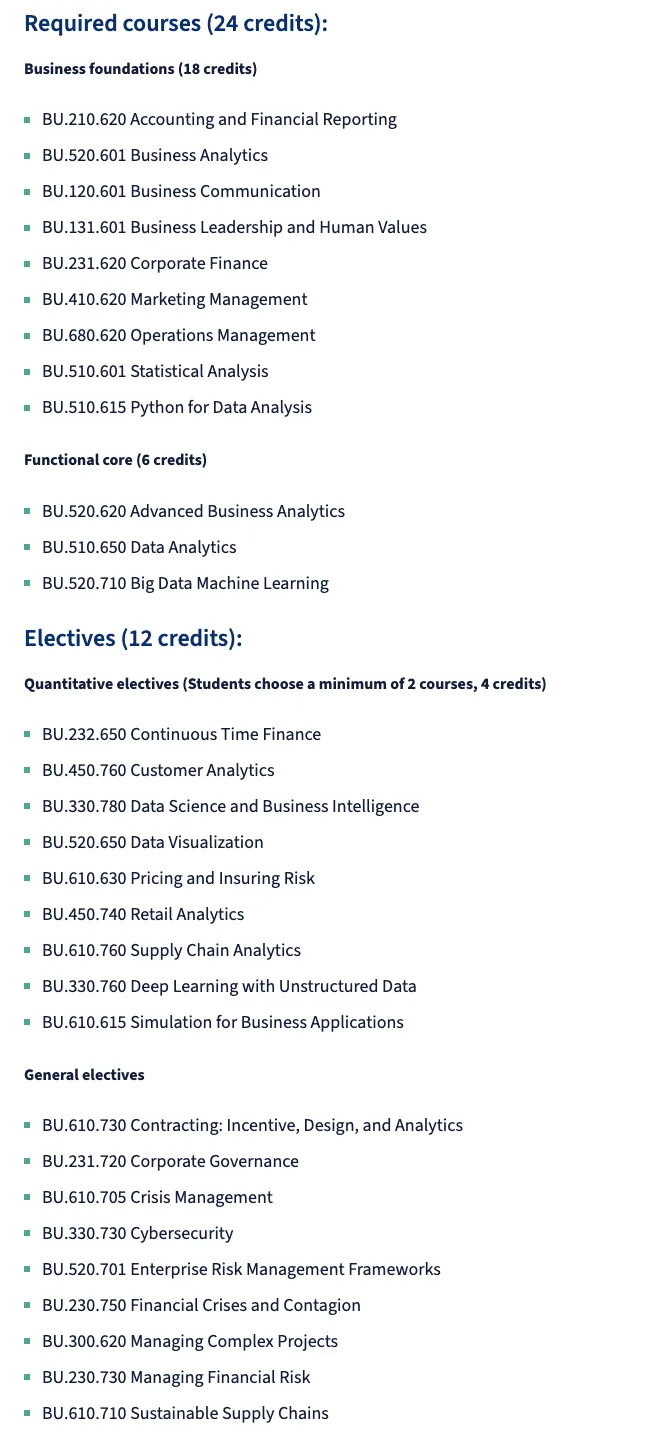
The program offers 24 credits of core courses and 12 credits of electives. Through these courses, students can apply new methods and knowledge related to data analysis to make decisions and then manage risks in practical applications. The curriculum typically includes, but is not limited to, the following areas:
- Business Analytics Fundamentals: Teaches how to use data analysis tools to solve business problems, including data mining, predictive modeling, and visualization techniques.
- Risk Management Theory: Covers risk assessment models, capital management, insurance principles, and market and credit risk management strategies.
- Quantitative Analysis Methods: Emphasizes the application of mathematical and statistical methods in business decision-making, such as probability theory, regression analysis, and time series analysis.
- Practical Case Studies: Through analyzing real-world cases, students learn how theoretical knowledge is applied in actual business settings.
3. Application Requirements
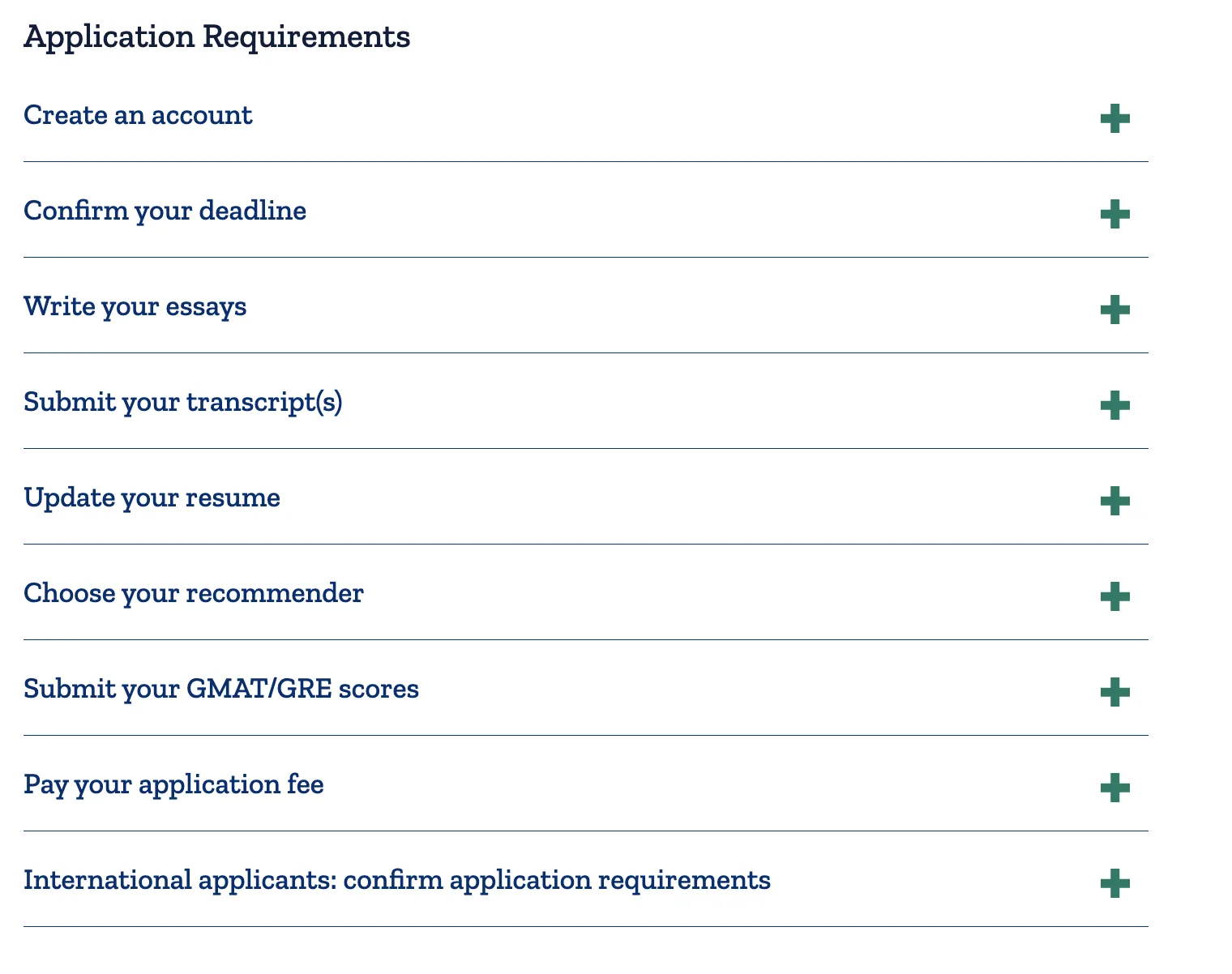
- Academic Background: A bachelor's degree in a related discipline (such as business management, economics, mathematics, or engineering).
- Work Experience: Some programs may require a certain number of years of relevant work experience.
- Standardized Test Scores: GMAT or GRE scores may be required, depending on the program.
- Language Proficiency: Non-native English speakers must provide TOEFL or IELTS scores to demonstrate English proficiency meets program requirements.
- Personal Statement and Letters of Recommendation: To showcase the applicant's academic interests, career goals, and reasons for choosing this program.
4. Career Development and Prospects
Graduates typically work in financial institutions, consulting firms, tech companies, and government agencies, engaging in risk assessment, data analysis, investment strategy formulation, and more. The reputation and network resources of Johns Hopkins University's business school provide students with abundant career development opportunities, making graduates highly competitive in the job market. In addition, with the continuous development of big data and artificial intelligence technologies, demand for graduates of business analytics and risk management programs is expected to keep growing.
In the 24fall application cycle, JHU's BARM program even offered multiple scholarships. You can look at the backgrounds of CheersYou(清柚教育) students admitted to BARM this year for reference.
.png?x-oss-process=style/opt-webp)
.png?x-oss-process=style/opt-webp)
For more questions related to studying abroad and graduate applications, you can also add the contact details of a CheersYou(清柚教育) consultant below to learn more.