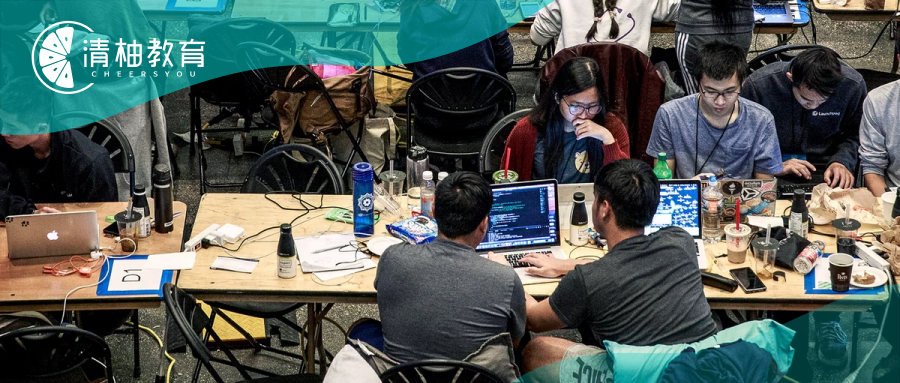
Tech companies continue to lay off employees this year, and even Amazon, Microsoft, and Google have not been spared.
On one hand, tech giants are laying off employees like crazy; on the other, AI is developing at breakneck speed.
Whereas bloggers used to flock to share stories of switching to coding and landing a job in 30 days, now they are all preaching doom and gloom for CS majors.

.png)
Are Universities Training CS Technicians?
A recent article in The Atlantic titled 'The Problem with College Computer Science Programs' sparked heated debate.
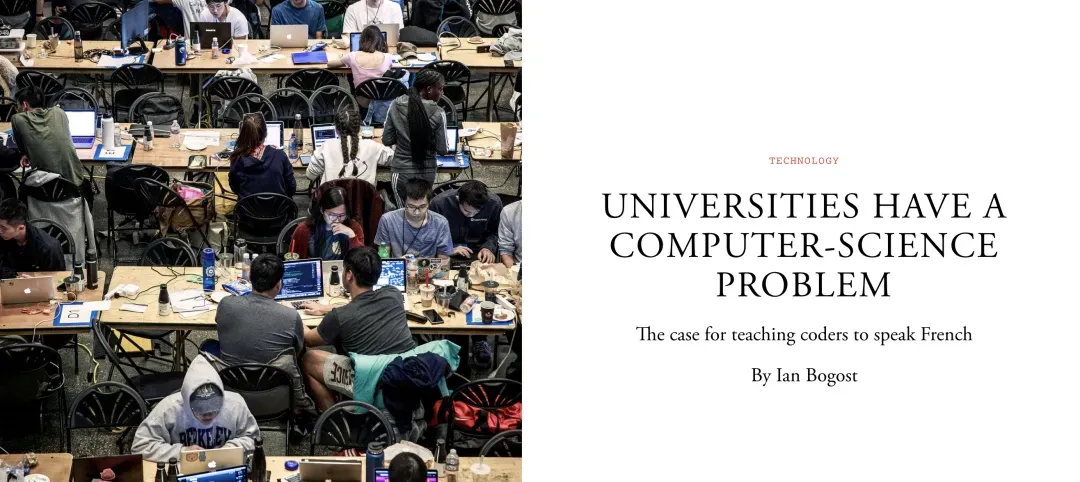
First, the popularity of CS has skyrocketed in recent years. The author, who teaches in the CSEE department at Washington University in St. Louis, has noticed that CS courses are packed every semester, often with students on waitlists.
According to statistics, the number of undergraduate CS majors in North America has tripled over the past decade and is still growing. The high salaries and influence of tech giants are attracting more and more students to choose CS.
Last year, CS graduates accounted for 18% of the total at Stanford, more than double the percentage from ten years ago.
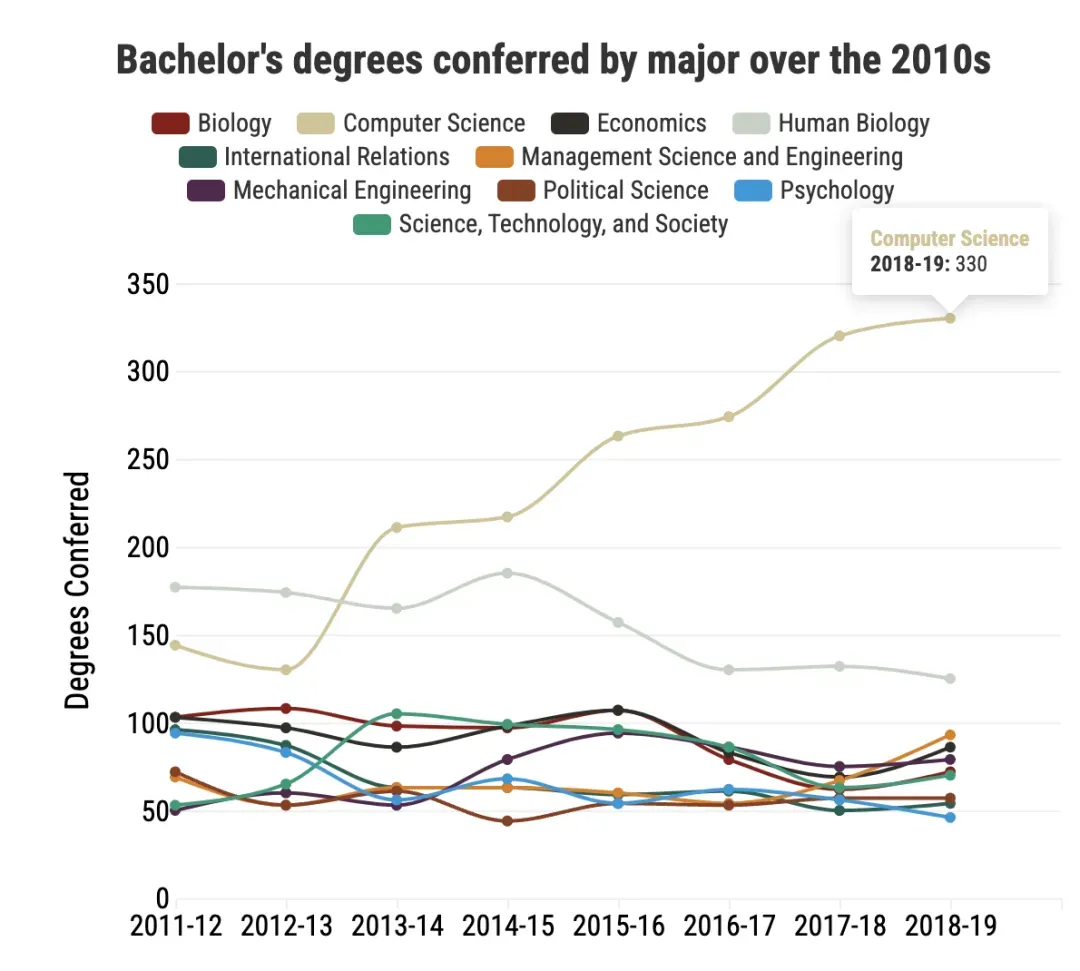
At MIT, the share of CS graduates rose from 23% to 42%.
Tech giants have reaped reputation, wealth, and influence in the internet age, and CS programs have ridden the wave. Enrollment rates, research output, and fundraising capabilities have all seen significant improvements.
Many universities now offer interdisciplinary CS programs, such as MIT's Urban Studies and Planning With Computer Science, or Mathematics With Computer Science. Additionally, students can take CS-related courses in the engineering school.

Many universities have even established dedicated schools of computing. Since 2019, MIT, Cornell, and UC Berkeley have successively opened independent computing colleges.
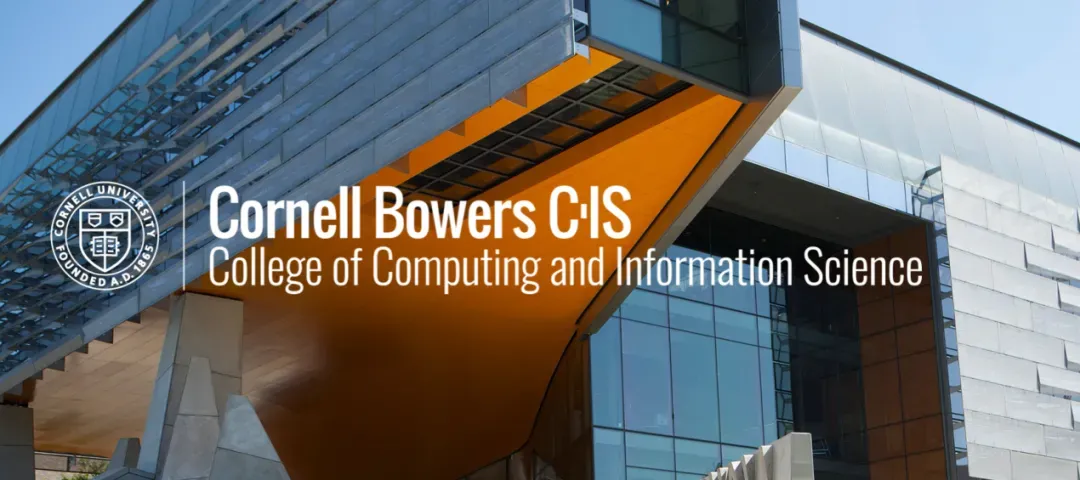
By offering interdisciplinary CS programs and independent computing colleges, elite universities have further elevated the status of computer science, making it gradually as prominent as law and engineering.
But is it really better to separate computer science from traditional colleges?
In the 1990s, when the author was studying, computer science was just emerging. At that time, USC did not have a separate CS major; it was housed under the School of Engineering or the Mathematics Department in the College of Letters, Arts and Sciences.
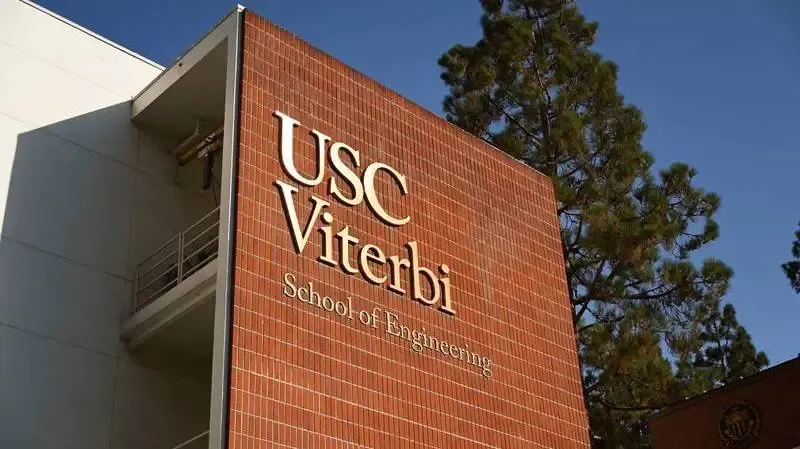
Now, universities have separated CS into its own school, overemphasizing programming skills and focusing on producing high-earning professionals, which is indeed lucrative. But few schools truly make CS an integrated discipline. Lacking integration with arts, politics, sociology, psychology, philosophy, law, and other fields, CS students become too specialized and lack interdisciplinary abilities, ultimately akin to attending a trade school.
The author believes that computer science is a problem-solving tool to advance research in other fields. The future of computing colleges should lie in cross-disciplinary research and practical applications with more subjects.

Many netizens agreed:
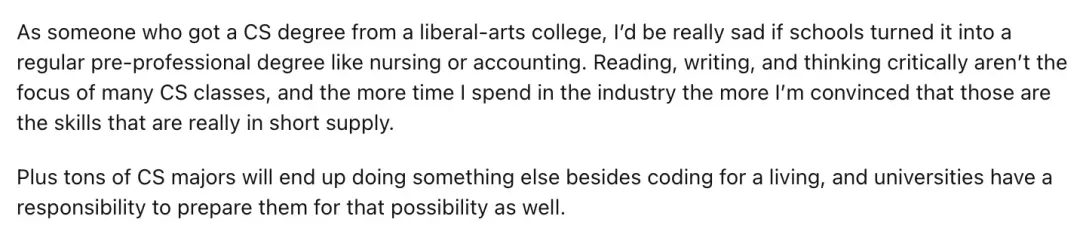
'As a CS graduate from a liberal arts college, I really don't want to see CS become a vocational pre-professional degree like nursing or accounting. In fact, soft skills like reading, writing, and critical thinking are equally important for coders.'
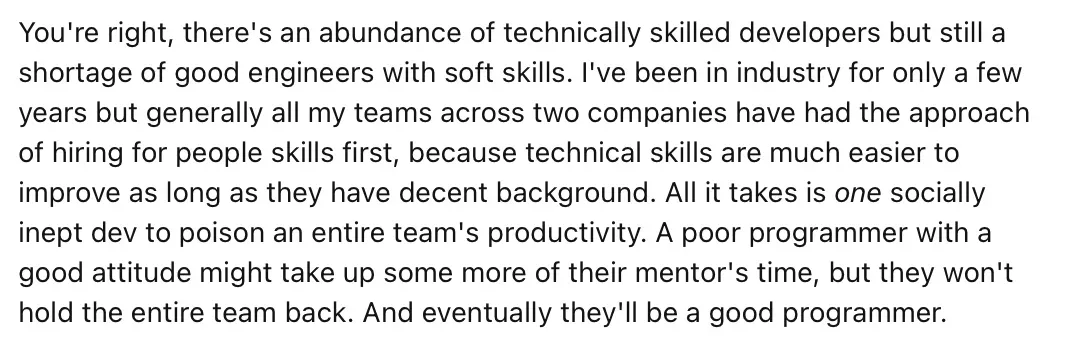
'Yes, there are many coders with strong programming skills, but few with strong soft skills. Professional abilities can be honed and improved on the job, but poor soft skills can sometimes drag down the entire team.'
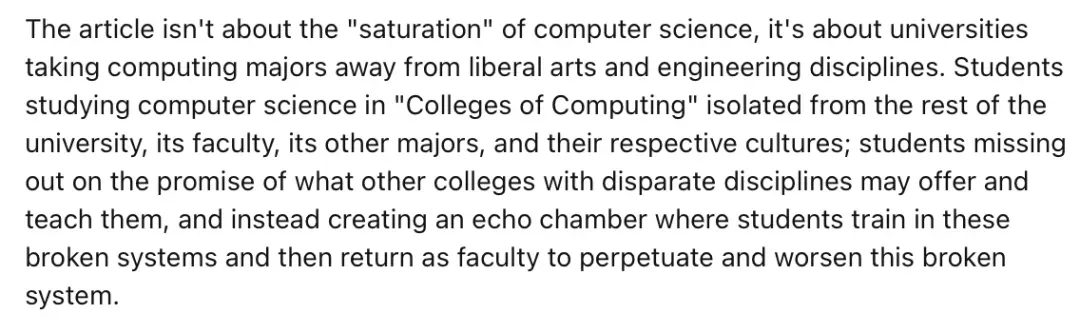
'Very few disciplines exist in isolation. Separating CS from the engineering school is a form of cultural isolation. It's like creating an echo chamber where students are trained in a fragmented knowledge system.'
'Even third-rate universities have CS programs; what's the point of studying CS at a top school?'

However, many netizens disagree:
'Is CS doomed? You just use it without realizing it. The integration of CS with data science, Bluetooth, smartphones, and cloud storage has made our work and lives more convenient. Moreover, CS is driving innovation in healthcare and other fields.'
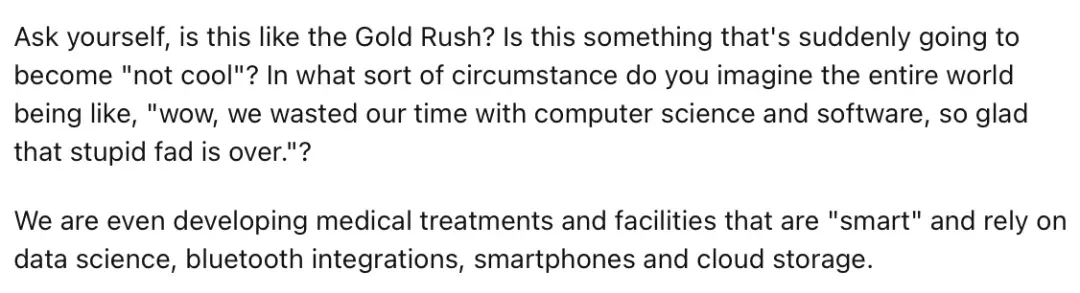
Some netizens think CS is just a scapegoat; ultimately, it's the universities that are unwilling to spend effort cultivating students' soft skills. And given the current job market, isn't the point of going to college to get a better job? It's understandable that young people want to acquire wealth in the most lucrative tech field.

However, the author's concerns are not unfounded. Will the arrival of the AI era turn CS into the next trap major?

CS Major, the Next 'Trap'?
Finding a CS job nowadays is like the Hunger Games.

Landing a job isn't a one-and-done deal either; you could still be laid off through a PIP.

Getting into a big tech company with a high salary was once the ultimate dream of 'small-town swots.' A down payment for a $1 million house could be saved up in just a few years, leaving investment bankers and consultants in the dust.
So in recent years, it has become a trend that everyone wants to switch to coding, even medical students and law JDs are on the path.
The industry is filled with people who don't love it. Schools have become trade schools, and everyone is jumping on the coding bandwagon.
So the surreal reality now is: one moment it's a six-figure salary 'slum,' the next it's a hunger games for job seekers.

The disconnect is not just survivor bias but also the dot-com bubble.
During the pandemic, tech giants expanded wildly, causing hiring inflation; a correction was inevitable.
The advent of AI could also trigger a new wave of unemployment.
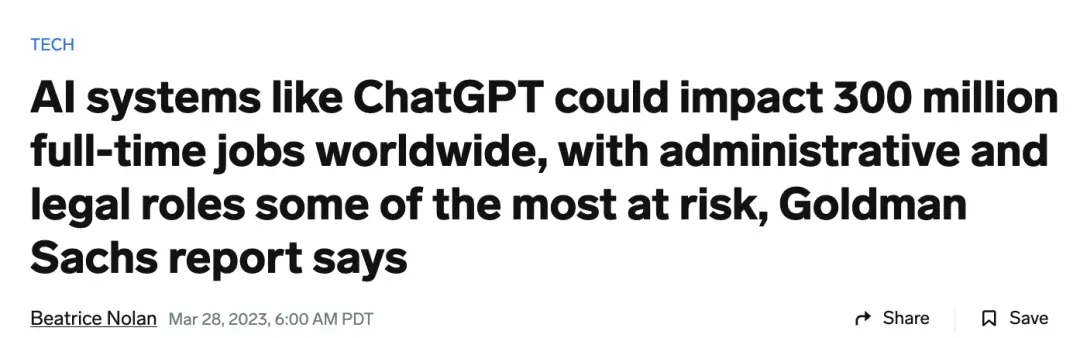
A Goldman Sachs research report suggests that AI will affect 300 million jobs globally.
McKinsey predicts that by 2030, 30% of US jobs will be automated, and about 12 million workers will be impacted by AI.
AI will fill some technical roles, such as software development, web development, computer programming, and data science.
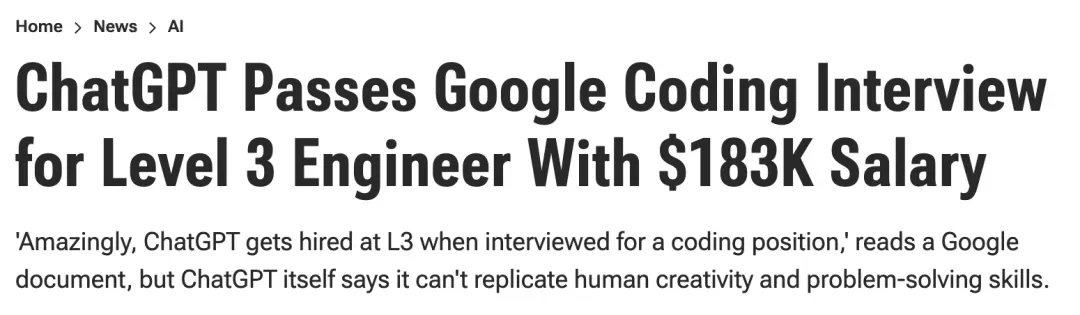
ChatGPT can already pass a Google Level 3 programming interview; it's hard for entry-level CS positions at tech giants not to be affected in the future.
2024: Layoffs Continue
On one side, the impact of AI; on the other, tech giants continue to lay off.
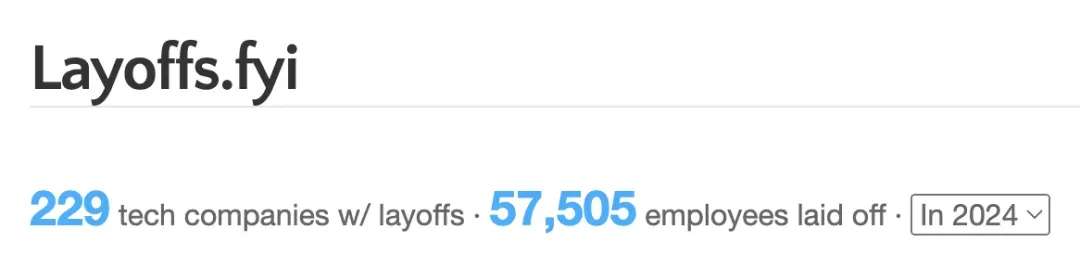
So far in 2024, tech companies have laid off over 57,000 employees.
IBM
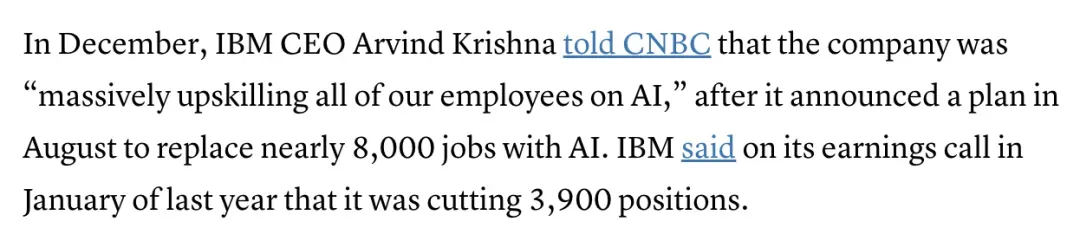
IBM is cutting marketing positions and plans to replace 8,000 jobs with AI this year.
Dell
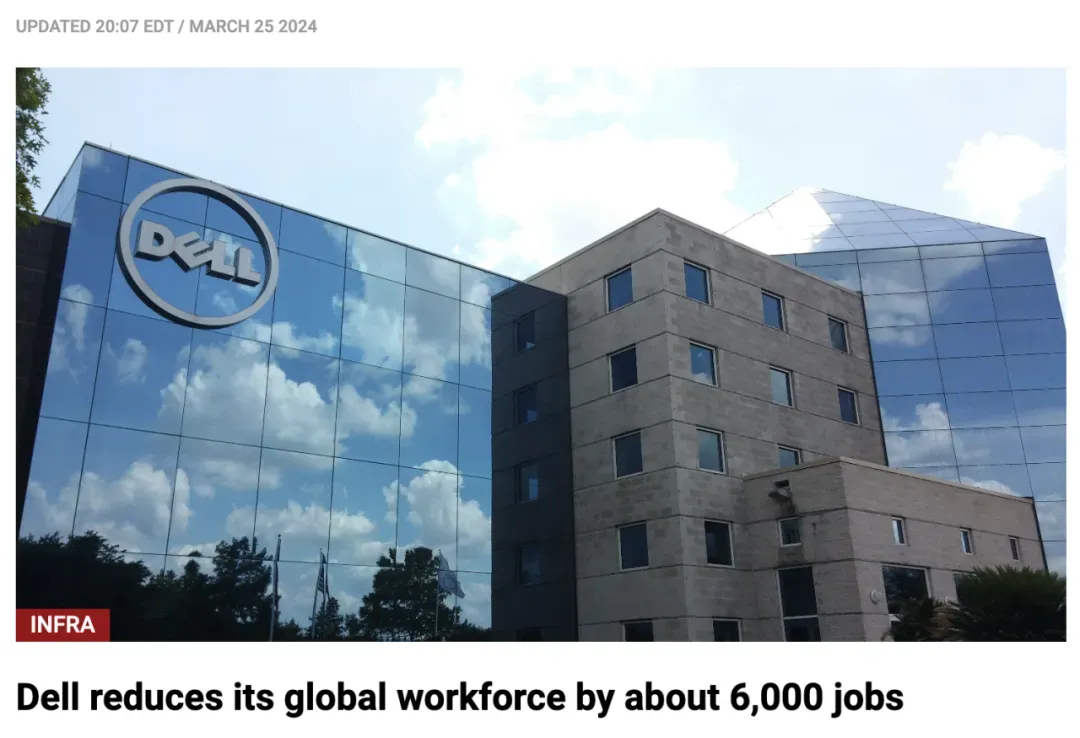
In March, Dell laid off 6,000 employees globally. Last year, Dell had already laid off 13,000.
Sony
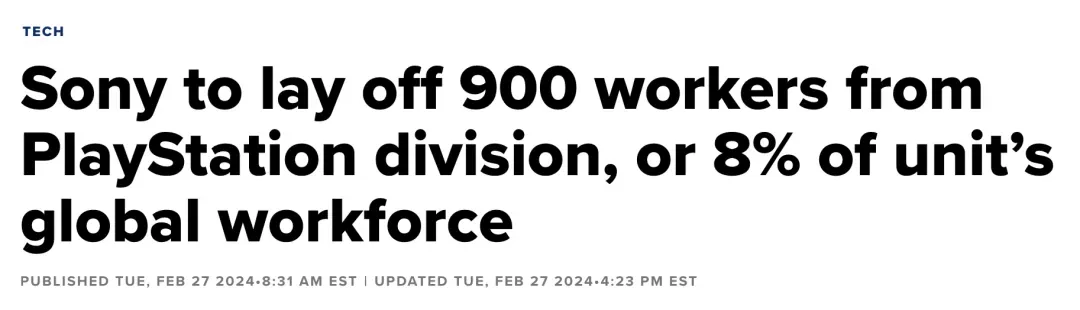
In February, Sony laid off 900 employees from its PlayStation division, accounting for 8%.
Expedia
In February, Expedia laid off 1,500 employees, or 9%.

Cisco
Cisco laid off 5% of its workforce, affecting over 4,000 people.

Amazon
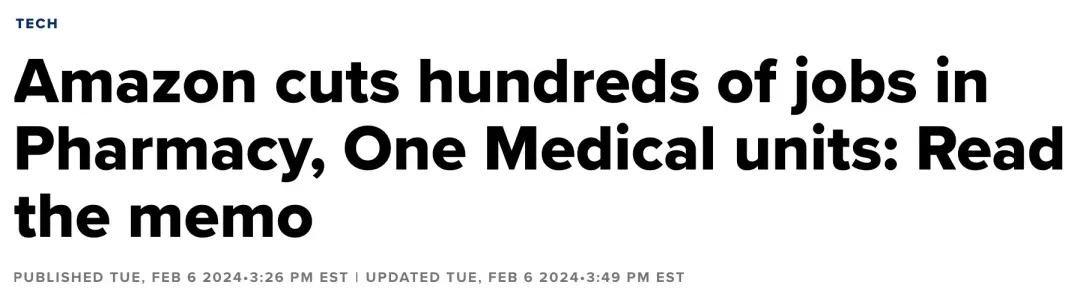
In February, Amazon laid off hundreds of employees in its healthcare division, including One Medical.
Microsoft
In January, after acquiring Activision Blizzard, Microsoft announced 1,900 layoffs in its gaming division.

Additionally, giants like Google and TikTok also conducted layoffs early this year, and it's far from over.
Putting aside the overhiring during the pandemic, with the popularization of AI, the future of CS employment is indeed not optimistic.

CS graduates get high salaries, so everyone studies CS. Where there's demand, there's supply. Universities are promoting CS everywhere, offering all kinds of CS programs, even setting up independent schools.
For CS majors, some love it, some hate it. There are indeed people who genuinely like CS and treat programming as a hobby; after all, coding can be a paradise for introverts. However, most people just blindly follow the trend.
Perhaps the fault lies not with CS or any other major but with the 'people' themselves. Majors should match individuals, but when applying for further education, people always consider various factors, such as job prospects, salary levels, and even how others perceive them... There are too many 'face' factors in the choice of major.
Ultimately, it comes back to the age-old topic: what suits you is more important. We advise everyone not to blindly follow trends or be influenced by doomsayers, but to choose a major rationally.