
Preparing for the GRE but still not sure what it really is? Today, we’ll take you through six different angles to fully understand the GRE exam!
▪ GRE Overview ▪ GRE Structure
▪ GRE Adaptive Mechanism ▪ GRE Registration Info
▪ GRE Rescheduling & Cancellation ▪ GRE Score Check & Sending
GRE Overview
The GRE, full name Graduate Record Examination, is the most widely accepted graduate school admission test worldwide, applicable for the vast majority of graduate program applications.
Administered by Educational Testing Service (ETS), the GRE is an entrance exam score required by many graduate schools and doctoral programs around the world, and is also an important factor for admission committees when awarding scholarships.
Unlike language tests such as TOEFL and IELTS, the GRE assumes your English proficiency is at the native speaker level and further evaluates academic logical reasoning ability.

GRE Structure
The GRE consists of three main sections:
▪ Verbal Reasoning: 2 sections, score scale 130–170
▪ Quantitative Reasoning: 2 sections, score scale 130–170
▪ Analytical Writing (AW): one Issue essay, score scale 0–6
The specific question types for each section are as follows:
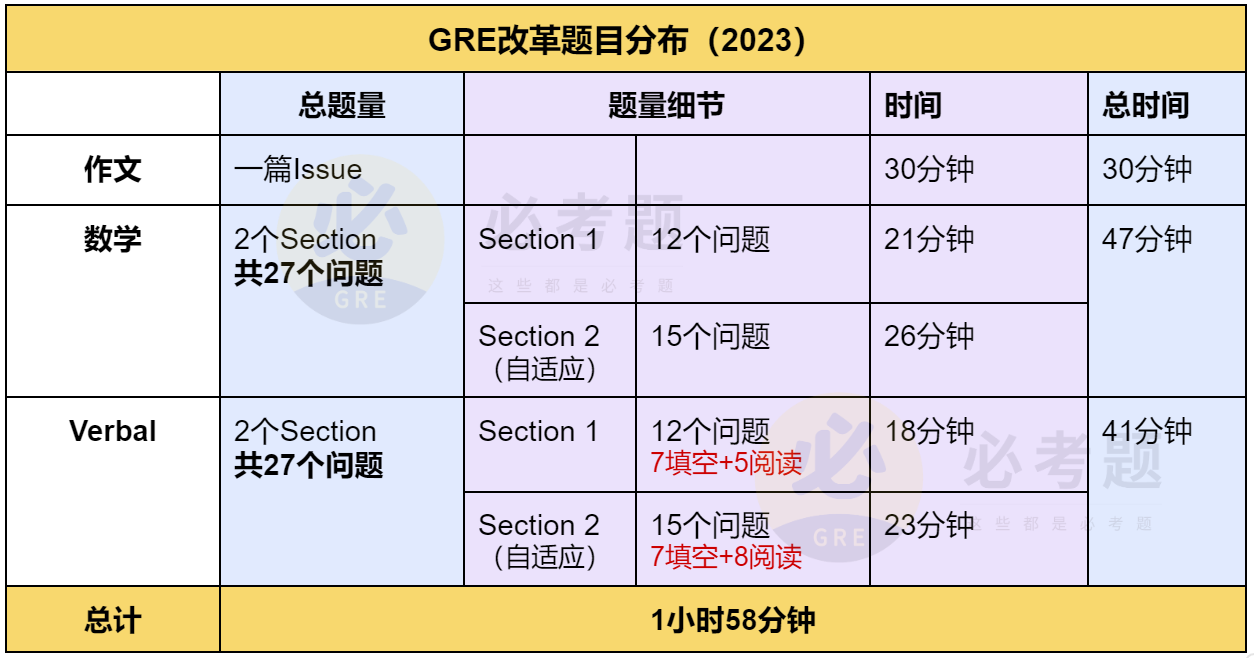
The order of Verbal and Quantitative sections varies; two possible sequences:
① Issue → Q → V → Q → V
② Issue → V → Q → V → Q
Content Tested in Each Section
▪ Verbal Reasoning: Includes reading comprehension and text completion/sentence equivalence. Requires candidates to integrate and evaluate written material, analyze logical relationships among sentences and components, and recognize relationships among words and concepts.
▪ Quantitative Reasoning: Requires understanding of basic mathematical concepts and skills, and the use of quantitative reasoning, modeling, and quantitative methods to solve problems.
▪ Analytical Writing: Candidates write an essay expressing their viewpoint on a given issue, supporting that viewpoint with reasoning and examples.
GRE Adaptive Mechanism
Both the Verbal and Quantitative sections of the GRE use a section-level difficulty adaptation, meaning accuracy on the first section directly affects the difficulty of the second section, falling into three tiers: easy, medium, hard.
In the actual exam, the difficulty mode of the second section depends on the accuracy of the first section. We first need to determine the specific correlation between the two.
Based on score data analysis from many students, we estimate the adapted mechanism after the GRE revision is roughly as follows:
|
Verbal Adaptive Mechanism |
|
|
Section 1 Correct Answers |
Section 2 Adaptive Difficulty |
|
9~12 questions |
Adaptive Hard |
|
5~8 questions |
Adaptive Medium |
|
0~4 questions |
Adaptive Easy |
|
Quantitative Adaptive Mechanism |
|
|
Section 1 Correct Answers |
Section 2 Adaptive Difficulty |
|
8~12 questions |
Adaptive Hard |
|
4~7 questions |
Adaptive Medium |
|
0~3 questions |
Adaptive Easy |
*Table data is for reference only; specific situation also depends on the difficulty level of correctly answered questions.
The higher the difficulty mode entered in the second section, the more advantageous for your score! So be sure to perform well on the first section!!
GRE Registration Information
Registration Process
1️⃣ To take the GRE at a test center in mainland China, log in to the NEEA website (National Education Examinations Authority) to register.
Detailed registration guide:
▪ GRE Mainland China In-Person Registration Detailed Process & FAQ!
2️⃣ To take the GRE at a test center outside mainland China or the GRE General Test at Home, register directly on the ETS GRE website.
Detailed registration guide:
▪ In-Person Test Outside Mainland China | Step-by-Step Registration Guide!
▪ At-Home Test in Mainland China | Ultra-Detailed Registration Process!
Important!!
1. You may take the GRE General Test once every 21 days, up to five times within any continuous rolling 12-month period (365 days).
2. The interval between two test dates must be at least 20 days; you can retake the GRE on the 21st day after your previous test.
Test Fees
▪ GRE In-Person Test in Mainland China: CNY 1,665
▪ GRE Test at Home in Mainland China: HKD 1,720
▪ GRE In-Person Test / Test at Home outside Mainland China: USD 220
GRE Rescheduling & Cancellation
If you have registered for the GRE, you must change or cancel your test registration no later than four days before the test date (for test-takers in mainland China, at least 10 days prior), otherwise your test fee will not be refunded.
1. Outside mainland China
Rescheduling fee is USD 50; reschedule online through your ETS account. If canceling the test, you will receive a refund of 50% of the original test fee.
2. Mainland China
▪ In-Person Test: Rescheduling fee is ¥388; if canceling the test, you will receive a refund of 50% of the original test fee. Changes/cancellations must be made through the NEEA account at least 10 days before the test date.
▪ At-Home Test: Changes/cancellations must be made through your ETS account at least 4 days before the test date.
More on GRE rescheduling & cancellation:
ETS! Hand Over That! GRE Payment & Refund Complete Guide!
GRE Score Check & Sending
Checking Your GRE Score
You can see your unofficial Verbal and Quantitative scores immediately after the test. Official scores are available 8–10 calendar days after the test date.
Test-takers outside mainland China can check scores directly on the ETS website.
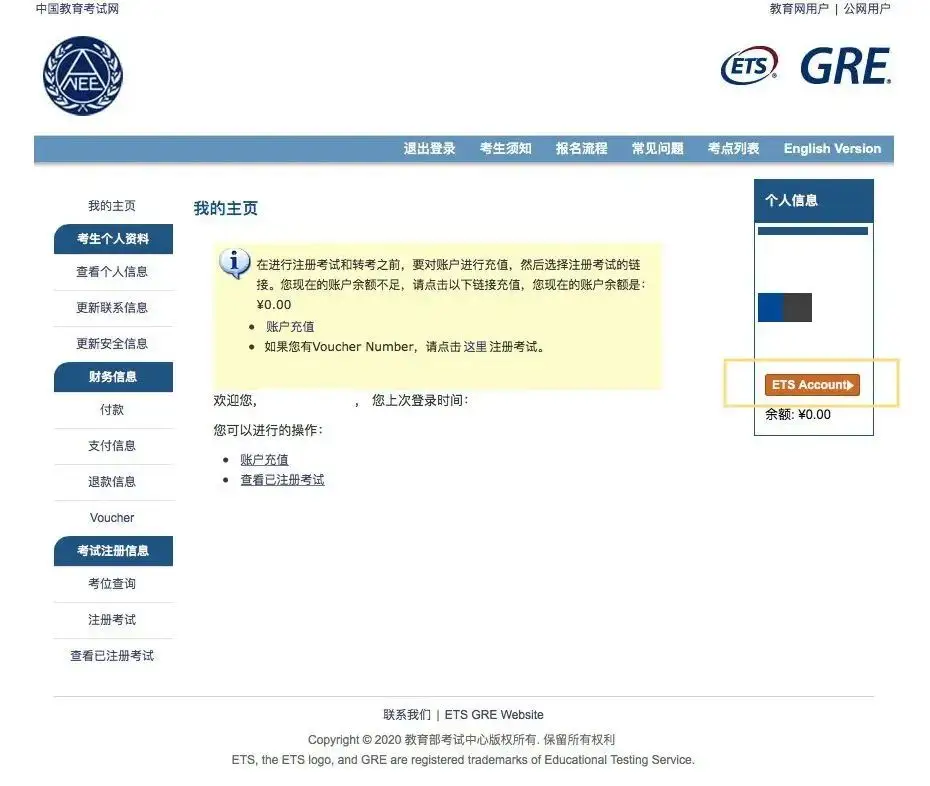
For test-takers in mainland China who registered through NEEA, you still need to link your NEEA account with an ETS account and check scores on the ETS GRE website.
Sending GRE Scores
1. Score Select at the test center (free)
On test day, after viewing your scores, you can choose up to four score recipients to send your scores for free.
If you choose to send scores that day, you can send only that day's scores or all scores (past 5 years) to the selected institutions.
Of course, you can also choose not to send any scores on test day. Most students wait until official scores are released and carefully decide which scores to send.
2. Additional Score Reports (after test day)
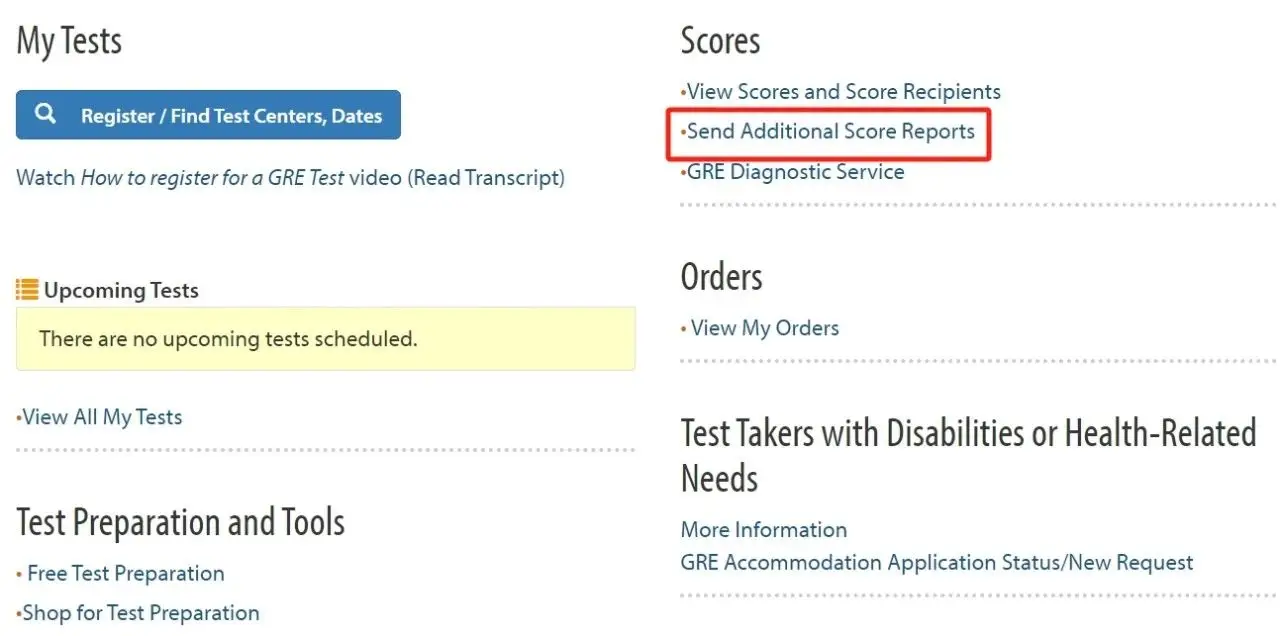
Once official scores are available, you can order Additional Score Reports through the ETS website. You can choose to send your best scores or all scores (past 5 years). The fee is USD 30 per recipient.
For detailed steps on GRE score checking and sending, see: Revised GRE Score Checking & Sending Process and Key Notes! After the GRE, Don’t Miss This Step!
I hope this GRE introduction gives you a clearer concept of the GRE exam, helps you set your goals, and get started with preparation early!
Finally, best of luck to everyone achieving a high score! Wishing you a smooth 2025 Fall application season and hitting your dream school!!
GRE Summer Single-Subject Classes enrolling now! 🔥
Add an advisor now to customize your exclusive GRE prep plan!