If you are passionate about cultural heritage preservation and wish to delve deeper into this field, the University of Edinburgh's newly launched MSc Cultural Heritage Futures for 24Fall is definitely worth your attention. As globalization accelerates, cultural heritage protection has become a critical global issue. The University of Edinburgh, a key hub for cultural heritage preservation in Europe, feels a strong responsibility. Therefore, it has decided to launch the "Cultural Heritage Futures" programme, aiming to explore new concepts, methods, and technologies in cultural heritage preservation through interdisciplinary collaboration and research, providing robust support for global cultural heritage efforts.
For more questions, you can also scan the QR code below for one-on-one consultation.

I. Programme Overview
The Cultural Heritage Futures programme is an innovative initiative by the University of Edinburgh in the field of cultural heritage preservation. It is part of the interconnected portfolio of postgraduate study at the Edinburgh Futures Institute (EFI). Through interdisciplinary research and practice, the programme aims to explore new concepts and methods in cultural heritage preservation and contribute to the global cause of cultural heritage. The programme covers multiple aspects of cultural heritage preservation, including historical research, architectural conservation, and environmental management, providing students with a broad space for study and research.
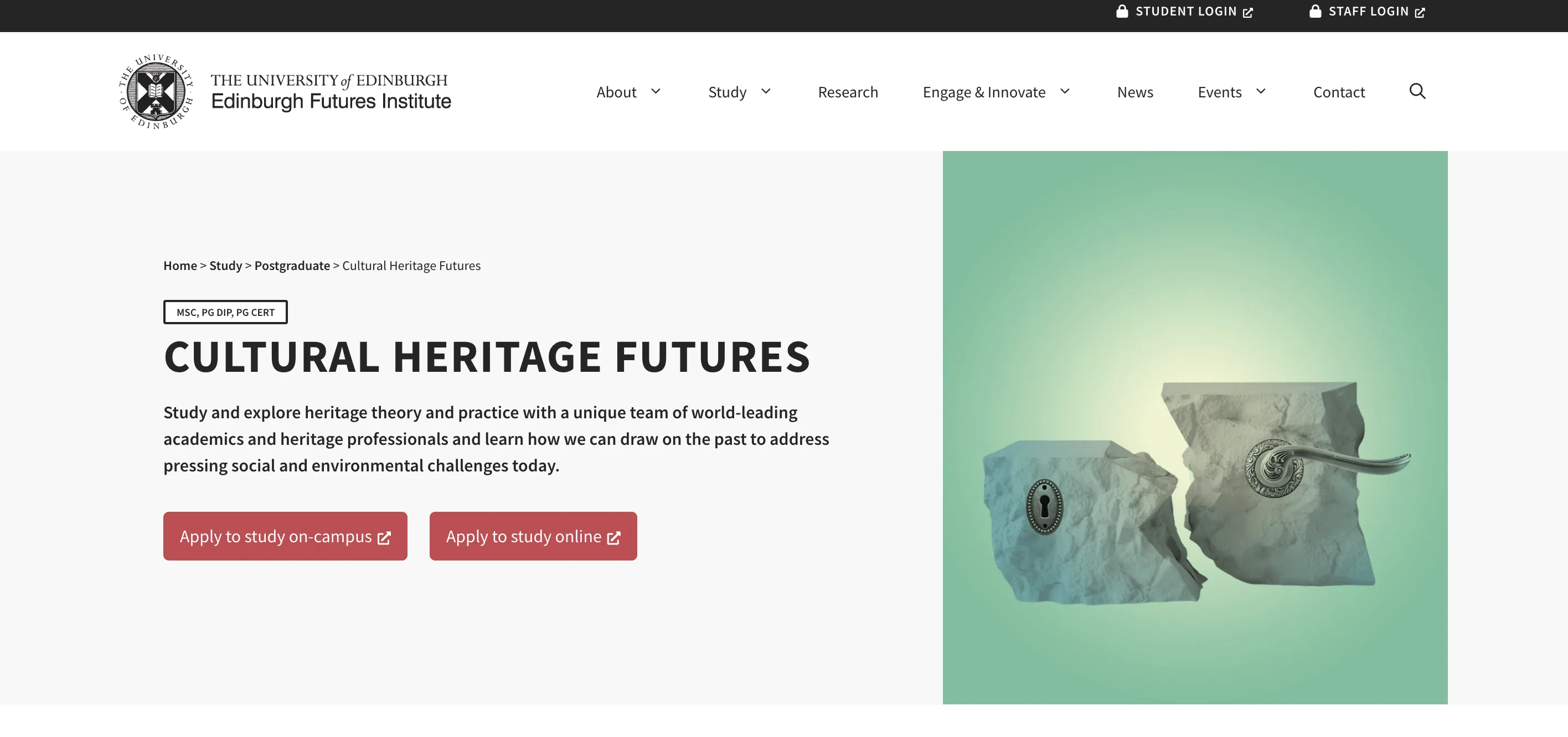
Official website: https://efi.ed.ac.uk/programmes/cultural-heritage-futures/
II. Curriculum
The MSc Cultural Heritage Futures at the University of Edinburgh is an interdisciplinary postgraduate programme typically covering the following core modules:
-
Research Methods in Cultural Heritage: Introduces fundamental methods and theoretical frameworks for cultural heritage research, including qualitative and quantitative research methods.
-
Cultural Heritage Management and Policy: Analyzes the legal, policy, and management practices of cultural heritage protection, and how these factors influence the preservation and utilization of cultural heritage.
-
Cultural Heritage and Society: Explores how cultural heritage interacts with society, including community engagement, identity, and the social value of cultural heritage.
-
Cultural Heritage Preservation Practice: Provides practical case analyses to help students understand the specific operations and challenges of cultural heritage preservation.
-
Cultural Heritage and Sustainable Development: Discusses the relationship between cultural heritage preservation and sustainable development, including economic, environmental, and social sustainability.
-
Digital Cultural Heritage: Introduces the application of digital technologies in cultural heritage preservation and exhibition, such as 3D modeling and virtual reality.
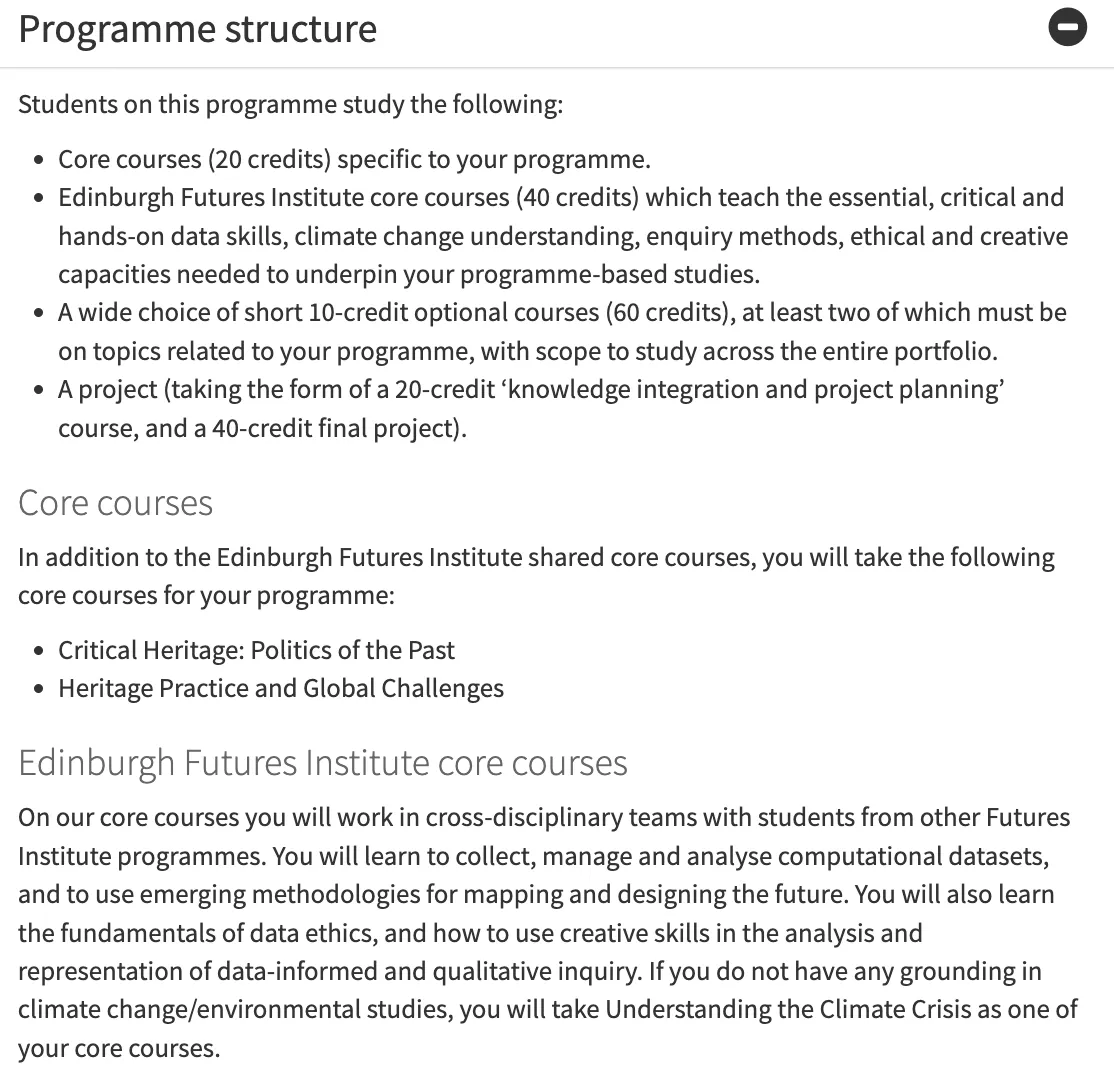
In addition, students can choose from a range of elective courses to gain in-depth knowledge of specific cultural heritage areas or develop relevant skills, such as GIS (Geographic Information Systems), museology, and archaeology.
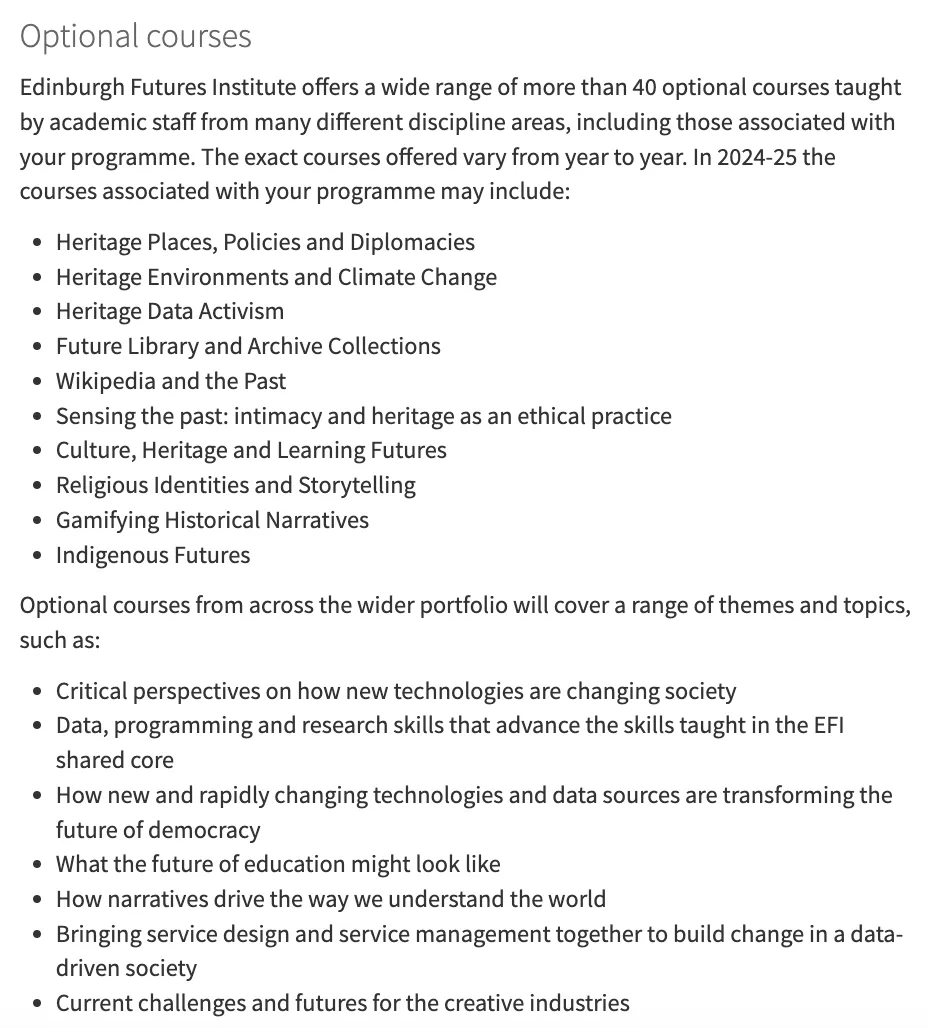
Please note that the curriculum may vary according to the annual teaching plan and research directions. For the most up-to-date course content and requirements, please refer to the official information released by the University of Edinburgh for the current academic year.
III. Admission Requirements
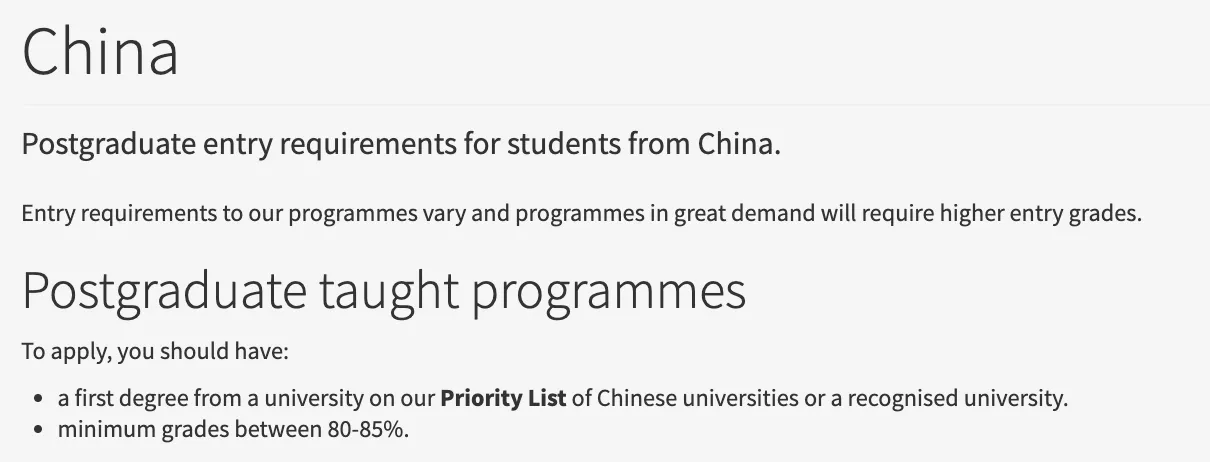
The University of Edinburgh places considerable emphasis on applicants' academic performance, especially in relevant fields. You will need to provide detailed transcripts demonstrating your academic performance during undergraduate studies. Moreover, the University of Edinburgh has compiled a Priority List of Chinese universities; graduates from institutions on this list will be given priority, with a minimum grade requirement typically ranging from 80% to 85%.
Secondly, regarding language requirements: since the programme is delivered in English, you will need proficient English listening, speaking, reading, and writing skills. Usually, you are required to provide English language test scores, such as IELTS or TOEFL, as part of your application.

IV. Career Prospects
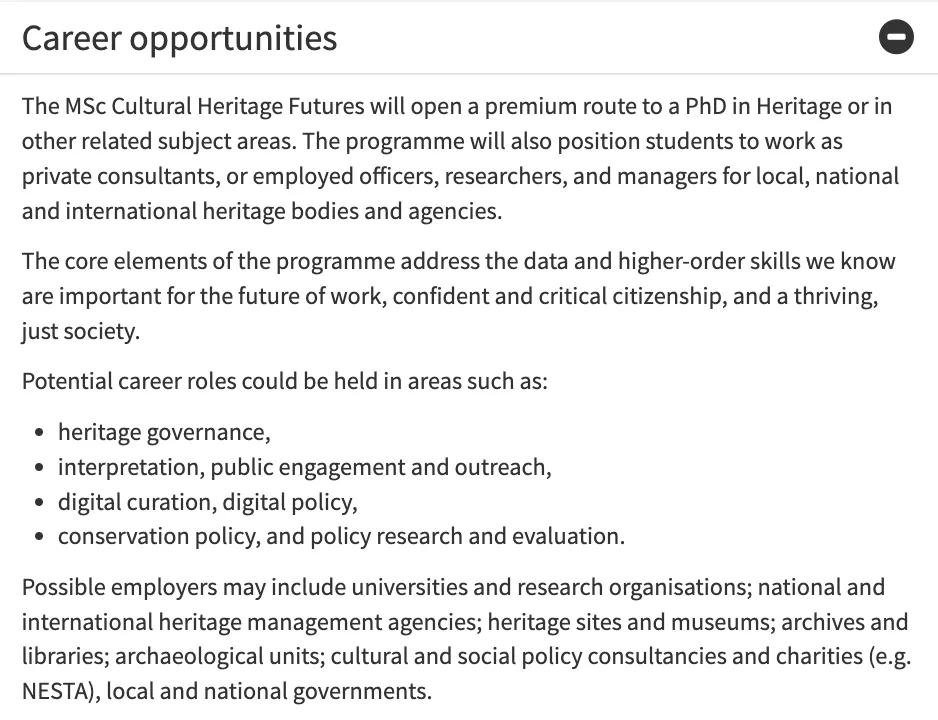
The career prospects for cultural heritage preservation graduates are quite broad. With increasing public awareness of cultural heritage protection and the booming tourism industry, graduates in this field have ample employment opportunities across various sectors.
-
Government Departments: Graduates can work in cultural heritage management agencies, heritage conservation units, urban and rural planning departments, and other government bodies, participating in the preservation, management, and planning of cultural heritage.
-
Educational Institutions: Graduates can serve as teachers in universities, secondary schools, vocational colleges, and other educational institutions, engaging in teaching and research on cultural heritage-related courses.
-
Museums and Cultural Institutions: Graduates can work in museums, art galleries, libraries, and other cultural institutions, taking on roles in artifact collection, exhibition curation, educational outreach, and more.
-
Cultural Tourism Industry: With the rise of cultural tourism, graduates can work in travel agencies, scenic spot development, cultural creative industries, and other fields, developing tourism products and projects that integrate cultural heritage resources.
-
Research and Consulting: Graduates can pursue research careers in cultural heritage preservation, providing professional consulting services to governments, businesses, and academia.
-
International Organizations: Experienced graduates may also work in international organizations such as UNESCO, engaging in cultural heritage protection-related work.
-
Freelancing: Some graduates may choose to become independent cultural heritage preservation experts, consultants, or freelance writers, offering professional opinions and preparing relevant reports for various projects.
As awareness of cultural heritage preservation continues to grow and technology advances, graduates in this field will face increasing employment opportunities and development prospects in the future. Furthermore, with the progress of globalization and increased cultural exchange, the demand for cultural heritage professionals is expected to keep rising.
For more admission cases and questions related to study abroad and graduate applications, you can also add the contact information of CheersYou(清柚教育) advisors below for detailed information.