The Chinese University of Hong Kong (CUHK) has the most comprehensive media master's programs and is the institution with the longest history of media education and research in Hong Kong. Its School of Journalism and Communication offers five media-related programs: Global Communication, New Media, Journalism, Advertising, and Corporate Communication. Among these, the New Media master's curriculum covers knowledge of society, economy, culture, products, and media law, making it relatively suitable for cross-disciplinary applicants. After graduation, many students choose to enter the internet industry, bringing with them the portfolios they developed during graduate studies, such as in advertising, marketing, or media, or working in product user research and digital marketing. So, what is the learning experience like in this program? How is the curriculum structured? How much does it help with employment and career development? And what is life like at CUHK? Today, CheersYou(清柚教育) has compiled answers to these questions for you. For more questions, you can also scan the QR code below for a one-on-one consultation.

1. Program Introduction
CUHK's MSc in New Media is a graduate program focused on the new media field, aiming to cultivate students into new media professionals with innovative thinking and critical analytical skills. The program emphasizes interdisciplinary integration, combining knowledge from communication, sociology, computer science, and other fields to provide students with a comprehensive learning platform.
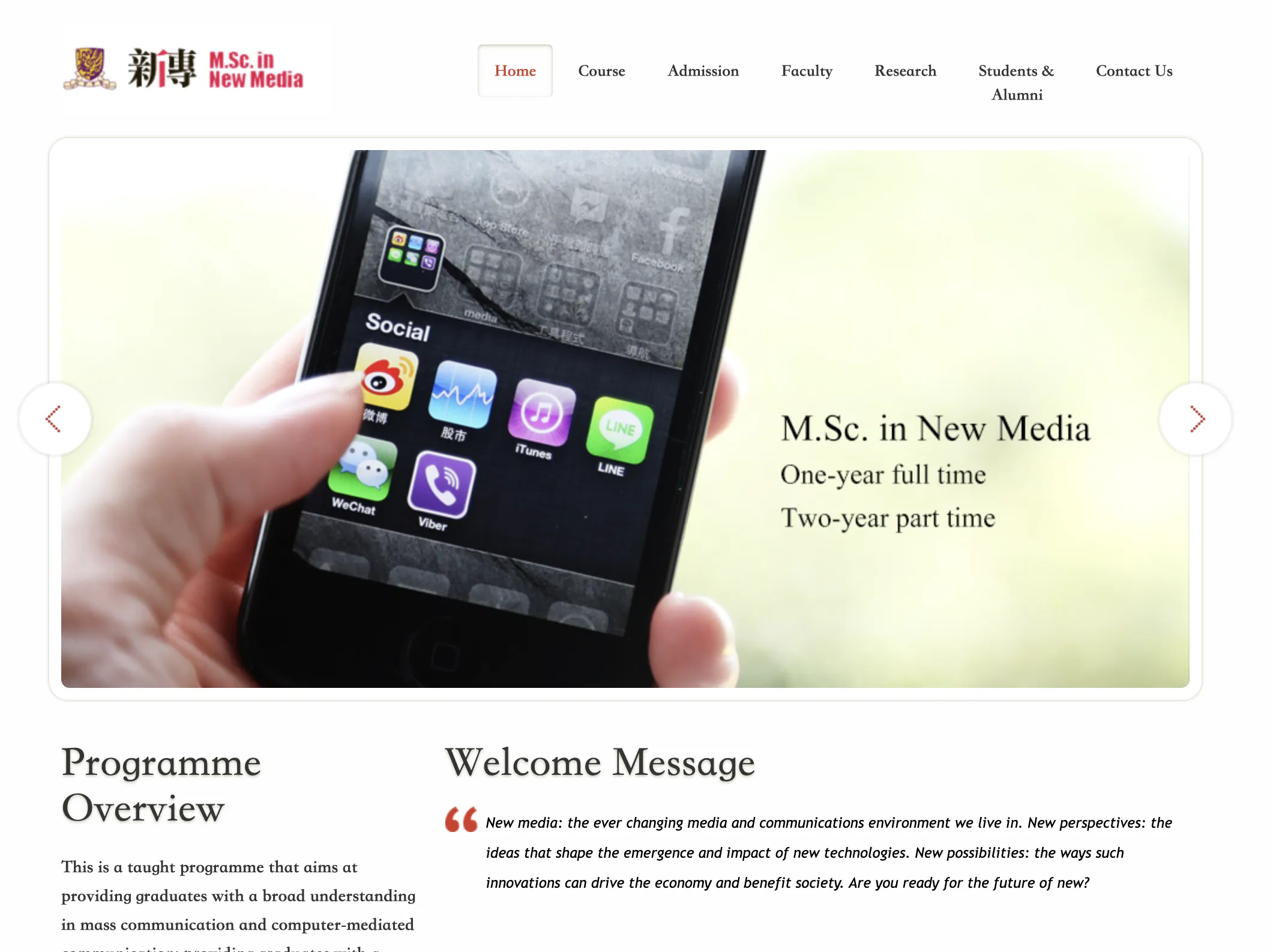
Official website: https://pg.com.cuhk.edu.hk/pgp_nm/
2. Curriculum
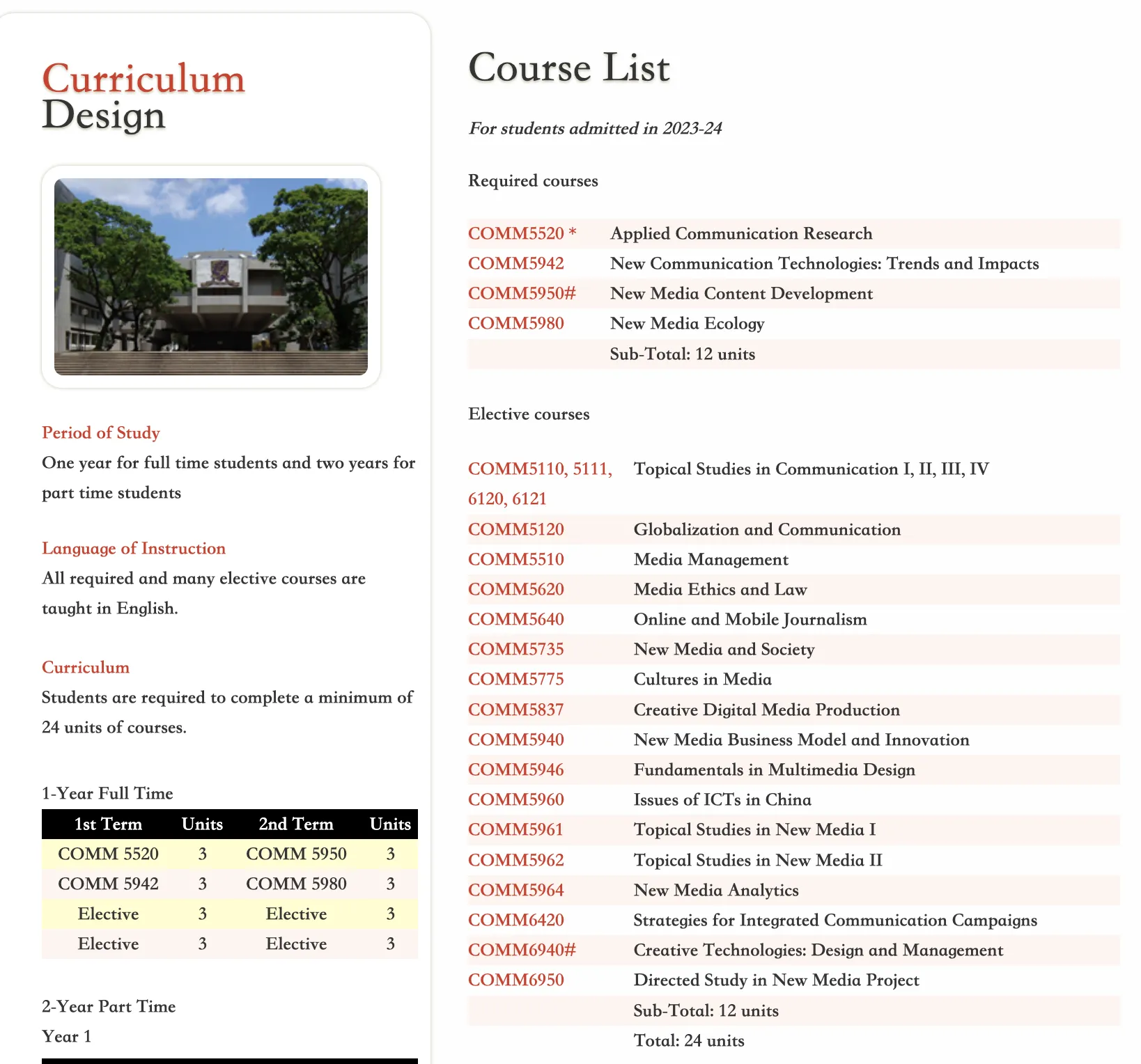
CUHK's New Media master's program lasts one year, divided into two semesters, with students taking four courses each semester—two compulsory and two elective. The curriculum is rich, covering various aspects of new media, aiming to develop students' professional knowledge and practical skills in the field. Courses include Introduction to New Media, New Media Technology, New Media Marketing, New Media Ethics, and more. These courses not only cover fundamental concepts and theories of new media but also delve into the latest developments and applications of new media technologies, such as social media, mobile applications, and big data.
The New Media program places great emphasis on combining critical media theory with practice. Theoretical courses help students understand the overall ecology of the new media internet industry and the basic principles of new media operations. Practical courses involve basic web programming, such as completing website design, user research, and product development processes.
Compulsory Courses
- Applied Communication Research
This course is a research methods course designed to teach students how to conduct quantitative and qualitative research. Students will learn how to design research questionnaires, collect data, perform analysis, and write academic papers. The course also includes group discussions and case studies to help students apply theoretical knowledge to practical research.
- New Communication Technologies: Trends and Impacts
This course explores the latest developments in new media technologies, such as social media, mobile applications, and big data. Students will learn the principles and applications of these technologies and analyze their impact on society, culture, and individual behavior. The course includes group discussions and case studies to help students deeply understand the social implications of new media technologies.
- New Media Business Model and Innovation
This course introduces business models and innovation strategies in new media. Students will learn how to use new media technologies for business model innovation and analyze successful case studies. The course includes group discussions and case studies to help students understand the operations and competitive strategies of the new media industry.
- Fundamentals in Multimedia Design
This course introduces the basic principles and skills of multimedia design, such as image processing, video production, and audio editing. Students will learn to use relevant software for multimedia creation and complete practical projects. The course includes group discussions and case studies to help students improve their multimedia design capabilities.
Elective Courses
- New Media Ecology
This course explores the composition and operational mechanisms of the new media ecosystem. Students will learn about the key players, business models, and case analyses in the new media environment. The course includes group discussions and case studies to help students gain a deep understanding of the characteristics and development trends of new media ecology.
- Creative Technologies: Design and Management
This course introduces the application of creative technologies in the new media field, such as virtual reality and augmented reality. Students will learn how to use creative technologies for design and management and complete practical projects. The course includes group discussions and case studies to help students understand the development trends and application prospects of creative technologies.
- Topical Studies in Communication II: New Media and Computing
This course combines knowledge from communication and computer science to explore the intersection of new media and computing. Students will learn how to use computer technology for communication research and complete practical projects. The course includes group discussions and case studies to help students deeply understand the integration and application of new media and computing.
- Data Science in New Media
This course introduces the application of data science in the new media field, such as data mining and data visualization. Students will learn how to use data science methods for new media data analysis and complete practical projects. The course includes group discussions and case studies to help students understand the application prospects and challenges of data science in new media.
3. Application Requirements
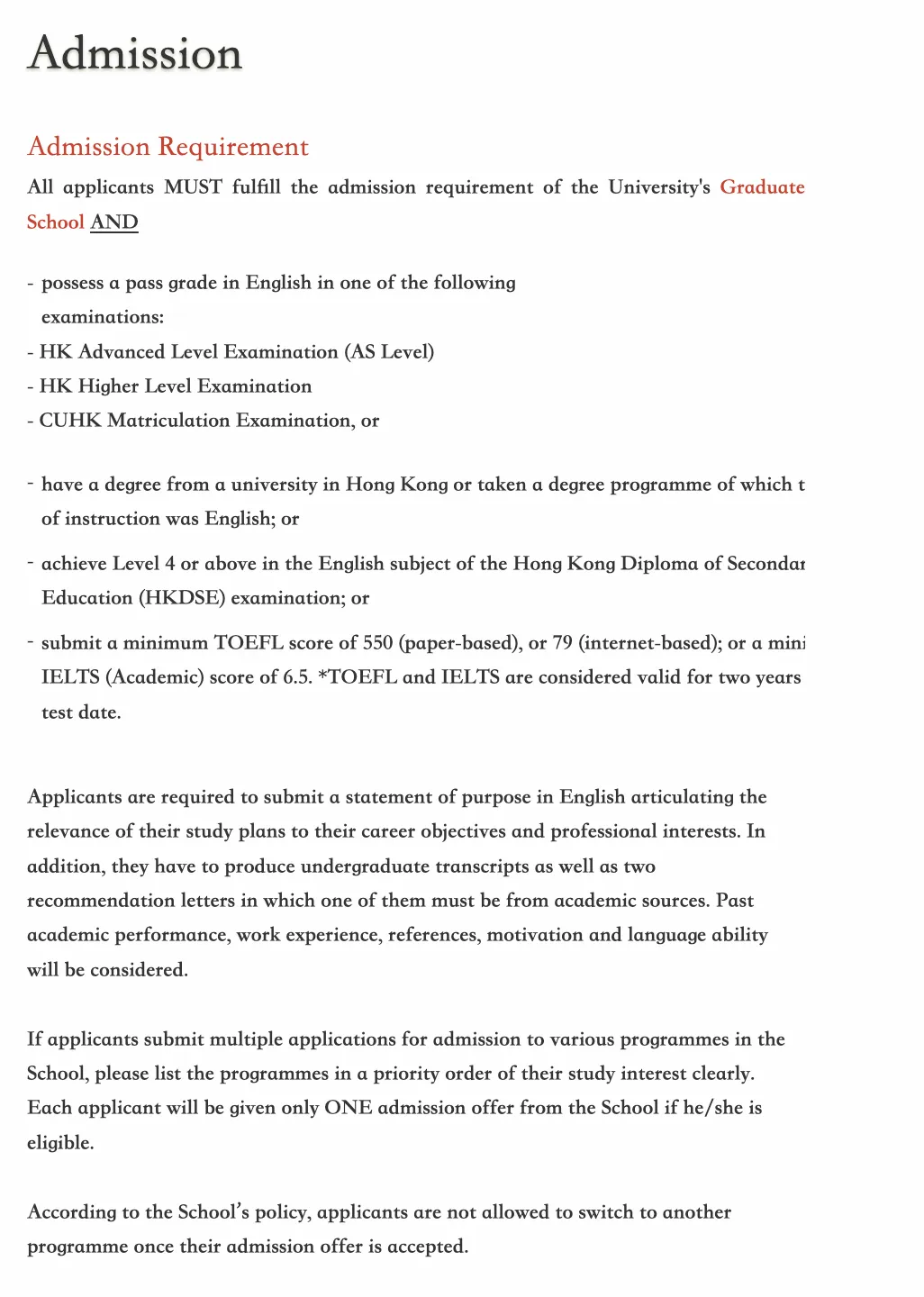
Although not explicitly stipulated, according to current students, most admitted students have excellent undergraduate backgrounds. There are many students from overseas universities and CUHK itself, as well as some from top domestic 985 universities. Currently, there are no students from non-double-first-class universities, but the program is very friendly to working professionals.
-
Academic Background: Applicants typically need a bachelor's degree in communication, journalism, advertising, marketing, or related fields. If the applicant's academic background is not completely related but has relevant work experience or self-study experience, they may also be considered.
-
English Proficiency: Since the medium of instruction is English, applicants need to have good English listening, speaking, reading, and writing skills. TOEFL or IELTS score reports are usually required as proof.
-
Portfolio: Some courses may require applicants to submit a portfolio or relevant works to demonstrate their practical skills and creativity in the new media field.
4. Career Development Prospects
The rapid development of the new media industry provides broad career prospects for graduates. Career choices are diverse, with possibilities in data, product, operations, marketing, branding, and more. Whether it's large internet companies, traditional media, or startups, new media graduates are in high demand. The program's international perspective and multicultural background prepare students to adapt to a globalized work environment and compete on the international stage. CUHK's strong alumni network and school reputation provide valuable career development resources and networking support for graduates.
For more admission cases and questions about studying abroad for graduate applications, you can also add the CheersYou(清柚教育) consultant's contact information below for more details.