Recently, Times Higher Education, one of the four authoritative university rankings, unveiled the latest 2024 University Impact Rankings!
This is the first and only ranking to evaluate universities globally based on the United Nations' Sustainable Development Goals (SDGs). The assessment considers four dimensions: research, management, outreach, and teaching.
The 2024 edition is the sixth iteration of the Impact Rankings, covering 2,152 universities from 125 countries and regions.
.png)
THE Impact Rankings Assessment Criteria
As this ranking focuses on impact in sustainable development, its evaluation methodology differs from traditional university rankings.
Let's first look at some of the indicators referenced by THE, including poverty, hunger, climate, water and sanitation, clean energy, etc.:
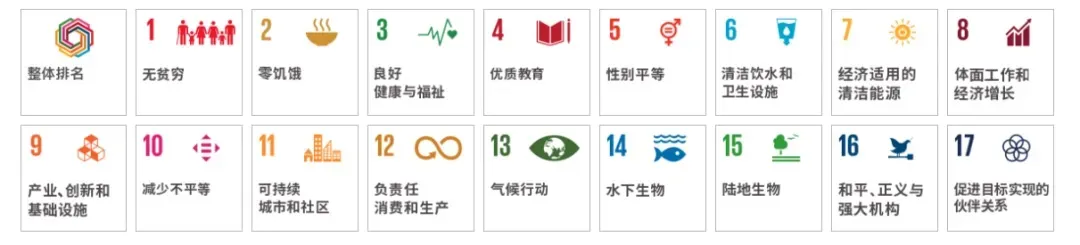
The indicators above are the 17 Sustainable Development Goals officially announced by the United Nations—a blueprint for a better and more sustainable future for all, designed to collectively address global challenges.
Universities on this ranking demonstrate a strong sense of social responsibility and mission.
2024 THE Impact Ranking
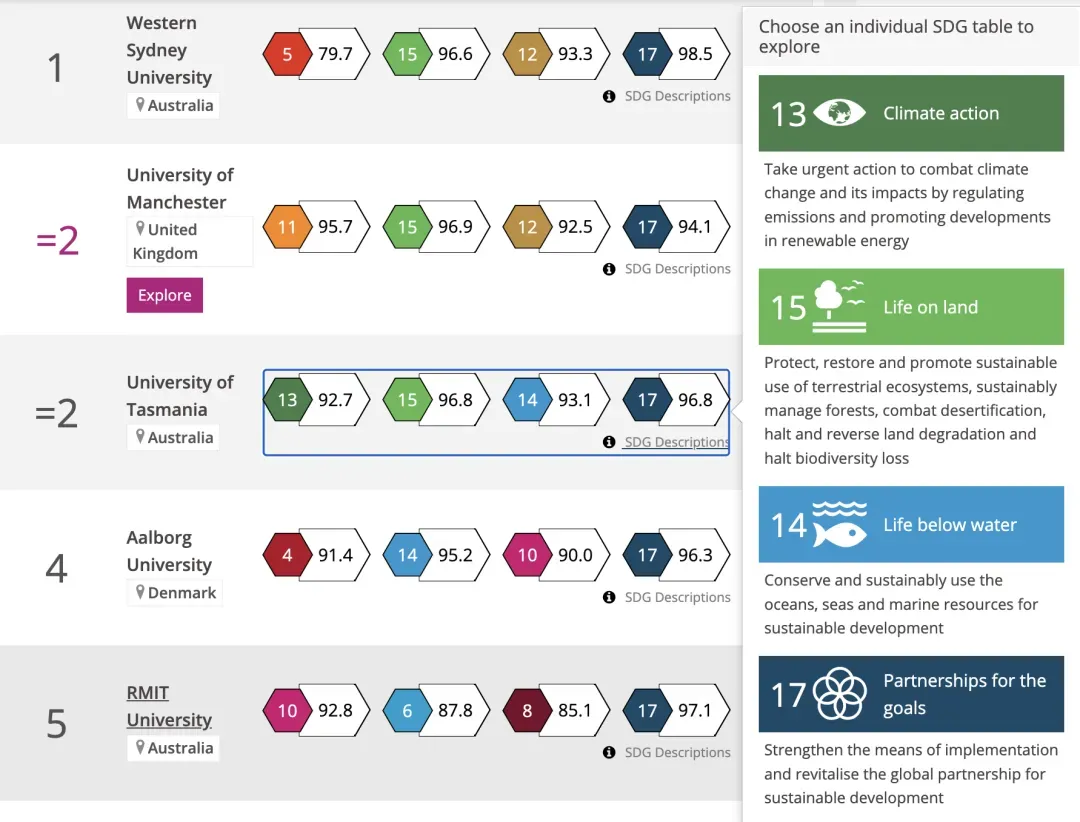
Western Sydney University in Australia ranked first for the third consecutive year.
Tied for second place are the University of Manchester in the UK and the University of Tasmania in Australia.
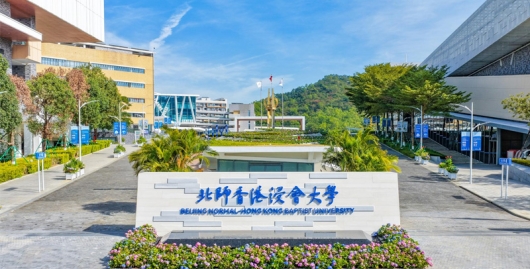
In SDG 4 (Quality Education), Hong Kong Baptist University and The Hong Kong Polytechnic University ranked second and fourth respectively.
The top ten of the table are as follows:
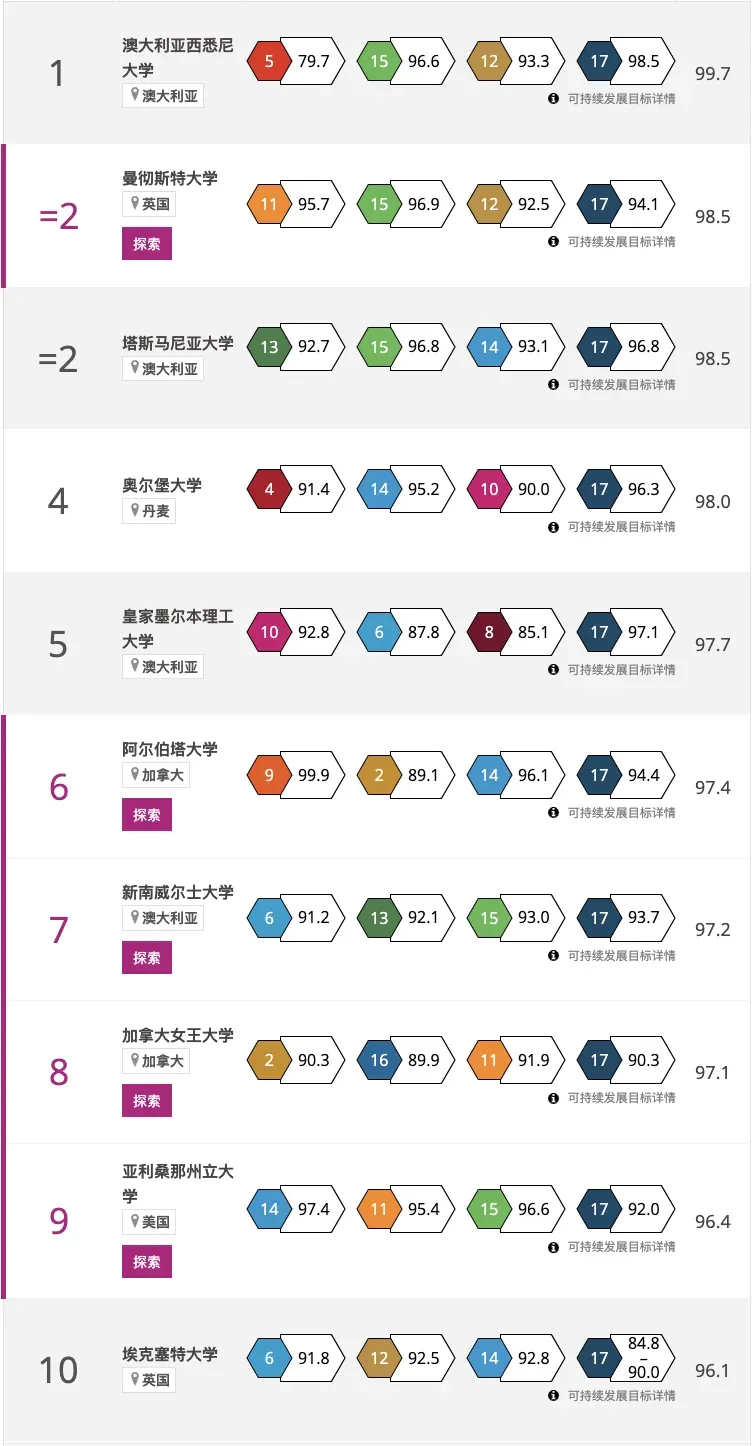
From this year's top ten, we can see that the listed institutions are mainly concentrated in mainstream study destinations like Australia, the United Kingdom, Canada, and the United States, indicating they continue to hold strong appeal.
THE also clearly presents each university's detailed scores across SDG indicators. Looking at the ranking, SDG 17 (Partnerships for the Goals) remains a heavily weighted indicator this year, aligning with the philosophy of the ranking.
The UN website provides a detailed explanation of SDG 17: strengthening global partnerships to support the achievement of the SDGs through financial, technical, and capacity-building support. It emphasizes that solidarity, cooperation, and resource sharing are key drivers for realizing all other SDGs.

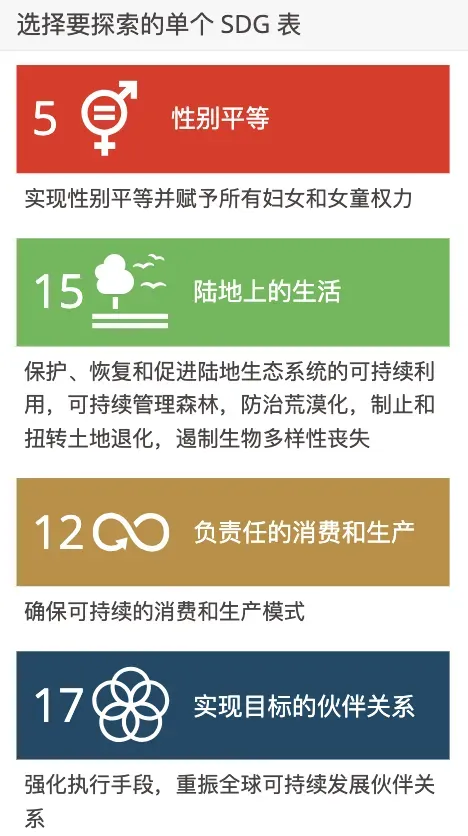
Australia's Western Sydney University, which again ranks first this year, achieved high scores in SDG 5 (Gender Equality), SDG 12 (Responsible Consumption and Production), SDG 15 (Life on Land), and SDG 17 (Partnerships for the Goals), securing the top global spot.

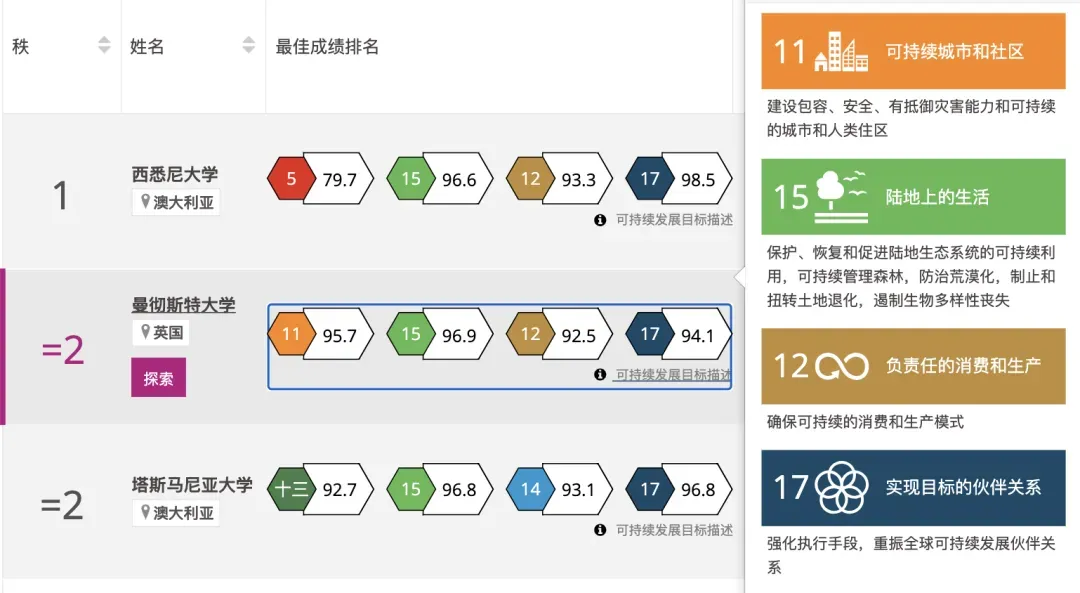
The University of Manchester, ranked second, also led in four areas: SDG 11 (Sustainable Cities and Communities), SDG 12 (Responsible Consumption and Production), SDG 15 (Life on Land), and SDG 17 (Partnerships for the Goals).
The University of Tasmania, tied for second, excelled in SDG 13 (Climate Action), SDG 14 (Life Below Water), SDG 15 (Life on Land), and SDG 17 (Partnerships for the Goals).
This year's ranking features a record number of institutions, a 26% increase from last year’s 1,705 universities. A total of 11 mainland Chinese universities participated in this ranking.
Here is the overall TOP 100 for your reference!
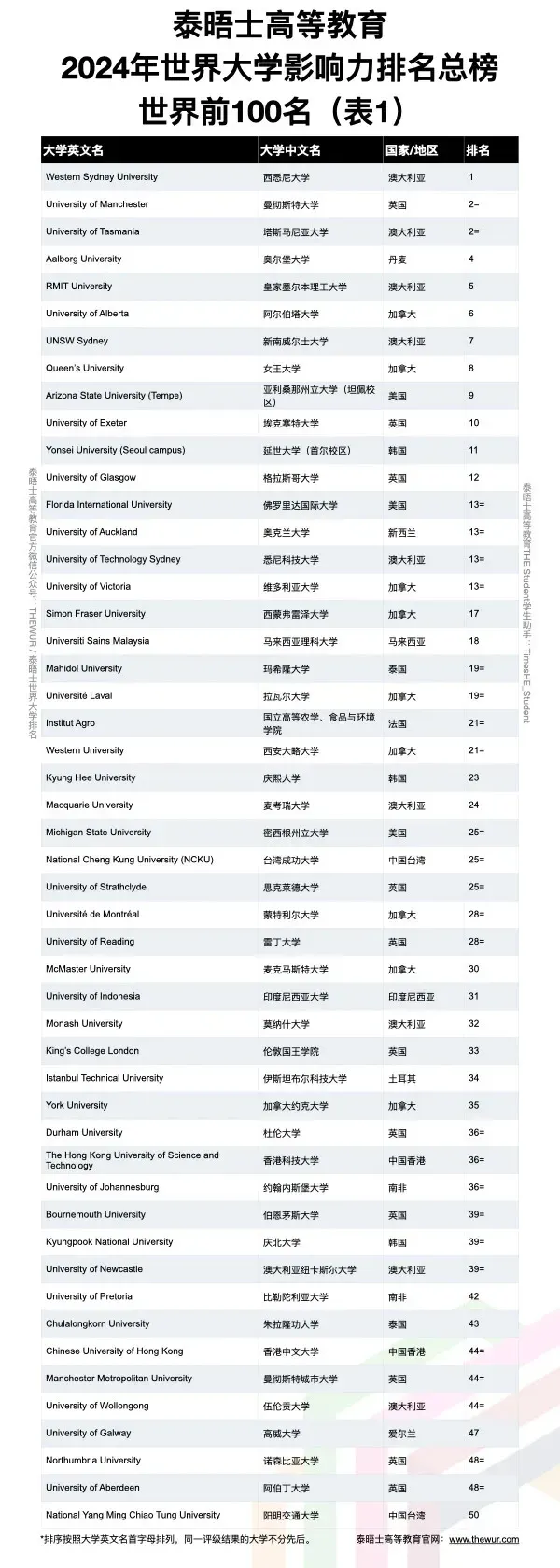
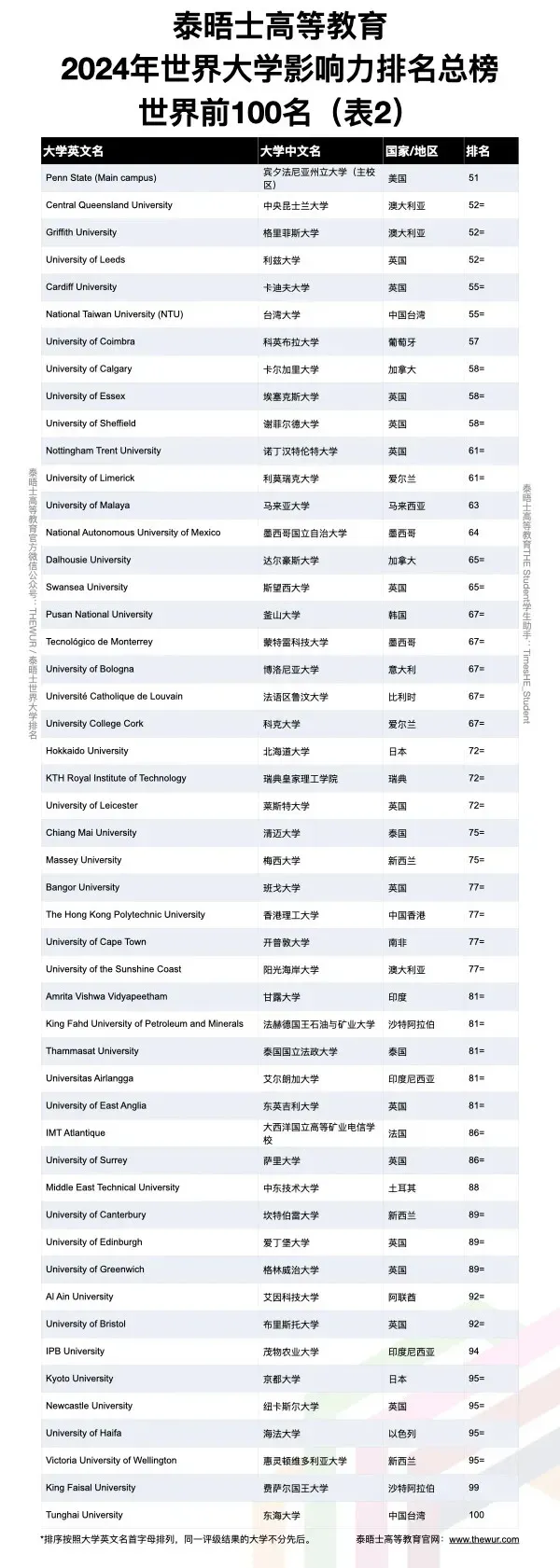
Notably, six mainland Chinese universities entered the overall ranking this year, with four placing in the world's top 600.
Southern University of Science and Technology (SUSTech) ranked in the 301-400 band, making it the highest-ranked mainland Chinese university.
Shanghai Normal University debuted in the overall ranking, placing in the 401-600 band. Shantou University and Soochow University also appeared in the 401-600 band.
Select SDG Rankings
Sustainable Development Goal – No Poverty
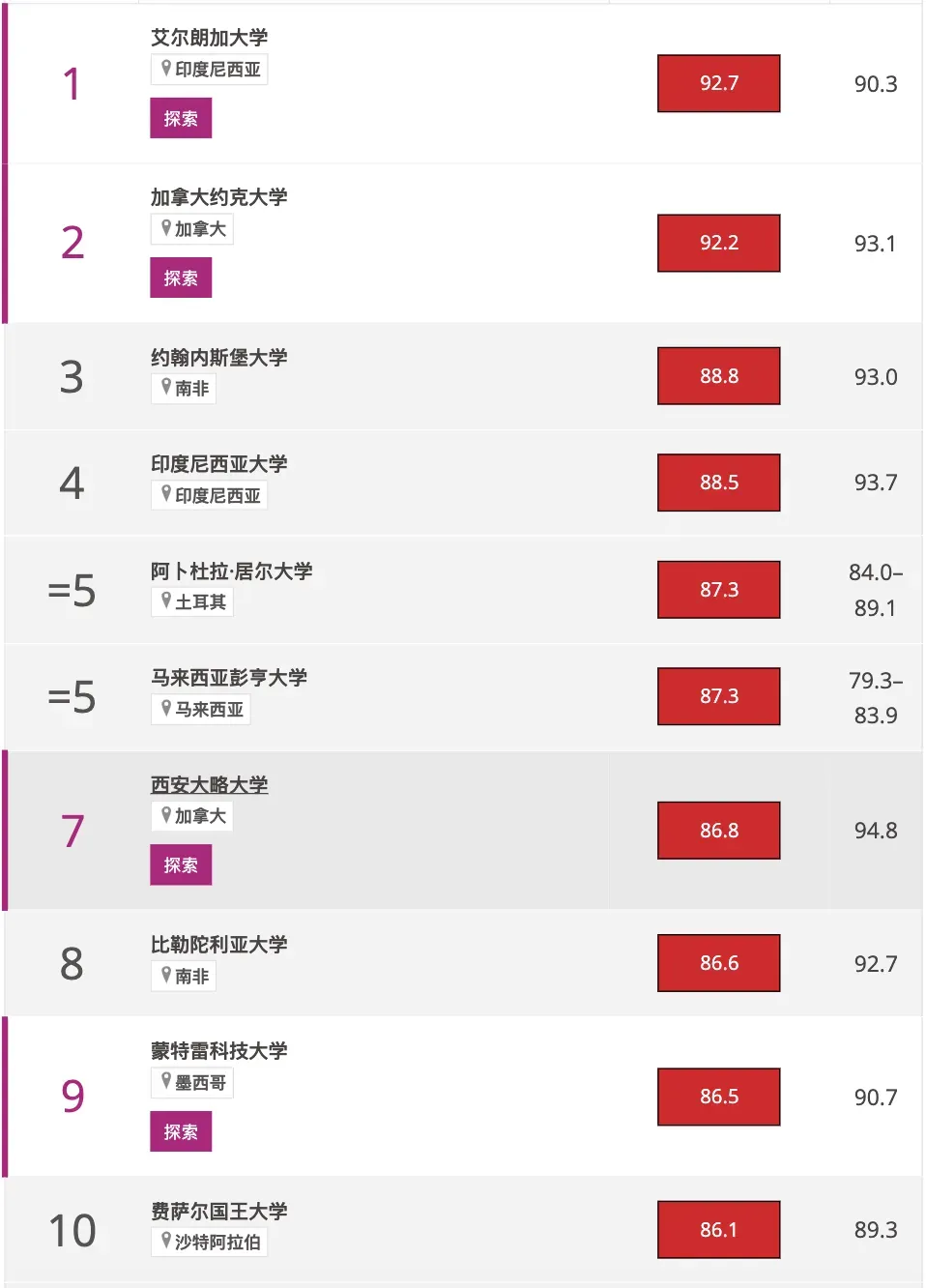
This ranking evaluates universities' research on poverty, as well as their support for impoverished students and community residents.
Topping this ranking are Universitas Airlangga in Indonesia, York University in Canada, and the University of Johannesburg in South Africa.
Sustainable Development Goal – Zero Hunger

This ranking measures universities' efforts in developing solutions to world hunger, conducting in-depth research on food security, and creating plans aimed at achieving zero hunger globally.
The top three universities in this category are Queen's University in Canada, Oklahoma State University in the United States, and Lincoln University in New Zealand. Queen's University is the only institution in this ranking to score above 90 on this indicator.
Sustainable Development Goal – Good Health and Well-being
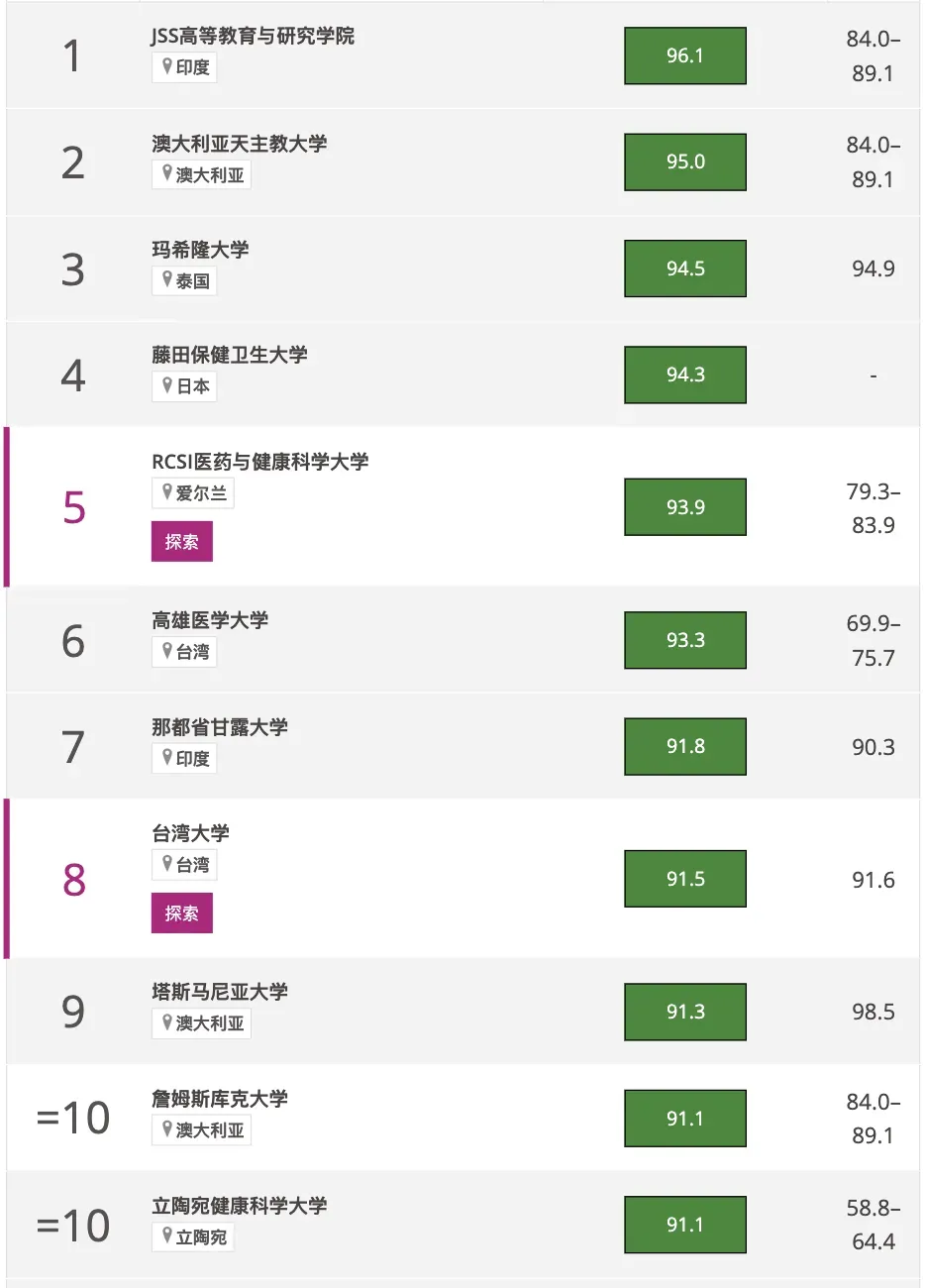
This assessment evaluates universities' research on key diseases and health conditions, support for healthcare professions, and the health of students and staff.
Universities listed not only promote community health but also make significant contributions to global health improvement, bringing about profound changes in the lives of diverse populations.
The top three institutions are JSS Academy of Higher Education & Research in India, Australian Catholic University, and Mahidol University in Thailand.
Sustainable Development Goal – Quality Education
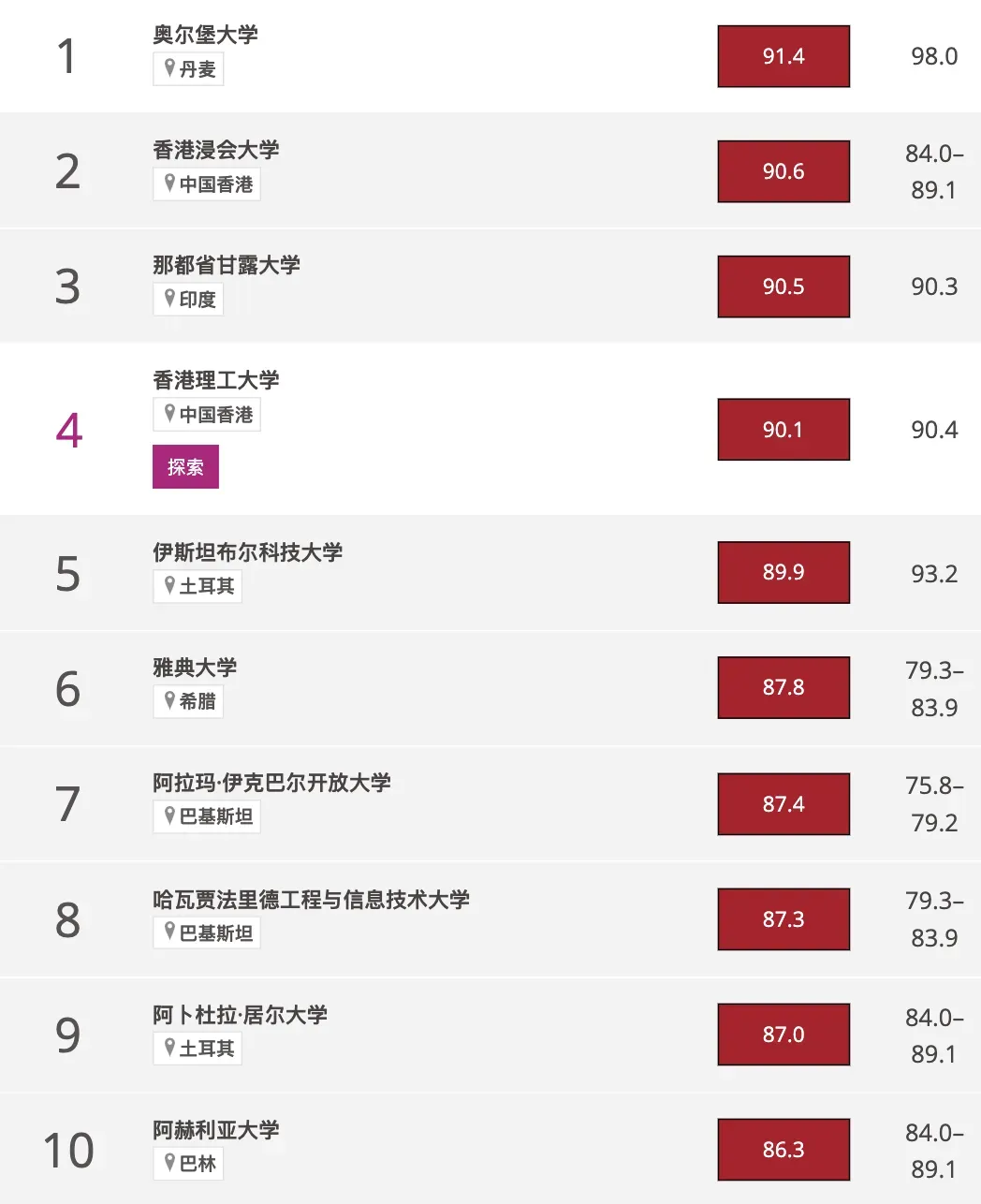
This ranking assesses universities that excel in providing equitable quality education, promoting vocational training, and offering lifelong learning opportunities.
Their innovative approaches ensure education is not only accessible but also adaptable to society's changing needs, thereby supporting sustainable development and reducing inequalities within and among countries.
Competition in this ranking was intense: Aalborg University in Denmark ranked first with a score of 91.4, followed by Hong Kong Baptist University from China's Hong Kong and Amrita University in India, which placed second and third.
Sustainable Development Goal – Gender Equality
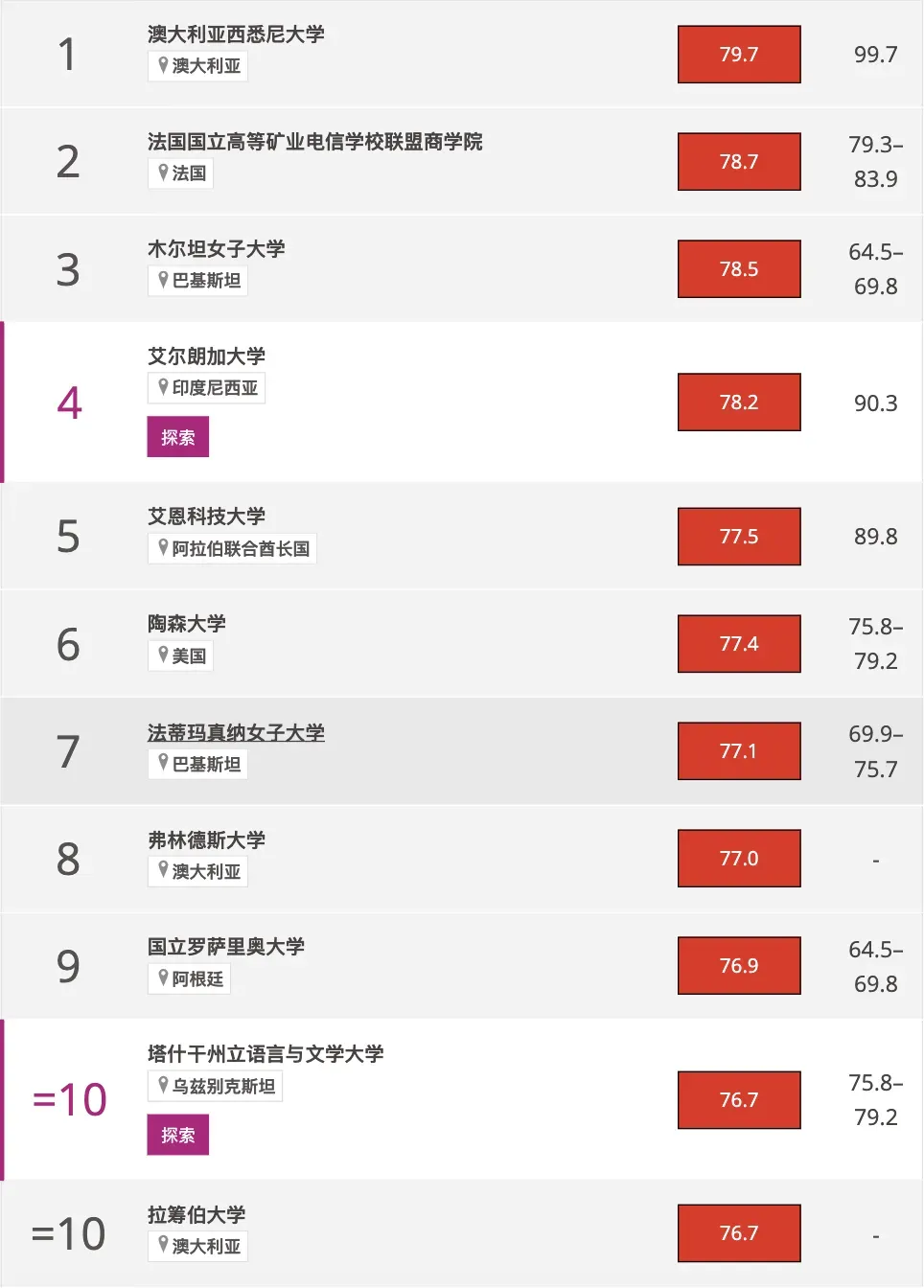
This ranking measures institutions' efforts in addressing gender equality issues. These listed universities provide equal educational opportunities and leadership roles for women, creating an environment conducive to women's development.
The top three universities in this ranking are Western Sydney University in Australia, Institut Mines-Télécom Business School in France, and The Women University Multan in Pakistan.
When selecting schools, rankings can help us understand how different universities perform in various fields, but they should only be used as a reference.
Diverse rankings can be dazzling, but what matters most is being able to see through the rankings to determine whether a school's strengths in all aspects match your own needs.
Rankings are not everything. Rational and personalized consideration, with rankings as a guide, is the right way to choose a school!