
In today's data-driven era, policymakers and public sector managers increasingly rely on sophisticated data analysis and computational techniques to formulate and evaluate policies. The University of Chicago's Master of Science in Computational Analysis and Public Policy (MSCAPP) is designed to cultivate professionals who can lead at this intersection. This program not only reflects the school's forward-thinking approach to education at the nexus of data science and public policy, but is also currently the only public policy master's program in the U.S. with STEM certification.For more details and any questions related to graduate applications, you can also scan the QR code below for a one-on-one consultation.

I. Program Overview
The University of Chicago's MSc in Computational Analysis and Public Policy is jointly offered by the Harris School of Public Policy and the Department of Computer Science, aiming to combine the depth of public policy with the breadth of data science. Students will learn to apply advanced computational tools and data analysis methods to solve complex public policy issues, such as social inequality, environmental policy, and healthcare reform.
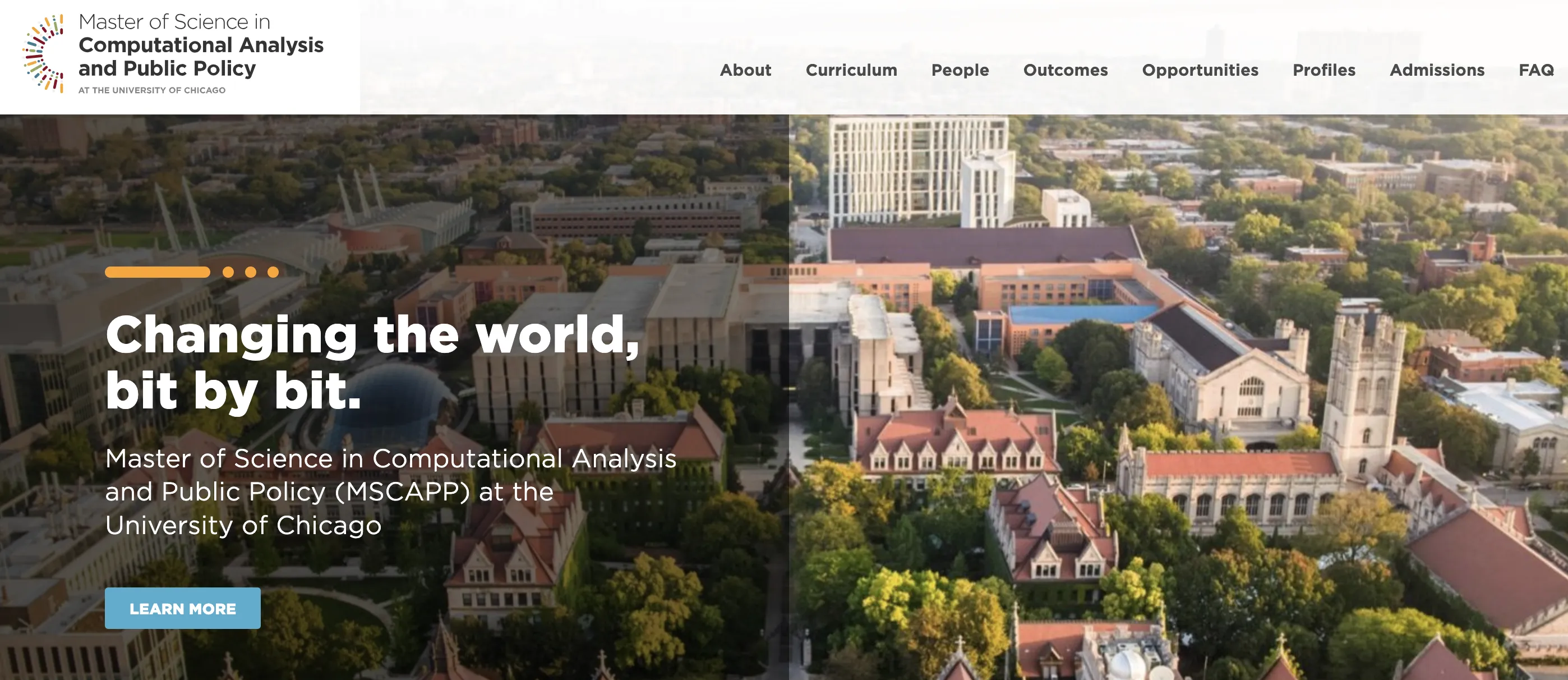
Official website: https://capp.uchicago.edu/
II. Curriculum
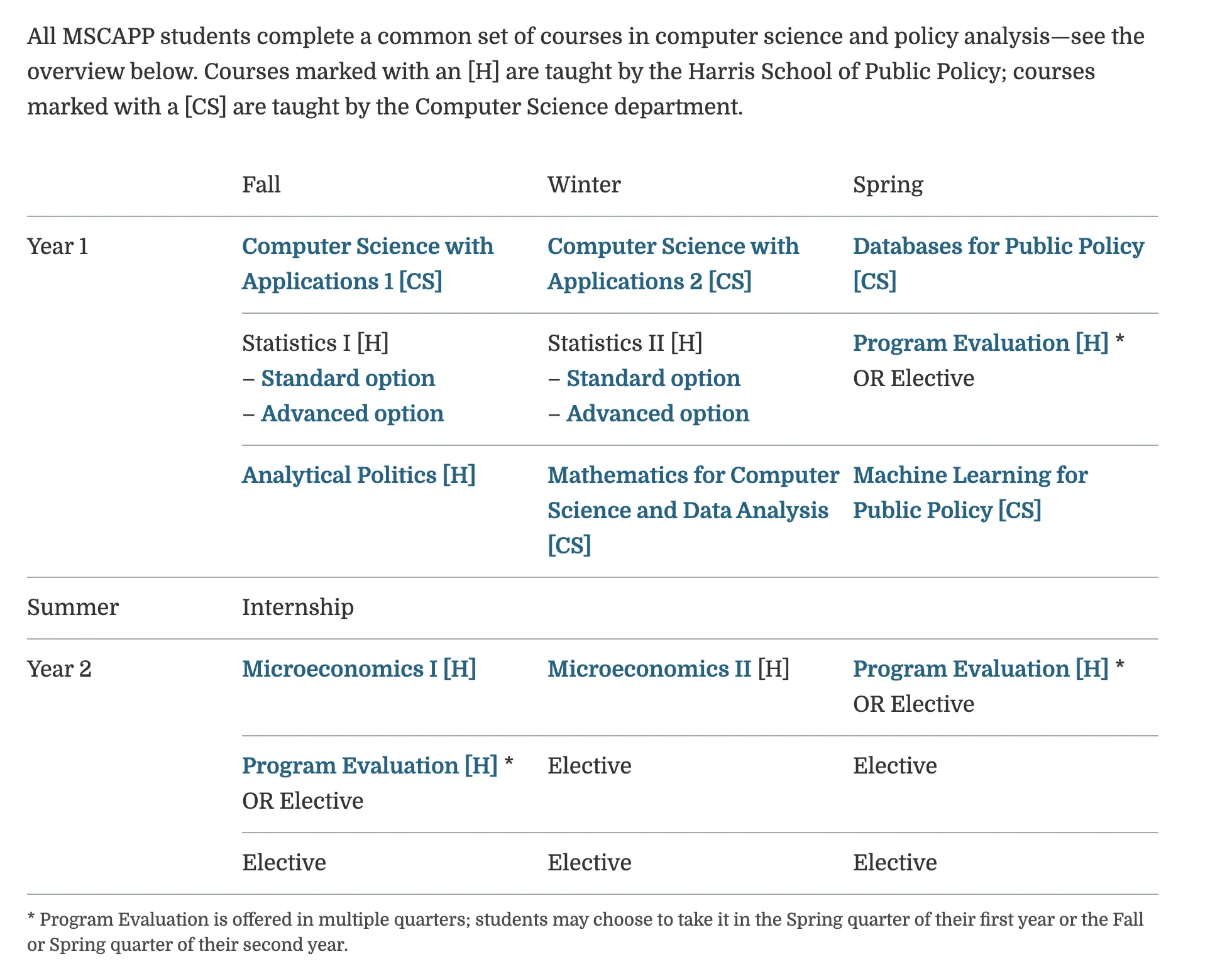
The program's curriculum covers public policy analysis, data science, machine learning, policy evaluation, predictive modeling, and more. Students will study technical courses such as statistics, computer programming, database management, and algorithm design, while also gaining a deep understanding of public policy theory and practice. Additionally, the program offers internship opportunities and research projects to help students apply theoretical knowledge to real policy issues. The MSCAPP degree requires completion of 18 graduate-level courses (1800 credits), including at least seven Harris courses (six core + one elective) and six computer science courses (five core + one elective).
III. Application Requirements
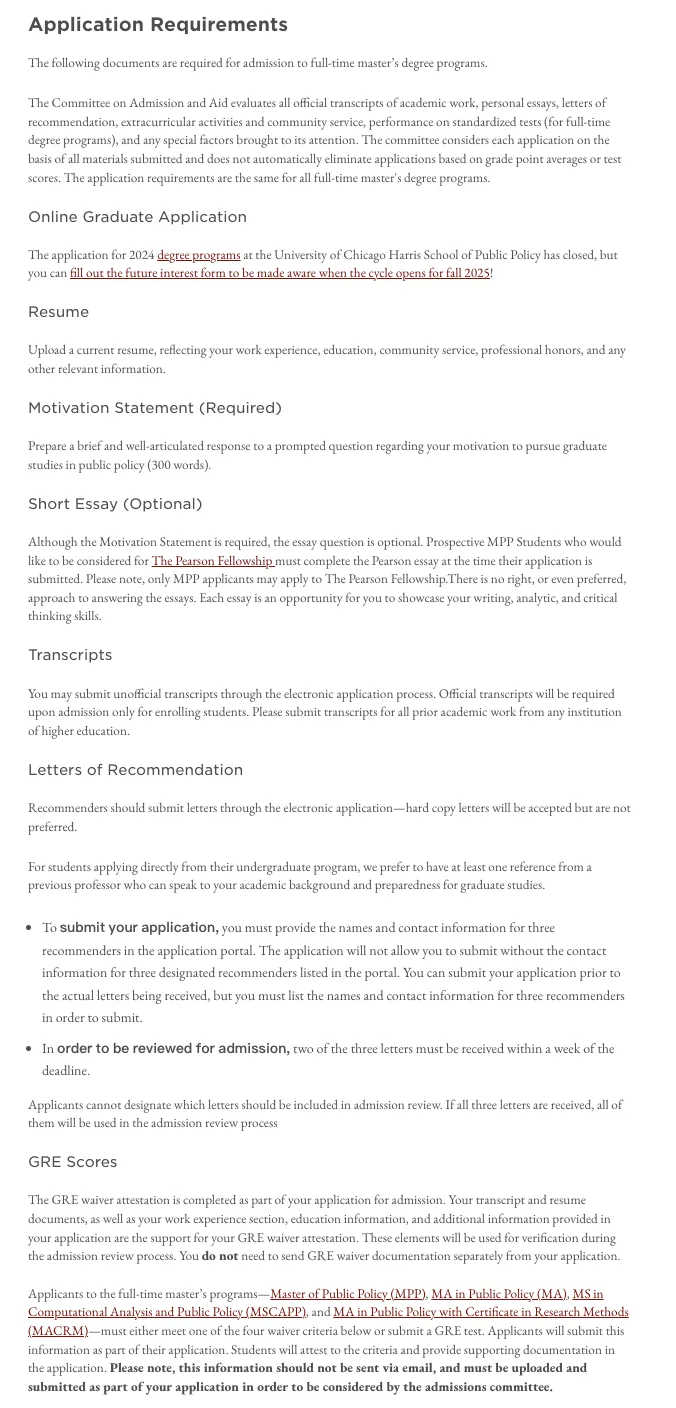
Candidates applying to the MSc in Computational Analysis and Public Policy should possess a strong background in mathematics and statistics, along with a passion for public policy. A bachelor's degree in a relevant field such as computer science, economics, mathematics, statistics, or public policy is typically required. Good English proficiency is also necessary, with a minimum TOEFL or IELTS score usually expected.
IV. Career Prospects
Graduates will be equipped to work in government agencies, non-profit organizations, think tanks, consulting firms, and technology companies. They can pursue roles such as policy analyst, data scientist, program evaluation specialist, and public policy consultant, or choose to continue their education by pursuing a doctoral degree and academic research.
For more admission case studies and questions about studying abroad and graduate applications, you can also add the contact information of a CheersYou(清柚教育) consultant below for more details.