
Carnegie Mellon University's (CMU) Master of Science in Computational Finance (MSCF) program, jointly developed by four colleges at CMU, enjoys a strong reputation in the global financial engineering field. The program deeply integrates knowledge in financial theory, mathematical models, statistical analysis, and computational technology, aiming to equip students with advanced computing and quantitative analysis skills for the finance industry.For more details and any questions about graduate applications, you can also scan the QR code below for a one-on-one consultation.

1. Program Overview
Carnegie Mellon University's four colleges collaborated to develop the Master of Science in Computational Finance (MSCF) curriculum. This inter-college approach enables the MSCF program to offer a tightly integrated foundation in statistics, computer science, mathematics, and finance—the essential building blocks of computational finance. The program spans 1.5 years, with the option to study at either the Pittsburgh or New York campus. The MSCF program strikes an excellent balance between theoretical learning and practical application. Through a fixed, specialized curriculum in quantitative, applied finance, and computational coursework, students gain a fully integrated, cross-disciplinary approach to quantitative finance.
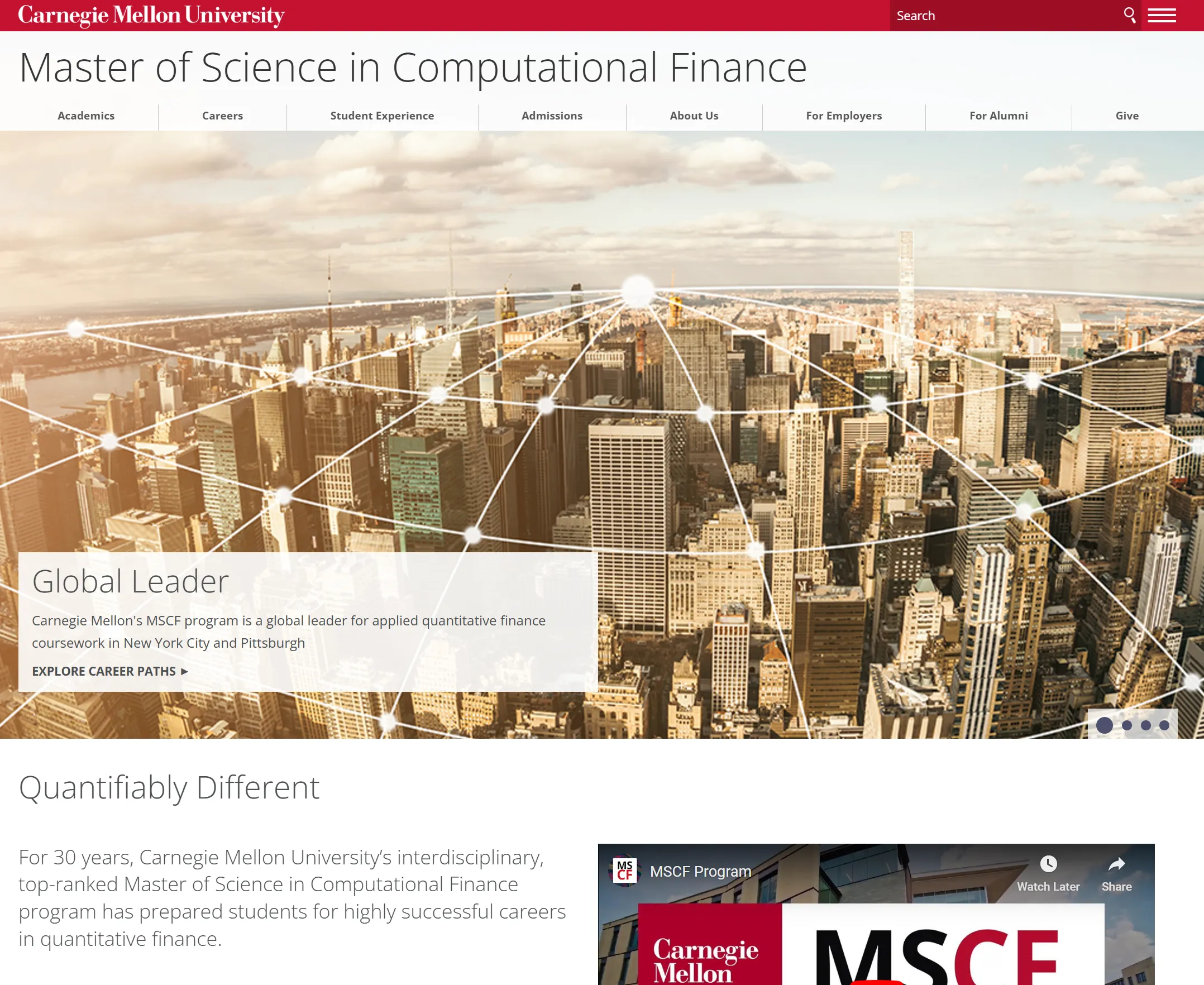
Official Website: https://www.cmu.edu/mscf/
2. Curriculum
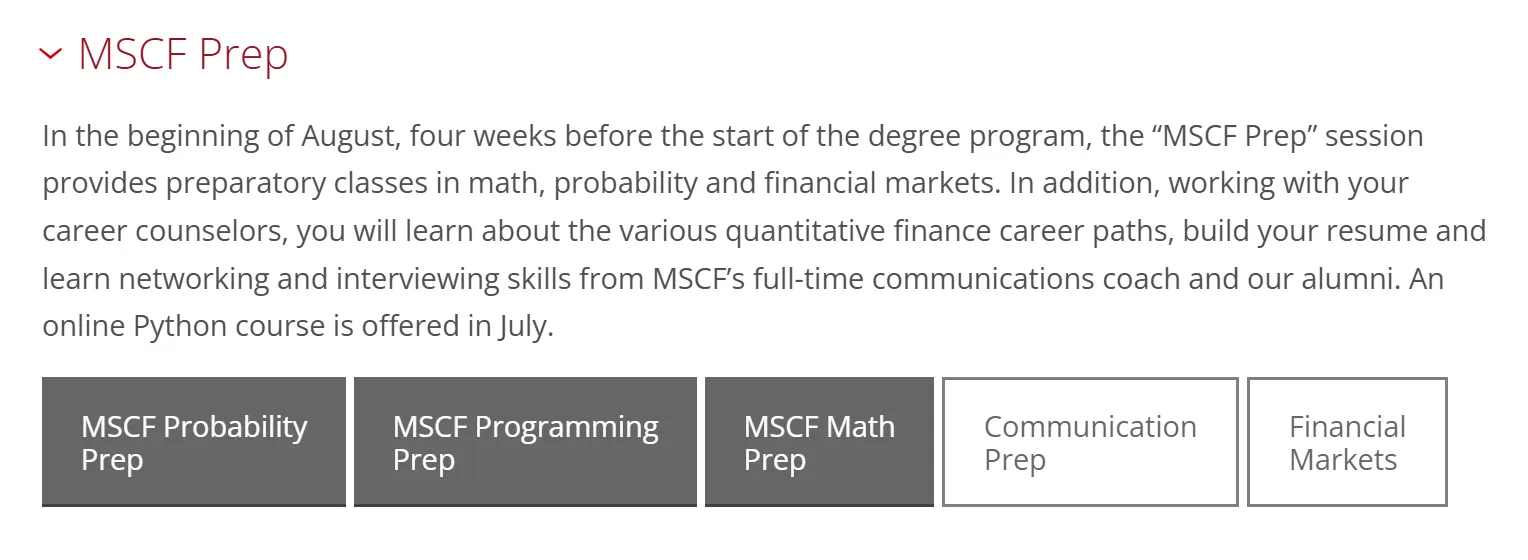
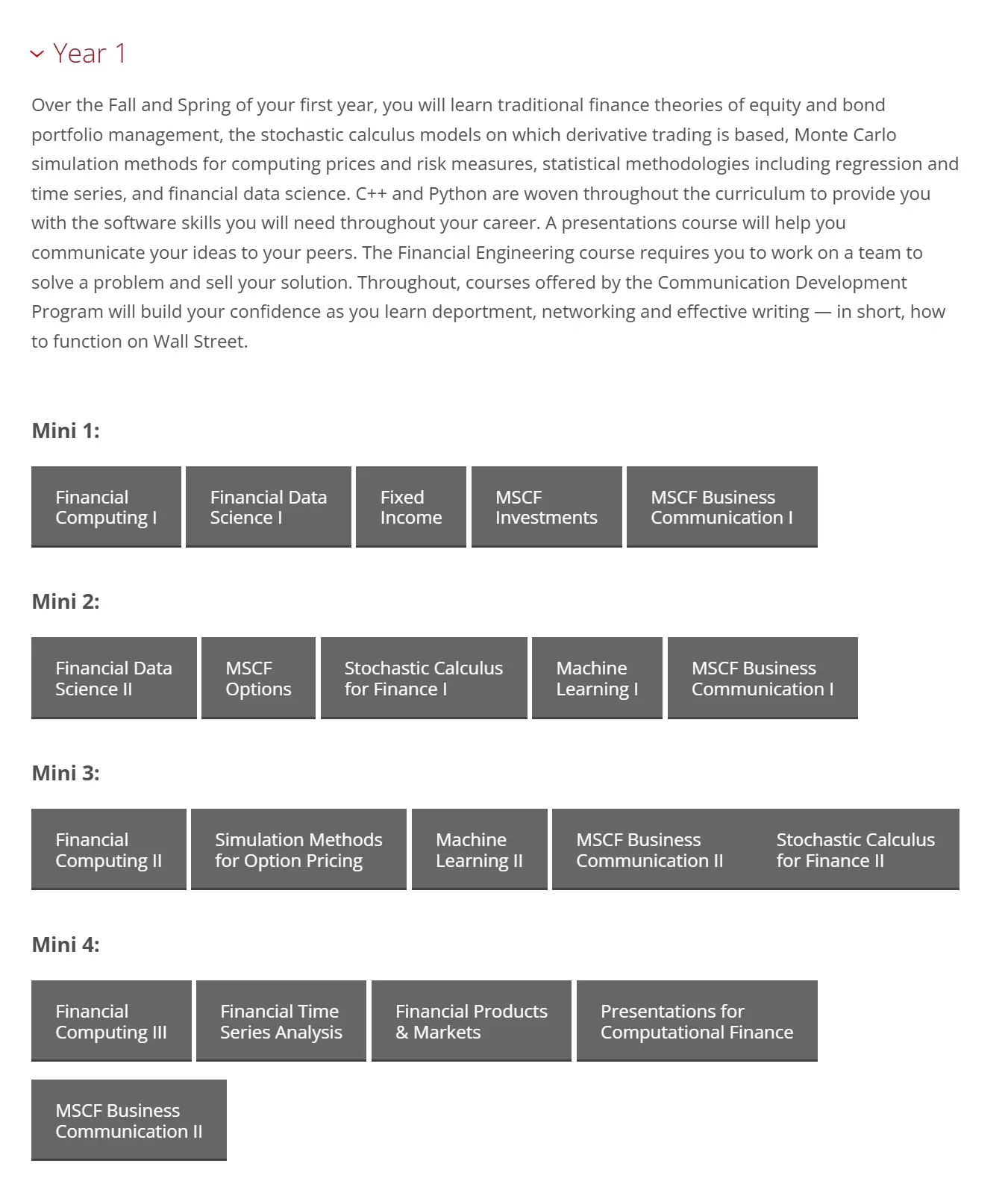
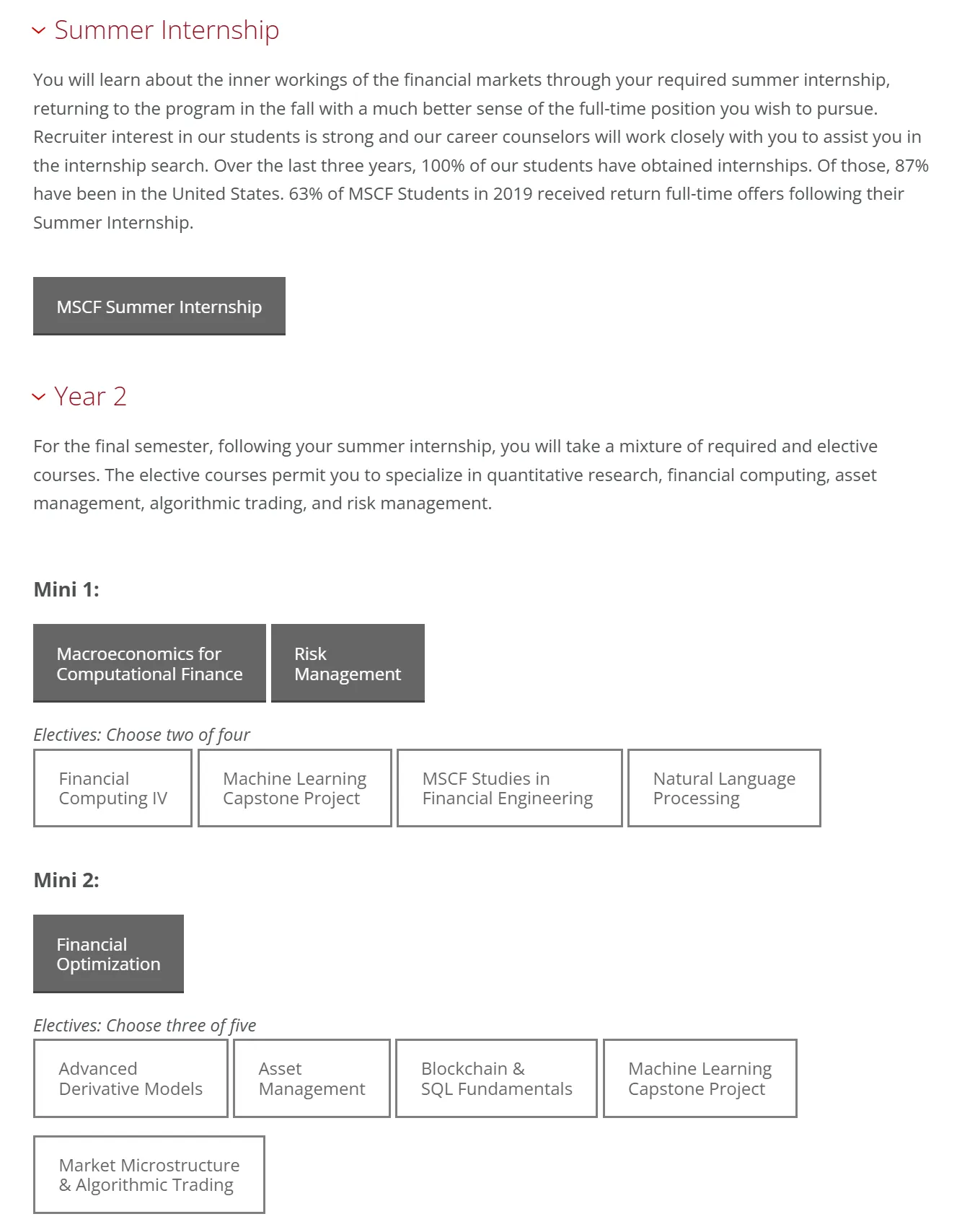
The program's curriculum is exceptionally comprehensive. Before the official start, students are required to take a series of preparatory courses in mathematics, probability, financial markets, interview skills, and more. Core courses include quantitative finance, asset pricing, derivatives pricing, risk management, statistical analysis, and computational methods, ensuring students can flexibly apply their knowledge in practice. Moreover, with CMU's renowned strength in computer science, C++ and Python are woven throughout the entire curriculum, guaranteeing students master essential programming skills. Students also participate in a summer internship, during which they may even secure a return offer.
3. Admission Requirements
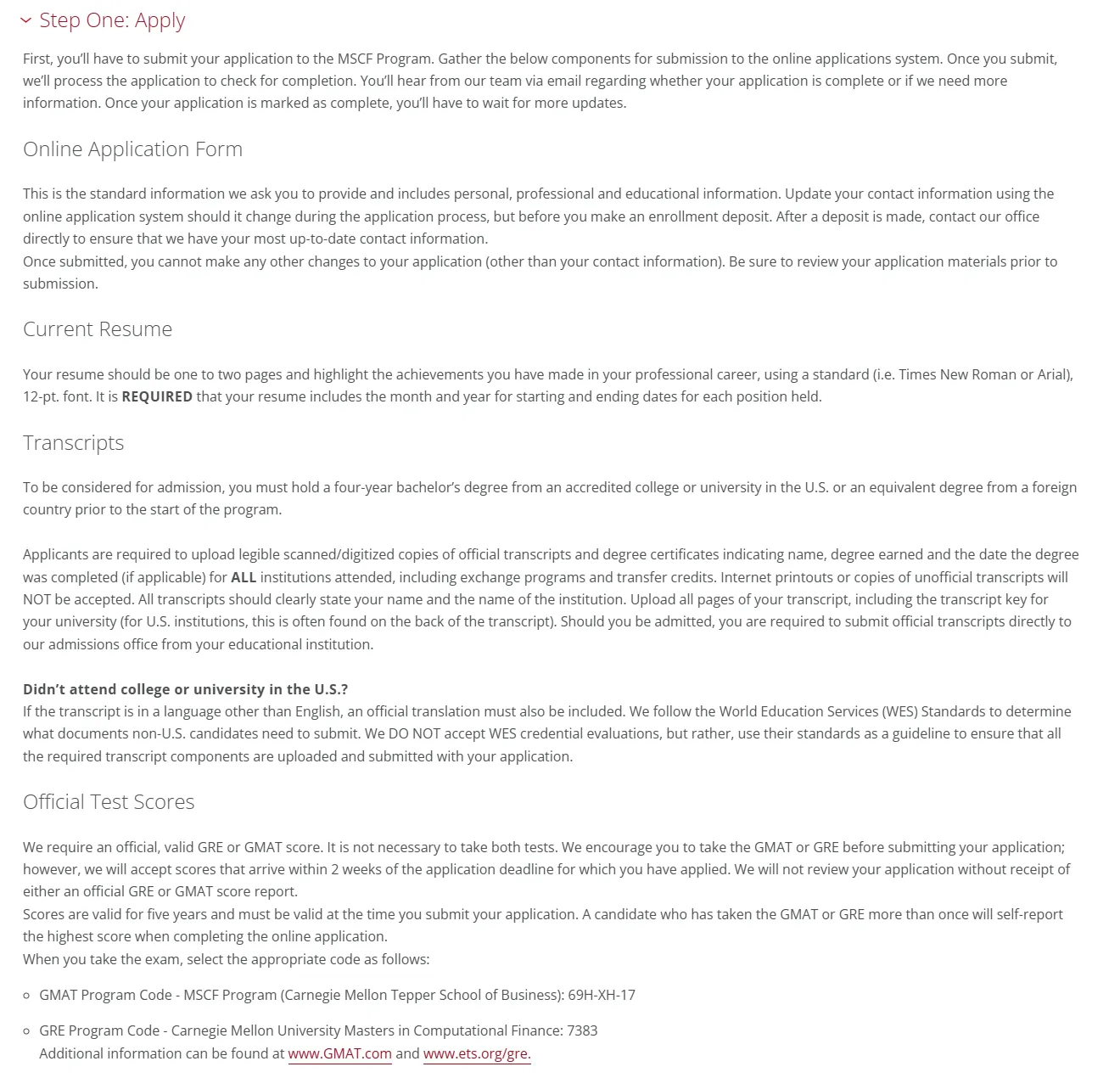
Based on previous years' experience, competition for this program is extremely fierce. Successful applicants typically need at least a 3.8 GPA, a GMAT score of 728 or a GRE score of 330+, and impressive internship experience to strengthen their chances. The first application round deadline is December 1, 2024, and the second round is March 2, 2025. Applicants are advised to submit complete materials as early as possible to improve their odds of admission.
4. Career Prospects
As the financial market's demand for big data and AI technologies grows, MSCF graduates are highly sought after by employers in quantitative trading, risk modeling, asset allocation optimization, and related fields. MSCF graduates enjoy strong market competitiveness. According to official CMU data, over the past three years, 99% of students secured full-time employment within six months of graduation. Many have taken positions at top firms such as J.P. Morgan and Goldman Sachs as quantitative analysts, financial engineers, risk managers, data scientists, and investment strategy analysts.
For more admission case studies and questions about graduate applications, feel free to add the contact information of CheersYou(清柚教育) advisors below for further details.