The University of Hong Kong (HKU) has launched a brand-new master's program this year—the Master of Arts in AI, Ethics and Society (MAAIES). This program aims to cultivate interdisciplinary talents equipped to address the ethical, social, political, and economic challenges and opportunities arising from artificial intelligence (AI) technologies. Through rigorous theoretical study and practical application, students will be able to apply their knowledge effectively in diverse contexts and contribute to societal progress. In the ongoing 25Fall application cycle, one of our students has already received an offer for the MAAIES program. Today, let’s take a closer look at this program—and for more details or any questions about graduate applications, feel free to scan the QR code below for a one-on-one consultation.
I. Program Overview
The Master of Arts in AI, Ethics and Society (MA-AIES) is a full-time, one-year program dedicated to the normative study of artificial intelligence and related technologies, their impacts, and developmental trajectories. The program takes ethical, social, and political questions as its starting point: Should we, and how should we, allow AI and related technologies to transform our lives? For instance, should we let AI make decisions for us when we don’t fully understand the reasoning behind those decisions? How do we ensure that AI-driven decisions are fair and just? How should we identify and address bias and security risks in AI? How do AI technologies affect privacy, politics, and human relationships?
Through a rigorous curriculum, students will gain an in-depth understanding of the ethical, social, and economic implications of AI and emerging technologies. By the end of the program, they will be able to apply this knowledge in various contexts, including policy-making, business strategy, ethical design, creative industries, education, and research.
The program features a dedicated career advisor who assists students and graduates, ensuring participants receive tailored guidance and support during career transitions.
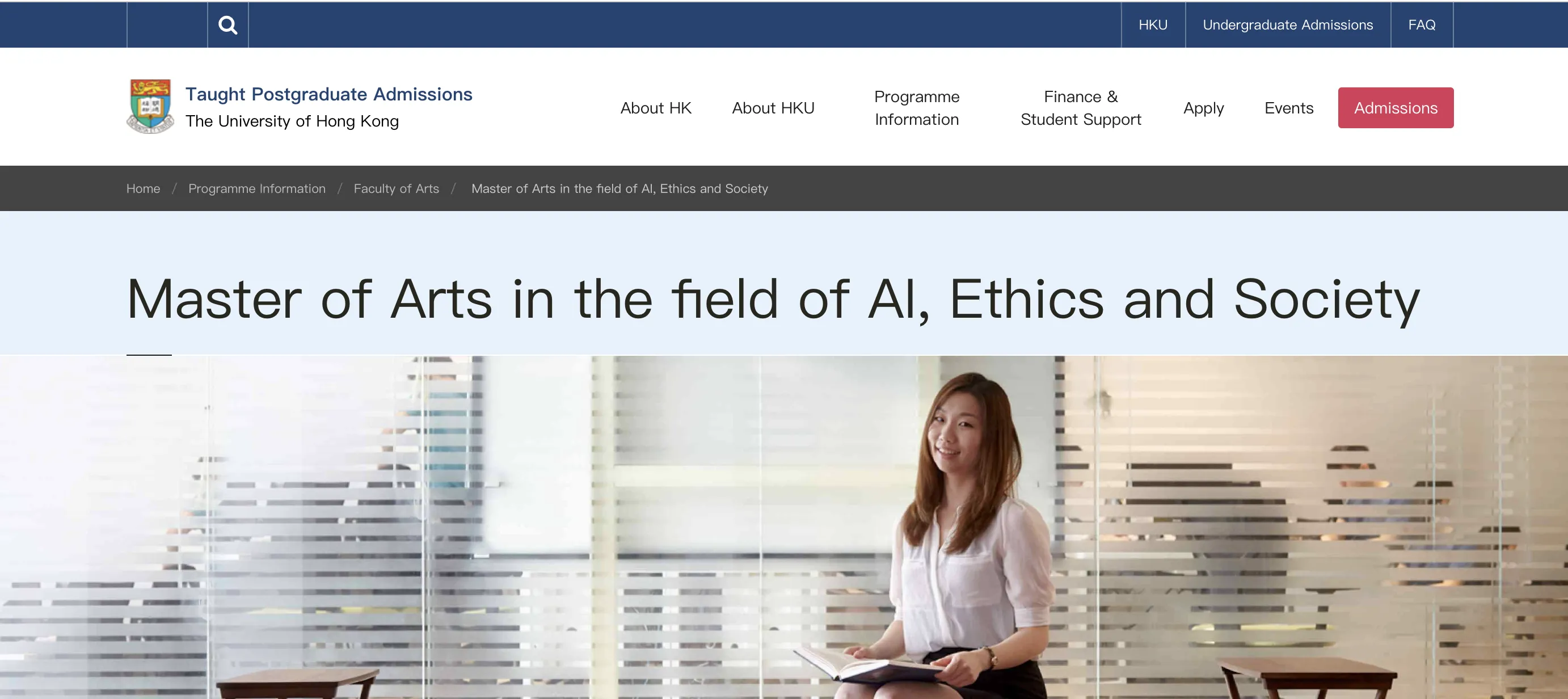
Official website: https://admissions.hku.hk/tpg/programme/master-arts-field-ai-ethics-and-...
II. Curriculum
The program adopts an interdisciplinary approach, drawing on a range of fields including philosophy, computer science, social sciences, law, political science, and the humanities. Through a rigorous curriculum that combines theoretical and practical methods, students will develop a deep understanding of the ethical, social, political, and economic impacts of AI. They will also learn to apply this knowledge in various settings, such as decision-making, business strategy, ethical design, and creative industries.
Core Courses:
· Fundamentals of AI, Data, and Algorithms
· Ethics: AI, Data, and Algorithms
· The Nature of AI
Elective Courses:
· AI Safety and Security
· AI Regulation and Governance
· Mind and Machine
· Philosophy and Ethics of Virtual Reality
· Philosophy and Ethics of Information
· Technology and Human Values
· Formal Methods for AI, Ethics, and Society
In addition, students will have the opportunity to engage with cutting-edge research and innovation through HKU's AI & Humanity Lab, participate in expert lectures and discussions, and further expand their knowledge at the intersection of AI and society.
III. Admission Requirements
- Applicants must hold a recognized bachelor's degree. While there is no strict restriction on academic background, prior research experience in AI, ethics, and society-related issues is required.
- Applicants whose undergraduate instruction was not entirely in English must provide satisfactory language test scores: IELTS minimum overall score of 7.0 (with no subscore below 5.5) or TOEFL score of 80 or above (with a Writing score of 25 or above).
- A written test may be required to assess applicants' relevant competencies.
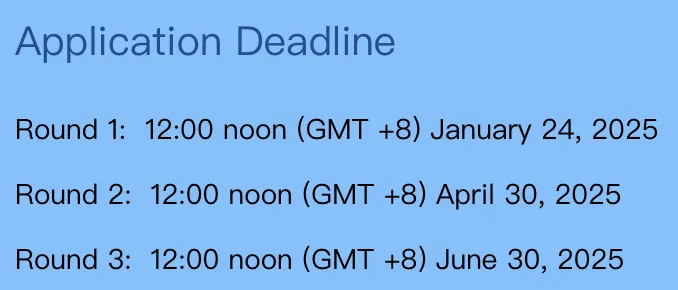
The first round of applications has opened this year, and the three deadlines are as follows:
IV. Career Prospects
With the rapid development of AI technology, there is a growing demand for professionals with knowledge of AI ethics and societal impact. Graduates can find extensive employment opportunities in various fields, including:
- Tech companies: Work as AI ethics consultants, data analysts, or product managers, participating in the ethical design and governance of AI products.
- Government and non-profit organizations: Engage in policy analysis, social research, or public affairs, driving the formulation of AI-related social policies.
- Academic institutions: Pursue further studies or conduct research exploring the intersection of AI and society.
- Creative industries: Apply AI technologies in media, advertising, and cultural creative fields to innovate and design.
In summary, HKU's Master of Arts in AI, Ethics and Society offers students rich learning opportunities and broad career prospects, aiming to cultivate diverse talent for the future society. It is a highly recommended program, and one of our students has just received an offer for the MAAIES program.
.png?x-oss-process=style/opt-webp)
If you would like to learn more about detailed backgrounds, additional admission success stories, or have questions about graduate applications, feel free to contact a CheersYou(清柚教育) advisor below for more information.