Recently, the U.S. Department of Homeland Security (DHS) announced new H-1B regulations that simplify the approval process, enabling American companies to quickly hire international talent in critical fields. This is also great news for international students.
This set of H-1B reform measures will officially take effect on January 17, 2025, and applicants participating in this year's H-1B lottery must also prepare according to the new rules.
Key Benefits of the New H-1B Rules
Here are the highlights of the upcoming H-1B reform:
Increased Flexibility
-
Updated Definition of Specialty Occupation: Optimizes the definition and standards for specialty occupations, making more positions eligible for H-1B.
The new rules now require that the beneficiary's degree has a "direct logical connection" to the job duties, allowing reasonable flexibility. It also removes references to "Business Administration" and "Liberal Arts," no longer judging eligibility solely by degree title. This means more opportunities for cross-disciplinary employment and liberal arts graduates applying for H-1B visas.
-
Extended F-1 Status Transition: Allows international students on F-1 visas to maintain legal status and work authorization while transitioning to H-1B, avoiding status interruptions.
DHS has extended the Cap-Gap deadline from October 1 to April 1 of the following year, solving the issue of beneficiaries having to stop working while waiting for H-1B approval.
-
Expanded Cap Exemption: Redefines H-1B cap exemption eligibility for non-profit and government research organizations, broadening the pool of applicants eligible for the exemption and thereby increasing the number of exempt petitions.
Entrepreneurship-Based H-1B
-
Entrepreneur Application: Allows foreign nationals with a controlling interest in a company to self-sponsor for an H-1B, subject to reasonable conditions.
To prevent abuse of the H-1B program, DHS establishes conditions for cases where the beneficiary holds a controlling interest in the petitioner company, including: the beneficiary must primarily perform specialty occupation duties, and initial and first extension approvals are limited to 18 months to ensure the position is legitimate and meets specialty requirements.
Subsequent extensions of up to 3 years may be granted, with a total maximum stay of 6 years. DHS has not set a minimum investment amount for this.
The benefit of this new rule is that, in addition to finding an employer sponsor, individuals can now also self-sponsor an H-1B by starting a company in the U.S.
Faster Processing
-
Expedited Processing: USCIS will accelerate the adjudication of H-1B petitions for previously approved applicants.
Strengthened Integrity Measures
-
Enhanced Scrutiny: USCIS will conduct inspections and impose penalties on H-1B employers to ensure compliance.
-
Employer Legitimacy: Employers must demonstrate the bona fides of the offered position and support the required Labor Condition Application (LCA).
New Form and Effective Date
-
New I-129 Form: Starting January 17, 2025, all H-1B petitions must use the new edition of Form I-129; earlier versions will not be accepted.
These new H-1B regulations, building on last year's "one person, one lottery," aim to enhance employer flexibility while preventing abuse, ensuring transparency and reliability, and creating more opportunities for high-skilled talent to work in the U.S.
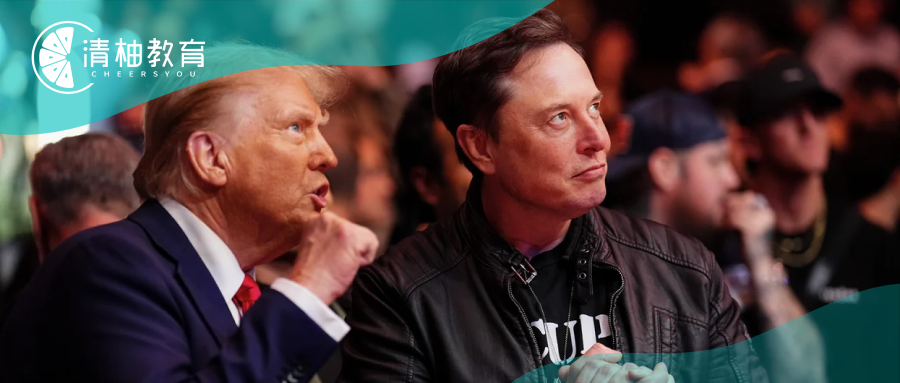
Musk Clashes with MAGA Over H-1B?
Even before the new H-1B rules take effect, Elon Musk has already clashed with Trump's hardcore MAGA supporters.
Late last month, Musk posted on X supporting the recruitment of top engineering talent into the U.S., comparing it to how the NBA recruits foreign players as a key to American success.
This comment caused an uproar among MAGA (Make America Great Again) supporters, sparking heated online debates.
"This isn't some championship game. The U.S. government should focus on making life better for its own people first."
"Are you telling me Americans can't do $70-80k entry-level jobs?"
Right-wing influencer Laura Loomer attacked Musk as a hypocrite, saying, "Tech billionaires are like termites in Palm Beach, eating away at MAGA from the inside."
As Musk's tweet was overrun by MAGA comments, he fired back directly:
"The reason I was able to build SpaceX, Tesla, and hundreds of other companies that make America strong alongside many key individuals is exactly because of H-1B visas. FK yourself. I will fight for this issue that you cannot understand."
This statement left MAGA supporters stunned.
After days of feuding between Musk and MAGA, Trump stepped in, stating that he "has not changed his position on H-1B."
Trump stated: "I've always felt that America needs the most capable people. We need competent individuals. We need smart people coming into our country. We need a lot of them. We're going to have job opportunities like never before."
Truly a leader's words—saying a lot but meaning nothing 😅
Trump has traditionally taken a hardline stance on immigration, advocating "Hire American first."
However, both key figures in Trump's new Department of Government Efficiency (DOGE) have immigrant backgrounds.
Musk was born in South Africa, moved to Canada with his mother, and later studied in the U.S. He once stayed in the U.S. on an H-1B visa, and his company Tesla also employs a large number of H-1B foreign workers.
Vivek, born into an Indian immigrant family, believes that American culture "venerates mediocrity over excellence," leading to the U.S. "failing to produce the best engineers."
Musk and Vivek share the same stance on H-1B, urging the new administration to bring in more foreign tech talent. This has infuriated many MAGA supporters, who backed Trump precisely because of his promise to prioritize hiring Americans.
During his first term, Trump restricted the H-1B program, arguing that "the visa allows companies to replace American workers with lower-paid foreign employees."
On the other hand, tech companies rely on H-1B visas to bring in thousands of foreign engineers and other technical staff from India, China, and other countries every year.
The tech industry has long called for increasing the number of H-1B visas to attract high-skilled talent to the U.S. Musk's support for H-1B is largely driven by his own business interests. After all, H-1B workers are hardworking, efficient, and highly cost-effective.
With his global workforce now reaching 110,000, he needs talented foreign employees to reduce operating costs—a sentiment shared by the U.S. government.
When he visited Tesla's factory in China, he praised Chinese workers for their diligence, saying, "They are still working overtime at 3 a.m., while Americans just don't want to work."
Critics argue that this introduction of "catfish" into the workforce intensifies competition in the U.S. labor market, especially in tech, further raising technical thresholds and workplace pressure.
Capitalists prioritize profits, MAGA prioritizes white supremacy—let's see which side prevails.
For international students, favorable policies on H-1B and green cards are the topics of greater concern.
Although Trump has historically taken a tough stance on H-1B, his decision to appoint Musk to head DOGE, and his ambiguous, fence-sitting response to MAGA's outrage this time, make it hard to predict.
During the campaign, Trump even suggested granting green cards directly to international students graduating from U.S. universities—though his campaign quickly retracted the statement, it suggests a significant shift in attitude over four years.
As Trump prepares to take office, he may outwardly continue to advocate protecting jobs for American workers, but might adopt some relaxation measures for high-skilled foreign technical workers, especially in tech and engineering.
At the same time, he could push for immigration policies based on labor market needs, ensuring the number and type of foreign workers entering the U.S. align with actual demand.
After all, during his second term, with the U.S. fiscal deficit soaring, there is an urgent need to improve government efficiency. Trump's approach to employment-based immigration will likely be more cautious, which could also bring new opportunities for work visas. Let's wait and see.