In today’s data-driven era, the combination of economics and data science is becoming increasingly important. Facing complex economic phenomena, traditional economic thinking alone can no longer answer many real-world questions. The University of Manchester’s MSc Economics and Data Science program was established precisely to address this need, aiming to train students to use advanced data analysis techniques and economic theories to gain a deeper understanding of economic dynamics. This program not only provides a solid academic foundation but also emphasizes the cultivation of practical skills, helping students build stronger competitiveness in a rapidly changing economic environment. In the ongoing 25Fall application season, we’ve had students receive offers for the Economics and Data Science program. Today, let’s take a closer look at this program. For detailed information and more graduate application queries, you can also scan the QR code below for a one-on-one consultation.
Program Overview
The University of Manchester’s MSc Economics and Data Science is a master’s program integrating economic theory and data science practice, designed to equip students with the ability to use data analysis to solve practical problems in modern economic settings. The program offers a rich curriculum and hands-on opportunities, enabling students to stand out in a fast-evolving economic landscape.
Official link: https://www.manchester.ac.uk/study/masters/courses/list/21299/msc-econom...
Curriculum
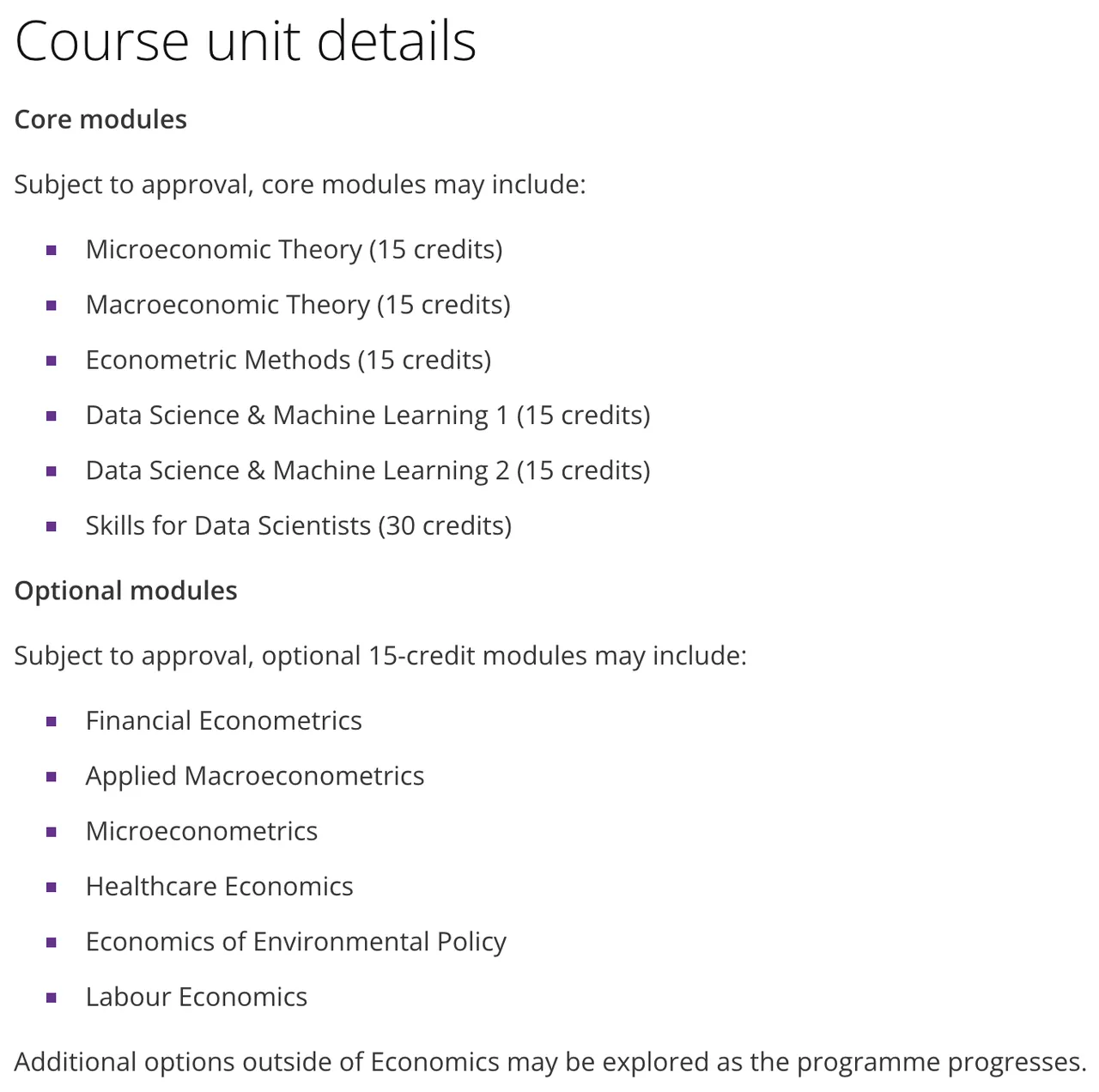
The MSc Economics and Data Science curriculum is comprehensive, divided into the following main parts:
-
Core Courses:
- Principles of Economics: Covering the foundations of microeconomics and macroeconomics.
- Econometrics: Teaching applications of data analysis and statistical models.
- Data Science Methods: Introducing data mining, machine learning, and their applications in economics.
- Economic Policy Analysis: Evaluating and designing economic policies, analyzing their impact.
-
Elective Courses: Based on personal interest, students can choose from a variety of electives covering broader topics in economics and data science.
-
Projects and Internships: The program typically includes an internship or project work, providing students with practical experience to apply theoretical knowledge in real-world settings.
Admission Requirements
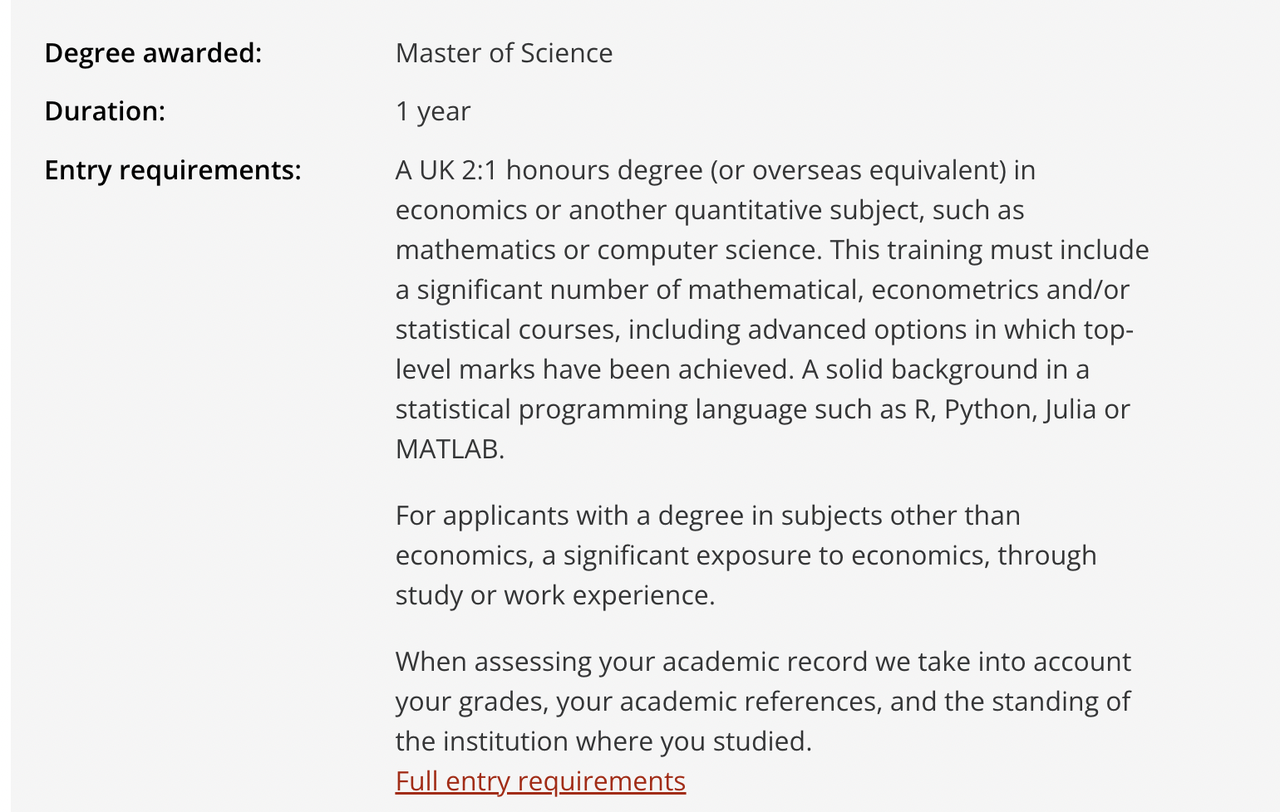
When applying for the MSc Economics and Data Science program, students must meet the following basic requirements:
- Academic Background: Applicants should hold a bachelor’s degree in a relevant field such as economics, mathematics, statistics, or computer science. Graduates from domestic Chinese universities need to have graduated from a recognized institution with a weighted average score of 80–85 or above (specific score requirements vary depending on the institution’s background).
- Grade Requirements: Usually a UK Upper Second-Class Honours degree or equivalent is required.
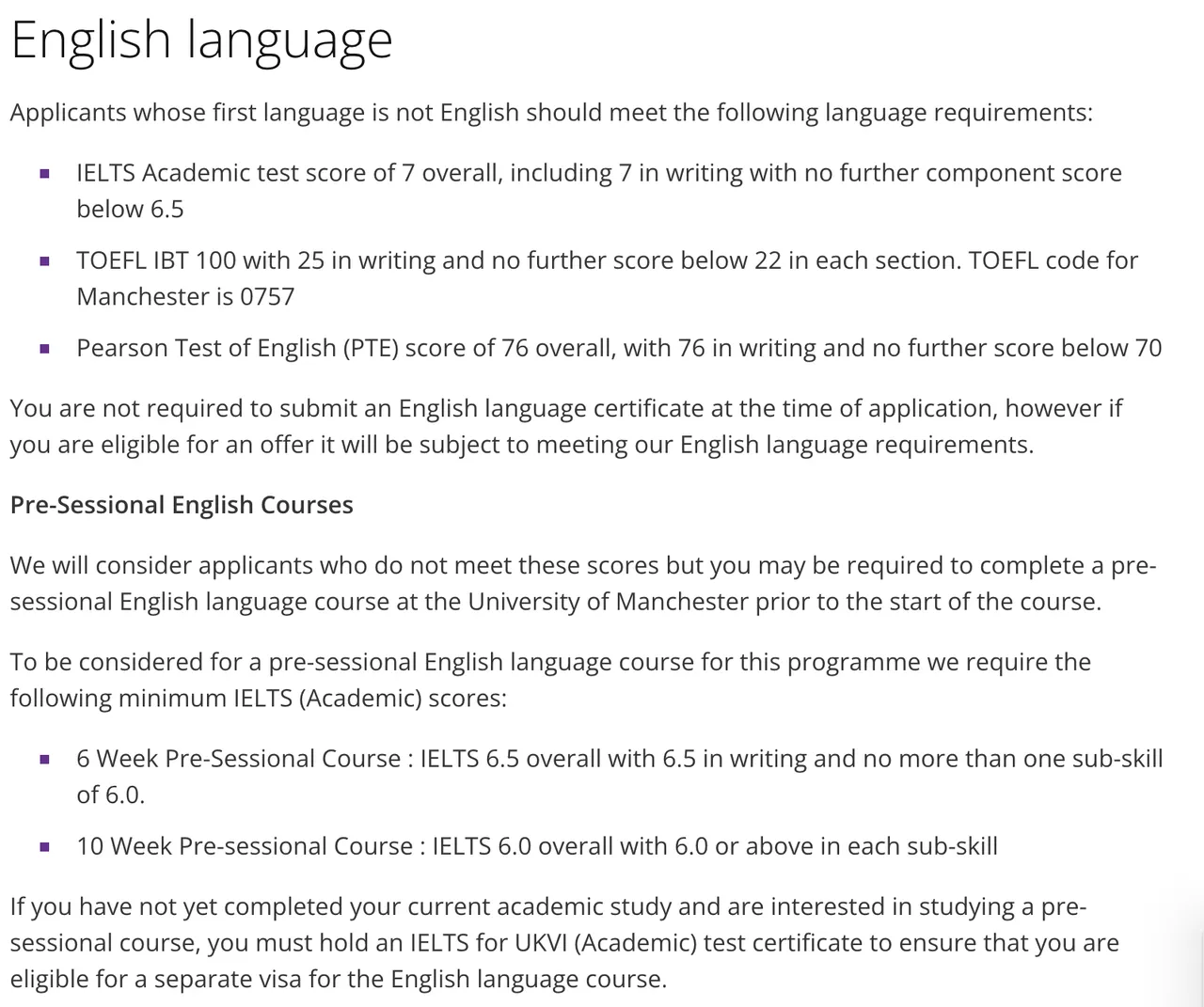
- English Language Proficiency: Non-native English speakers must provide IELTS (typically overall 6.5, with no sub-score below 6.0) or TOEFL scores.
- Letters of Recommendation and Personal Statement: Applicants need to submit recommendation letters and a personal statement that demonstrate their academic background and career goals.
Career Prospects
Graduates of the MSc Economics and Data Science program will possess key skills in economics and data science, enabling them to pursue careers such as:
- Data Analyst: Working in finance, market research, or policy analysis.
- Economic Consultant: Providing economic policy advice to governments or businesses.
- Business Intelligence Analyst: Using data science tools to optimize corporate decision-making.
- Researcher: Conducting economic research in universities, think tanks, or NGOs.
With a solid grasp of both economics and data science, graduates will be highly competitive in the job market and can enter a variety of industries.
The University of Manchester’s MSc Economics and Data Science provides an excellent learning platform for students aiming to succeed in the intersection of economics and data science. Through systematic coursework and abundant practical experience, students will lay a solid foundation for their future careers. If you are passionate about data analysis and economics, this is a master’s program very worth applying to. Our students have also received offers for this program in the latest application season. For detailed timelines and backgrounds, along with more admission cases and study-abroad application-related questions, you can also contact CheersYou(清柚教育) via the contact details below for more information.