In an era of rapid technological advancement, the integration of technology and management has become a key driving force across industries. The MS in Technology Management program at the University of Illinois Urbana-Champaign (UIUC) was created to meet this demand, offering an excellent platform for students eager to apply management skills in the tech sector. Below is a comprehensive analysis of the program covering the program overview, curriculum, admissions requirements, and career development prospects.For more details or questions about graduate applications, you can also scan the QR code below for a one-on-one consultation.
I. Program Overview
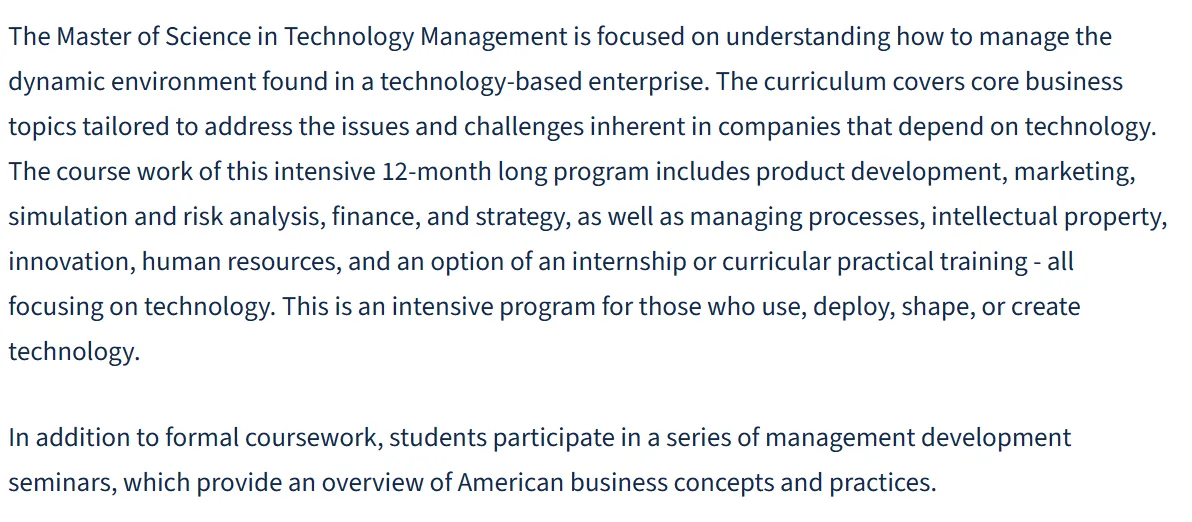
As a top public research university in the U.S., UIUC boasts an outstanding academic reputation. Its MS in Technology Management program is designed to cultivate interdisciplinary talent with deep technical backgrounds and exceptional management skills.
The program integrates resources from multiple colleges such as the College of Engineering and the College of Business, breaking down disciplinary silos to create an interdisciplinary learning experience. Students not only gain exposure to cutting-edge technology but also delve deeply into management theory and practical skills, preparing them to navigate the complex and ever-changing challenges of the tech industry.
With a strong emphasis on combining theory and practice, the program offers extensive internships and hands-on project opportunities through partnerships with numerous renowned companies. Students have the chance to participate in real tech-project management, accumulating valuable industry experience that makes graduates highly sought after in the job market.
Official website: http://catalog.illinois.edu/graduate/bus/technology-management-ms/
II. Curriculum
- Core Courses
- Technology Innovation and Entrepreneurship: This course focuses on the innovation mechanisms and entrepreneurial processes within the technology sector. Students will learn how to identify technological innovation opportunities, assess the commercial potential of new technologies, and develop effective entrepreneurial strategies. Through real case studies and simulated startup projects, the course fosters innovative thinking and entrepreneurial capabilities.
- Foundations of Technology Management: This course systematically introduces the basic concepts, principles, and methods of technology management. It covers technology strategic planning, technical team management, and technology risk management, providing students with a knowledge framework for technology management and a comprehensive understanding of the field.
- Data Analysis and Decision-Making: In the era of big data, data-driven decision-making is critical. This course teaches students how to collect, organize, and analyze technology-related data, and use the insights to make informed management decisions. Students will acquire data analysis tools and methods, enhancing their ability to interpret data and support decisions.
- Elective Courses
- Intellectual Property Management: As technological competition intensifies, intellectual property protection becomes increasingly important. This course delves into IP laws and regulations, the patent application process, and IP strategic planning, helping students learn how to effectively protect and manage intellectual property in technology projects.
- Global Technology Marketing: Addressing the unique characteristics of tech products and services, this course explores marketing strategies for the global market. Students will learn how to conduct market research, target customer segments, and develop brand promotion strategies, thereby enhancing the global competitiveness of technology products.
The diverse curriculum ensures that students master the core knowledge and skills of technology management while also allowing for personalized learning based on personal interests and career goals.
III. Admissions Requirements
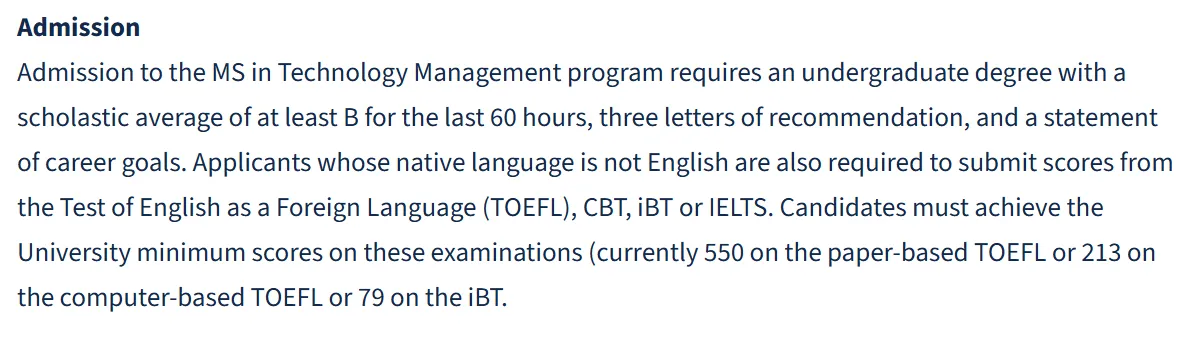
- Academic Background: Applicants are typically required to hold a bachelor's degree; all majors are accepted, but candidates with backgrounds in engineering, science, mathematics, or business are preferred. An undergraduate GPA of 3.0 or above (on a 4.0 scale) is generally recommended, as strong academic performance is an important indicator of learning ability.
- Standardized Test Scores
- GRE/GMAT: While there are no strict minimum score requirements, competitive GRE or GMAT scores will strengthen your application. A GRE total score above 310 or a GMAT total score above 650 is considered ideal.
- TOEFL/IELTS: Non-native English speakers must submit language test scores. A minimum TOEFL total score of 100 or an IELTS total score of 7.0 is required, with each section meeting certain thresholds to ensure students can thrive in an all-English academic environment.
- Letters of Recommendation: Two letters of recommendation are required. Recommenders should be able to speak in detail about the applicant's academic ability, work performance, leadership potential, etc. Ideal recommenders include university professors, internship supervisors, or work managers.
- Statement of Purpose: The personal statement is a crucial opportunity to showcase your personality and motivation. In this statement, applicants need to articulate the source of their interest in the technology management field, their career goals, and how the program aligns with their career plans, highlighting their unique strengths and experiences.
IV. Career Development Prospects
- Diverse Career Paths
- Management Positions in Technology Companies: Graduates can take on roles such as project manager, product manager, or operations manager in various tech firms. They are responsible for planning, executing, and monitoring tech projects, coordinating team efforts, and ensuring on-time delivery and goal achievement. For example, managing new product development and promotion at an internet technology company.
- Venture Capital & Private Equity: With keen insight into tech trends and management knowledge, graduates can work as investment analysts or investment managers, evaluating the investment potential of tech startups, screening valuable projects for investment firms, and participating in post-investment management and value-added services.
- Government Technology Agencies: Graduates can contribute to government departments focused on S&T policy formulation and S&T project management. They may participate in developing national or local technology development strategies and policies, manage government-funded R&D projects, and promote the commercialization and application of scientific achievements.
- Competitive Salary
In terms of salary, starting pay for graduates is quite attractive. In the U.S., the average annual salary for a newly minted MS in Technology Management graduate is around $70,000–$90,000, with significant increases as experience and rank grow. In China, starting salaries for similar roles in first-tier cities typically range from RMB 120,000 to 180,000 per year, with ample room for growth as individual capabilities and industry experience deepen.
Overall, UIUC's MS in Technology Management program, with its high-quality teaching resources, well-designed curriculum, clear admissions requirements, and broad career prospects, provides a robust pathway to a successful career in technology management. If you are passionate about the intersection of technology and management and aspire to make a mark in this dynamic field, this program is well worth your consideration. In the 25fall application cycle, CheersYou(清柚教育) students have already received offers from this program.For information about application timelines and background profiles, more admission case studies, or any other questions related to graduate school applications, feel free to add the contact information of the CheersYou(清柚教育) consultant below.