As biomedical research fully enters the era of “big data + AI,” Carnegie Mellon University’s (CMU) MS in Quantitative Biology and Bioinformatics program, with its dual-core curriculum in “computer + biology,” has become a sought-after choice in STEM fields worldwide. As a top-ranked institution in computer science, CMU deeply integrates AI, machine learning with genomics and proteomics, cultivating interdisciplinary talent capable of deciphering the code of life through algorithms and advancing medical innovation via automated experiments. Graduates of the program enjoy an average starting salary exceeding $105,000, an 85% international student employment rate in the U.S., and STEM designation that guarantees 36 months of OPT—making it a highly recommended program. Next, we will detail the program overview, curriculum, application requirements, and career prospects. For more detailed information and any questions related to graduate applications, you can also scan the QR code below for a one-on-one consultation.

I. Program Overview: Interdisciplinary Integration and Cutting-Edge Technology Empowerment
CMU's MS in Quantitative Biology and Bioinformatics is jointly offered by the School of Computer Science and the Department of Biological Sciences, dedicated to solving core issues in genomics, drug development, precision medicine, and more. Leveraging the clinical resources of the University of Pittsburgh Medical Center (UPMC) and CMU's world-leading AI labs, the program builds a closed loop of “academic research—industry application.”
-
Core Advantages:
-
STEM Designation: Graduates are eligible for a 3-year OPT, significantly boosting competitiveness for U.S. employment.
-
Industrialized Research: The first program in the U.S. to include lab robotics operation and AI active learning as required coursework; 30% of student research results are published in sub-journals of Nature and Cell.
-
Flexible Duration: 1.5–2 years, with options for coursework plus independent research (Thesis Track) or industry internship (Non-Thesis Track), balancing academic and career needs.
-
Friendly to Career Changers: Accepts students from biology, computer science, mathematics, and other backgrounds; a GPA of 3.0+ can be offset by research experience.
-
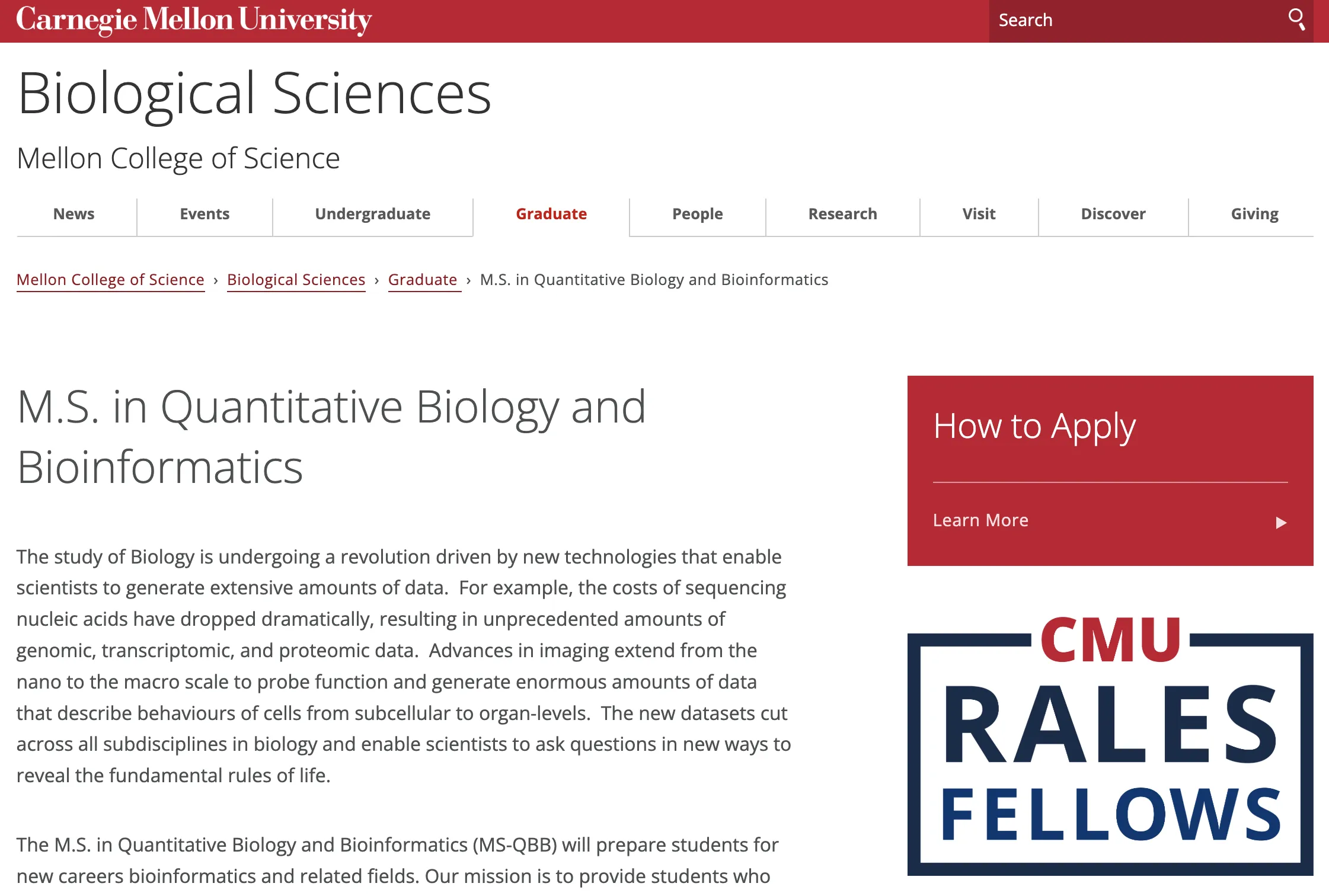
Official website: https://www.cmu.edu/bio/graduate/ms_quant_bioinformatics/index.html
II. Curriculum: Full-Stack Training Emphasizing Both Theory and Technology
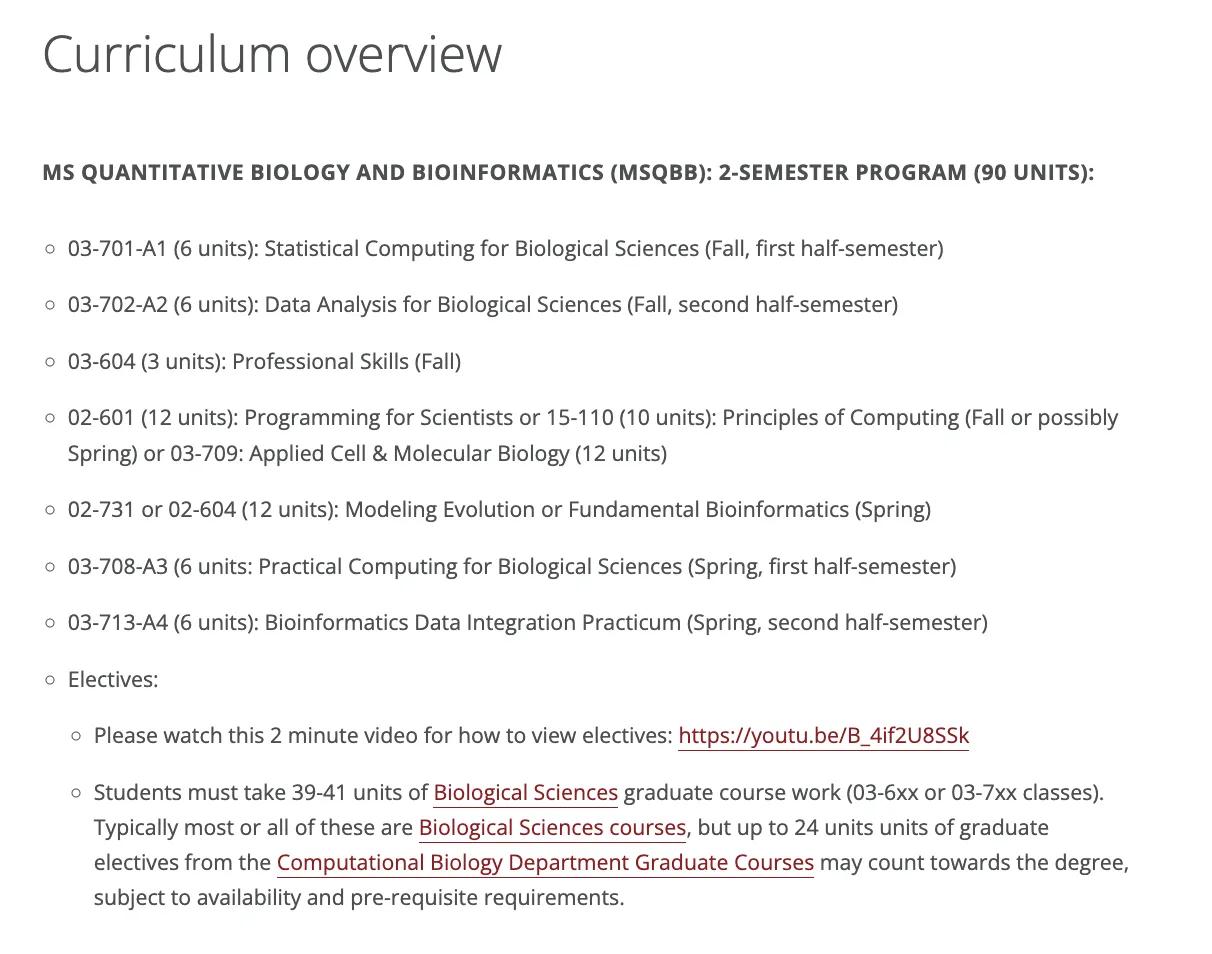
The curriculum is divided into core courses, electives, and practical modules, covering three main areas: bioinformatics algorithm development, high-throughput experimental design, and medical image analysis:
-
Core Courses:
-
Foundations of Computational Biology: Bioinformatics algorithms, genomic data analysis, protein structure prediction.
-
Machine Learning and Biological Applications: Deep learning in single-cell sequencing and drug target discovery.
-
Automated Scientific Experiments: High-throughput experimental design and analysis using robotic lab equipment.
-
-
Elective Tracks:
-
Bioinformatics: Focus on algorithm development and biological database management (e.g., Computational Genomics, Biological Modeling Methods).
-
Systems Biology: Biological network modeling and dynamic simulation (e.g., Computational Molecular Biology).
-
Medical Image Analysis: Combining computer vision techniques to process medical imaging data.
-
-
Research/Internship:
-
Thesis Option: Independently complete a research project and publish a paper, suitable for those planning to pursue a PhD.
-
Industry Internship: Collaborate with companies such as Illumina and Pfizer on gene sequencing or drug development projects.
-
III. Application Requirements: Interdisciplinary Background and Solid Technical Skills
-
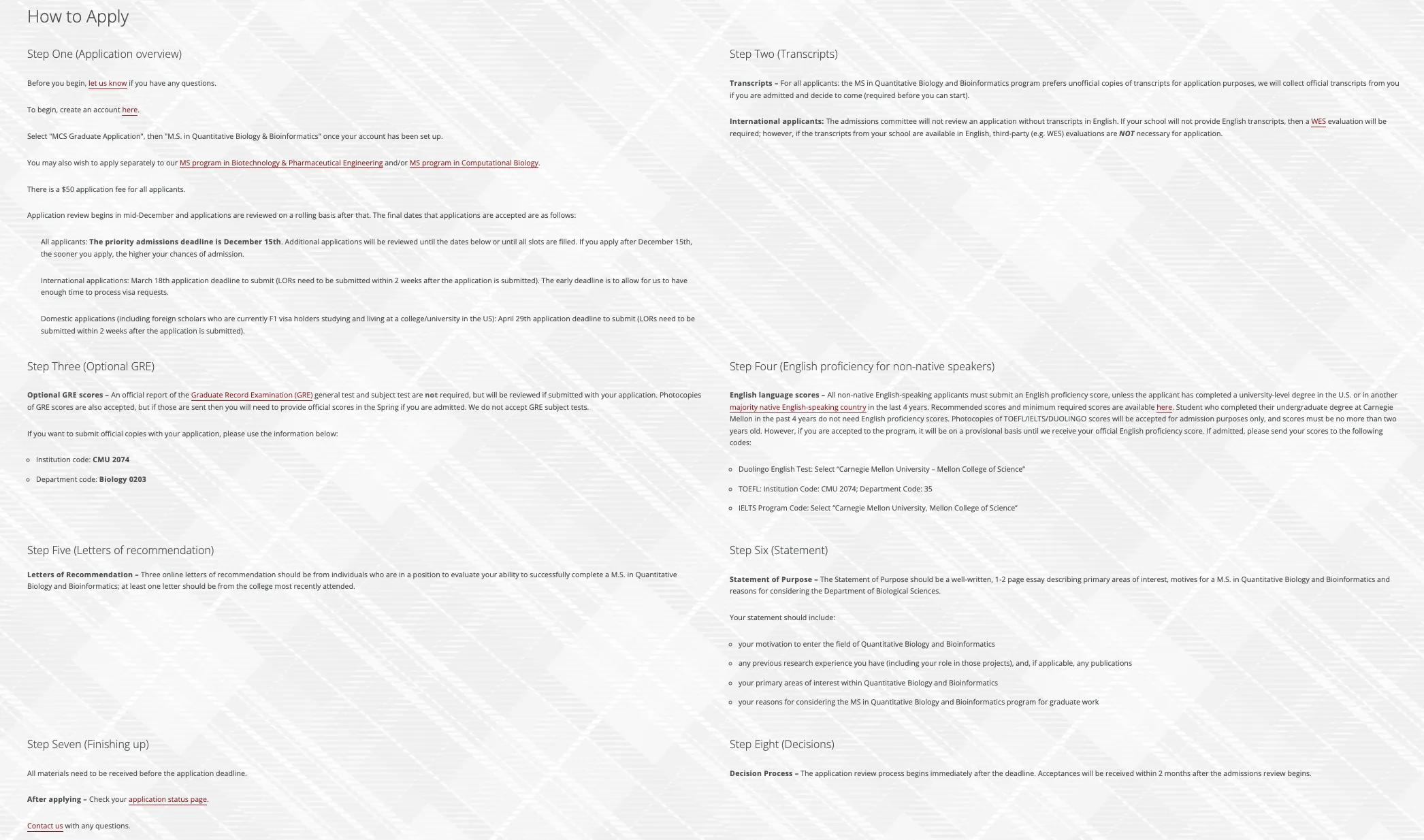
Academic Background: Bachelor’s degree or above; must have completed calculus, linear algebra, and introductory biology courses. Prior programming experience in Python/R is preferred.
-
Standardized Tests:
-
Language: TOEFL ≥100 (with subscores ≥25) or IELTS ≥7.0 (with subscores ≥7.0).
-
GRE: Required; recommended Quantitative ≥165.
-
-
Application Materials:
-
Statement of Purpose (2–4 pages, clearly stating interdisciplinary research interests and career goals).
-
3 letters of recommendation (preferably including a research advisor and internship supervisor).
-
Transcripts (WES evaluation required; GPA ≥3.0/4.0).
-
IV. Career Prospects: The Golden Path at the Intersection of Biotechnology and AI
Graduates, equipped with combined skills in “biology + computation,” pursue careers across biomedicine, medical technology, and academic research:
-
Industry Distribution:
-
Biotech and Pharmaceuticals: Companies such as Illumina, Pfizer, Moderna, working on gene sequencing analysis or drug target discovery.
-
Medical Technology and Diagnostics: GE Healthcare, Siemens Healthineers, developing AI-assisted diagnostic tools.
-
Academic Research: About 30% of graduates pursue PhDs in computational biology and bioinformatics.
-
-
Salary Level:
-
Average annual salary for bioinformaticians is $105,000; senior professionals can reach $150,000+.
-
-
Career Support:
-
CMU Career Center provides resume polishing, mock interviews, and alumni referrals; Pittsburgh’s medical ecosystem (UPMC) directly connects students with internship resources.
-
Carnegie Mellon University’s MS in Quantitative Biology and Bioinformatics program, with its top interdisciplinary curriculum, cutting-edge research resources, and high career returns, serves as an ideal springboard for life science career changers. Whether aiming for biotech giants or deep academic innovation, CMU opens up a global career pathway. In the 25fall application cycle, CheersYou(清柚教育) students also received offers for this program.

If you want to learn about application timelines and backgrounds, more admission cases, or any questions related to study-abroad and graduate applications, you can also contact the CheersYou(清柚教育) advisor below for more details.