As one of the largest and top-tier public research universities in the U.S., Arizona State University (ASU) offers the Master of Science in Electrical Engineering (MS in Electrical Engineering) with a dual-core model of "cutting-edge research + industry collaboration," consistently ranking #36 in USNEWS national electrical engineering programs. Leveraging the strong academic resources of the engineering school and the high-tech cluster in the Phoenix region (e.g., Intel, Boeing, NASA), the program cultivates versatile talents proficient in power systems, communication technologies, electromagnetics, and automation control. Graduates boast an average starting salary of $95,000, and international students enjoy a 36-month OPT extension thanks to STEM certification, significantly boosting U.S. employment competitiveness. Next, we will elaborate on four aspects: program introduction, curriculum, admissions requirements, and career development prospects. For detailed information and more questions about graduate applications, scan the QR code below for one-on-one consultation.

1. Program Introduction: Dual Advantages of Research Depth and Industry Collaboration
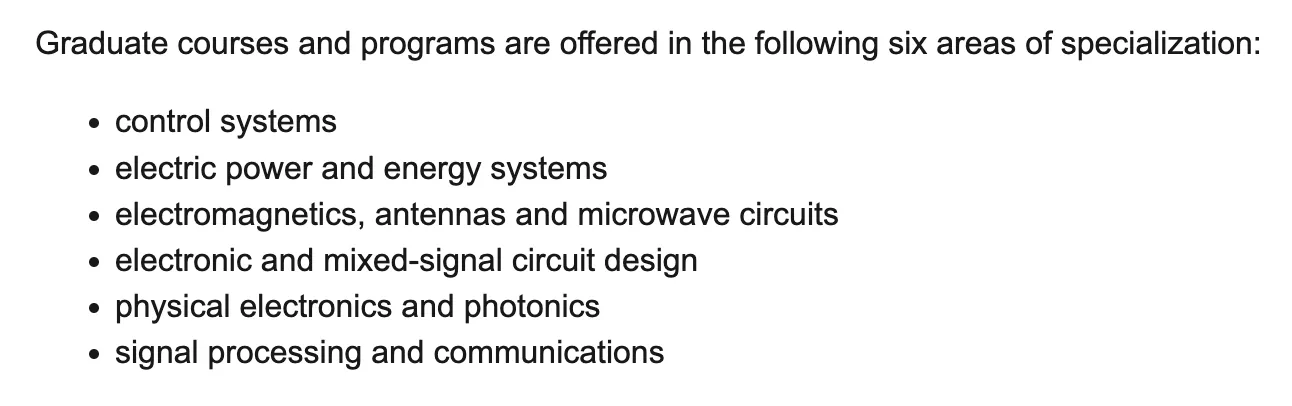
ASU's MS in Electrical Engineering, offered by the School of Electrical, Computer and Energy Engineering (ECEE), provides both MS (Master of Science) and MSE (Master of Science in Engineering) tracks, focusing on core areas such as control systems, power electronics, and signal processing, committed to addressing global challenges like energy transition, smart grids, and 5G communications.
-
Core Advantages:
-
STEM Certification: Graduates are eligible for 3-year OPT, providing long-term support for U.S. employment and career development.
-
Top-tier Research Resources: Equipped with laboratories like the Electromagnetics and Microwave Circuits Lab and the Smart Grid Research Center, students can participate in NASA collaborative projects or U.S. Department of Energy-funded research.
-
Flexible Duration: Full-time 1.5-2 years, offering both thesis and coursework options to meet academic deepening or career-oriented needs.
-
Interdisciplinary Collaboration: Electives in computer engineering, materials science, and other cross-disciplinary courses, along with innovative projects such as healthcare intelligent system development through the Arts and Media Engineering program.
-
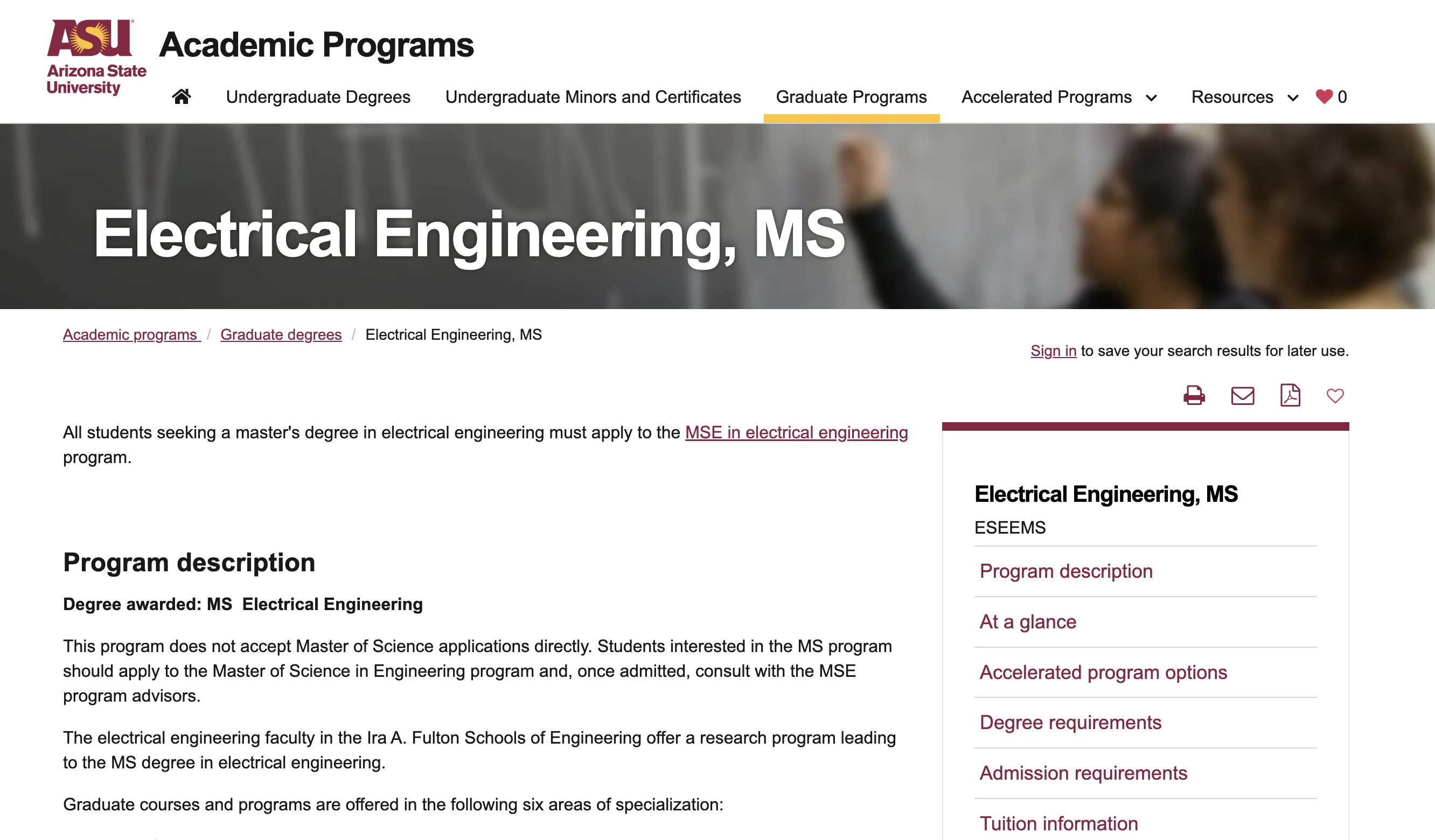
Official website: https://degrees.apps.asu.edu/masters-phd/major/ASU00/ESEEMS/electrical-e...
2. Curriculum: Comprehensive Coverage of Core Technologies and Application Scenarios
The curriculum consists of core courses, elective tracks, and practical modules, requiring 30 credits, emphasizing both theoretical depth and hands-on engineering practice:
-
Core Courses:
-
Electromagnetics & Antenna Design: Applications of high-frequency circuits and microwave technology.
-
Power System Analysis: Smart grid and renewable energy integration strategies.
-
Digital Signal Processing: Leveraging machine learning algorithms to optimize communication system performance.
-
-
Elective Tracks:
-
Communications & Networking: 5G technology and Internet of Things (IoT) system design.
-
Control & Robotics: Automation control theory and industrial robot programming.
-
Microelectronics & Photonics: Semiconductor devices and optoelectronic integration technologies.
-
-
Practical Modules:
-
Industry Internship: Recommended placements with partner companies like Intel and Boeing, involving chip design or aerospace project development.
-
Capstone Project: Team-based problem-solving for real engineering challenges, with outcomes directly usable in job-hunting portfolios.
-
3. Admissions Requirements: Balancing Academic Background and Quantitative Skills
-
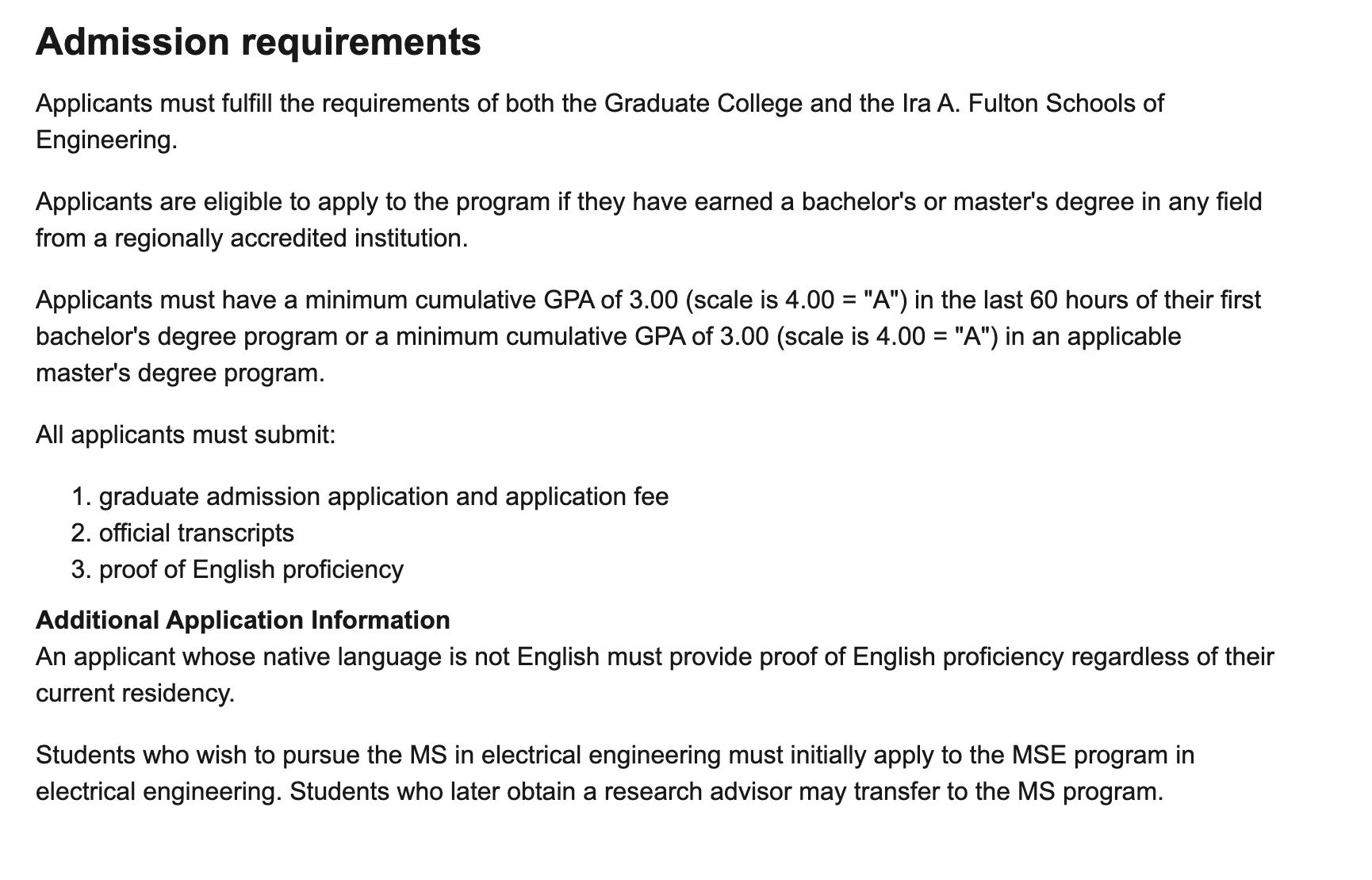
Academic Background: A bachelor's degree or higher, preferably in electrical engineering, electronic engineering, or a related field, with prerequisite courses in circuit analysis, electromagnetics, calculus, etc. Graduates from non-ABET-accredited programs need a GPA ≥ 3.5 (on a 4.0 scale) and GRE Quantitative ≥ 156.
-
Standardized Tests:
-
Language: TOEFL ≥ 90 (with Speaking ≥ 26 for scholarship eligibility) or IELTS ≥ 6.5.
-
GRE: Required, with recommended Quantitative ≥ 160; admitted students typically average around 315.
-
-
Application Materials:
-
Statement of Purpose (clearly indicating research direction, e.g., smart grids or communication technologies).
-
3 Letters of Recommendation (preferably including academic research advisors and industry recommenders).
-
Transcripts (WES evaluation required; recommended GPA ≥ 3.3/4.0).
-
4. Career Development Prospects: Core Tracks in High-tech Industries and Energy Transition
Graduates, armed with solid technical skills and ASU's industry-academia network, enjoy top-tier employment competitiveness nationally:
-
Industry Distribution:
-
Semiconductor & Electronics Manufacturing: Intel, Texas Instruments, engaging in chip design and testing (average annual salary $100,000+).
-
Energy & Utilities: American Electric Power (AEP), Siemens Energy, leading smart grid and renewable energy projects.
-
Communications & Aerospace: Boeing, Qualcomm, developing 5G base stations or satellite communication systems.
-
-
Career Support:
-
Career Services Center: Offers resume polishing, mock interviews, and alumni referrals, hosting 50+ tech enterprise recruitment events annually.
-
Geographic Advantage: Phoenix is one of the fastest-growing high-tech cities in the U.S., adjacent to Silicon Valley and the Texas Technology Corridor.
-
The Arizona State University MS in Electrical Engineering program, with its top-tier research resources, flexible curriculum, and high industry recognition, serves as a golden springboard for technology elites to enter the global high-tech industry. Whether delving into energy innovation or pioneering communication technology frontiers, ASU offers an excellent platform to enhance your global perspective and practical skills.
For more admissions cases or questions about studying abroad and graduate applications, you can add the CheersYou(清柚教育) advisor's contact information below for details.