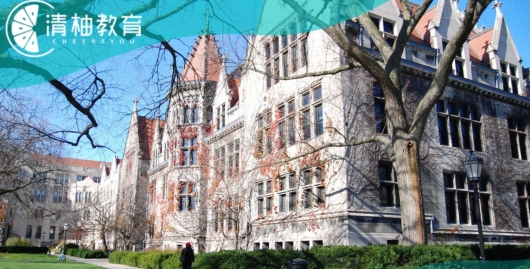
As a global benchmark in applied mathematics, New York University's Master of Science in Mathematical Sciences (MS in Mathematical Sciences) is offered by the world-renowned Courant Institute of Mathematical Sciences, consistently ranking within the top 10 for mathematics in QS World University Rankings over the years. The program integrates the depth of pure mathematics with the breadth of applied mathematics, focusing on cutting-edge fields such as partial differential equations, probability theory, and scientific computing. It cultivates multifaceted talents capable of solving interdisciplinary complex problems in engineering, finance, biology, and more. Graduates have an average starting salary of $105,000, STEM qualification guarantees 36 months of OPT, and the international student retainment rate in the US exceeds 75%. Next, we will elaborate from four aspects: program introduction, curriculum design, application requirements, and career prospects. For detailed information and more application-related questions, you can also scan the QR code below for a one-on-one consultation.

I. Program Introduction: Dual-Engine Driven by Theory and Application
New York University's MS in Mathematical Sciences program is led by the Courant Institute of Mathematical Sciences, named after founder Richard Courant, which has long ranked 14th in applied mathematics in USNEWS. The program offers multiple sub-disciplines, including algebraic geometry, dynamical systems, computational biology, and scientific computing, emphasizing the deep integration of mathematical theory with real-world problems.
Core Advantages:
-
Top Academic Resources: Courant Institute boasts a world-class mathematics research team, including Fields Medalist Peter Lax, and students can participate in research projects with NASA and Lawrence National Laboratory.
-
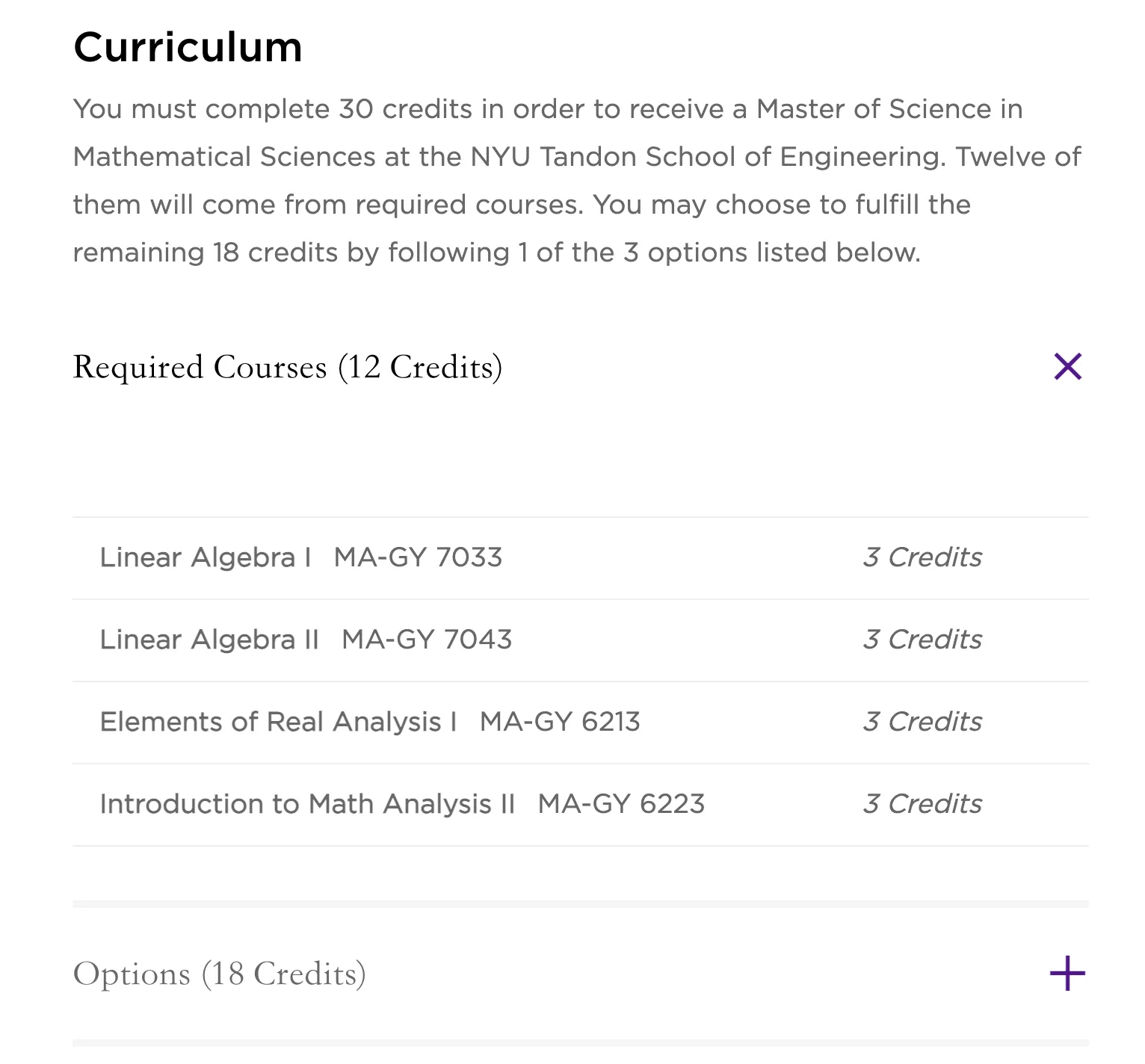
Flexible Study Duration: Full-time 1-1.5 years, requiring 30 credits (10 courses), with the option of a thesis track or course-only track, suitable for academic advancement or career development needs.
-
Interdisciplinary Practice: In collaboration with the School of Engineering and the Center for Data Science, students can take cross-disciplinary courses in computer science, financial mathematics, and participate in industry-level project development.
-
STEM Certification: Graduates can apply for a 3-year OPT, significantly enhancing competitiveness for employment in the US.
Official website link: https://engineering.nyu.edu/academics/programs/mathematics-ms
II. Curriculum Design: Integration of Theoretical Depth and Industry Applications
The curriculum is divided into core required courses, elective tracks, and practical modules, covering foundational mathematical theory and cutting-edge technology applications:
-
Core Courses:
-
Real Analysis I & II: In-depth study of measure theory, Lebesgue integration, and functional analysis, providing a foundation for advanced research.
-
Linear Algebra I & II: Covers matrix theory, eigenvalue analysis, and numerical linear algebra applications.
-
Partial Differential Equations: Combined with fluid mechanics, quantum mechanics, learn modeling and analytical methods.
-
-
Elective Tracks:
-
Scientific Computing: Co-taught with the Computer Science department, learning high-performance computing algorithms and numerical simulation techniques (e.g., finite element method).
-
Probability and Financial Mathematics: Study stochastic processes, financial derivative pricing, and risk management strategies, meeting the quantitative positions needs on Wall Street.
-
Computational Biology: Apply mathematical modeling to analyze biomedical problems in genomics, neuroscience, etc.
-
-
Practical Modules:
-
Master's Thesis (optional): Requires independent research under faculty supervision, available to students with a GPA of ≥3.7.
-
Capstone Project: Team-based solutions to real-world problems from enterprises or labs, such as optimizing energy systems or developing financial risk models.
-
III. Application Requirements: Balancing Academic Potential and Interdisciplinary Background
-
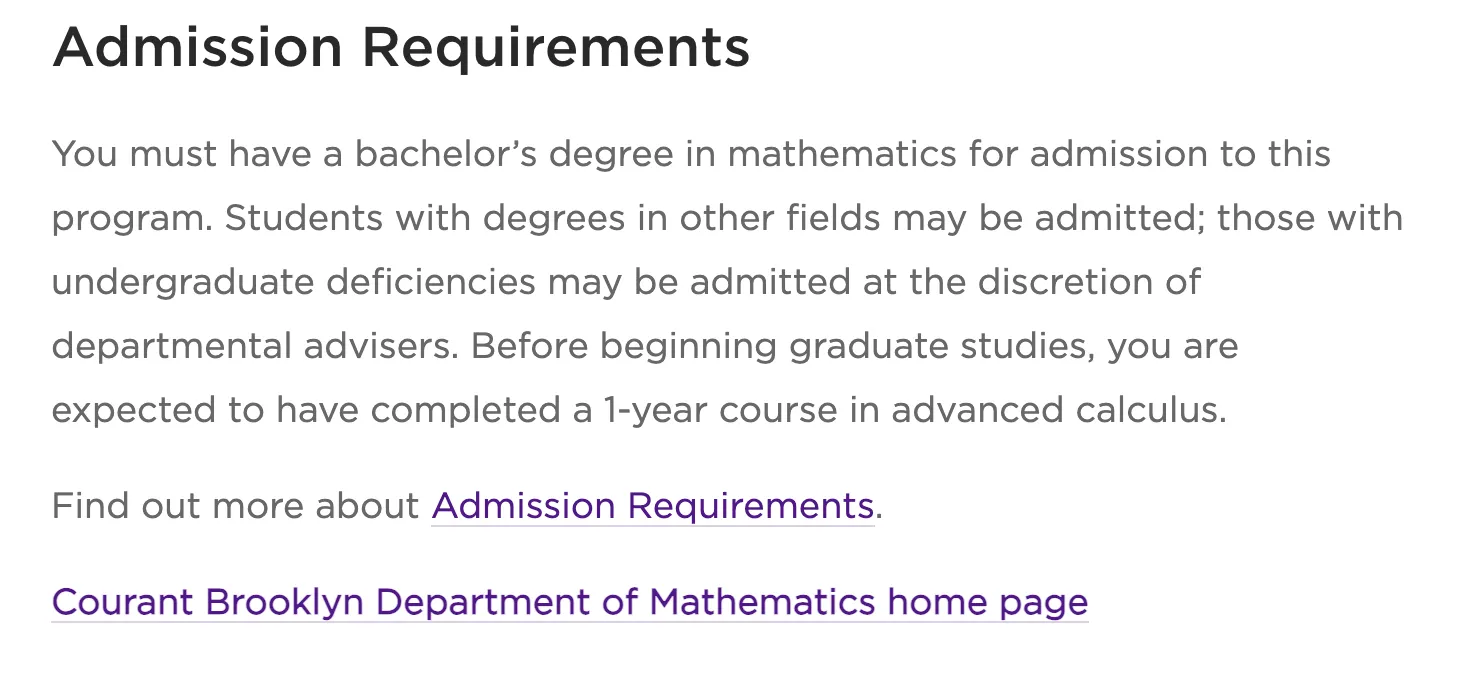
Academic Background:
-
Undergraduate coursework must include calculus (3 semesters), linear algebra, probability theory, etc. Backgrounds in mathematics, physics, engineering, and other sciences are preferred.
-
Applicants from non-mathematics majors need to demonstrate quantitative ability through competition awards, research papers, or advanced mathematics courses.
-
-
Standardized Test Scores:
-
Language: TOEFL ≥100 (no sub-score requirements) or IELTS ≥7.0; scores below this may still apply but are less competitive.
-
GRE: GRE Mathematics Subject Test is required; the GRE General Test is not mandatory.
-
-
Application Materials:
-
Personal Statement (must specify research direction, e.g., "applications of partial differential equations in materials science" or "financial math modeling").
-
3 letters of recommendation (at least 2 from professors in mathematics or related fields).
-
Transcripts (recommended GPA ≥3.5; higher for non-prestigious universities).
-
IV. Career Prospects: Dual Tracks in Academia and Industry
Graduates, with solid mathematical modeling skills and interdisciplinary perspectives, find employment across academia and industry:
-
Industry Distribution:
-
Finance and Technology: Quantitative analysis, algorithmic trading at Goldman Sachs, Two Sigma, etc. (average annual salary $110,000+).
-
Research and Education: Approximately 30% of graduates pursue PhDs at top institutions, in applied mathematics, computer science, and related fields.
-
Engineering and Consulting: Technical optimization and strategic modeling at Boeing, McKinsey, and similar firms.
-
-
Career Support:
-
Courant Career Network: Provides alumni referrals, industry lectures, and exclusive job fairs for Silicon Valley/Wall Street firms.
-
Geographic Advantage: New York City hosts a dense concentration of top investment banks, tech companies, and research institutions, offering ample internship and full-time opportunities.
-
New York University's MS in Mathematical Sciences program, with its top-tier academic resources, STEM certification, and high industry recognition, is a strategic choice for mathematics elites seeking to enter global research and core industrial circles. Whether tackling theoretical challenges or driving technological innovation, Courant Institute provides an unparalleled platform and opportunities.
In the 25fall application season, CheersYou(清柚教育)'s students also received offers from this program. If you want to know about the application timeline and background, more admission cases, or study abroad application questions, you can also add the contact information of a CheersYou(清柚教育) advisor below for details.