In the just-released QS World University Rankings, the University of Hong Kong jumped to 11th place globally, its best-ever position.
It's said that excellence is reflected in every aspect, and HKU's foresight is certainly worth mentioning. In early May, HKU announced it would accept transfer students from QS or THE top 50 universities worldwide.
Source: The University of Hong Kong
Although the announcement was met with ridicule from netizens, just days later, US-bound students faced visa interview suspension turmoil.
Now that HKU is a "top trend" nearly breaking into the global top 10, many students are shifting their attention to Hong Kong and Singapore universities amid the ever-changing global study-abroad landscape.
Policy Shifts: Hong Kong and Singapore Universities Harvest Global Talent
The University of Hong Kong Accepts Undergraduate Transfers
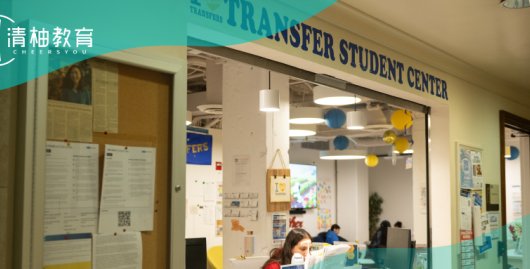
In light of recent changes in the global education landscape, the University of Hong Kong has opened transfer channels for students from QS or Times Higher Education top 50 universities.
Source: The University of Hong Kong
The policy primarily covers Non-JUPAS/International Qualifications:
● Non-local students: Those holding international qualifications other than the Gaokao
● Local students: Those holding or pending international qualifications other than the HKDSE
Source: The University of Hong Kong
Among them, non-local students with international certificates include IB, A-level, HKDSE, SAT/AP/ACT, Singapore A-level, etc.
Source: The University of Hong Kong
Currently, only a suggested GPA of 70% or 3.0 has been provided officially, with little else explained. Students interested in transferring can email HKU for specific details.
HKUST/Lingnan Unconditionally Accept Harvard Transfer Students
HKUST expressed to Harvard students at the center of the "university storm": it will offer unconditional admission, streamlined processes, and academic support for current international undergraduate and graduate students, as well as students holding confirmed offers from Harvard degree programs, providing a seamless transition for interested students.
Source: The Hong Kong University of Science and Technology
If HKUST's move can be seen as offering a helping hand, Lingnan University's operation is hard not to view as riding the wave.
Source: Lingnan University
That said, you can't entirely blame Lingnan; after all, with such a batch of top talent, everyone is eager for them, and our neighbor across the strait is no exception.
NUS Business School Opens US Grad Offer Exchange
The National University of Singapore also announced that it would provide graduate offer exchange for US students affected by relevant policies, with the major premise being that you hold a Top 20 admission.
Source: National University of Singapore
Is this Top 20 QS 20 or USNews 20? NUS has not specified that clearly yet; interested students are advised to inquire via email.
Some who asked indicated it's just a "gimmick" and still requires re-application and interviews. But either way, it provides a Plan B for those on the fence about 25Fall admissions.
Hong Kong and Singapore Applications May Become Even Harder: How to Improve Success Rates?
The uncertain situation in the US may intensify competition in Hong Kong and Singapore applications. How to boost the success rate for 26Fall applications has become the most headache and pressing issue for the new batch of applicants.
Choose Multi-Country Joint Applications
Multi-country joint applications have become a new trend in recent years for graduate applications. Overall, the advantages are significant:
-
Combining joint application strategies to improve offer hit rates
-
Mitigating sudden policy risks, ensuring you always have a fallback
-
Avoiding delays due to slim chances, turning fallbacks into outs
In general, multi-country joint applications expand your options and provide more possibilities. The most important thing is to understand the application characteristics of each region, plan rationally, and avoid blind choices.
You can refer to the study-abroad comparison chart compiled by CheersYou(清柚教育) to understand the similarities and differences in applications across popular regions.
Comparison of hot study-abroad regions
Rational Selection of Schools and Programs
There is an art to school and program selection. Googling, researching, checking social media—these are feasible, but doing "homework" without logic only yields half the result with twice the effort.
Taking graduate applications as an example, CheersYou(清柚教育) has also summarized four critical factors that cannot be ignored in school and program selection to help as a reference.
Based on the above four aspects, matching and screening schools and programs can efficiently complete the selection process, and it is targeted, able to align with the applicant's situation and needs.
This also avoids the drawbacks of "casting a wide net" while giving applicants a high probability of being admitted to a desired school.
Plan Your Timeline Well
For students intending to study abroad for graduate school, regardless of whether you are an early bird or a late starter, you should have a checklist of application plans. Effective planning can double the efficiency of your graduate application journey.
Meanwhile, Hong Kong and Singapore applications are consistently on a first-come, first-served basis. 26Fall graduate early decisions are about to open, so students intending to apply should prepare promptly!
International situations are complex and ever-changing. When applying to study abroad, it is recommended that you consider the circumstances while making the most suitable choice for yourself, avoiding a situation of "wavering back and forth, gaining one thing and losing another."
We hope every student can receive their dream school offer and enroll smoothly. CheersYou(清柚教育) will follow up in real time with the latest news!