ETS recently announced: starting August 2019, the TOEFL test will provide the MyBest scores reporting service.
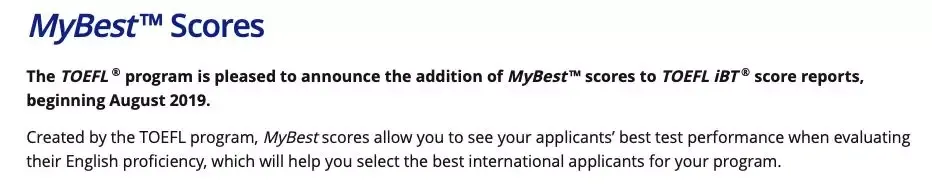
MyBest scores, also known as TOEFL superscoring, allows ETS to list a student's highest section scores from the Listening, Reading, Speaking, and Writing sections of all valid TOEFL tests taken in the past two years, combining them into a superscore.
Starting August 1, 2019, an applicant's TOEFL score report will include both the MyBest scores and the single test date score you choose. As shown below:

For applicants whose single TOEFL scores are not ideal, the new TOEFL superscoring policy can help improve their total score, giving them a chance to apply to better schools.
Applicants can also decide whether to accept the superscored report based on the requirements of the institutions they apply to. Either way, applicants can still receive single test date score reports as before. The superscored report can be seen as an additional reporting option.
So, does the TOEFL superscoring policy really make study abroad applications easier?
First, universities' acceptance of the superscoring policy remains an unknown.
If the university program you apply to does not accept TOEFL superscores to meet total score or section requirements, then the new score report won't be of much help.
Previously, applicants could also send multiple score reports based on their own judgment, hoping universities would consider their overall TOEFL performance. Of course, it was unclear whether universities actually combined multiple score reports.
The new superscored report simply makes it more likely that universities will see your overall performance directly. But honestly, compared to the previous practice of sending multiple scores, it may not make a significant difference.
Additionally, the superscored report will record the test date for each section. If you have four different test dates, and if the school cares about the number of test attempts, your application could be affected.
After the TOEFL superscoring policy is introduced, will universities raise their TOEFL score requirements? Will they place more emphasis on academic background, internship experiences, essays, and interviews? These are hard to determine.
It is believed that various university programs will respond to this new policy in different ways. When applying, students must check the official university website for the latest TOEFL score requirements.
Since last year, some U.S. universities have also started accepting GRE superscores, and CheersYou(清柚教育) has provided detailed analysis on this.
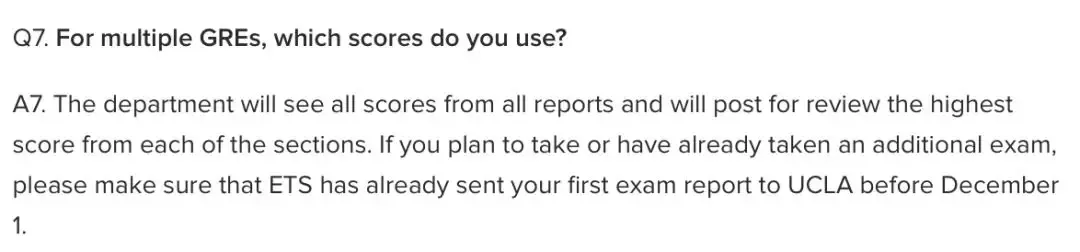
UCLA allows applicants to send multiple GRE scores before the application deadline, and the admissions office will consider the highest score from each section across all submitted tests.
USC has also started accepting GRE superscores.

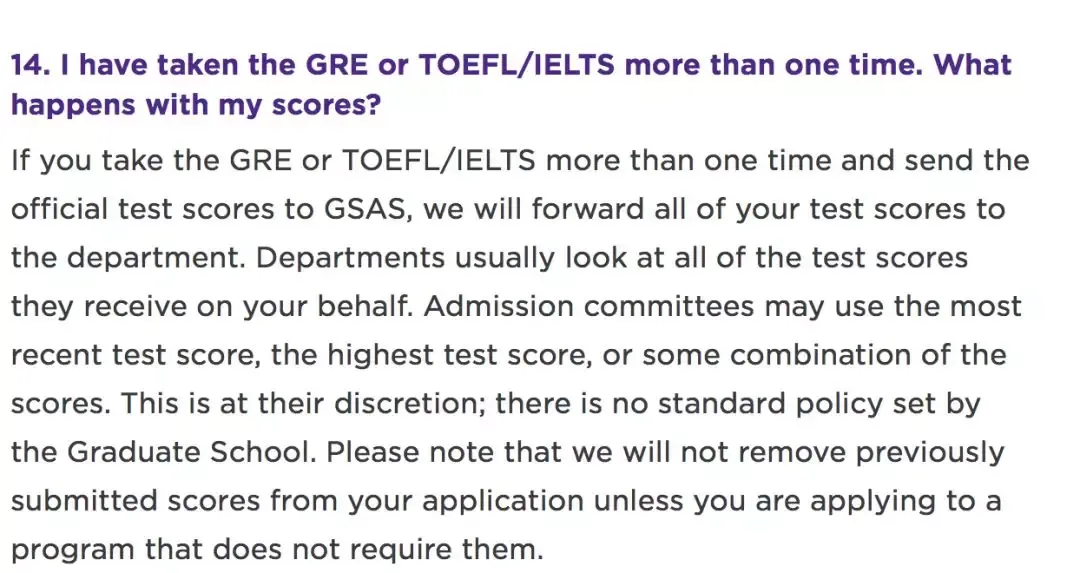
NYU's GRE policy is tricky: if you've taken the GRE multiple times, how your scores are reviewed depends on the department's requirements.
UC Berkeley does not accept GRE superscores; they still only consider a single complete test score.
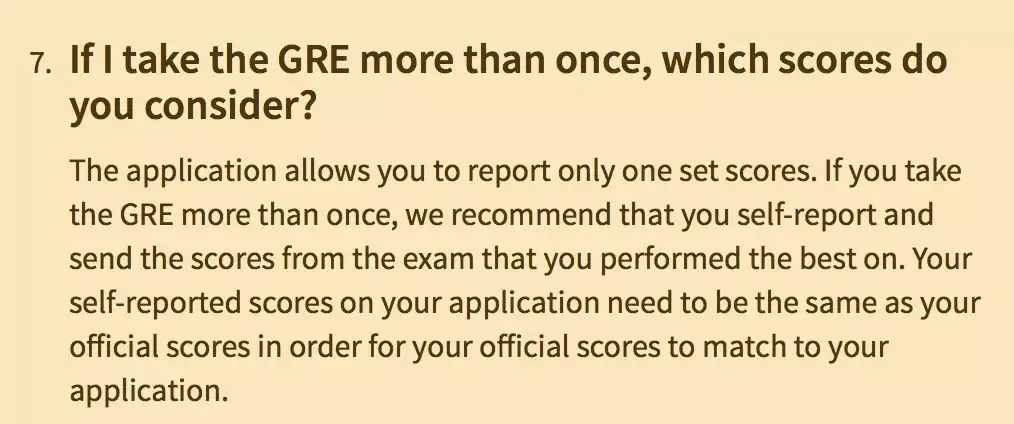
The effectiveness of GRE superscoring also depends on the school. If score differences between tests are too large, there is a risk of scores being canceled by ETS, being seen by schools as lacking academic ability, or even being suspected of cheating, which could delay the application process.
GRE superscoring should be approached with caution. CheersYou(清柚教育) also recommends that after taking the test, you send the single test date with the highest total score. After all, scores are objective, but how they are viewed is subjective.
Overall, the newly introduced TOEFL superscoring policy benefits test-takers more than it harms them. However, CheersYou(清柚教育) still advises confirming with the school before submitting TOEFL scores.
Finally, best of luck to all 2020 applicants in conquering the TOEFL and GRE!