
What is the Adversity Score?
This new score, called the "Adversity Score" by college admissions officers, is calculated based on 15 factors. These include students' family income, the academic rigor of their high school, the crime rate and poverty level in their community, and more.
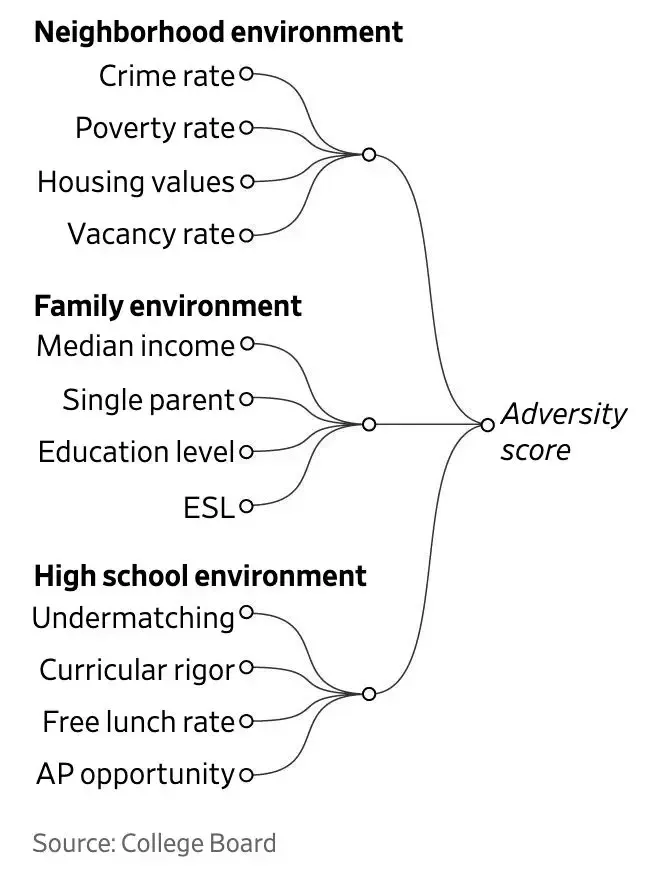
The Adversity Score (ranging from 1 to 100) will appear on the Environmental Context Dashboard. It displays multiple indicators, including students' poverty, wealth, and opportunity, as well as comparisons of SAT scores with other students.
The average Adversity Score is 50. Any score above it indicates a relatively disadvantaged economic background, while a score below it indicates a relatively affluent life.
The College Board declined to disclose the calculation method for the Adversity Score or the weight of the indicators. College Board CEO Coleman said the data comes from public records such as the U.S. Census Bureau and some proprietary College Board sources.
Meanwhile, students will not be informed of the score, but colleges will see these numbers when reviewing their applications.
Last year, 50 colleges used this score as part of a beta test. The College Board plans to expand it to 150 institutions this fall and use it widely the following year.
Why is the Adversity Score needed?
How colleges should take race and class into account in admissions has been a matter of debate. And having a diverse student body has always been part of every school's educational mission.
The College Board's plan has three starting points.
First, for years it has been concerned that income inequality affects test results. According to its 2018 findings, Asian students scored 100 points higher than white students, while white students averaged 177 points higher than black students and 133 points higher than Hispanic students. Meanwhile, children of wealthy, college-educated parents perform better than their peers.
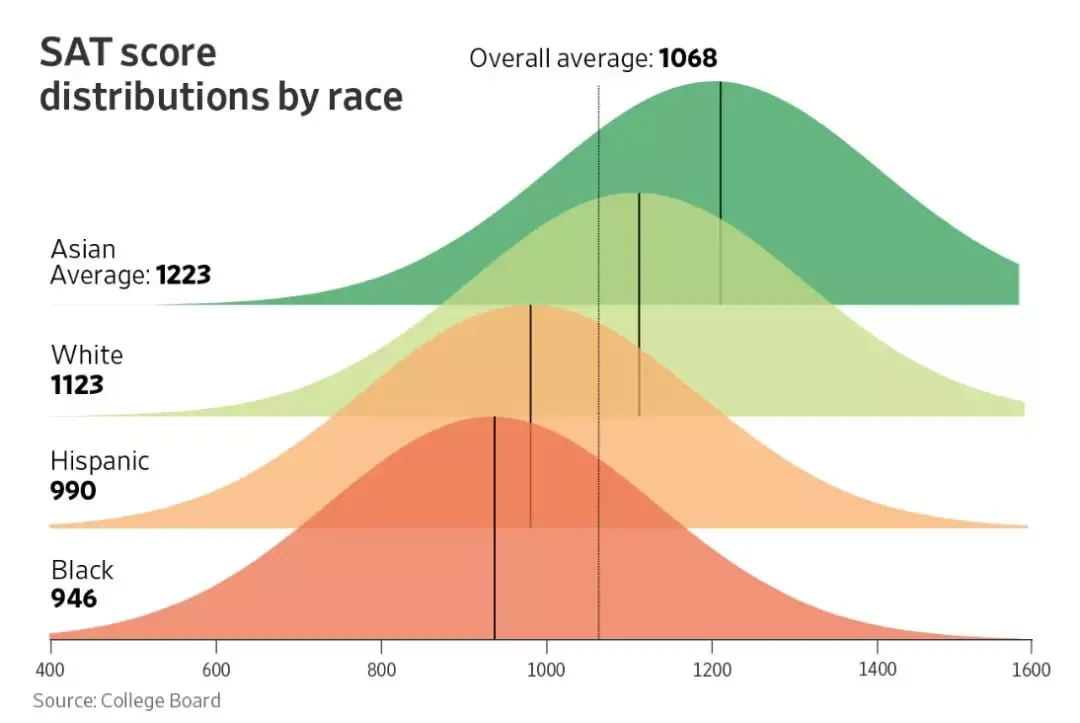
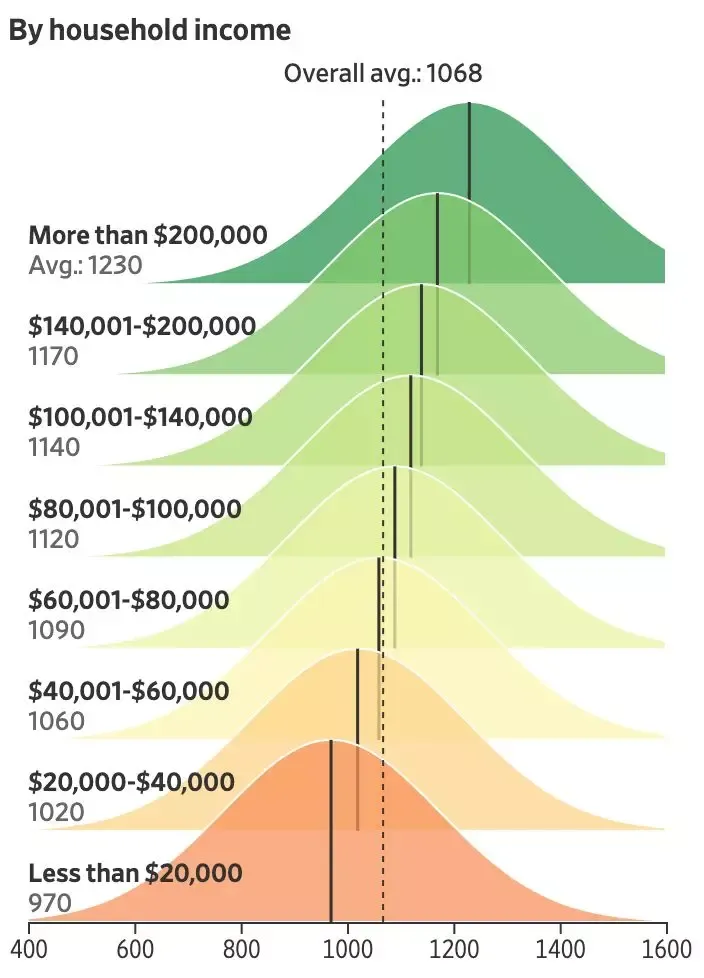
Coleman said, "There are many talented students who may score lower on the SAT but achieve more. We cannot ignore the impact of the wealth gap on SAT scores."
Second, cheating on the SAT and ACT exams continues to be rampant, especially in Asia and the Middle East where security vulnerabilities exist. Federal prosecutors revealed that the SAT, including the math and language sections, is still done with pencil and paper, meaning its authority and fairness still face challenges, and far-reaching college admissions cheating often exploits this loophole.
Third, there is the issue of discrimination against minority students and affirmative action considerations. Yale University's director of undergraduate admissions, Quinlan, said, "The Adversity Score does influence every application we see and helps diversify our freshman class, which has been part of the success story."
Controversy over the Adversity Score
Some organizations have expressed support for the new measure, believing it can level the playing field.
Yale is one of the schools trying out the Adversity Score for applicants. Quinlan said, "Yale has been working hard to improve socioeconomic diversity, and in the past few years, the number of low-income and first-generation college students has nearly doubled to about 20% of incoming students."
John Barnhill, assistant vice president for academic affairs at Florida State University, said, "At FSU, the Adversity Score helped increase the enrollment rate of non-white freshmen from 37% to 42%."
In fact, whether the Adversity Score serves as a means to level the playing field or becomes a machine for promoting reverse discrimination, it will increase the pressure on international students applying to top universities.
For Chinese international students, who already lack the advantages of domestic students, there are generally higher application thresholds for undergraduate admissions.
Now with the Adversity Score, minority students (mainly black and Hispanic) who already have some admissions preferences gain additional support from socioeconomic background points. Asian students with relatively good economic conditions cannot consider using the "Adversity Score" to gain an advantage, let alone Asian international students who have even less connection to it.
It can only be said that those who are taken care of are even more taken care of, and as the number of favored applicants increases, the competitive pressure on other applicants becomes greater. With top universities generally strongly promoting such diversity policies, it becomes even more difficult for Asian students to get into prestigious schools.