A few weeks ago, many believed the US and China were close to a trade deal that would ease tensions between the world’s two largest economies.
Since then, however, things have gone from bad to worse. The US raised tariffs on $200 billion worth of Chinese imports to 25% and threatened to impose tariffs on another $300 billion in goods.
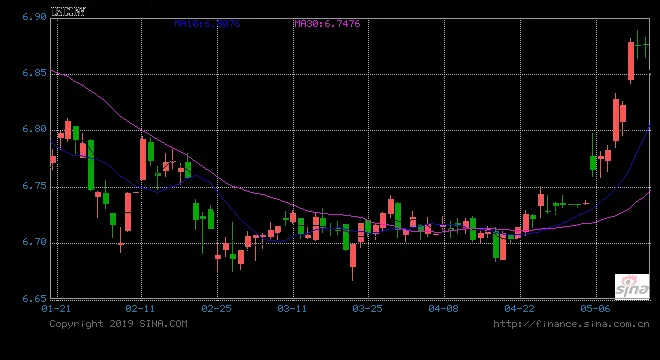
China’s stance on the trade war initiated by the US is clear: it does not want a trade war, but it is not afraid of one and will fight if necessary. During this period, the RMB has once again started a depreciation trend, approaching the 7-per-dollar mark.
In this escalating trade war, the most severe impact on international students bound for the US is undoubtedly the rising costs. CheersYou(清柚教育) breaks down the effects of the US-China trade war on studying in the US from the following perspectives:
Tuition
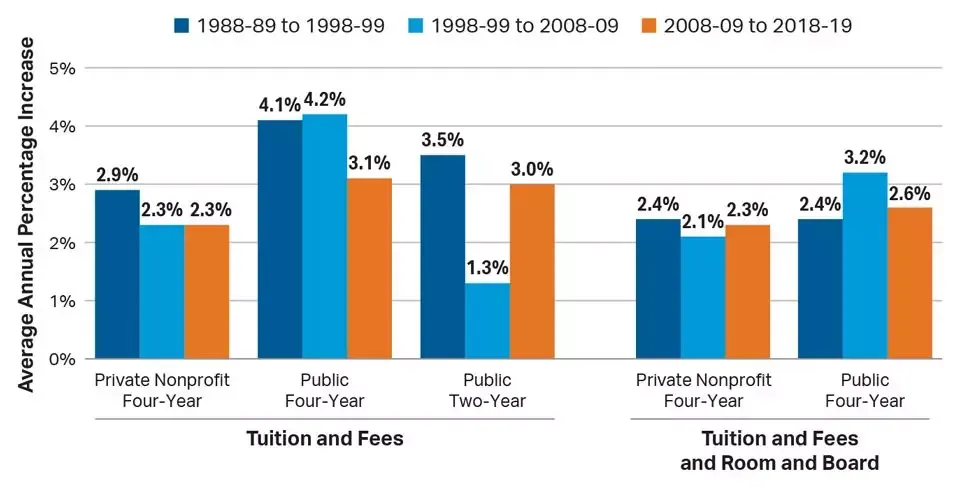
In recent years, tuition at US universities has been rising continuously. According to U.S. News, American university tuition rose by an average of 3% in 2018–2019, while Ivy League costs climbed by about 8%.
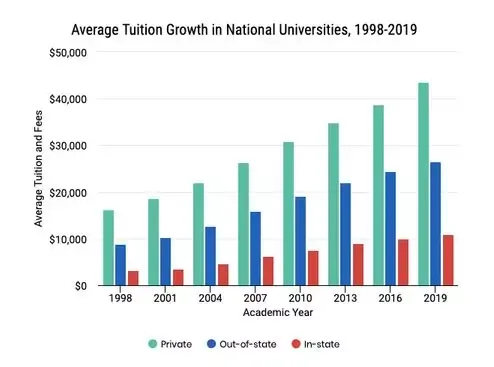
For international students, the average annual tuition at a four-year public US university is around $35,000, while at a four-year private university it exceeds $45,000, and graduate programs average about $43,000 per year.
Given the upward trend, annual tuition and fees for international students amount to at least 500,000 RMB, increasing by at least 25,000 RMB each year.
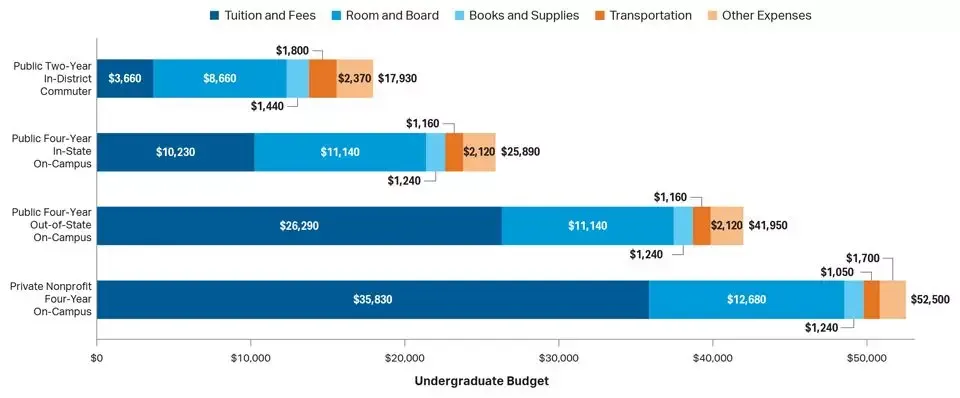
After the RMB exchange rate fell to 6.93, compared to the previous rate, international students would need to pay over 20,000 RMB more each year. That’s equivalent to losing three iPhones annually.
Under the dual impact of rising tuition and currency depreciation, the financial burden of studying in the US will only increase.
Admissions Difficulty and Job Opportunities
Although the US Department of Education has not officially announced a tightening of study-abroad policies, application results at top-tier universities like Harvard, Yale, and Stanford in recent years clearly show increased difficulty, with international student admission ratios declining from previous years. Recruitment for highly advanced programs in areas such as computer science and artificial intelligence has also been scaled back, making them more competitive to enter.
However, to avoid economic losses, US universities have expanded enrollment in non-STEM fields, such as management, business, and media studies. For students interested in humanities or business disciplines, now is a good time to apply.
Due to the trade war, many big-name companies—such as Morgan Stanley and the Big Four accounting firms—are reducing visa sponsorship for international students. KPMG and PwC have been on a downward trend, and last year PwC explicitly stated it “prefers STEM students,” further tightening talent screening.
Given this tough employment landscape for international students, CheersYou(清柚教育) advises students not to feel they must follow the crowd into big-name firms. Instead, smaller companies or startups can be excellent alternatives: competition is less intense, and you can gain hands-on experience and learn directly.
This year, USCIS also reformed the H1B visa process to increase the proportion of applicants with master’s degrees or higher, meaning the H1B selection rate for those with advanced degrees will rise by 16%.
Students with a master’s degree or above will have a considerable advantage when applying for work visas in the future. However, despite the increase in selected applicants, H1B scrutiny has also become stricter.
Visas
First, for tourist visas—whether for personal travel or attending conferences—rejection rates are higher than in previous years, and many denials come without explanation. Parents of international students are advised to prepare thoroughly when applying for tourist visas to be ready for all possibilities.
Additionally, under the US-China trade war, visas for undergraduate and graduate students in different majors may be affected, especially in fields like computer science that might involve national security concerns.
However, students currently applying need not panic excessively. After all, international students contribute a massive $30 billion surplus to the US GDP each year. If the US truly wants to counter the trade deficit with China by “restricting student visas,” American universities would be the direct victims.
Summary
1. Under the influence of the trade war, the RMB exchange rate is likely to continue falling. Combined with rising tuition, it is wise to plan for studying abroad sooner rather than later. The period before 2021 can be considered the optimal golden window.
2. Although the US government is tightening student visa issuance for advanced STEM fields, American universities have introduced corresponding enrollment expansion policies for non-STEM majors.
3. In the face of a challenging job market, international students should keep a balanced mindset: avoid aiming too high and looking only at big-name firms. Consider turning to small and medium-sized companies. Applying to graduate school is also a good way to boost H1B selection chances.
4. For undergraduates already in the US considering graduate studies, given that future applications may become harder, it is advisable to leverage the advantages of a US undergraduate background and apply early to seize the opportunity.