What is the current employment situation in China and the US? According to a LinkedIn survey on returning grads’ employment, over 80% are working in fields unrelated to their studies, with low job satisfaction.
Moreover, many fresh graduates complain: “I thought studying abroad would give me a leg up in job hunting, but it’s actually harder to find a job after returning with a master’s degree?” “Watching my peers climb the career ladder while I’m stuck in the awkward state of being a jobless returnee?”
Is this really the case? CheersYou(清柚教育) has summarized and analyzed employment data for recent graduates at home and abroad in recent years, and interviewed HR from various companies, compiling the following points and potential reasons:
Comparing Employment Situations at Home and Abroad
US STEM Jobs Have Clear Advantages, but Employment for International Students Is Getting Tougher
Recently, PayScale released its latest 2018-19 College Salary Report. (PayScale is a salary survey company based in Seattle, known for its rankings of US college graduates' salaries, with the world's largest and most comprehensive employee salary database.)
According to this year's report, the highest-paying undergraduate majors are still concentrated in STEM (science, technology, engineering, or math) fields.
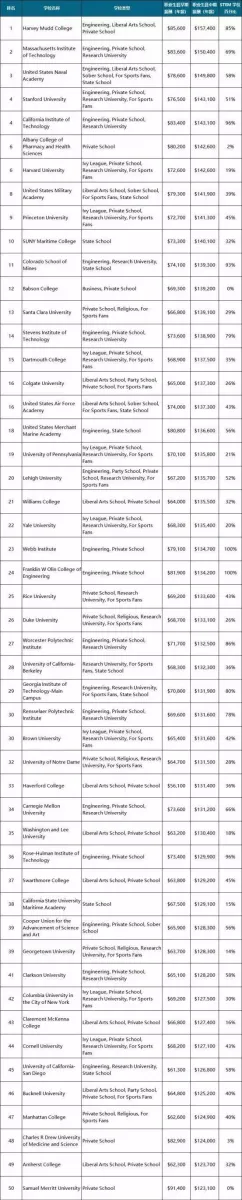
In terms of salary, the average annual salary for a bachelor’s degree holder is around $61,000, with the top three earning fields being:
1. Architercture/Engineering ($83,000)
2. Computers/Stats/Math ($76,000)
3. Business ($65,000)
Compared to China, salaries are significantly higher.
However, according to actual statistics, 80% of Chinese students in the US still choose to return home eventually. And among these 80% who return, 80% have not gained any work or internship experience in the US, what we often call “returning empty-handed.”
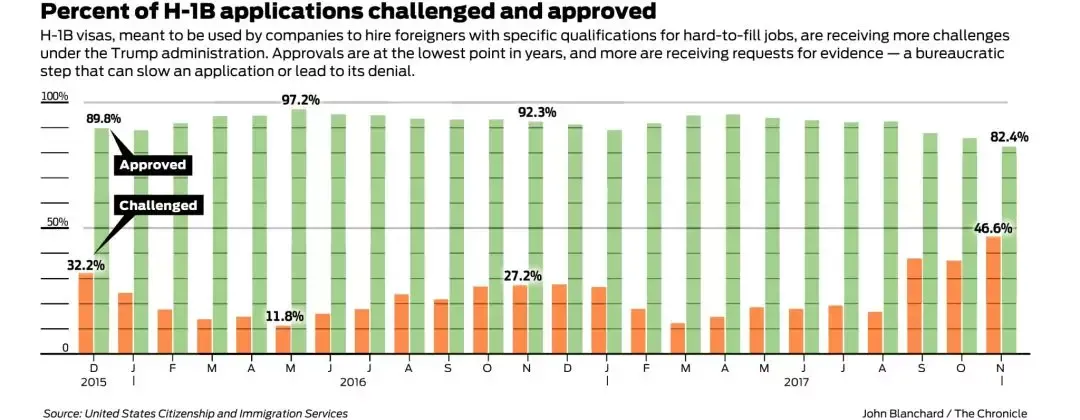
Among the few students who stay in the US to work after graduation, half are still staying on OPT status, and only 16% have obtained an H1B visa.
Moreover, since 2019, the escalation of the US-China trade war has led to significant delays in OPT processing times compared to previous years. Policy changes have also increased the risks for international students working in the US.
Generous Policies for Returning Students in China, High-Tech Leading the New Wave of Employment
In 2018, 46% of returning grads preferred to work in first-tier cities (Beijing, Shanghai, Guangzhou, Shenzhen), with over 36% concentrated in Shanghai and Beijing.
This is also because Shanghai and Beijing launched global talent attraction policies for returnees in 2018, aiming to let more returning students enjoy more benefits.
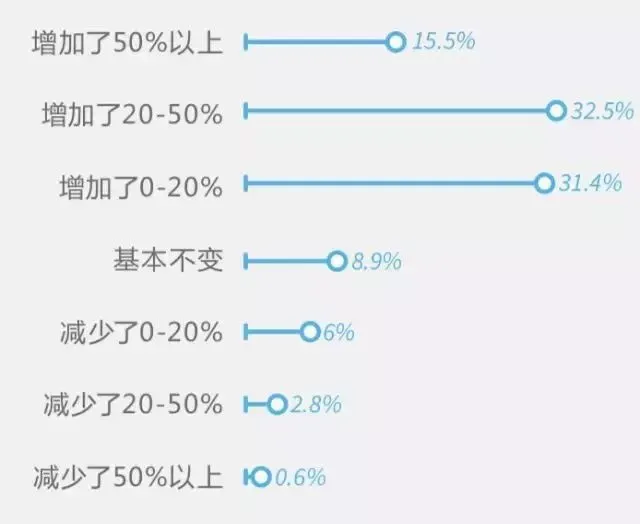
In terms of salary, nearly 80% of returnees saw their pay increase after returning to China, and among them, more than half saw increases of over 20%.
Moreover, with the Trump administration tightening policies on international students and the impact of the US-China trade war, it is increasingly difficult to work in the US. Compared to the chilly US job market, Chinese employers are showing spring-like warmth.
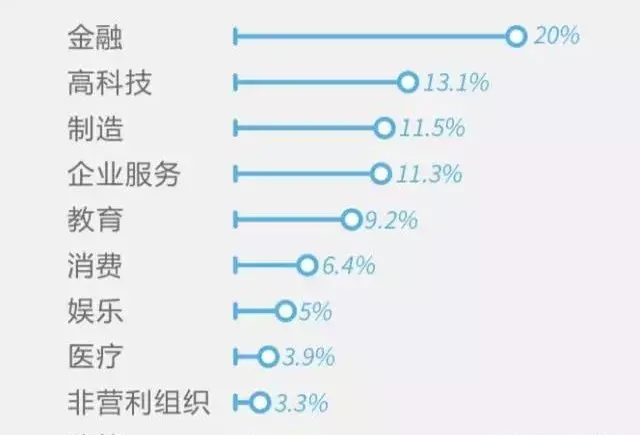
Top 10 Industries for Returning Talent
Finance and high-tech sectors remain hot, and overseas talent is focusing on high-tech fields such as cloud computing, artificial intelligence, and blockchain.
In the Chinese market, many companies are willing to invest heavily in recruiting returnees for emerging software development positions. For example, for algorithm/AI roles, the average annual salary for returnees in this field is typically between 300,000 and 600,000 RMB.
By comparison, the employment situation in China is better, and the government offers more preferential policies for international students.
Degree Requirements: Diverse Opinions
First, Is It Easier for Undergraduates to Find Jobs in the US?
This is true in most cases. Because overall employment in the US, graduate students are not as favored as undergraduates.
In the US, most domestic students choose to work right after their bachelor’s degree. And unlike Chinese culture, which has a blind worship of degrees, the US focuses more on individual ability. As long as you can demonstrate your value, you can be hired.
The most important reason why master’s or doctoral graduates are less favored for employment than undergraduates is that most jobs do not require such high technical expertise; a bachelor’s knowledge is sufficient. Companies also assume that graduate students will demand higher salaries, so they prefer undergraduates.
However, Chinese undergraduates studying in the US still do not have an advantage in the US job market. After graduation, they have to compete with a large number of domestic students, their soft skills are relatively weaker, and most of those who successfully get offers are limited to talents in CS-related fields.
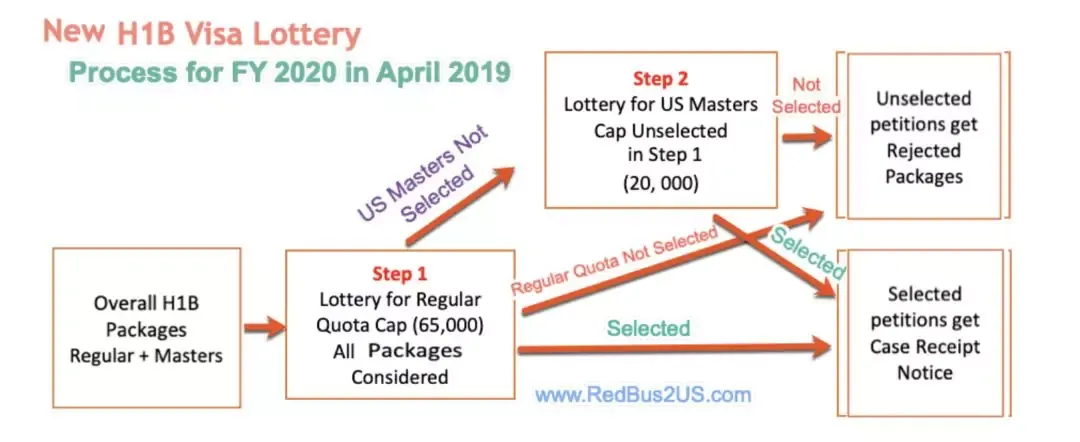
Therefore, most international students still choose to pursue graduate studies. In addition, with changes to the H1B lottery policy this year, graduate students have a higher chance of being selected for work visas compared to undergraduates.
After Returning Home, Are Graduate Returnees at the Bottom of the Food Chain?
This claim is absolutely one-sided and inaccurate.
First, domestic large companies are increasingly demanding higher degrees in recruitment; a bachelor’s degree is the minimum, and a master’s degree has long become the norm. Therefore, in China, a higher degree is a necessary stepping stone for many prestigious companies.
So why does the claim that graduate returnees find it harder to get jobs still exist?
We interviewed senior HR professionals in the industry and received this response: Generally speaking, students who studied abroad have broader horizons and better personal expression skills compared to domestic students under the same conditions.
But they also pointed out that a common issue among returnees is excessively high personal expectations: “Many students think their overseas study experience is an advantage, but that’s not necessarily true. In addition, given current corporate cultures and the adaptability of overseas students, companies do not show special preference for this group. However, graduates from world-class top universities still have a clear advantage.”
So for those who want to develop their career back in China, a master’s degree or above has become a necessity in the competitive environment, but not an advantage. They need to keep a balanced mindset and avoid having too high expectations while lacking practical skills.
A degree from a prestigious university can serve as a stepping stone to a top company, but whether you actually get the offer depends more on your individual capabilities; however, if you give up on further education to “gild” your resume, you may not even get that stepping stone.
Conclusion
Based on the above statistics and interviews with industry insiders, we have drawn the following conclusions:
-
US STEM jobs have clear advantages, while China offers more preferential policies for international students. Overall, the US job market is tougher compared to China.
-
In the US, undergraduates have an easier time finding jobs than graduate students, but international students still don’t have an advantage. Continuing to graduate school remains the choice for many Chinese undergraduates in the US.
-
A returning master’s degree is no longer an absolute advantage, but it is still a necessary stepping stone for many top companies. Whether you get the offer depends on your individual capabilities. HR advice: avoid having grand ambitions but limited practical skills.