To address everyone's questions about Data Science, CheersYou(清柚教育) specially invited Chris Zhang, who previously worked in Amazon’s data department and now works on data science and artificial intelligence at Facebook, to answer questions in an online lecture last week.
In order to meet the needs of students who couldn’t attend the lecture due to scheduling conflicts, CheersYou(清柚教育) has specially compiled and reviewed the lecture content. Everything you want to know is presented in this article!
Data Science
Current Analysis and Future Employment Trends
Data Science, as an emerging field, plays an indispensable role in many companies. Data science aims to bridge the gap between IT technology and business decision-making, so the requirements for the position itself are very high. The shortage of such interdisciplinary talents has also led to the rise of the Data Science craze.
According to the "Future Data Talent Report," it is predicted that by 2020, the US job market will add 2.7 million new data-related positions.
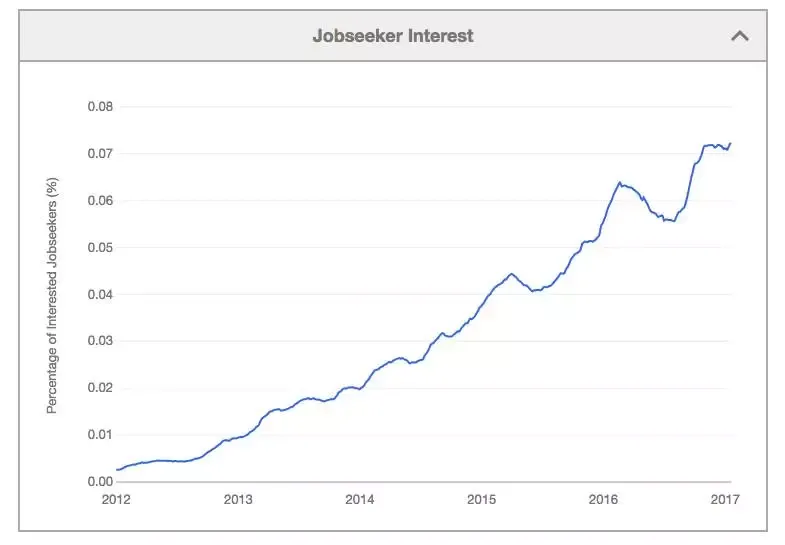
Data Science has already been applied to various fields, including finance, energy, tourism, and government departments. Many universities have also realized the importance of offering courses and programs in this field.
From Columbia University to MIT, as well as UC Berkeley and NYU, many schools have successively launched related graduate programs, aiming to provide students with more opportunities to study courses in this field and develop their careers.
DS/BA/CS
Differences in Graduate Study and Employment Directions?
The main difference between Data Science, Business Analytics, and Computer Science, both in graduate applications and employment, lies in the different emphasis on skills.
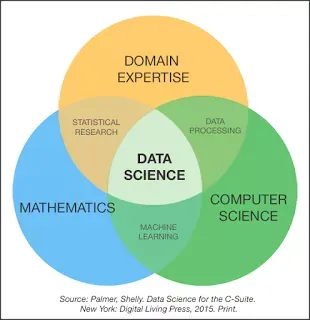
Most Data Science programs are set up under the School of Engineering, or as independent schools. Data Science is more like a complete and independent discipline, integrating statistics, data analysis, machine learning and other disciplines, and is rapidly developing into a system;
Business Analytics, on the other hand, is generally set up in business schools and is a branch of the business school. Business Analytics is more like a major set up for employment, and since business schools value career development, the teaching focuses on practical business data analysis and decision-making assistance skills that can be used in actual work.
We can use the following equation to more directly explain the connection between the three:
BA ≈ Data Science
= Statistics +
Computer Science +
Business
= Business Decisions
The difference between BA and Data Science also lies in the different proportions of their emphasis:
MSBA=
40% Statistics +
30% Computer Science +
30% Business
• Suitable for applicants with humanities/business/science/engineering backgrounds
Data Science=
30% Statistics +
50% Computer Science +
20% Application
• Suitable for applicants with science/engineering backgrounds
In the workplace, the departments and job content of these three are also clearly divided.
Business Analyst, as the name suggests, acts as a bridge between products and business. Their service targets are usually product managers and senior leaders. The data they handle is directly related to the business, such as company revenue and profitability, and their main job is to regularly produce reports to analyze quarterly data to support market decisions.
Data Scientists mostly work within the IT department. This position is relatively more technical, with the main job being to build models, i.e., predictive modeling, also known as machine learning, using existing data to predict missing data. The ability to automatically provide decision-making for business departments is a core skill of a Data Scientist.
At Facebook, Data Scientists are divided into two tracks: one is the Research track, which is the Data Scientist we described above. The other is the Product Analytics track, which is the Business/Product Analyst we mentioned above.
How to Determine if You are Suitable for Studying
Data Science?
To determine whether you are suitable for studying Data Science, we might as well first look at the curriculum of data science and the industry requirements for data scientists, so as to know whether you are suitable for this job.
We list the following three main skill requirements for Data Scientists:
(1) Computer science skills
Most data science majors require a background in programming and computer science. Simply put, it involves skills related to large-scale parallel processing technologies such as Hadoop and Mahout, which are necessary for processing big data, as well as machine learning-related skills.
(2) Skills in mathematics, statistics, and data mining
In addition to mathematical and statistical literacy, one also needs the skills to use mainstream statistical analysis software such as SPSS and SAS.
(3) Data visualization
The quality of information largely depends on its presentation. Analyzing the meaning contained in data composed of numerical lists, developing web prototypes, and thus visualizing the analysis results is one of the very important skills for a data scientist.
In addition to the above hard skills, in actual work, data scientists also need corresponding soft skills, such as the ability to justify their conclusions.
Because the work of a Data Scientist is not just building models to discover problems; they also need to report on the data results and future predictions.
Moreover, your audience may be high-level decision-makers who do not have computer science knowledge but care about the results. How to convert data into language that the audience can understand and trust your ability largely depends on the data scientist's communication skills.
Key Points and Difficulties in Applying for a Master's in Data Science
Although Data Science is a hot major at present, the number of institutions that actually offer this independent major is not large. And the number of students trying to get into this major is increasing year by year, making competition extremely fierce. With limited choices and great competition, the corresponding admission bar is also extremely high. In particular, schools place more emphasis on applicants' undergraduate professional backgrounds, valuing backgrounds in computer science and statistics more.
Furthermore, based on the admission situation in recent years, CheersYou(清柚教育) does not recommend that students only focus on Data Science as their only option. Instead, they should carefully browse the curriculum of each school. Many schools offer majors related to Data Science, and the curriculum is also very practical, which can serve as alternative options for data science.