
What Are Interdisciplinary Majors
Interdisciplinary majors, also known as cross-disciplinary majors, are formed by integrating two or more disciplines, resulting in a new field of study.
Common examples include financial mathematics, biomedical engineering, financial engineering, and data science, mostly concentrated in graduate STEM programs. With the current prevalence of cross-disciplinary studies, many business and liberal arts schools have also launched a large number of interdisciplinary majors.
The emergence of interdisciplinary majors primarily stems from industrial convergence and the demand for cross-boundary talents. With the advancement of modern science and technology, many fields face complex problems that cannot be solved by knowledge from a single discipline, raising higher requirements for the interconnectedness of economy, science, and technology in our era. Moreover, as academic research in many traditional disciplines is highly mature, achieving further breakthroughs has become increasingly difficult.
Advantages of Interdisciplinary Majors
In today's society, economy, science, and technology development is characterized by high integration and collaboration. Higher education, especially graduate education, has responded quickly to this demand by increasing educational resources and investment in interdisciplinary fields.
The continuous introduction of new graduate programs by U.S. universities shows that this is an inevitable trend for the future.
Interdisciplinary majors themselves arise from market demand for such talents, thus possessing two natural advantages in employment and program selection.
◆ Fewer restrictions on applicants' backgrounds during admission, making it very beneficial for those wishing to enter another field while leveraging their existing knowledge and skills.
◆ Broad employment options, as professional knowledge can be applied to numerous fields, with opportunities to enter many emerging positions.
In addition, traditional disciplines are already very mature. Among future emerging disciplines, interdisciplinary majors will become mainstream, and more interdisciplinary master's or doctoral programs will appear. It can be said that under this general trend, now is the best time to enter interdisciplinary fields.
The National Center for Education Statistics (NCES) of the U.S. Department of Education developed the Classification of Instructional Programs (CIP) in 1980, which supports accurate tracking and reporting of disciplinary fields and program completion activities, and is also an authoritative summary of the diversity and systematization of U.S. higher education.
From the CIP program list, we can see that in the past decade, newly added programs (including those planned for 2020) have increased by over 500, most of which are interdisciplinary, demonstrating the rapid development of interdisciplinary programs in recent years.
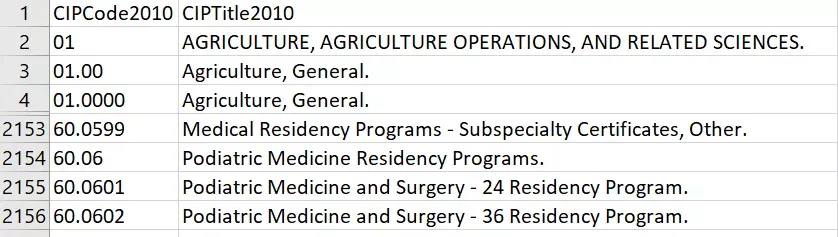

(The CIP program list shows over 500 new programs added from 2010 to 2020)
Common Interdisciplinary Majors and Programs
Financial Engineering
Financial engineering combines knowledge of finance, mathematics, and computer science. Most programs require applicants to have a background in business or STEM, but applicants from other fields like physics, who have strong computer and math backgrounds, will have a significant advantage.
Popular Programs:
Mathematics in Finance, New York University
Financial Engineering, Columbia University
Financial Engineering, New York University Tandon School of Engineering
Financial Engineering, University of California, Berkeley
Financial Engineering, University of California, Los Angeles

(Core courses of NYU's Mathematics in Finance program)
Management Information Systems
Management Information Systems, also known as MIS (Management of Information System), is a discipline that combines management science, information science, systems science, and computer science. Applicants from management, information systems, computer science, and other related fields can apply.
Popular Programs:
Master of Information Systems Management, Carnegie Mellon University
Master of Science in Information Systems, New York University
Master of Information Management and Systems, University of California, Berkeley
Master of Information Technology – Business Information Systems, Virginia Tech
Master of Science in Information Systems, Johns Hopkins University

(Fall 2020 application deadline for JHU's Information Systems program)
Business Analytics
The popular big data business analytics major is suitable for applicants with an undergraduate background in mathematics or statistics. Some business analytics programs also lean towards market analysis. Currently, most universities have successively launched business analytics programs, making it a hot major.
Popular Programs:
Master of Science in Business Analytics, University of Texas at Austin
Master of Science in Applied Analytics, Columbia University
Master of Science in Business Analytics, New York University
Master of Science in Analytics, Northwestern University
Master of Science in Business Analytics, University of Rochester
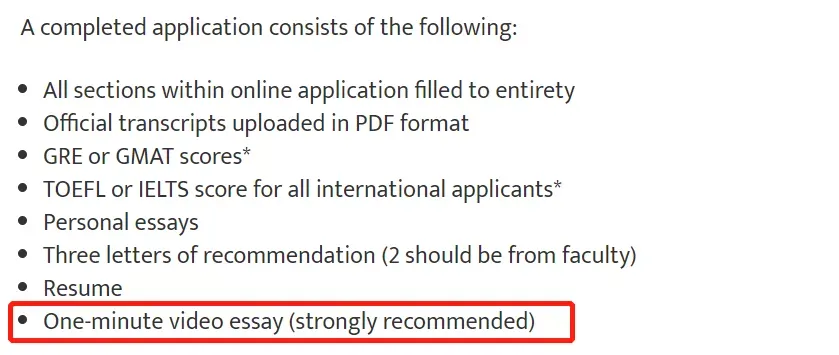
(UT Austin's BA program strongly recommends a Video Essay in addition to regular application materials)
Biostatistics
Biostatistics, as an applied branch of statistics in the life sciences, merges the two fields. Future employment is mainly in pharmaceutical companies, health insurance, hospitals, research institutions, and universities.
Popular Programs:
Master of Science in Biostatistics, Brown University
Master of Science in Biostatistics, New York University
Master of Science in Biostatistics, University of California, Los Angeles
Master of Science in Biostatistics, Georgetown University
Master of Science in Applied Biostatistics, Boston University

(Prerequisite courses required by Georgetown University's Biostatistics program)
Risk Management
Risk management is a science that studies the patterns of risk occurrence and uses quantitative and qualitative methods to control risks and minimize losses. It covers a wide range of fields, including financial policy, insurance and risk theory, finance, and market analysis.
Popular Programs:
MS in Enterprise Risk Management, Johns Hopkins University
MS in Enterprise Risk Management, Columbia University
MS in Risk Assessment and Management, University of Virginia
MS in Risk Analysis and Communication, Carnegie Mellon University
MS in Risk Management, Brandeis University
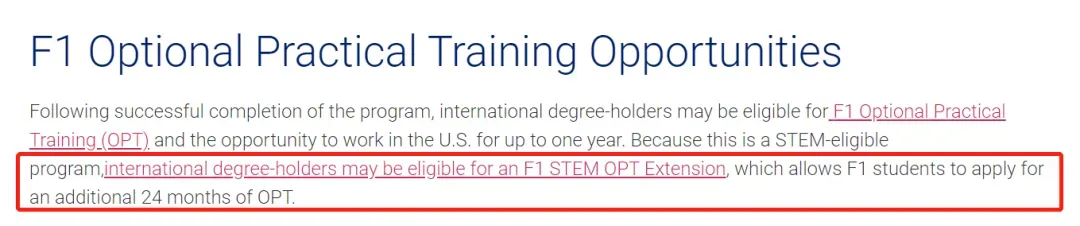
(Columbia University's ERM program is a STEM program)