Among environmental majors, Environmental Science and Environmental Engineering stand out as two dominant fields, attracting many Chinese students to study abroad. So, what exactly are the differences between Environmental Science and Environmental Engineering in the U.S.? Do their career paths differ? Today, CheersYou(清柚教育) will answer these questions for students.
What Are Environmental Science and Environmental Engineering?
1. What Is Environmental Science?
Environmental Science explores the global patterns of environmental evolution, the relationship between human activities and natural ecosystems, the impact of environmental changes on human survival, and the prevention and management of regional environmental pollution.
Environmental Science is highly interdisciplinary, incorporating theoretical knowledge from biology, physics, chemistry, environmental geology, engineering, and also courses in policy-making such as environmental economics and environmental management.
Environmental Science falls under the sciences, emphasizing theory and research. For example, when implementing a certain engineering plan, researchers often focus on developing an idealized, perfect solution, without necessarily connecting it closely to real-world conditions.
2. What Is Environmental Engineering?
Environmental Engineering uses applied science and engineering methods to improve the environment, primarily addressing the treatment of the three major waste types: solid, liquid, and gas.
- Solid waste pollution, soil remediation
- Water resource management, wastewater treatment, polluted water body restoration
- Atmospheric pollution (smog, wildfire ash, etc.) remediation
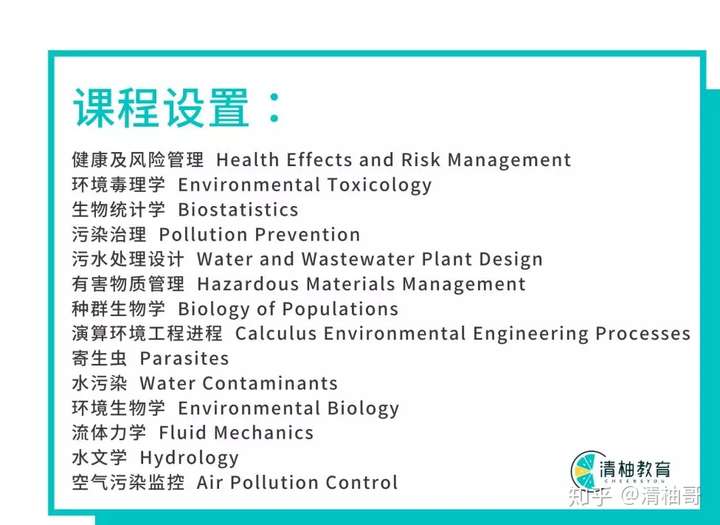
Students mainly study general chemistry, engineering mechanics, surveying, engineering drawing, microbiology, hydraulics, electrical engineering, environmental monitoring, and related subjects.
Environmental Engineering belongs to engineering disciplines, aimed at cultivating technical professionals. It is more practical and hands-on. When implementing an engineering plan, more emphasis is placed on actual execution, such as controlling project costs and considering time constraints.
Environmental Engineering branches generally include:
- Water resource treatment and supply
- Drainage engineering
- Water pollution control engineering
- Air pollution control engineering
- Solid waste treatment and disposal
- Noise control engineering
- Environmental impact assessment
Sample Environmental Engineering Courses:
Future Careers for Environmental Science/Environmental Engineering
The average annual salary for environmental engineers in the U.S. is $69,940, with a range roughly from $43,180 to $106,230. Graduates with a master's in Environmental Engineering can earn up to $60,000 pre-tax annually.
The employment distribution for Environmental Engineering in the U.S. is approximately:
◆ 43% government agencies
◆ 21% management, scientific, and technical consulting services
◆ 15% construction, engineering, and related services
◆ 2% self-employment
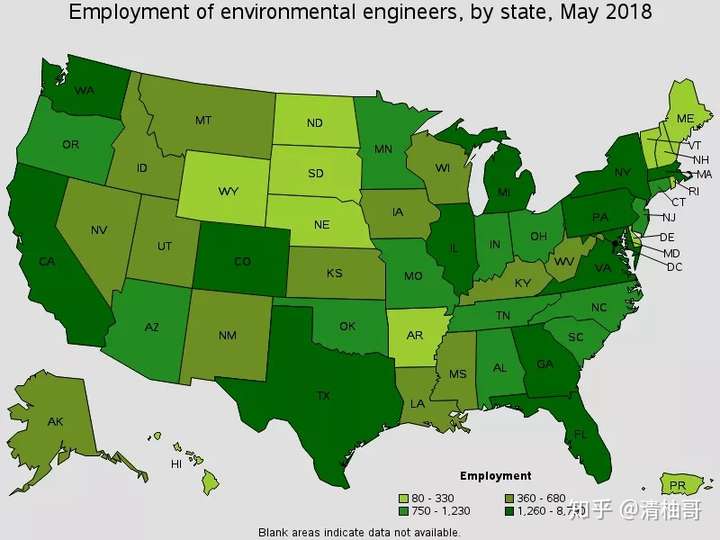
(U.S. Bureau of Labor Statistics employment data for environmental engineers by state)
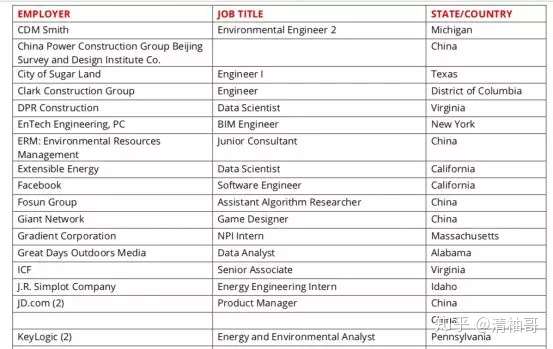
Carnegie Mellon University (CMU) 2018 civil and environmental engineering master’s graduates earned an average salary exceeding $60,000, with over 60% successfully employed and a small percentage pursuing further studies.
(Program link: https://nlg.cheersyou.com/Carnegie-Mellon-university?college=4327&object=5265#5265)
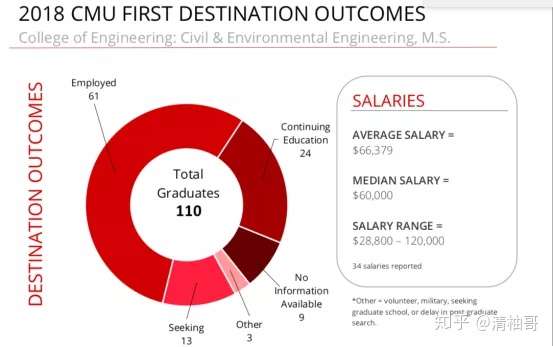
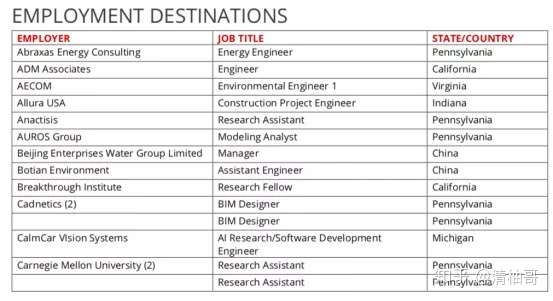
Specific job paths include environmental engineer and environmental consultant. Operations managers at large companies like JD, Wanda, and Walmart are also common career directions. CMU's program is relatively "hardcore", with courses involving CS-related topics, and as seen in the chart, many graduates have transitioned into software engineering and data analysis roles.
For the Environmental Science and Management program at UC Santa Barbara, employment data over the years show that graduates most often go to consulting firms, followed by government agencies, non-profit environmental organizations, various corporations, and some choose research paths.
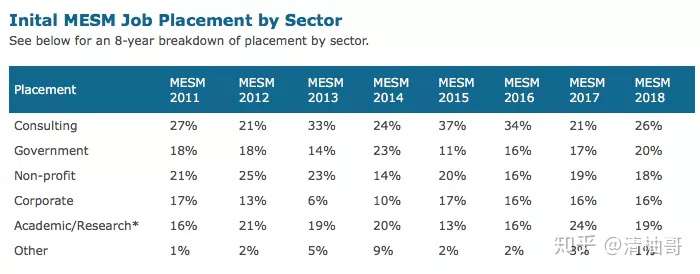
In summary, career paths for Environmental Science and Environmental Engineering are not vastly different. Environmental Science tends to be more specialized in a field, for instance, UCSB graduates working in ocean analysis and marine/water resource protection, while Environmental Engineering primarily focuses on engineering roles.
Overall, future careers in environmental fields will involve the following areas:
- Sustainability
- Clear Air & Water
- Land & Clean Up
- Health & Safety
- Waste treatment/classification
- Climate Change
- Emergencies
- Chemicals & Toxins
- Pesticides & Agriculture
Suitable Applicant Backgrounds
Academic Background Requirements
Many environmental engineering/science programs do not have strict prerequisite course requirements, but they prefer applicants with an undergraduate degree in engineering and strong foundational knowledge in mathematics (including calculus, linear algebra, differential equations), physics, chemistry, biology, geography, and engineering. Therefore, it is recommended to take as many relevant courses as possible during undergraduate studies.
It is also strongly recommended to have experience in computer programming, and proficiency in software such as MATLAB and CAD.
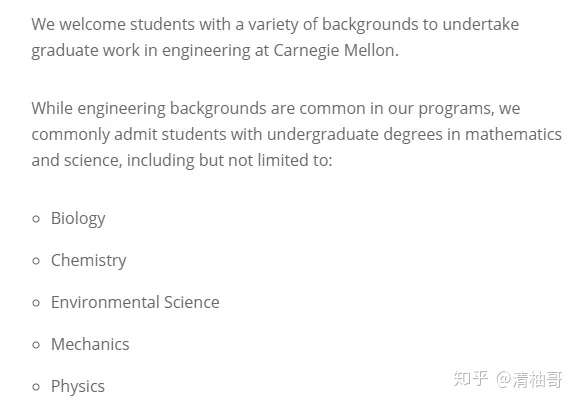
Carnegie Mellon University’s Civil and Environmental Engineering program admits many students with a civil engineering degree; CMU also admits students with bachelor's degrees in mathematics and sciences, in fields including biology, chemistry, environmental science, mechanics, and physics.
Standardized Test Requirements
Based on CheersYou(清柚教育)'s years of application data, we recommend that students planning to apply for environmental science/engineering programs aim for a GPA of 3.3+, GRE 320+, and TOEFL 100+ to be more competitive for top 30 schools in overall and program rankings.
For those aiming for top 20 programs, recommended scores are: GPA 3.5+, GRE 325+, and ideally TOEFL 105+. If your research and soft background are strong enough, you can try for top 10 schools.
Background and Experience Requirements
For environmental science/engineering applications, research and technical experiences are most critical. Research experience includes, but is not limited to, participating in professors' research projects, academic competitions, projects at off-campus research institutions, and summer overseas research if possible.
At the same time, internships and practical activities related to engineering design and implementation are very valuable, especially internships at top companies, which can strengthen your application.
Recommended Environmental Science/Environmental Engineering Programs
Environmental Engineering
Environmental Engineering is a highly interdisciplinary field with a wide variety of programs available.
- Environmental Engineering: Duke University, University of Southern California
- Energy Systems and Environmental Sustainability: UC Berkeley offers Energy, Civil Infrastructure and Climate; Washington University in St. Louis offers Energy, Environmental & Chemical Engineering—these are specialized master's programs focusing on specific areas within the field.
- Combined with Civil Engineering: Programs at Carnegie Mellon University, Cornell University, Northwestern University are often called "Civil and Environmental Engineering," representing a major category of environmental engineering programs.
Duke University
Master of Engineering (MEng) in Environmental Engineering
Duke University, located in Durham, North Carolina, is a world-class research university. Duke is one of the top universities in the U.S. and the best private university in the South, often called the "Harvard of the South."
It consistently ranks among the top 10 in the U.S. and top 20 globally.
This program is housed in Duke's Pratt School of Engineering and Nicholas School of the Environment.
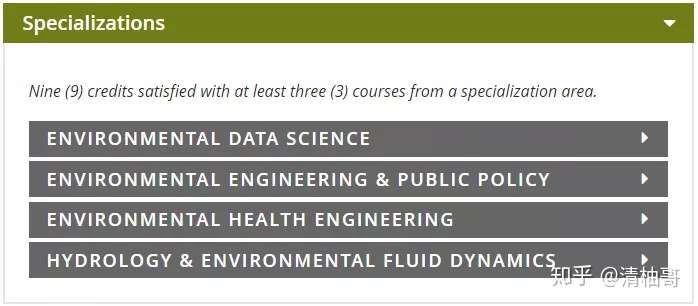
Research areas:
- Environmental Data Science
- Environmental Engineering and Public Policy
- Environmental Health Engineering
- Hydrology & Environmental Fluid Dynamics
Curriculum:
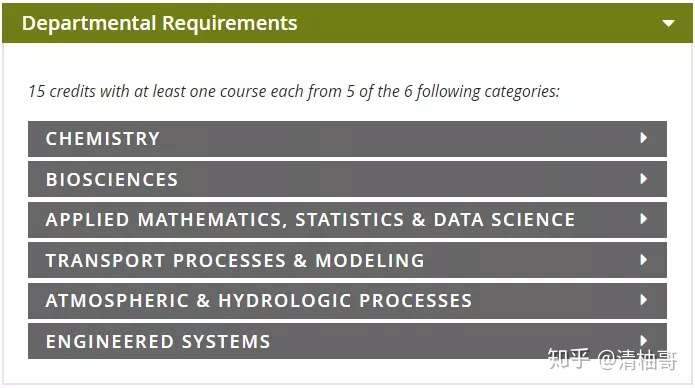
The MEng in Environmental Engineering requires 30 credits. Students must complete core industry preparatory courses, professional courses in areas like environmental data science and environmental health engineering, as well as courses in chemistry, biological sciences, applied mathematics, statistics, and data science.
Application Requirements:
• No work experience required.
• No minimum GPA/GRE/TOEFL scores; average admitted scores for reference: GRE Quantitative: 163-169 / GRE Verbal: 152-161 / GPA: 3.4-3.7
• Career support provided (on-campus recruiting, career development platforms such as career fairs, alumni events, resume and cover letter training, interview skills workshops, etc.)
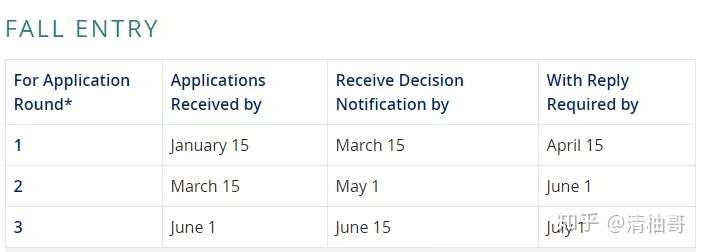
Application Deadlines:
Students requiring an F-1 visa must submit their application by the first round deadline. Students already holding a valid F-1 visa who only need to transfer their SEVIS record to Duke may apply in the second round.
Washington University in St. Louis
MEng in Energy, Environmental & Chemical Engineering
Washington University in St. Louis (WUSTL) is one of the earliest universities established in the U.S. In science and engineering, its programs in biochemistry, biophysics, biomolecules, and civil engineering are nationally leading.
Washington University in St. Louis is the first and only university to establish a Department of Energy, Environmental & Chemical Engineering. The department aims to develop solutions to global energy challenges through environmental engineering science and chemical engineering research.
Curriculum:
Full-time students can complete the 30-credit degree within 12-16 months. Courses include those related to engineering practice and beyond, such as project management, society, and policy courses.
All 30 credits must be passed, and a minimum graduate GPA of 2.7 is required to earn the master’s degree.




(Partial course list)
Application Requirements:
• GRE scores required
• TOEFL minimum 90 / IELTS minimum 6.5
• Recommended undergraduate coursework: 2-3 semesters of calculus + 1 semester of differential equations
• Applicants with a bachelor’s degree in engineering, physical sciences, or life sciences are welcome
Fall Admission Deadlines (Rolling admissions):

Carnegie Mellon University
MS in Civil and Environmental Engineering
Carnegie Mellon University (CMU) is a renowned private research university in the eastern U.S., located in Pittsburgh, Pennsylvania. CMU is globally famous for its School of Computer Science and School of Drama, and its College of Fine Arts, Tepper School of Business, Heinz College of Public Policy, and College of Engineering are all top-ranked.
CMU’s Department of Civil and Environmental Engineering (CEE) is within the College of Engineering. The MS in Civil and Environmental Engineering has three tracks, allowing students to focus deeply on one area:
- Advanced Infrastructure Systems (AIS)
- Environmental Engineering, Sustainability and Science (EESS)
- Mechanics Materials and Computing (MMC)
Curriculum:
This program requires 96 credits total, of which 60 credits must be from CEE courses. The remaining 36 credits can be electives from other departments. CMU requires a minimum graduate GPA of 3.0 to earn the master’s degree.

Application Requirements:
• GRE scores required
• TOEFL minimum 84 / IELTS minimum 7.0
• CMU admits students with bachelor's degrees in engineering, mathematics and science, biology, chemistry, environmental science, mechanics, and physics.
• Career support: Graduates can seek help from the Carnegie Mellon University Career and Professional Development Center for job searching.
Application Deadlines:
Spring: September 15
Fall: January 5
Environmental Science
Johns Hopkins University
Environmental Sciences and Policy
Johns Hopkins University, founded in 1876, with its main campus in Baltimore, Maryland, is the first research university in the U.S. and a founding member of the American Association of Universities (AAU). It is considered one of the 20 most valuable universities in the U.S.
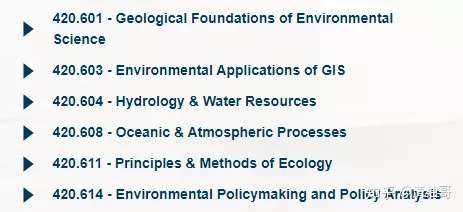
Curriculum:
Core courses include geology, hydrology, oceanography, meteorology, ecology, geographic information systems (GIS), and policy. Electives range from policy-oriented to science-focused courses.
Application Requirements:
• TOEFL minimum 100 / IELTS minimum 7
• Undergraduate coursework in calculus, statistics, and chemistry is required. If applicants lack these but have strong other qualifications, they may be admitted conditionally and required to make up courses.
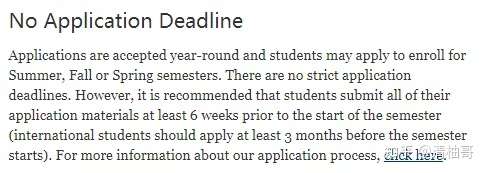
Application Deadlines:
Applications are accepted year-round for summer, fall, or spring semesters. There is no strict deadline. International students are advised to submit at least 3 months before the start of the semester.
Case Study:
CheersYou(清柚教育) Student: F
University: Tianjin University
Major: Environmental Engineering
GPA: WES 3.15
GRE: 157+169+3.5=326+3.5
TOEFL: 97
Internship: (Recommended by CheersYou(清柚教育)) Assisted in securing professor and internship recommendation letters
Offers Received:
- Carnegie Mellon University (CMU)
Civil & Environmental Engineering - University of California, Los Angeles (UCLA)
MPH Environmental Health Sciences - University of Southern California (USC)
Environmental Engineering - Washington University in St. Louis (WUSTL)
Energy, Environmental and Chemical Engineering
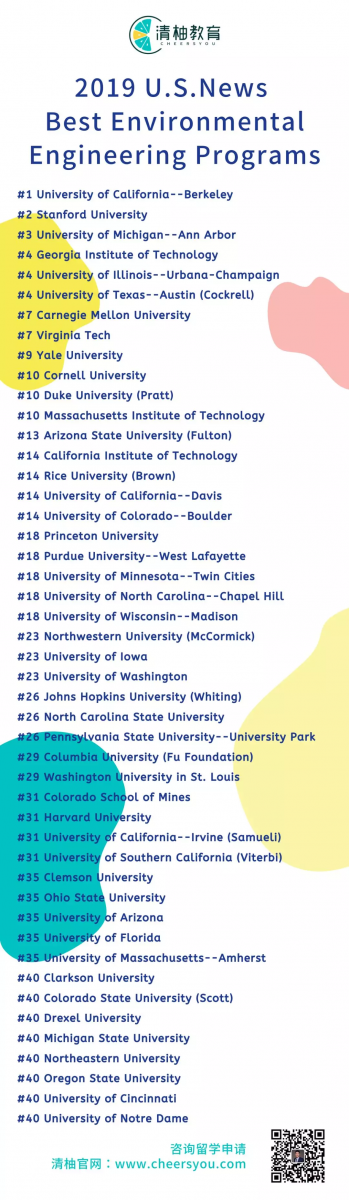
Appendix: 2019 U.S. News Best Environmental Engineering Programs Ranking
(Environmental / Environmental Health Engineering)
Click to view U.S. News official ranking link
In summary, Environmental Science primarily covers environmental fundamentals, basic theory, and policy systems. Graduates typically work in testing, assessment, consulting, or continue to graduate studies; the career scope may be somewhat limited.
Environmental Engineering programs are more practice-oriented, mainly aiming to train environmental engineers. They offer better practicality and employment prospects compared to Environmental Science, and there are relatively more Environmental Engineering programs in the U.S. Therefore, whether your undergraduate major is Environmental Science or Environmental Engineering, you may be inclined to apply for Environmental Engineering for graduate studies.
It is recommended that before applying, students carefully research the program's training focus and curriculum to select the most suitable and preferred program. That concludes today's introduction~ If you have any questions, feel free to scan the QR code at the bottom right to consult with us~