
Recently, Bloomberg Businessweek released its latest 2019-2020 U.S. business school rankings.
Bloomberg Businessweek is widely recognized as one of the most authoritative English-language business magazines and one of the most widely read global business publications.
Since 1988, Bloomberg Businessweek has published its annual MBA rankings, which have become an essential reference for students pursuing business degrees, especially those in MBA programs.
This year's rankings were compiled from 26,804 survey responses from current MBA students, alumni, and recruiters, based on the respondents' goals and experiences, and incorporating each school's salary and employment data.
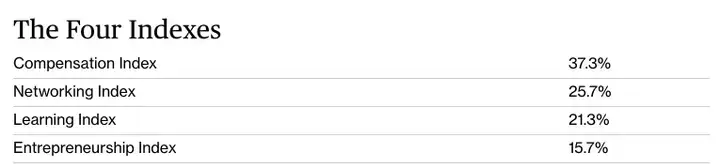
The specific ranking criteria are as follows:
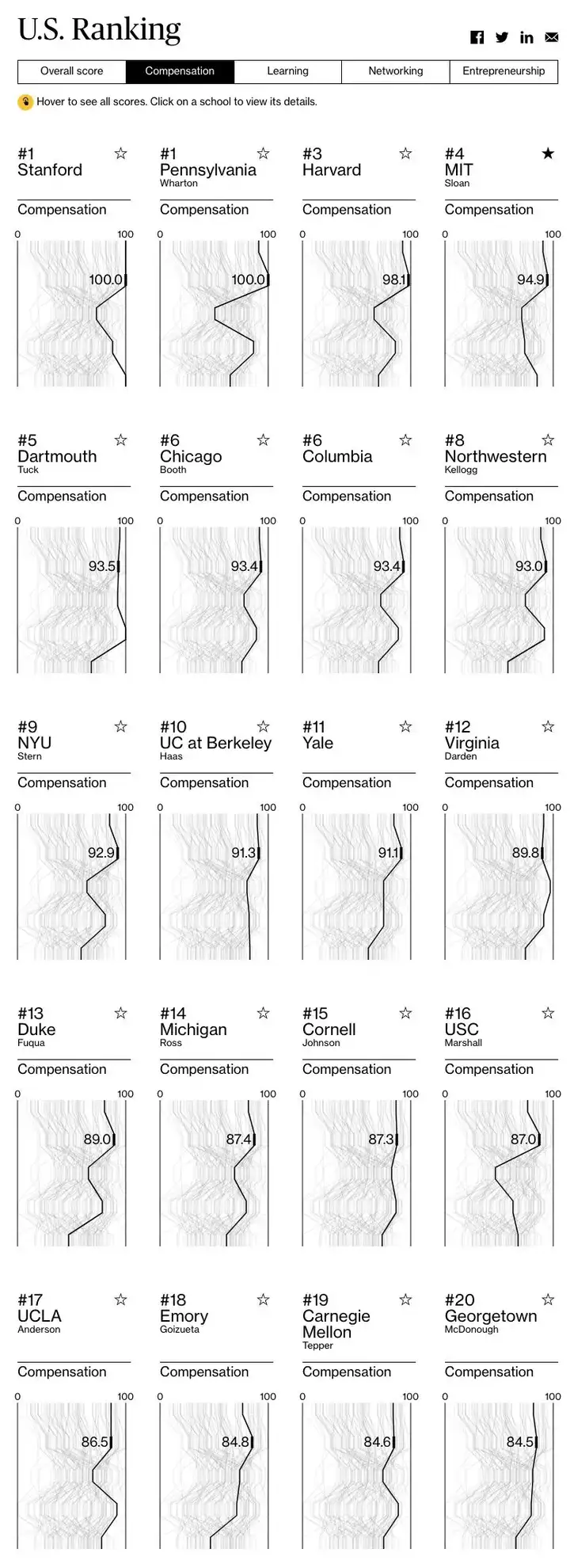
Compensation: 37.3% (including post-graduation starting salary, alumni income, three-month employment rate, etc.)
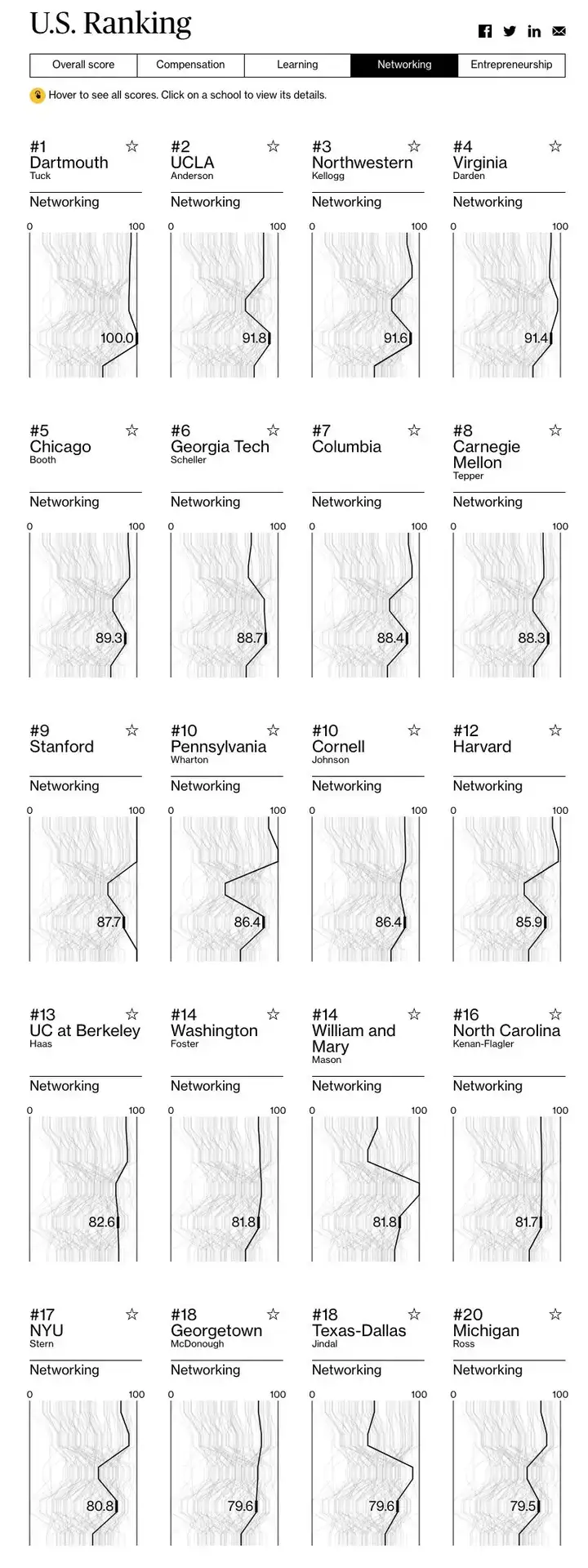
Alumni Network: 25.7% (including quality of student network, student-alumni interaction, school brand halo effect, etc.)
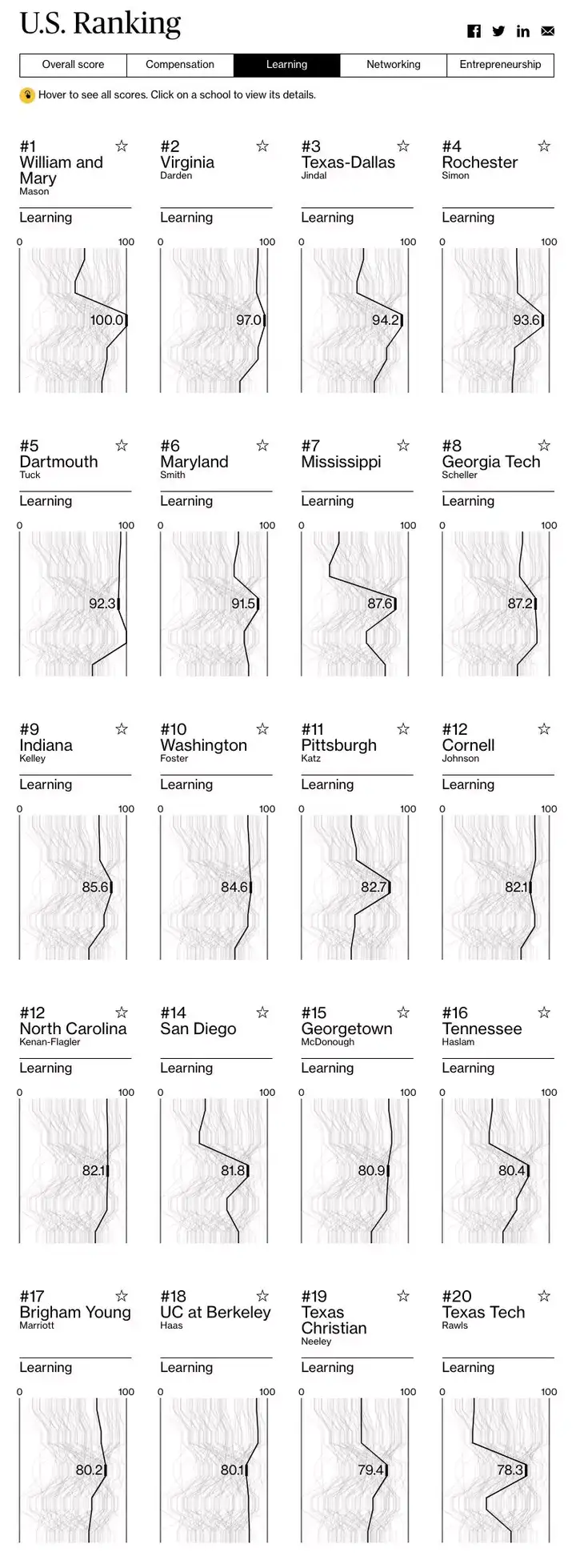
Academic Quality: 21.3% (including teaching quality and depth, curriculum relevance to practice, class size, etc.)
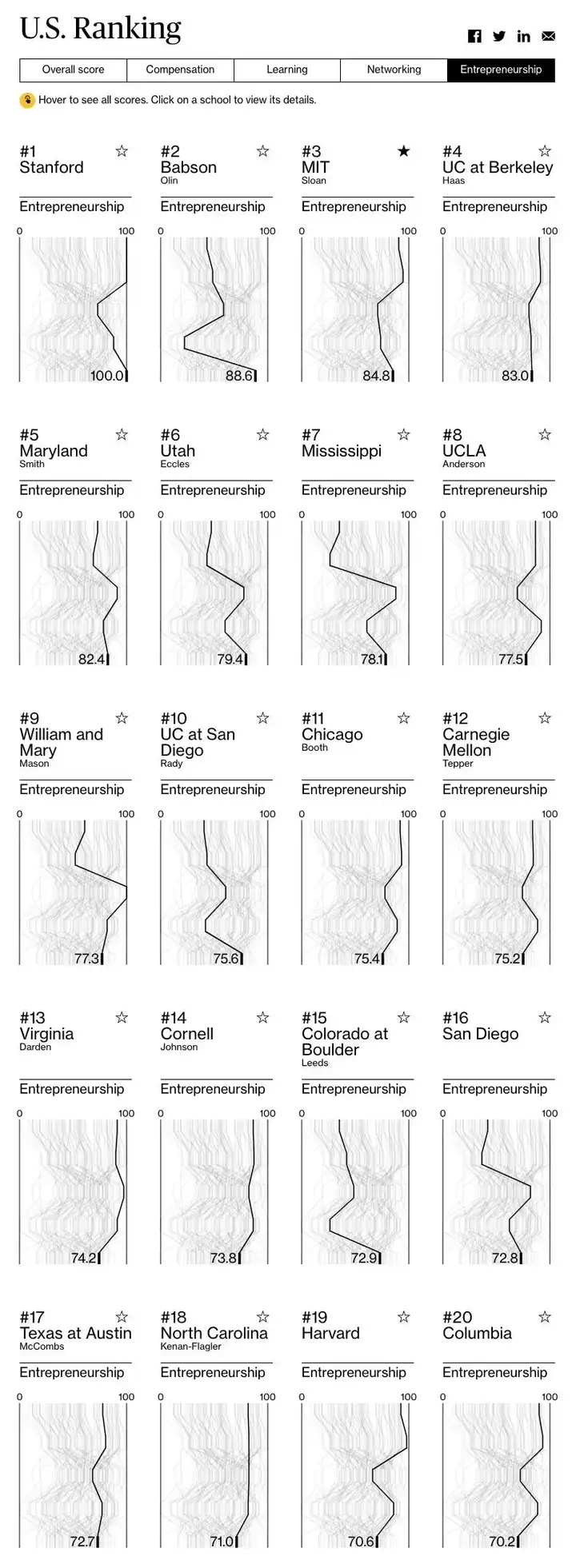
Entrepreneurship: 15.7% (including entrepreneurship training quality, whether graduates possess entrepreneurial skills, etc.)
The top 10 U.S. business schools this year are as follows:
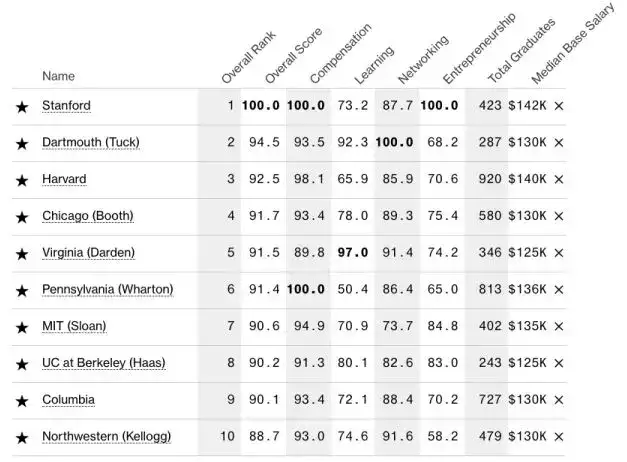
Stanford University claimed the top spot for the second consecutive year, excelling in compensation and entrepreneurship. Dartmouth's Tuck School of Business was the biggest riser, gaining 17 points in alumni network and academic quality to secure second place.
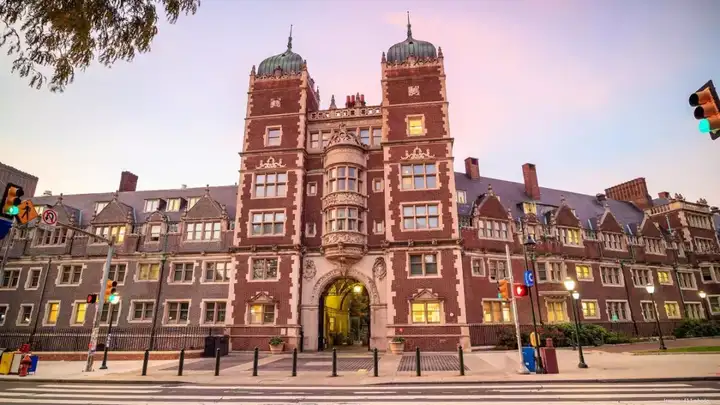
Harvard Business School, Chicago Booth School of Business, and the University of Virginia Darden School of Business rounded out the third through fifth positions. The Wharton School of the University of Pennsylvania slipped out of the top five from its second-place ranking last year.
In addition to the overall ranking, Bloomberg Businessweek also released specific rankings for each of the four indicators.
Top 20 in Compensation:
Top 20 in Academic Quality:
Top 20 in Alumni Network:
Top 20 in Entrepreneurship:
With business school tuition soaring and many opting to launch startups directly rather than invest in a prestigious degree during periods of economic stability, application numbers for MBA programs have been declining in recent years.
Among Bloomberg Businessweek's top 10, Stanford Graduate School of Business saw a 6% drop in applications, and Dartmouth's Tuck School saw a 22.5% decline in 2019.
Wharton's applications fell by 5.4% compared to 2018. Although Chicago Booth saw a 3.4% increase this year, that was not enough to offset the 8.2% drop in 2018.

However, the decline in applications has not led to lower admission standards. Among these top-ranked U.S. business schools, more than half reported average admitted student scores higher than the previous year.
MIT Sloan raised its average GMAT score to 728; Michigan Ross achieved a record-high average GMAT of 720; and UCLA Anderson also hit a new high of 719.
While application numbers are down and MBA acceptance rates are up, this does not mean top MBA programs have lowered their requirements. Elite programs continue to be highly selective, meticulously screening applicants' backgrounds.

Rankings are still just a reference. Here at CheersYou(清柚教育), we continue to advise applicants to view rankings rationally and to identify schools that best fit their own profiles and goals.