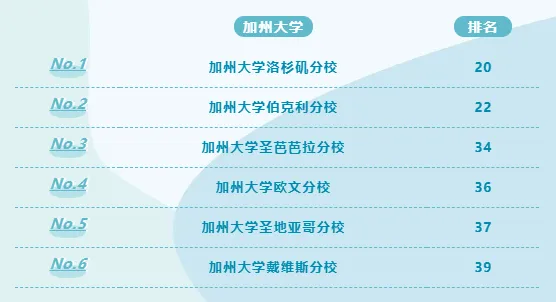
The University of California, a public university system comprising 10 campuses with nearly 300,000 enrolled students, is hailed as "a model of public higher education". Among its 10 campuses, excluding UC San Francisco which offers only graduate degrees, six consistently rank within the top 50 of the U.S. News National University Rankings.
According to official UC statistics, since 2017 the system has received between 170,000 and 180,000 applications annually. UC is also one of the most popular choices among Chinese international students—it is said that "one in eight Chinese undergraduates in the U.S. studies at a UC campus."
The nine UC undergraduate campuses share a single application portal, meaning one application can be submitted to multiple campuses, including the personal insight questions.
We all know that essays are a vital component of the transfer application, serving as a key reference for admissions officers when evaluating an applicant's background. A strong essay can not only enhance your profile but sometimes come to the rescue when other parts of your application are weak. Today, we'll go over the essential knowledge about UC application essays that you can't afford to miss.

Transfer Essay Prompts: The "3+1" Format
The UC Personal Insight Questions are essentially the UC application essays. They consist of one required question and three chosen from seven options, with each response limited to 350 words.
The one required question: How have you prepared for your intended major?
Please describe how you have prepared for your intended major, including your readiness to succeed in your upper-division courses once you enroll at the university.
Consider the following when answering:
- How did your interest in this major develop?
- How did your school experiences spark your interest in the target major?
- What extracurricular experiences helped you develop this interest?
- Did your culture, family background, or other factors lead you to choose this major?
- How does your intended major connect to your long-term goals?
If you are applying to different majors at different campuses, approach this question from a broader perspective or find a common thread among your chosen majors. This can also showcase your ability to synthesize ideas and your multitasking skills, giving you an edge.
From the seven optional prompts, choose three:
1. Leadership:
How have you positively influenced others? How have you helped resolve disputes or contributed to group efforts? A leadership role is not just a title; it can mean being a mentor to others, a person in charge of a specific task, or taking the lead in organizing an event or project. Think about your accomplishments and what you learned from the experience. What were your responsibilities?
2. Creativity:
What does creativity mean to you? Do you have a creative skill that is important to you? What do you do with that skill? How has your creativity influenced your decisions inside and outside the classroom? Does your creativity relate to your major or future career?
3. Talent:
What is your greatest talent or skill? If there is a talent or skill that you are proud of, now is the time to share it. This doesn't have to be something you've been recognized for or received an award for—tell us why this talent or skill matters to you. Is it something you were born with, or did you work hard to develop it? Has it opened up opportunities for you in and out of the classroom?
4. Educational Opportunity/Barrier:
How have you taken advantage of an educational opportunity or overcome an educational barrier? How have you applied what you learned through that experience? An educational opportunity can be anything that has added value to your educational experience. If you choose to write about an educational barrier, how did you overcome or strive to overcome it? How has overcoming this barrier shaped who you are today?
5. Overcoming a Challenge:
What significant challenge have you faced, and how did it affect your academic achievement? This challenge could be personal, or something you faced in your community or school. This is a great opportunity to talk about any obstacles you have encountered and what you learned from the experience. Did you have support from others, or did you handle it alone?
6. Community Service:
What have you done to make your school or community a better place? What was your role, your motivation, and what did you gain? Think of "community" as a group, team, or place—like your school, hometown, or family. What positive change did you bring to your community? How did your actions benefit others or the community at large?
7. Personal Distinction:
This is a completely open-ended question. From your perspective, what makes you stand out among UC applicants? What do you value in life? What are you passionate about? If admitted, what are you most looking forward to?
.png?x-oss-process=style/opt-webp)
Since you have the freedom to choose, we strongly advise playing to your strengths and avoiding topics that could work against you.
Before deciding on your topics, do some self-reflection:
- What are my strengths and advantages?
- What are my weaknesses and disadvantages?
- What key words or themes are associated with events in my life?
From these seven prompts, pick the three that best fit you—those you have the most to write about and that showcase your most compelling stories. If one or two topics stand out especially, write those first, then decide on the remaining one(s).
Content: Tell a Good Story, with "Me" at the Center
Writing your application essays is a process of packaging yourself, essentially creating a positive "personal image" for the admissions officers.
So how can your personal statement stand out among thousands of essays?
1. Pre-writing Preparation:
Deeply explore your life experiences and find examples that match the prompts. Study the detailed descriptions and sub-questions under each prompt, then outline your answers point by point so you know exactly what to include.
For example, some applicants may have participated in small invention or innovation projects, and some even have patents certified by official agencies—these can be excellent material for the "creativity" prompt.
However, some domestic applicants' examples are often limited to school experiences, both academic and extracurricular.
For the "leadership" prompt, some students write about playing a key role in group activities organized by their school or class; for "overcoming a challenge," they might write about tackling difficulties in a particular course and making progress on their own.
These are not off-limits, but you need to be mindful of cultural differences in your phrasing so that admissions officers can easily understand the situations you describe.
This is also when you'll appreciate the importance of background enhancement.
2. Planning and Writing:
Treat your experience or story like a movie where you are the lead character. A movie character needs a dramatic arc.
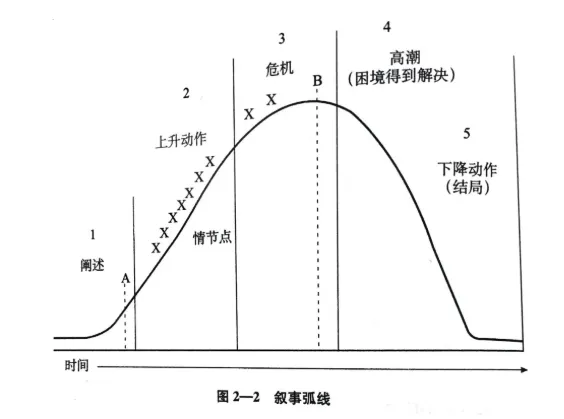
For example, in the "overcoming a challenge" topic, you can highlight the character arc by contrasting the before and after—from being weak or inept to becoming strong or skilled. For "leadership," you could describe going from being doubted by others before achieving success to being praised and followed afterward.
In these ways, you prove yourself both directly and indirectly. Even if an admissions officer only has time to read the opening and closing, they will notice the positive transformation that occurred over the course of your narrative.
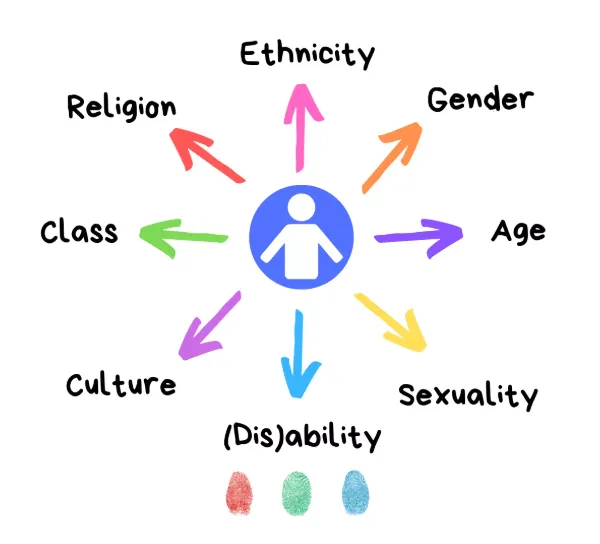
Additionally, if applicable, you can weave in experiences of being a "disadvantaged group" in terms of gender, ethnicity, social class, etc., connecting to hot-button issues in American society. This can help echo broader social concerns and, frankly, elicit sympathy.
3. Polishing and Refining:
No one writes a perfect essay alone. Start early to leave ample time to get input from different people, especially regarding grammar and word choice.
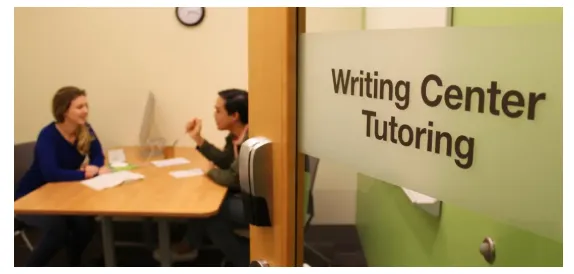
If you are attending high school or community college in the U.S., seek help from your school's writing center, tutors, English teachers, or even your host family. For applicants in China, you can also find native speakers to help with polishing.
However, any polishing must not exceed your own English level. A personal statement does not require sophisticated grammatical structures or obscure "big words." What matters most is authenticity and originality to show your uniqueness.
Key Takeaways
1. Read the prompt, then read it again, then read it again!
As mentioned, carefully dissect the prompt, including the summary and the detailed instructions below it. Start with an outline to avoid omissions or going off-topic, and to map out the structure of your essay.
2. Word limit: 350 words
There is much to say, but you must be concise. Each UC personal insight question is capped at 350 words, so you must "use every inch of space wisely." Pay attention to the proportion of your introduction, body, and conclusion.
This is why personal statements often go through multiple drafts—constant cutting and refining to make every sentence crisp and powerful. It's also why seeking guidance is recommended: someone else can better see which parts are most essential and which can be trimmed.
3. Not just right-minded, but positive-minded
Last but not least, solid values are the foundation of a good essay. Every line should radiate the positive attitude of a vibrant undergraduate applicant toward society and a bright vision for the future.
You must not only "tell the story well" but also tell a "good story." Refining your writing skills, grammar, and vocabulary helps you "tell the story well," while telling a "good story" requires taking control of your narrative from the start and continuously adjusting and perfecting your "personal image."
Keep the focus on "me" and stick to your genuine experiences and feelings. This is your "personal statement"—in your narrative, avoid expanding the individual "I" into a collective "we"!

Now that you understand the UC essay prompts and the key writing points, we believe every student who considers UC a dream school has gained more confidence and insight for the application.
UC welcomes you! Good luck to all applicants!