
Most students who want to apply to business schools think that only GMAT scores are accepted and naturally assume that taking the GMAT is a must for business programs.
In fact, this is a common misconception.
First, the vast majority of business schools now accept GRE scores.
In recent years, business schools around the world have gradually begun accepting GRE scores in place of GMAT to attract applicants from more diverse professional backgrounds.
As a result, the GRE exam has surged to become the fastest-growing graduate admissions standardized test in terms of usage in recent years.
According to the latest ETS survey report, an increasing number of students are switching to GRE scores for business school applications. Moreover, the usage rate of GRE scores for business school applications has increased by 25% compared to five years ago.

As of this year, GRE scores are accepted by over a thousand business schools worldwide, including more than 700 American graduate business schools. Among them are top-tier institutions such as Harvard Business School, Yale School of Management, and Stanford Graduate School of Business, all highly prestigious.
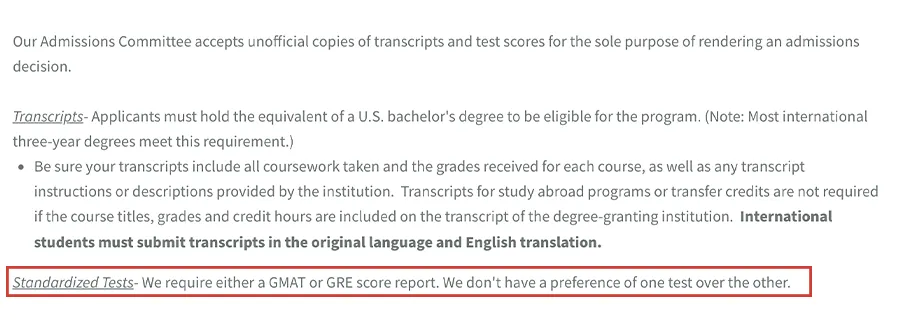
Most of the top 50 business schools in the United States accept GRE score submissions for applications. Many schools even emphasize in their admissions requirements that the GRE and GMAT are considered equally, with neither being superior.
Secondly, many high-value business programs with an engineering focus are not necessarily housed within the business school. For example, financial engineering or financial mathematics may be placed under the school of engineering. Such interdisciplinary business programs generally accept only GRE scores.
At the same time, the GRE exam is not only accepted by American universities but has also gained broad recognition in Commonwealth countries such as the UK and Canada.
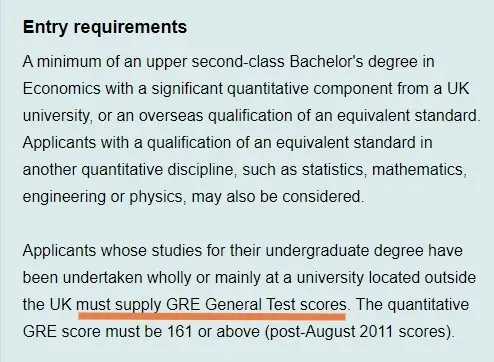
As the UK's most elite institutions, the G5 universities recommend GRE scores for the vast majority of their programs, and some programs cannot substitute GMAT scores.
For instance, the Economics master's program at University College London requires GRE scores and does not accept GMAT.
The GRE has become widely applicable across many fields of study, including business, solidifying its position as the premier standardized test.
So, what does the increasingly broad applicability of the GRE mean for test-takers?
More Options for Application Directions
The GRE exam itself has an extremely broad scope of applicability, suiting applications to graduate programs in various disciplines worldwide.
Graduate programs in business, science and engineering, humanities and social sciences, law, and more all accept GRE scores. This demonstrates its high value and wide acceptance.
Now, as the GRE is increasingly accepted by more business schools, it further expands the test's applicability and influence, undoubtedly helping test-takers broaden their range of academic choices once again.
The GMAT, on the other hand, as a standardized test that emphasizes business knowledge, is inherently limited and can only be used for business school applications. Programs in fields like engineering or the humanities cannot be applied to with GMAT scores.
For students aiming to apply in multiple directions, not limited to business schools, the GRE remains the preferred standardized test.
Achieving High GRE Scores Even Without Strong Math Skills
The GMAT focuses on the application of mathematical logic, whereas the GRE emphasizes vocabulary comprehension and usage. Therefore, the math questions on the GRE are generally easier than those on the GMAT, and it is easier to achieve a high score through active practice.
Therefore, students who are not strong in math tend to use GRE scores to apply for programs that accept the GRE as an alternative to the GMAT. Especially for students with a large vocabulary and who are less proficient in math and complex logical analysis, choosing the GRE is actually more advantageous. It saves time while maximizing their chances of success.
Enjoy More Flexible Exam Policies
In terms of exam policies, the GRE offers greater flexibility in format and rules. This is undoubtedly good news for test-takers.
Number of Test Attempts
The GRE can be taken up to five times per year, with no lifetime limit. The GMAT, on the other hand, only allows eight attempts in a lifetime.
Thus, when choosing the GMAT, one must be thoroughly prepared before registering. Approaching the GMAT with a "trial run" mentality simply wastes the already limited opportunities. This adds to the psychological burden on test-takers.

Test Format
The GRE allows test-takers to skip questions and manage their pacing better during the exam. In contrast, the GMAT does not permit reviewing previous questions and requires answering in sequential order. As a result, many students struggle to control their answering speed and are forced to guess when encountering difficult questions.
ETS was also the first to launch an "at-home" test this year. All these factors indicate that GRE exam policies are more user-friendly and the test format is more flexible. Taking the GRE means enjoying more liberal exam policies.
Summary
Of course, if you intend to apply exclusively to business schools, especially well-known traditional MBA programs or highly specialized business fields such as accounting, the GMAT remains a more suitable choice.
However, if you are considering applying in multiple directions, the GRE is definitely your best bet.
The application season is now in full swing, and we wish all students currently preparing for exams the best of luck—achieve your desired scores and your ideal results!