Recently, Times Higher Education released the new 2021 Impact Rankings.
The rankings cover a total of 1,240 universities from 98 countries and regions. They also produced 18 rankings, including one overall ranking and 17 individual rankings.
The THE Impact Rankings not only focus on the influence and reputation of institutions, but also compare them in areas such as research, outreach, activities, management, and teaching to produce a relatively credible ranking result.
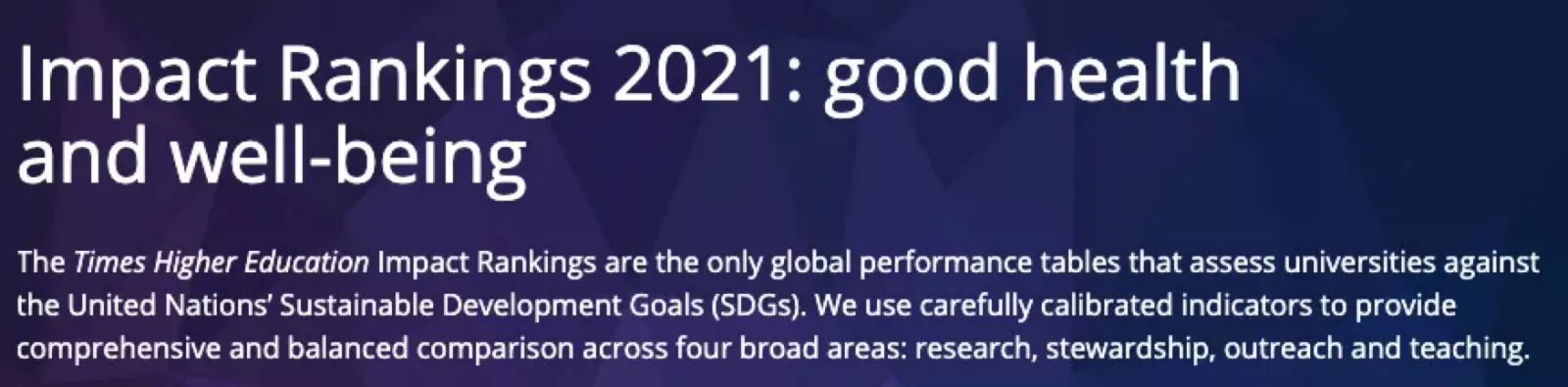
At the same time, this is the only ranking that evaluates global universities based on the United Nations Sustainable Development Goals (SDGs). The 17 individual rankings mentioned earlier are also THE's rankings based on the extent of each university's work in achieving the SDGs.
CheersYou(清柚教育) will compile and interpret this ranking. Let's take a look at the highlights of this year's ranking.
Ranking Methodology and Indicators
The Times Higher Education (THE) World Rankings comprehensively consider the indicators of the seventeen UN Sustainable Development Goals. While ranking each individual indicator, an overall world ranking is also produced.
The seventeen indicators include:
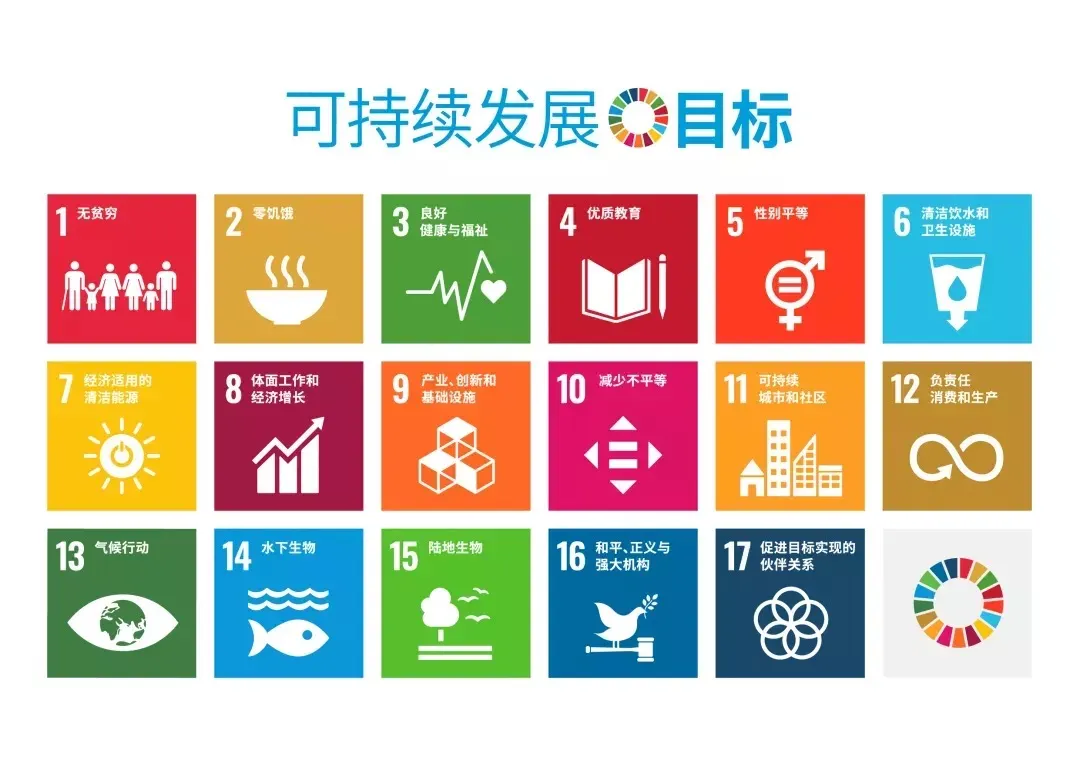
Times Higher Education also requires that universities participating in the evaluation must take part in four individual SDG rankings (with SDG 17: Partnerships for the Goals being mandatory).
The overall world university ranking will be based on the scores of the other three highest-scoring individual rankings, which are included in the total score for the overall ranking.
Top 100 Overall Impact Rankings
In this Times Higher Education World University Rankings, a total of 1,240 institutions participated, of which 1,115 entered the overall ranking.
Now, let's first look at the complete list of the top 100:
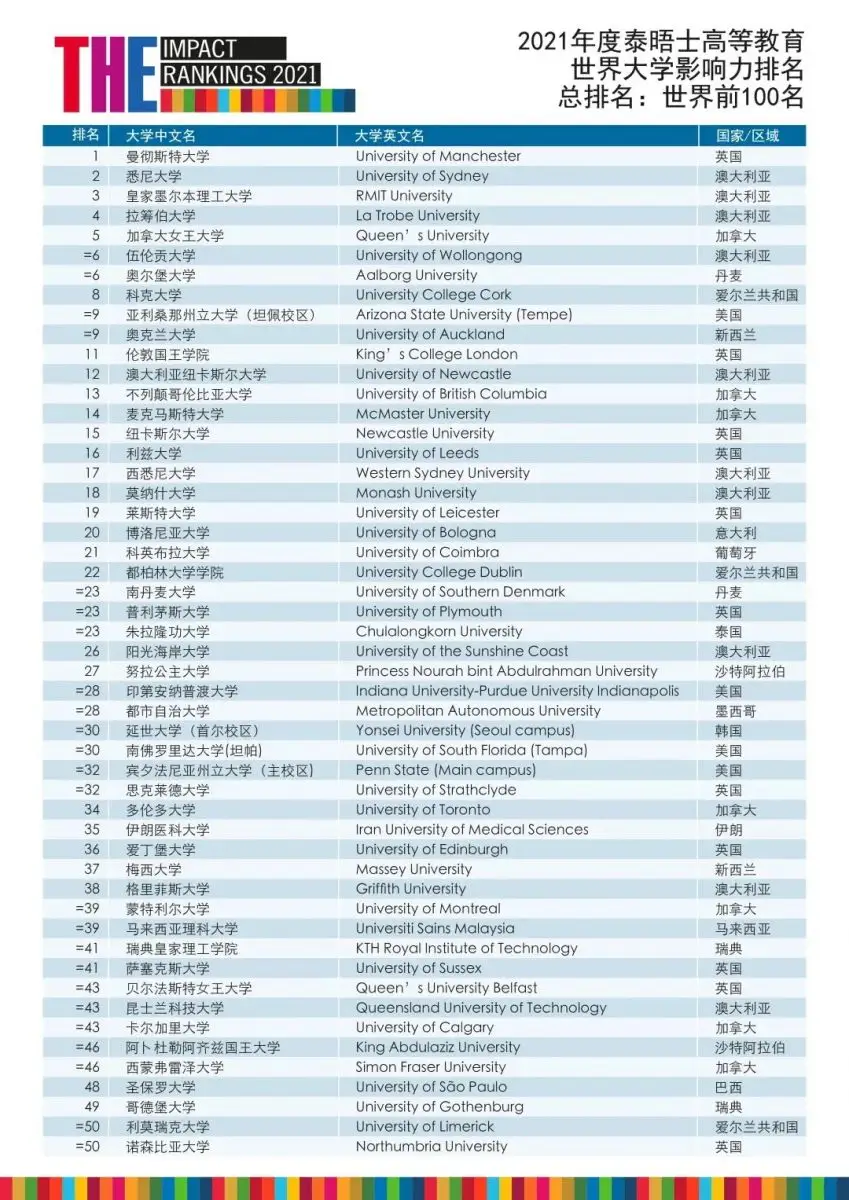
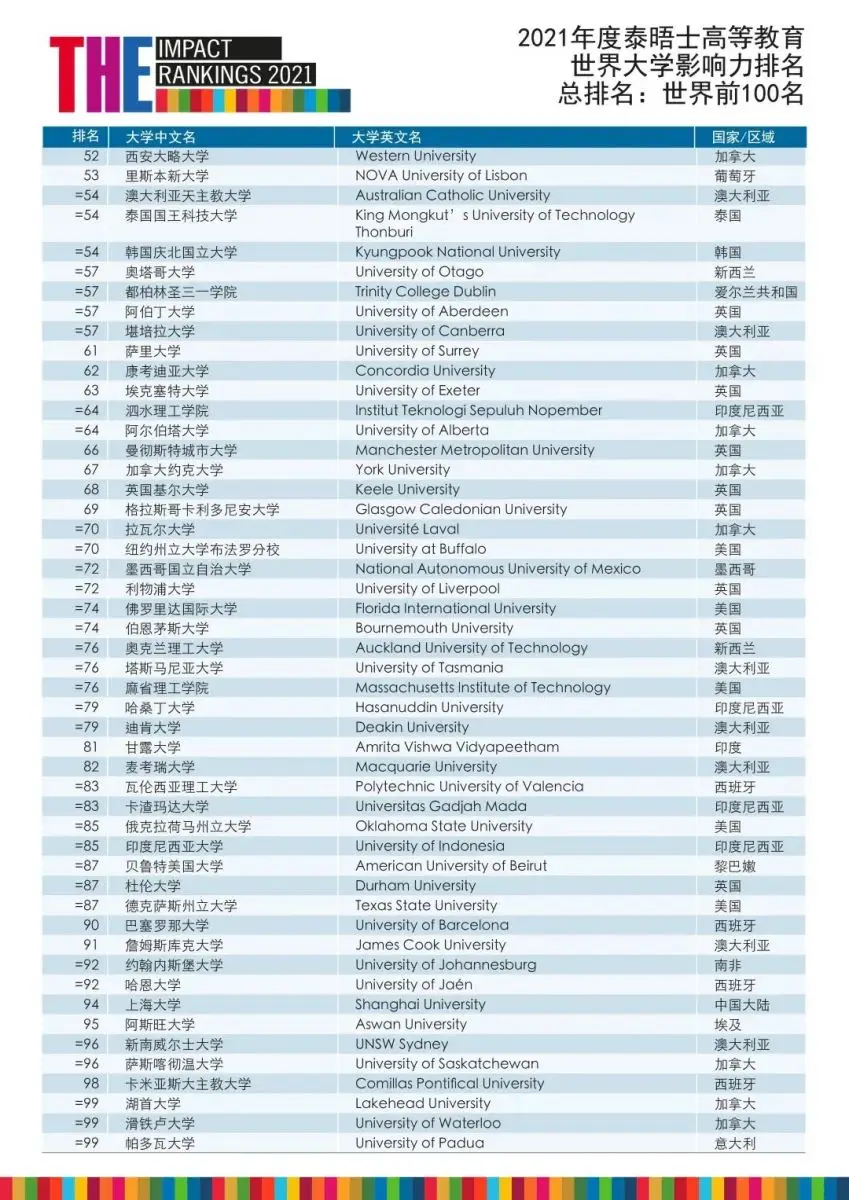
Ranking Analysis
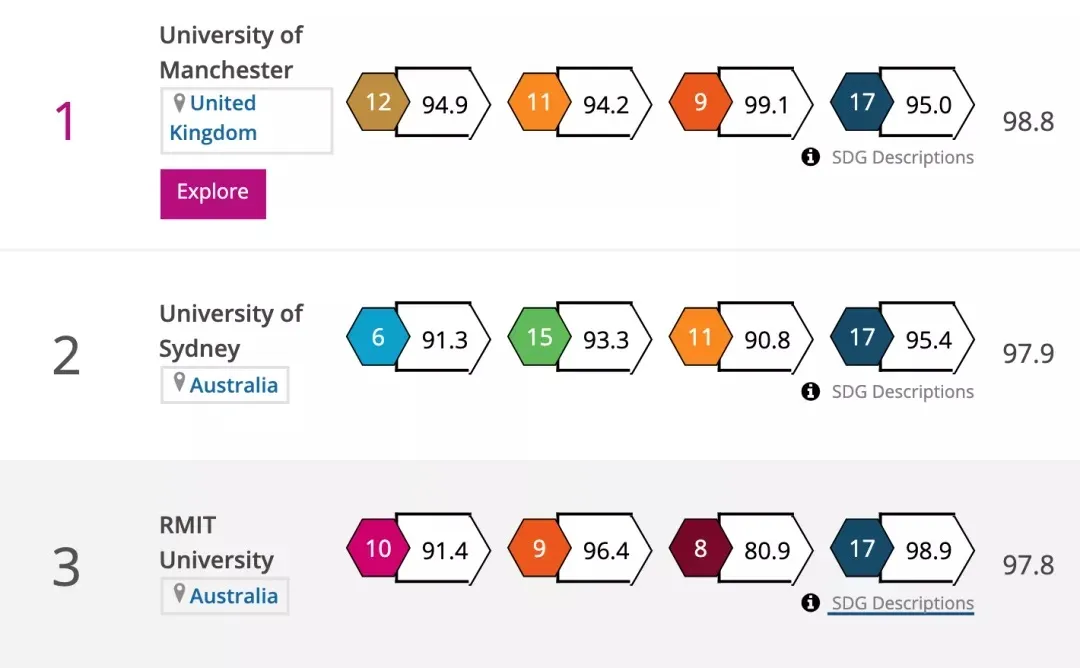
The biggest highlight of this ranking is that the University of Manchester from the UK topped the list with a total score of 98.8. It scored particularly high in three individual categories: Industry, Innovation and Infrastructure (SDG 9), Sustainable Cities and Communities (SDG 11), and Responsible Consumption and Production (SDG 12).
The University of Sydney and RMIT University from Australia ranked second and third respectively.
The University of Sydney achieved excellent results in Clean Water and Sanitation (SDG 6), Sustainable Cities and Communities (SDG 11), and Life on Land (SDG 15).
Meanwhile, RMIT University achieved good results in Decent Work and Economic Growth (SDG 8), Industry, Innovation and Infrastructure (SDG 9), and Reduced Inequalities (SDG 10).
It is also worth mentioning that although Shanghai University participated in the ranking for the first time, it ranked 94th in the world overall. It is also the highest-ranked Chinese mainland university in this evaluation.
In this ranking, the top 10 institutions come from seven regions and countries. A total of 24 countries and regions have universities in the top 100 of this ranking.
It can be seen that more and more universities around the world are not only willing to contribute to sustainable development but are also making contributions to some social issues.
Selected Individual SDG Rankings
SDG 1 - No Poverty
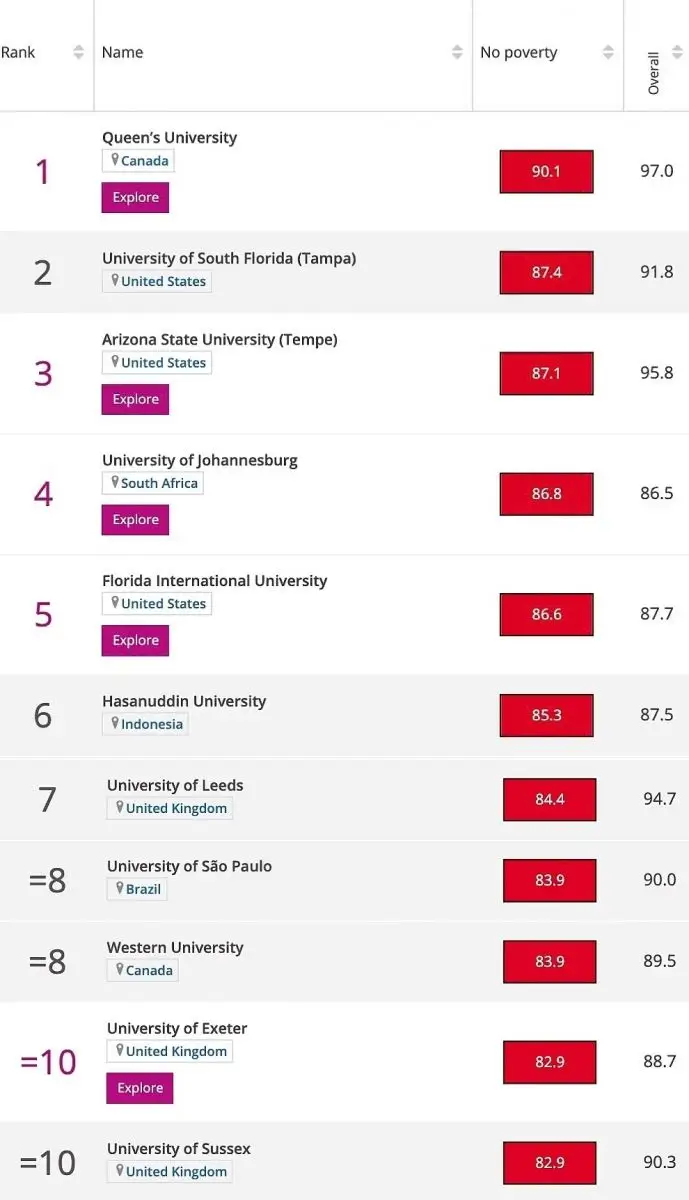
This ranking mainly assesses whether universities provide support and assistance to students from poor families and what types of help are available. In addition, it also examines the university's contributions and research on poverty issues.
In the ranking, Queen's University in Canada, the University of South Florida (Tampa) in the U.S., and Arizona State University (Tempe) in the U.S. took the top three spots. Queen's University also became the only institution with a score above 90 in the 'No Poverty' indicator.
SDG 2 - Zero Hunger
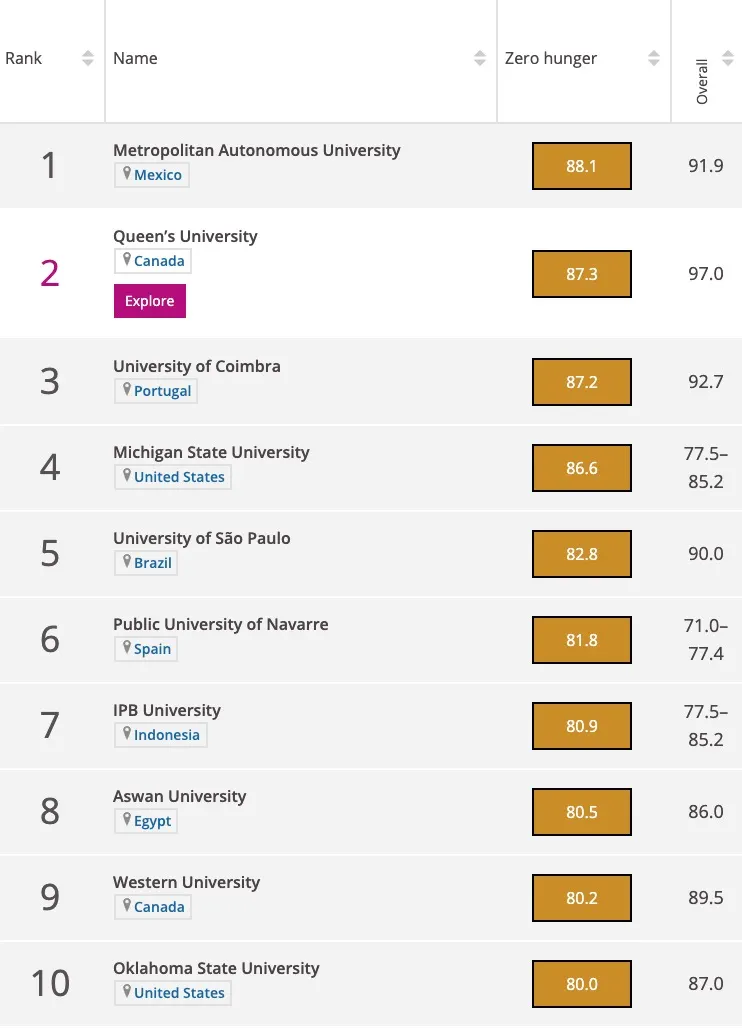
This ranking measures universities' academic research and social contributions in solving hunger problems. It also includes efforts to address hunger and food-related issues among individual students and local communities.
The top three universities in this ranking are the Universidad Autónoma Metropolitana in Mexico, Queen's University in Canada, and the University of Coimbra in Portugal.
SDG 3 - Good Health and Well-Being
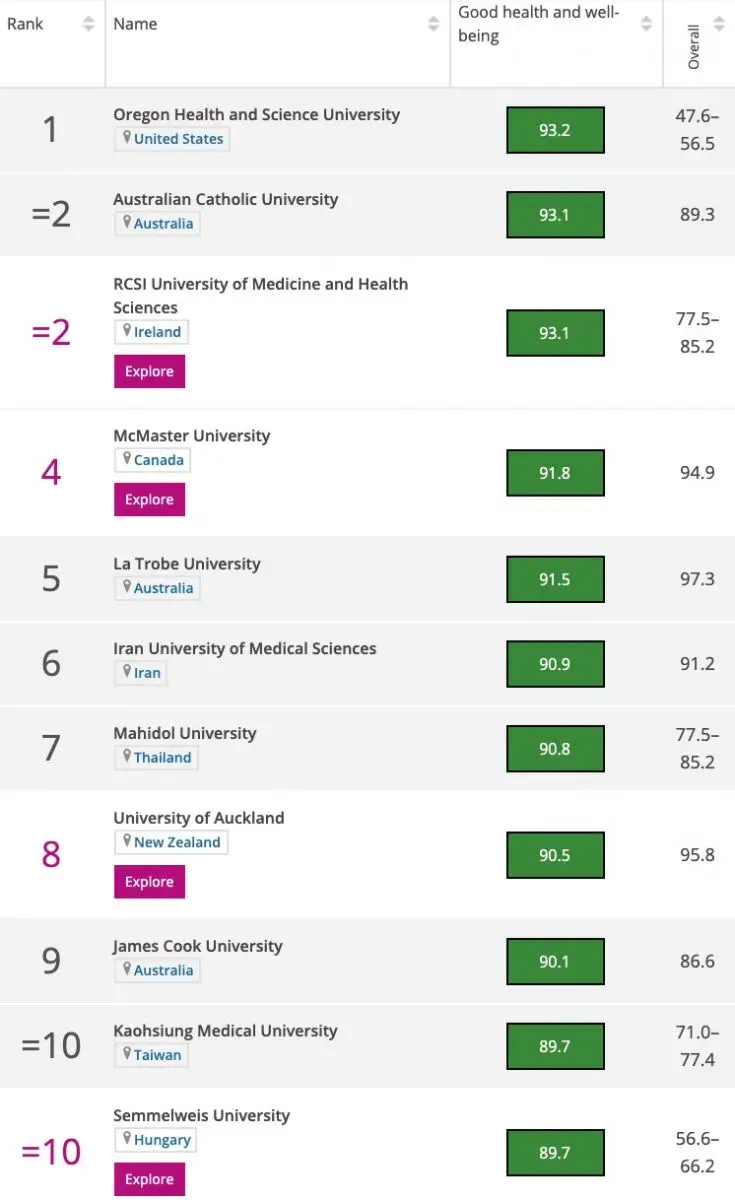
This ranking assesses universities' emphasis on health, diseases, and healthcare undertakings.
The top three institutions are Oregon Health and Science University in the U.S., the University of Medicine and Health Sciences in Ireland, and the Australian Catholic University. Among them, the University of Medicine and Health Sciences and the Australian Catholic University tied for second place with a score of 93.1.
SDG 4 - Quality Education
.jpg?x-oss-process=style/opt-webp)
This ranking focuses on the series of contributions, research, and promotion made by each institution in the field of education.
Aalborg University from Denmark ranked first with a score of 93.1. Second and third places went to the Iran University of Medical Sciences and Lingnan University in Hong Kong, China.
SDG 5 - Gender Equality
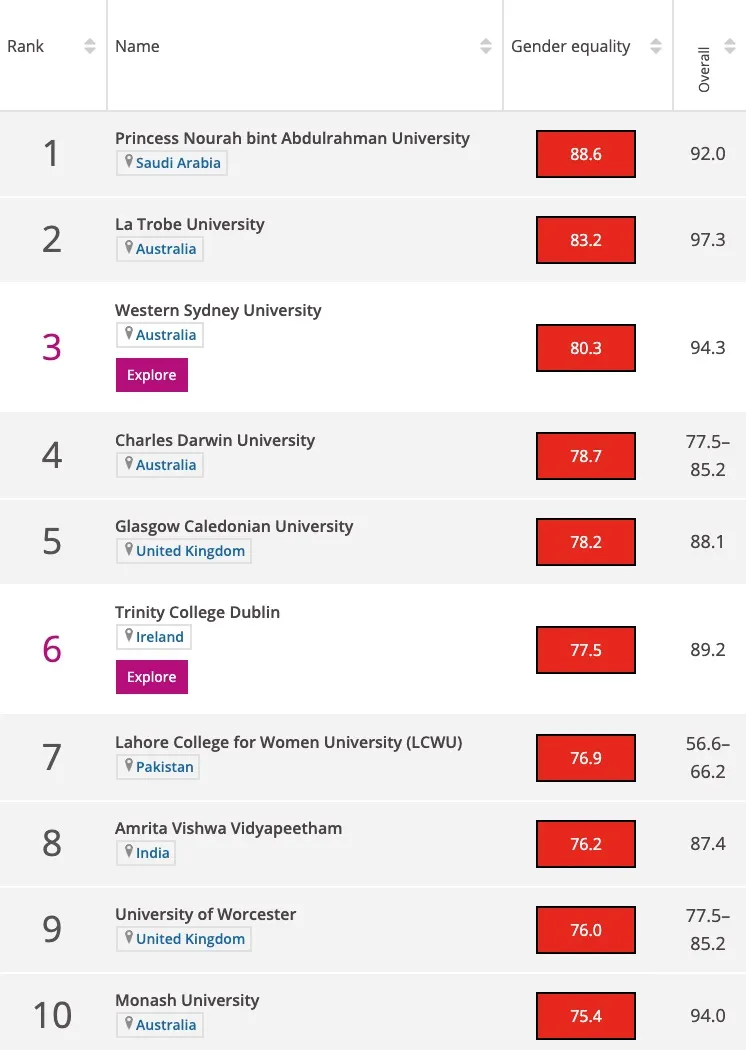
This ranking mainly measures the efforts made by institutions on gender equality issues. This includes policies introduced, the proportion of female staff recruited, and a series of academic studies in gender research.
The top three universities in this ranking are Princess Nourah Bint Abdulrahman University in Saudi Arabia, La Trobe University in Australia, and Western Sydney University.
Rankings can help us understand the situation of various universities in different fields, but they are still for reference only. Rankings themselves should not be used as the sole basis for university applications.
When choosing target universities, one should view various rankings rationally and take into account their own background and various needs to make a more reasonable and personalized choice.
Main source: THE Impact Rankings 2021