The 2022 QS World University Rankings have just been released!
The 2022 QS World University Rankings, compiled by global higher education analyst QS Quacquarelli Symonds, is the largest QS ranking ever.
This year, 1,300 institutions made the list. Without further ado, let's dive in!
Ranking Indicators
The QS World University Rankings uses six indicators to evaluate and analyze data from top global institutions. They are:
-
Academic Reputation (40%)
-
Employer Reputation (10%)
-
Citations per Faculty (20%)
-
Faculty/Student Ratio (20%)
-
International Faculty Ratio (5%)
-
International Student Ratio (5%)
QS rankings have always focused on multiple dimensions. Beyond academic performance, global employer reputation and university internationalization are also key focuses of the QS World University Rankings.
Global University Rankings Overview
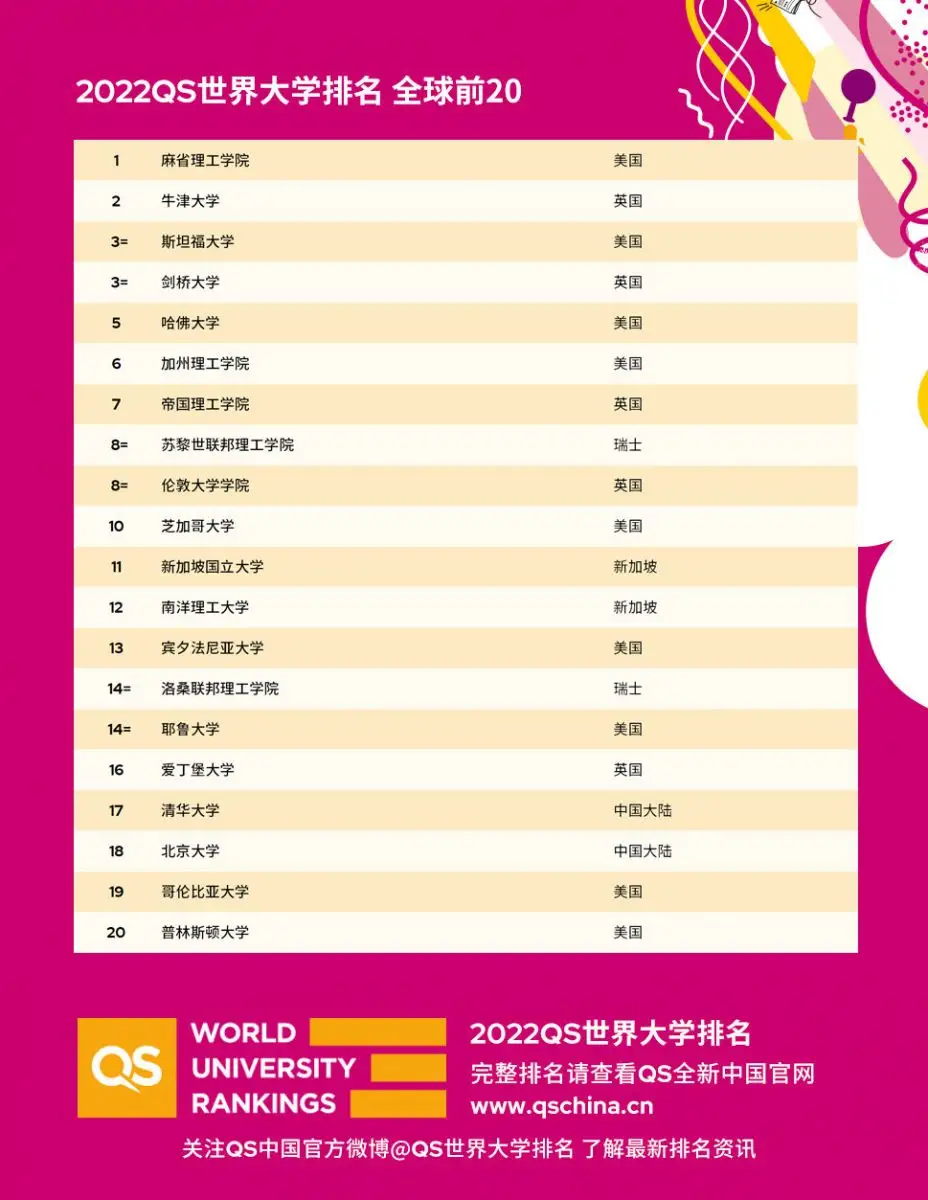
MIT has been ranked first in the world for the tenth consecutive year.
The University of Oxford has risen to second in the world for the first time since 2006, while the University of Cambridge and Stanford University are tied for third this year.
The highest-ranked university in Europe is ETH Zurich, in eighth place.
The two top universities in Asia are the National University of Singapore (11th) and Nanyang Technological University (12th). For the first time ever, two universities from mainland China have entered the world's top 20: Tsinghua University (17th) and Peking University (18th).
All four of Australia's top universities have risen in the rankings, with Australian National University re-entering the top 30.
Canadian universities have improved significantly this year, with more than half of the ranked institutions moving up. This year's QS ranking is also the first time in six years that two Canadian universities have jointly entered the top 30. The highest-ranked Canadian university is the University of Toronto (26th).
Overall, this year's QS ranking remains a battle between US and UK titans. Let's also take a look at the performance of American and British universities.
US University Rankings
Top US universities continue to lead the world, with 28 American institutions dominating the top 100.
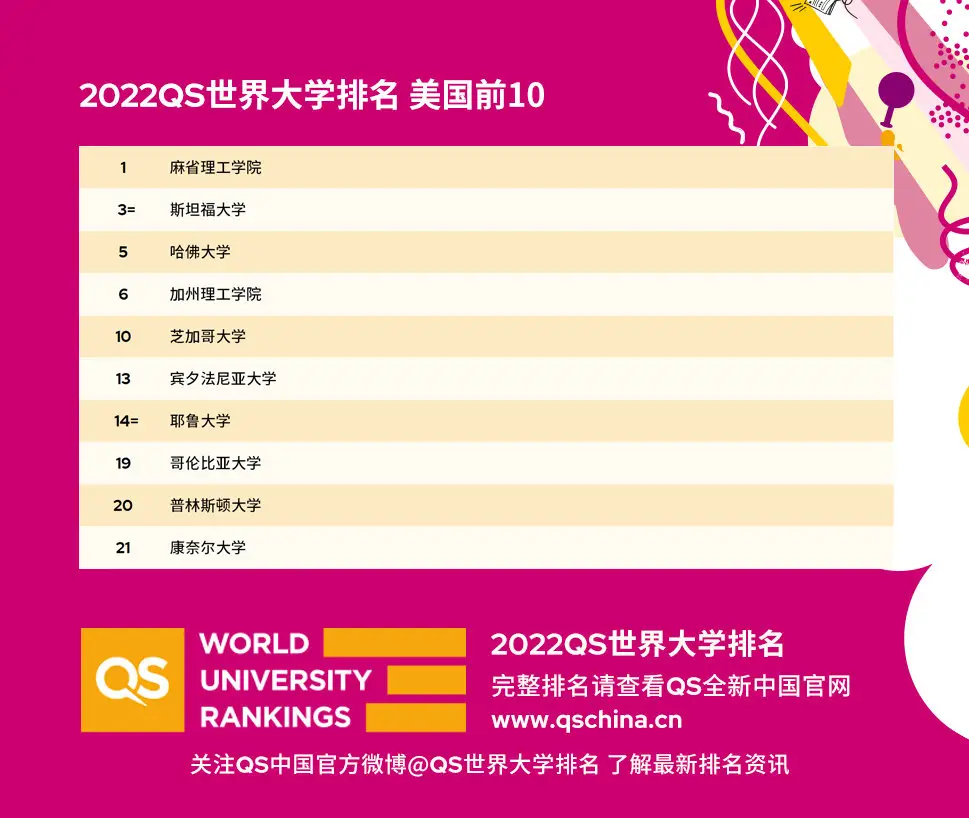
Overall, more than half of the US universities on the list have slipped in this year's ranking.
Harvard University dropped to its lowest-ever rank of 5th, while the California Institute of Technology has fallen out of the top 5 for the first time since 2015.
Cornell University has dropped out of the top 20 for the first time since 2004, landing at 21st. Duke University also fell to its lowest-ever position, at 52nd.
UK University Rankings
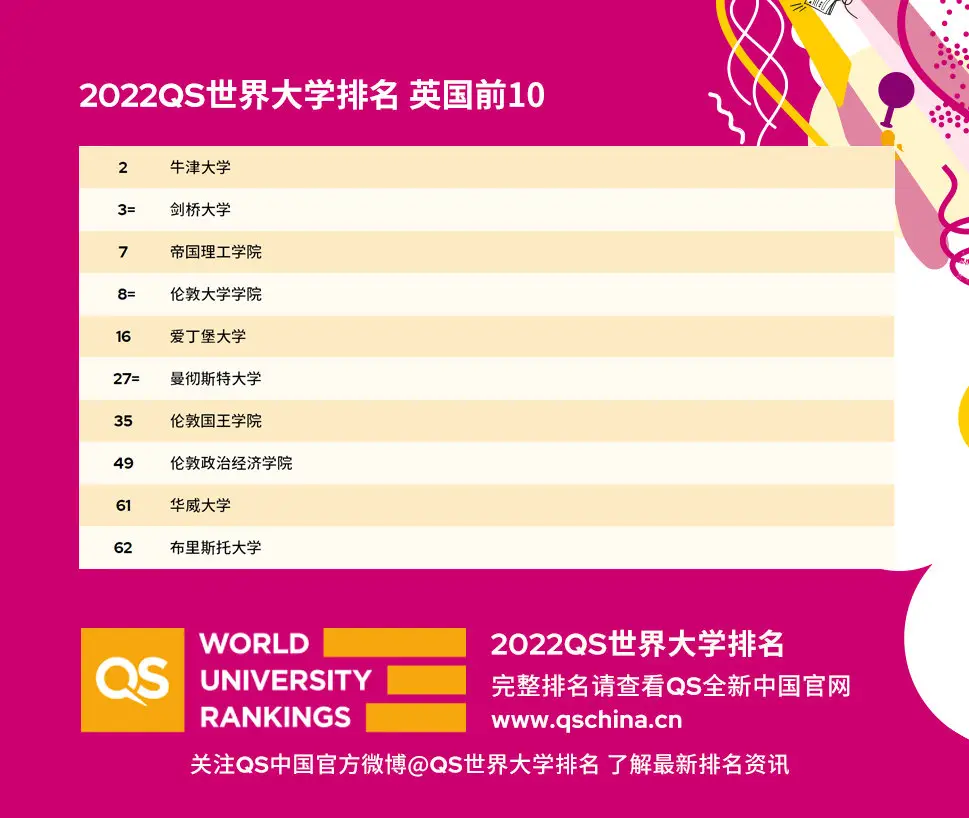
UK universities have performed impressively this year, with Oxford and Cambridge returning to the top 3 and a total of five institutions in the top 20.
The ranking improvements for the University of Oxford and the University of Cambridge are both due to advances in research impact. For instance, Oxford has played a leading role in the development of COVID-19 vaccines over the past year.
Imperial College London, University College London, the University of Edinburgh, and the University of Warwick have also all seen ranking increases.
For the full 2022 World University Rankings report, visit:
https://www.qschina.cn/university-rankings/world-university-rankings/2022
Different ranking indicators mean the QS World University Rankings differ from those by U.S. News, Times Higher Education, and other world rankings. Combined with factors such as the pandemic, this year's QS ranking also shows changes from previous years.
When choosing a school in the future, students can use the QS 2022 World University Rankings as a cross-reference to select programs of interest and maximize the benefits of studying abroad.
Rankings are only a reference. They should not be the sole basis for university applications.
When selecting target universities, students should view various rankings rationally, consider their own backgrounds and various needs, and ultimately make a more reasonable and personalized choice.
Source: QS World University Rankings