
Recently, the University of Michigan's Ross School of Business (Michigan Ross) announced a new graduate program—Business Analytics.
Business analytics is a hot business major that has emerged in recent years, with increasingly fierce competition. The major combines knowledge from data analysis, computer science, statistics, business, and more.
In the era of big data, the demand for talent capable of using data to solve business problems is growing. Business analytics has excellent career prospects and is a versatile degree!
Today, CheersYou(清柚教育) takes you through the new Business Analytics program at the University of Michigan, providing more information to support your application journey and offering a wider range of choices!
Overview of UMich Business Analytics Program
School Introduction
The University of Michigan (UM) is located in Ann Arbor, Michigan. It is a top public university in the U.S. and known as a "Public Ivy."
The Ross School of Business (Michigan Ross) is also a premier business school with generous funding and top-notch resources. Not only are its facilities state-of-the-art, but it also boasts strong financial support and first-class teaching resources, ranked #13 in the latest U.S. News Best Business Schools ranking. It's said that graduates here never lack job offers.

Program Duration
The new Master of Business Analytics is a 10-month, one-year program divided into summer, fall, and winter terms.
Application and Deadlines
The inaugural class is planned to start in June 2022, with applications opening in July 2021.
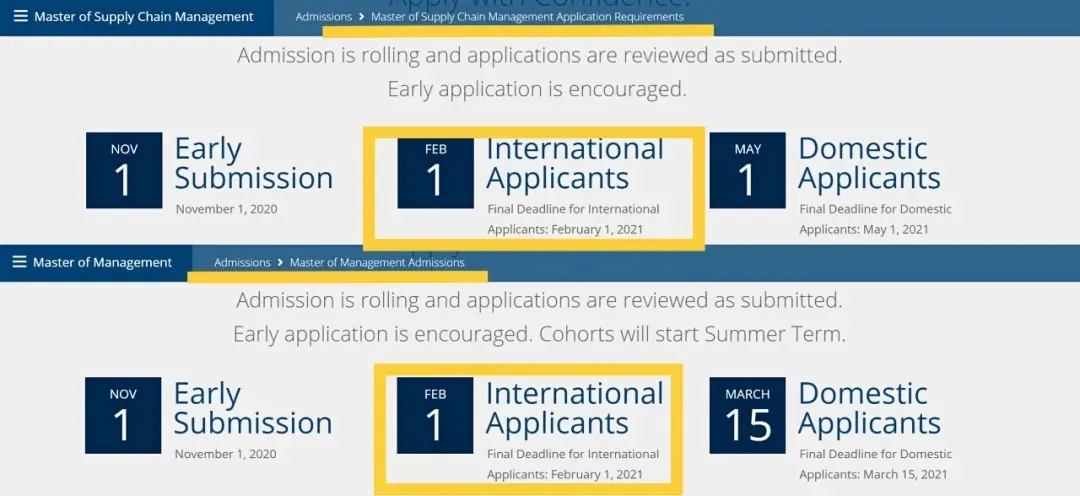
Application deadlines will be announced later this summer. Based on other programs in the same school, the deadline for international students is usually early February of the enrollment year, i.e., February 2022.
Given the popular demand for BA programs, we recommend prospective applicants prepare early and act quickly.
Tuition
For international students, the total program tuition is estimated at about $62,500. The program is currently seeking STEM certification.

UMich Business Analytics Application Requirements
Background Requirements
There is no explicit work experience requirement, but the program prefers graduates with 0-2 years of work experience. Students from various majors are welcome, but those with quantitative backgrounds are preferred.
However, the school's "quantitative background" requirement is relatively broad. In addition to statistics and mathematics, many business majors such as accounting, economics, and actuarial science qualify, as do backgrounds in bioinformatics, computer science, engineering, informatics, etc.
Prerequisite Courses
The program requires three prerequisite courses: Calculus I, Calculus II, and Introduction to Statistics. Applicants must complete these before the program starts with a grade of C or above. These courses must be taken in-person (online courses taken during the special period must be between March 2020 and July 2021).

GPA Requirement
The program's homepage does not specify a GPA requirement, but based on the average GPA of other programs in the same college, applicants should aim for a GPA of 3.5+.
GRE Requirement
The program accepts GRE scores, and submitting a GRE can enhance an applicant's competitiveness.
Language Requirements
IELTS: 7.0+
TOEFL: 100+
UMich Business Analytics Curriculum
The program requires 35.75 credits, with a well-rounded and comprehensive curriculum. Each semester includes both data-focused and business-focused courses.
In the winter term, students can choose electives based on their interests and career goals, including popular tracks like Digital Marketing, Fintech, and Health Tech, to boost their job competitiveness.
The program includes a hands-on project sponsored by real companies, allowing students to apply classroom skills to real business problems, gaining practical experience and enriching their resumes.
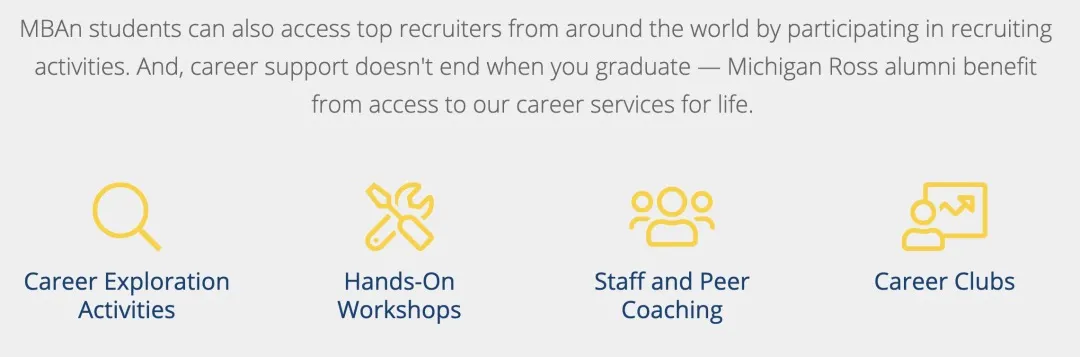
Additionally, Ross Business School has a robust career services system. Not only does the curriculum include career workshops, but students also receive personalized career guidance. Even after graduation, students can continue to use the university's career services.
Data-Focused Courses
Data-focused courses cover the knowledge needed in the data analytics industry, including data programming, data structures, probability and statistics, data visualization, machine learning, and prescriptive analytics.

Business-Focused Courses
Business-focused courses cover project management, financial accounting, decision strategies, and other subjects rarely seen in other schools' business analytics programs. This is a highlight of the program, emphasizing the application of data in business to help students improve their "business acumen" soft skills.

Overall, UMich's BA program features a solid curriculum, practical projects, and comprehensive career guidance.
Although it's a new program, with the strong reputation of the University of Michigan and Ross School of Business—a world-class university and top business school—many applicants are already eager to apply.
Other Schools Offering BA-Related Master's Programs
In addition to the University of Michigan, there are many popular business analytics programs in the U.S.
University of Southern California - Master of Science in Business Analytics
This program is a STEM-designated data science program with a business perspective. It is one of the longest-running MSBA programs in the U.S., ranked #1 globally. The program emphasizes project-based learning in the classroom, enabling students to gain deeper business analytics knowledge by actively exploring real-world business challenges and problems.
There is no specific background requirement, but work experience is preferred (not required). A GPA of 3.0+ is required, and a statistics course at the undergraduate level with a grade of B+ or higher is needed. Competitive GRE/GMAT scores can be submitted.
In the past, there were five application rounds, with the final deadline for international students typically in April.
The program requires 33 credits over three semesters, with mandatory courses in the first semester and a required internship.
Key courses include:

Johns Hopkins University - Master of Science in Business Analytics and Risk Management
This program is offered at JHU's Carey Business School, lasting one year, and aims to address risk-related threats and uncertainties through data analytics and scenario planning.
Since Fall 2019, this JHU Carey program has been designated a STEM program, granting graduates 36 months of OPT, significantly increasing job prospects in the U.S.
There is no explicit preference for applicants' backgrounds, but work experience is beneficial. All applicants must submit GRE/GMAT scores, and a GPA of 3.5+ is recommended.
Applications are accepted in three rounds. Given the growing popularity of JHU's BA program, early submission is advised.
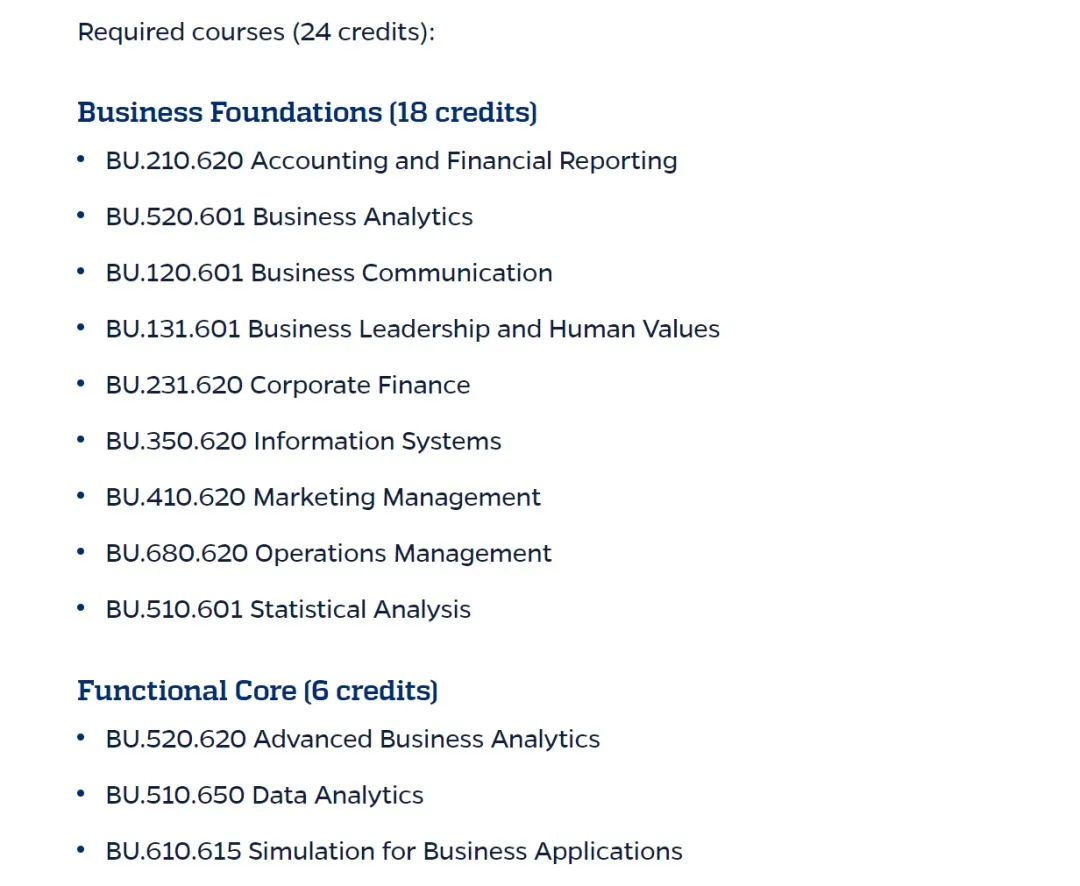
The curriculum includes 18 credits of foundation courses, 6 credits of core courses, and 12 credits of electives. Key courses include:

Massachusetts Institute of Technology - Master of Business Analytics
MIT's MBAn program combines expertise from the Sloan School of Management with strong support from its Operations Research Center. MIT often ranks first in technology fields. Its BA program is high quality, covering substantial content in a one-year format.
Applicants should have a strong background in mathematics, computer science, or statistics. All applicants must submit GMAT or GRE scores. A GPA of 3.9+ is competitive.
For students planning to enroll in August, the application deadline is typically early January.
The program requires students to complete 111 to 141 units of coursework. Up to 66 credits per semester, with at most 54 credits from the program's school. Key courses include:

In an era where everyone wants to work with “data,” BA has become a hugely popular major. However, not many schools offer this program, and competition for top BA programs is especially fierce.
Therefore, CheersYou(清柚教育)'s advice to students is:
1. Don't blindly follow trends. Understand your own goals, strengths, and weaknesses before deciding whether to apply to this program;
2. Don’t fixate on the BA title; consider related programs. For example, Quantitative Management, Applied Analytics, and other majors have similar aims, all related to data and statistics;
3. Finally, if you have a strong interest in business analytics, start preparing early, enhance your background, and make yourself stand out in the competition.
The 2022 application season is about to begin, and we wish everyone the best in securing offers from their dream schools~