For tech professionals with a passion for education:
Suitable Programs:
Learning Technology Design, Technology in Education
Primary Goal:
Apply educational theories to design tech products better suited for future education—a cutting-edge direction in the field.
Note: STEM-designated, 3-year OPT!
If you're interested in researching the meaning of education and pursuing a PhD
Suitable Programs:
Education Policy, International Education, Economics and Education.
These are interdisciplinary programs combining education with other social sciences, ideal for students with backgrounds in other fields.
At Columbia University, the Economics and Education program analyzes education policy and resource allocation from an economic perspective.
NYU’s Communication program leans more toward media and cross-cultural communication.
Primary Goal:
Study the significance of education in modern society, which can lead to impactful roles in education or entry into other industries with relevant experience, while also preparing for PhD studies.
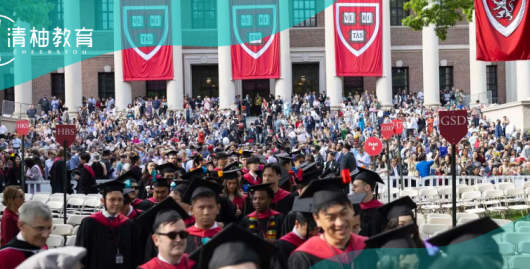
Note: Many research-oriented education programs allow cross-disciplinary electives. For instance, some programs at Harvard or UPenn let students take courses at their business schools, greatly broadening horizons and knowledge.
For senior education professionals seeking advancement
Suitable Programs:
Higher Education, Education Leadership
Primary Goal:
Programs designed to develop organizational management and leadership skills in education.
Note: These programs typically require relevant background experience.
If you're interested in specialized education fields
Suitable Programs:
Music Education, Dance Education, Health Education, Nutrition Education, Physical Therapy
Primary Goal:
To cultivate educators for these specialized areas.
If you're interested in educational psychology
Suitable Programs:
Applied Psychology, Counseling
Primary Goal:
Psychology knowledge can be applied to clinical counseling, psychological research, and providing psychological support and professional development guidance for students in middle schools and universities, akin to a “guidance counselor.”
Note: To work in school counseling, relevant certification is required; without it, one can join or start a private educational consulting firm.
Advantages: While these specializations often do not involve frontline teaching, their curricula blend theory and practice with case analyses projects in class and required internships or volunteer work outside class—nothing is merely theoretical. The greater the interdisciplinary overlap, the more diverse the opportunities, offering vast career flexibility.
Disadvantages: Career directions can be ambiguous; without clear planning and consistent practical experience, job searches may become confusing.
If you want to be a frontline teacher
Suitable Program:
Teaching and Learning Department
Primary Goal:
Impart professional teaching methods and cultivate qualified educators—a training ground for great teachers.
Advantages: You can intensively learn U.S. teaching methodologies, enabling you to design curriculum frameworks, assessments, and deliver demo lessons with ease, plus extensive hands-on teaching opportunities. If you obtain a teaching license and work in a public school, you won't need to rely on luck in the H1B lottery like most international students.
You can directly get a work visa!
You can directly get a work visa!
You can directly get a work visa!
Disadvantages: Less crossover with other industries; you'll spend most of your time on curriculum design and teaching practice. Without a teaching license, chances of teaching in the U.S. are minimal. Additionally, the U.S. school environment differs vastly from China's—culture shock is inevitable, so strong adaptability is needed.
So how can you teach in the U.S.?
There are many pathways to teaching in the U.S. In the public system, from universities down to elementary schools and kindergartens, as well as various private institutions, as long as you have the right major and degree, anyone can legally teach.
For Chinese individuals, the three most competitive teaching positions are teaching TESOL, teaching Chinese, and teaching Chinese-English bilingual programs. The highest demand for teachers is in U.S. public K-12 schools, where international students enjoy the “benefit” of not needing to go through the H1B lottery. Below, we'll detail these three specializations and how to obtain a teaching license.
U.S. Teaching License
All public school teachers in the U.S. are required to hold a teaching license. Requirements vary by state, but the general process is similar.
How can you obtain a U.S. teaching license? Each state has different requirements. New York has the strictest, but it has reciprocity agreements with over 40 states, meaning a New York license can be used to teach in those states.
Apply to a bachelor's or master's program that offers a teaching license, complete all required coursework, and complete two semesters of student teaching in a public school.
Prepare for licensure exams on your own.
After passing the exams, obtain a recommendation from your institution and apply for the license from the education department.
The education program you choose must include licensure/certification. You cannot obtain a license on your own without such a program. Licensed programs typically require more credits and take two years. They include professional coursework, plus one semester of observation and two semesters of student teaching in public schools.
A teaching license and a degree are not the same. You can graduate from a non-licensure program, or if you're in a licensure program but decide not to pursue the license, it won't affect your degree. Many people complete their exams and obtain their license after graduation.
1. Teaching TESOL
Among the three teaching directions, TESOL is the most popular among Chinese international students. TESOL stands for Teaching English to Speakers of Other Languages, meaning teaching English to non-native speakers, specifically new immigrants or their children. Most public schools and some private institutions offer ESL programs.
Although many believe that studying TESOL won't lead to a job in the U.S. because “Americans don't need foreigners to teach English,” this is actually an inaccurate notion.
First, relatively few “blond-haired, blue-eyed Americans” are willing to pursue TESOL. Teaching ESL is not the same as teaching English; ESL courses are mostly basic, aimed at immigrants with limited language proficiency, which can be somewhat challenging for native English speakers. It's similar to how in China, many study Chinese literature but few study Teaching Chinese as a Foreign Language. Based on my classroom and internship experiences, Americans and other ethnicities are fairly evenly represented in ESL teaching roles.
Second, non-native ESL teachers are not at a disadvantage. Since ESL students are often new immigrants with diverse native languages, having an ESL teacher who understands their mother tongue can sometimes facilitate communication between students and the school.
2. Teaching Chinese
In recent years, the U.S. has placed increasing emphasis on foreign language education. Many K-12 schools offer a variety of language courses, and advanced students can take foreign language AP courses for college credit—Chinese is among the highly prioritized languages.
Consequently, many universities offer Foreign Language Education (Chinese) programs, essentially true Teaching Chinese as a Foreign Language. Graduates can teach Chinese in public schools, private institutions, or centers like the Confucius Institute.
3. Teaching Chinese-English Bilingual
Chinese-English bilingual immersion programs are an “advanced outcome” of recent U.S. education reforms. The core idea is to cultivate bilingual talent from an early age by immersing children in a bilingual environment from elementary school, learning all subjects in both Chinese and English. Such programs are prevalent in states like California, New York, and Minnesota.
And in the foreseeable future, this teaching model will only grow more popular, with very promising prospects. Universities have also established corresponding Bilingual Education programs. Graduates can work as bilingual teachers in elementary school immersion programs.
After completing these programs, two main career paths are available: teaching in private institutions or in public schools. Public school teaching is a very stable route for staying in the U.S., offering job security and great benefits. And for international students,
No H1B lottery!
No H1B lottery!
No H1B lottery!
So, for those determined to stay in the U.S. long-term or whose partner already has a stable job here, come enroll in a licensure program!
The Trials and Tribulations of New York Teaching License
Some schools, like New York University, offer a Dual Certificate, meaning both TESOL and Chinese licensure. Graduates from such programs can obtain two teaching licenses. Everyone must take three mandatory exams, plus the exam for their specific teaching subject.
Educating All Students: This exam tests your ability to differentiate instruction for students with diverse abilities and backgrounds. [Moderate difficulty]
Academic Literacy Skills Test: Assesses whether your English proficiency is sufficient to teach in the U.S. It focuses on reading and writing, with difficulty between TOEFL and GRE. [Relatively difficult]
EdTPA: Requires submitting a 10-minute video of your teaching during public school internship, along with a several-page written analysis from various perspectives. [Moderate difficulty but very tedious]
Additionally, these subjects require certain credits from undergraduate coursework. For ESL, you need science and math credits (3 credits each) because you'll likely teach these subjects in English. For Chinese, you need 30 undergraduate credits in Chinese language courses—otherwise, you can substitute them with exams before applying for the license. Fortunately, you can plan your exam schedule and complete everything within two years.
A Genuine Pitch for Teaching in U.S. Public Schools
Teaching in the U.S. may not make you rich, but the perks are job stability and excellent benefits. In New York State, the starting salary is around $50,000 pre-tax per year, with annual raises based on seniority, capping at around $100,000 without any competitive evaluation.
Short working hours. Classes typically run from 8 am to 3 pm. With summers and holidays off, you work about 180 days a year—essentially half a year's work for a full year's pay! If you take on summer school, weekend programs, or after-school tutoring, you'll earn extra overtime.
No H1B lottery, and if you stay with the same employer, a green card is all but guaranteed.
However, teaching in the U.S. comes with significant stress. The education system is completely different from China's—academic pressure, school culture, colleague dynamics—all sources of culture shock. In less privileged districts, you may also encounter complex student home situations, bullying, drug abuse, and other challenges.
Are you truly ready for this?