
01. Learn GRE Vocabulary
Learning vocabulary is a major factor in GRE success. If you are unfamiliar with any of the answer choices, it will be difficult to tackle sentence equivalence and text completion questions. Additionally, a strong vocabulary will make it easier to analyze difficult passages encountered in reading comprehension.
Vocabulary learning includes both rote memorization and contextual understanding. Both are key parts of the vocabulary process.
For rote memorization, your best bet is flashcards. If you want to review using digital flashcards, you can use Quizlet, but it is recommended to make some paper ones—after all, everyone needs to learn different words. Moreover, handwriting helps with memory retention.
You might think that after memorizing 3,000 words, you're all set. But that's only one part of vocabulary; you also need to ensure you truly understand words in context—so you know how to use them and how to interpret others using them. This will also help you actually remember the words and their meanings.
You can practice contextual vocabulary. First, try writing sentences with your vocabulary words to make sure you truly know how they are used in context. You can also read high-level publications and note how the words you've learned are used there.
You'll know you've truly learned a word when you start using it fairly naturally in conversation or writing.
02. Read Complex Passages
The best way to improve reading comprehension is to read extensively, but don't just pursue quantity—you should read material similar to what appears on the GRE.
Try reading a variety of articles from high-level publications such as The Atlantic, The New York Times, The Economist, and Nature. Since science passages are common on the GRE, you can even try reading scientific research abstracts on PubMed. Then ask yourself: can you identify the study's main hypothesis and results from the abstract, even in an unfamiliar field?

As you read, make sure you truly understand the content. What is the main idea? What evidence does the author present to support their argument? Do they raise any counterarguments? If you can comprehend the argumentative and rhetorical structure of complex articles, you'll be well-prepared for GRE reading.
03. Recognize Signal Words
Signal words and phrases tell you important contextual information about a sentence or paragraph—information that will help you choose the correct answer. They are especially crucial for selecting the right words in vocabulary questions, but can also help you quickly parse the meaning of complex passages.
Signal words are typically transition words that indicate support, contradiction, clarification of previously presented information, and so on.
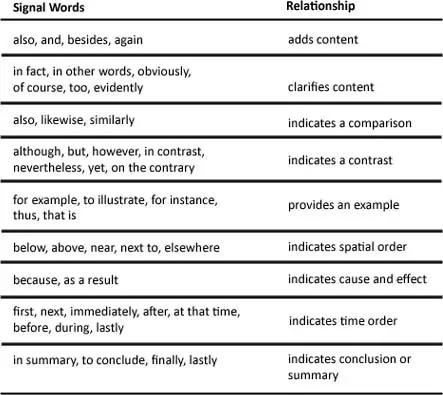
Here are some common GRE signal words, what they signal, and a brief example:
However/although: indicates a qualification or mitigation
Although the author was social by nature, he did not particularly enjoy book tours.
Indeed/furthermore: provides further support or emphasis
The author was social by nature; indeed, he loved meeting hundreds of new people on book tours.
By contrast/rather/instead: offers a different perspective or purpose
The author was not social by nature; rather, he was forced into sociability by the necessities of book tours and signings.
To practice your understanding of signal words, try noting each time you think you see a signal word in your reading, and consider what that signal word indicates.
04. Use Official Materials
The best materials for reading practice will always be ETS's official resources. Since they've been administering the test, their materials come closest to the real GRE.
You can get full official practice tests from the PowerPrep software, as well as additional practice questions from their paper-based and online tests. You might also consider purchasing a prep book.
05. Identify Your Weaknesses
As you complete GRE reading questions, tests, and practice sets, pay close attention to where you go wrong. Patterns of incorrect answers will reveal areas for improvement or weaknesses.
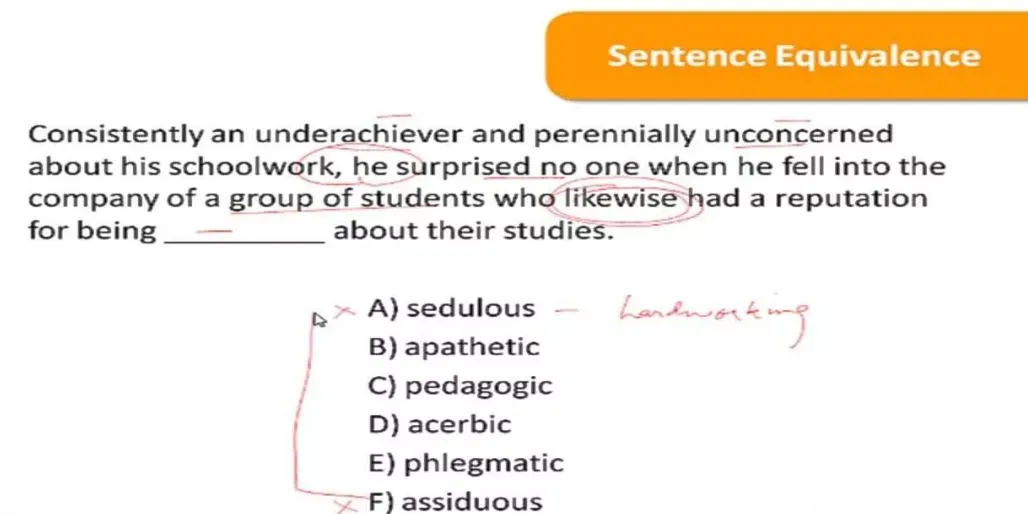
Do you consistently miss sentence equivalence questions?
Do science-themed passages confuse you?
Once you've identified your weak points, you'll know what to do.
06. Practice Pacing
Pacing is crucial on the GRE so that you can answer all questions within the time limit. To this end, be sure to take timed practice sessions and monitor where you waste too much time.
In general, try not to spend too much time on vocabulary questions, as reading comprehension questions naturally take longer due to the reading involved.
You should also practice strategies for selecting correct answers, such as process of elimination.
07. Develop a Consistent Strategy
Last but not least, come up with a strategy that will get you through the GRE smoothly. Refining your approach during prep will help with time management in the reading section and increase your comfort level when facing dense, complex GRE passages.
There are two reliable strategies for tackling GRE passages and reading comprehension questions:
1. Skim the passage first. With this strategy, you quickly scan the passage before reading the questions. Then, once you've read the questions, you go back to the passage for the details and evidence needed to answer them.
2. Read the questions first. For this method, you read the questions first, then read the entire passage, looking for evidence that points to the correct answers.
Both strategies help students manage their time well, and it's largely a matter of personal preference.
Unfortunately, there's a third method that, while commonly used, is not a good strategy. In this approach, you read the passage carefully first, trying to absorb every detail. Then you read the questions and discover you still need to return to the passage to find answers. As you can imagine, this is inefficient and wastes a lot of time.
Most details in the passage are not important for any single question, so there's no need to understand and memorize them all. If you want to read the passage first, just skim it for the main points.
These tips will help you quickly boost your GRE reading score—hope you achieve your target score soon!
To learn about average GRE scores in other countries, check out: Latest GRE Annual Report! See How You Score Among Global Test-Takers!