After being tortured by academics, standardized tests, school selection, and essays, graduate school applicants have finally grown from novices to survivors and reached the final stage of submission.
However, the waiting period after submitting online applications is agonizing. Some receive offers within weeks, while others wait months without any results.
A prolonged lack of response may indicate an issue in the process that is holding up your application, or it could simply be the slow review pace of the university.
CheersYou(清柚教育) has listed several possible reasons for slow results below to help you identify gaps and adjust your mindset.
Time-Consuming Factor 1: Delays in Transcript Processing
One critical step of the online application is sending the official (verified) transcripts and standardized test scores.
Different universities, colleges, and programs may take varying amounts of time to process transcripts. For example, the School of Visual Arts can take 3-4 weeks just to process materials including transcripts, which directly affects the release of admission results.
For standardized tests, the process of sending scores from testing agencies and matching them at the school requires processing time that varies by agency and institution. If your test scores remain in a pending matching status, your application review will also be on hold, and you will not receive an admission decision.
If more than 2-3 weeks pass after sending scores with no updates, contact the applied school immediately, as well as the testing agency or undergraduate institution, to find a suitable solution.
Time-Consuming Factor 2: Communication Issues with Recommendation Letter Submission
There are generally three scenarios for recommendation letter submission:
1. The school requires all recommendation letters to be submitted before the application deadline.
2. The school treats recommendation letters as supplementary materials with their own submission deadline.
3. If not specified, recommenders are typically expected to submit letters within 5-7 business days after the application is submitted.
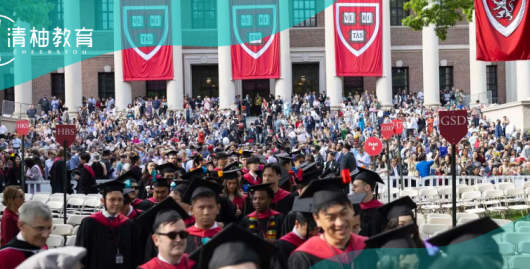
Harvard GSAS requires recommendation letters to be submitted before the application deadline
However, recommendation letters involve communication with multiple parties. The flexibility some programs offer in submission deadlines can ironically lead to errors and delays that affect the overall application process.
Especially around the end of the semester and year-end, when schedules are busy with tasks and holidays, recommenders who do not check emails promptly or miss messages may fail to submit on time. In extreme cases, recommenders have even backed out of writing letters due to being too busy...
Therefore, CheersYou(清柚教育) advises students to complete recommendation letter submission as early as possible and not procrastinate. Inform recommenders in advance about the programs you are applying to, and after submitting the application, send a polite reminder email to avoid issues such as an incorrect email address or simple forgetfulness. If possible, try to communicate in person as well.
You can track the progress of recommendation letters through the online application system. If a letter has been missing for too long, the school will also send a reminder email to the student, so it is crucial to check your email promptly.
Every year, reminder emails end up in spam folders, causing applications to become invalid with no result and no refund of the application fee—a very regrettable outcome. Please carefully check your application email account.

Time-Consuming Factor 3: Application Errors or Incomplete Materials
With many programs to apply to, students often need to register numerous accounts and fill out applications, and errors can easily creep in.
For example, reversing first and last names, entering the wrong birthdate, miswriting GPA or course numbers, uploading the wrong files without noticing before submitting...
You can upload a doc file even where a photo is required
And many mishaps aren't necessarily the student's fault. Professors may enter the wrong name or phone number when submitting recommendation letters, or schools may suddenly request additional materials.
A student shares that the school sent an email requesting supplementary materials before starting the review
These situations can delay the application process. Some students may think they have submitted everything, but in reality, the materials are not verified or are incomplete, and the application hasn't even entered the review stage.
CheersYou(清柚教育) reminds students to double-check their information before and after submitting applications, and to regularly monitor their online application system and email to confirm that the application has moved into the review phase.
If you cannot modify or delete an error in the application, or have any questions, contact the school’s admissions office by phone immediately. Simultaneously, send a follow-up email to ensure clear communication.
Schools are generally willing to help resolve issues, so there is no need to overly worry. Of course, this also means you may need to wait longer.
Time-Consuming Factor 4: Variable Processing Times at Admissions Offices
Generally, schools begin releasing admission decisions within 6-8 weeks after the application deadline, but some programs have highly flexible notification schedules.
For instance, Yale's MPH program can release decisions from mid-December all the way through early March. So it is indeed possible to wait two months after submitting without hearing back.
For many programs with December and January deadlines, a flood of applications submitted around the holidays causes a backlog in the admissions office.
For popular universities with large applicant pools, CheersYou(清柚教育) has learned that materials submitted around Christmas sometimes are not even processed until mid-January.
Regardless of the program, admissions offices need some processing time. The more popular the program or the closer to peak application periods, the longer the processing time may be.
We all know about the pace of work abroad. Once you have confirmed that all materials are submitted correctly, be prepared to wait patiently.
In the final sprint of the application season, ensure your online application is flawless while also staying calm and patient. Trust that all the hard work you've put in will yield rewards.
CheersYou(清柚教育) wishes everyone the best in receiving offers from their dream schools in the new application season!