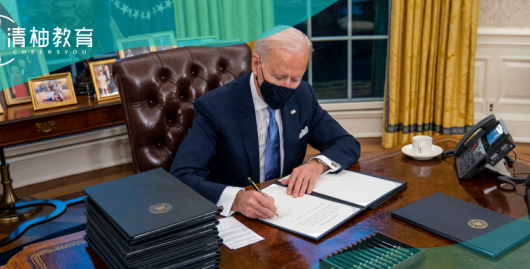
On Tuesday, U.S. President Biden signed an executive order aimed at combating racial discrimination against Asian Americans and Pacific Islanders.
During the pandemic, inflammatory xenophobic rhetoric has posed unprecedented threats to Asian communities, whether at the individual, family, community, or corporate level. Biden believes the federal government must combat racial discrimination and hatred against Asians, and that all people should be treated with respect and fairness regardless of language or faith.
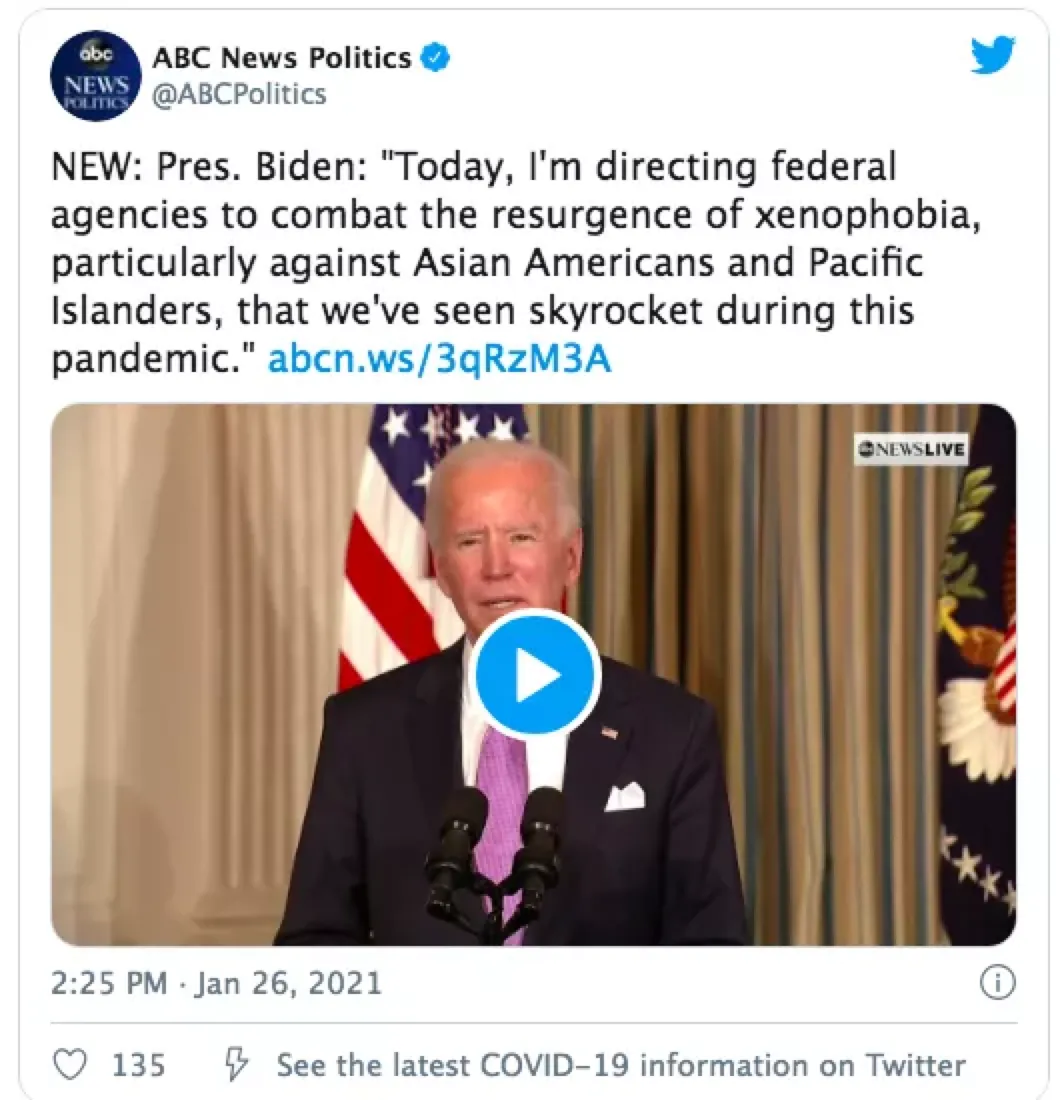
In a White House memorandum, Biden wrote: “The federal government must acknowledge its role as political leaders in guiding xenophobic sentiments, such as repeatedly using geographical terms to refer to COVID-19. Such inflammatory rhetoric has fueled unfounded fear and persistent stigmatization of Asian communities, leading to a surge in bullying, harassment, and hate crimes against this group.”
Biden also said this is “unacceptable and against the American spirit.” He directed the Departments of Justice and Health and Human Services to jointly combat such hate crimes.
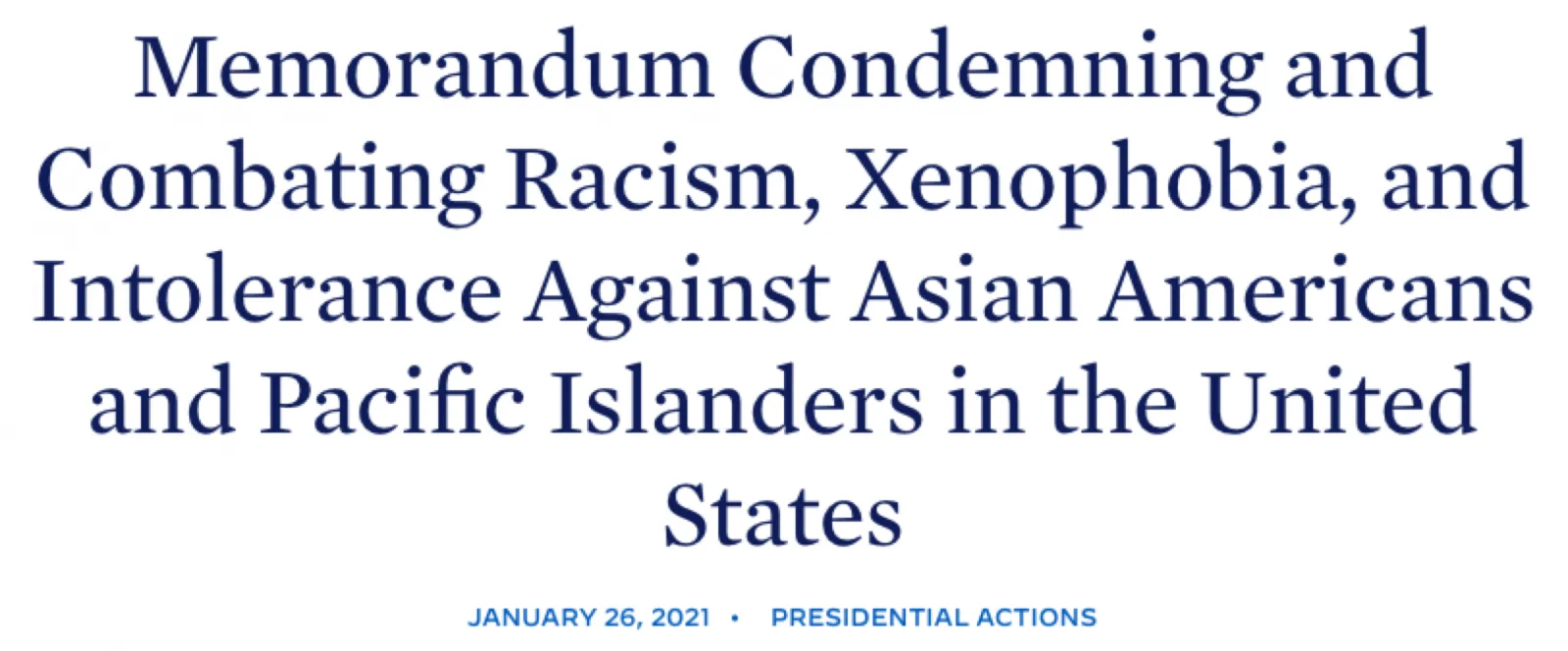
This executive order is one of several signed by Biden this week, initially fulfilling his campaign promise to combat “systemic racism.”
In contrast to former President Trump’s frequent inappropriate remarks during the pandemic that fueled hatred against Asian communities, Biden’s move is regarded as “an important first step.”
During the pandemic, racist incidents surged
According to a United Nations report released last October, hate crimes against Asian Americans in the U.S. have reached alarming levels. Between March and May 2020 alone, there were over 1,800 racist incidents targeting Asians.
Data from the U.S. advocacy group “Stop AAPI Hate” shows that among the over 1,800 incidents, 502 (or 27.2%) were specifically anti-Chinese, including verbal abuse and provocation.
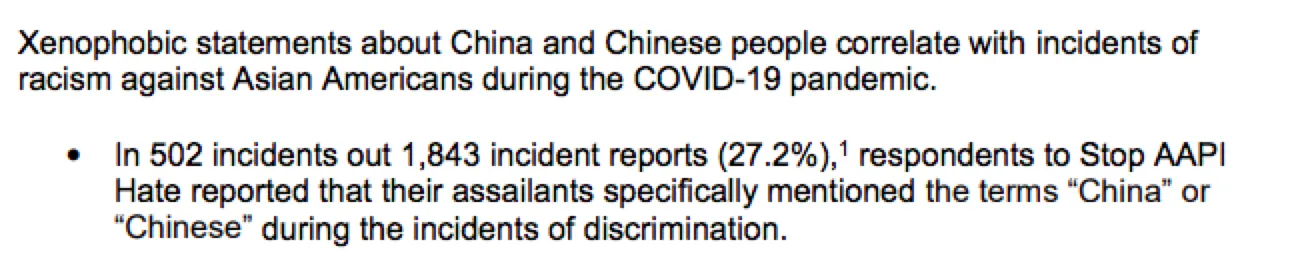
Former President Trump’s anti-China rhetoric further fueled extreme sentiments against Asians in the U.S. Trump blamed China for the pandemic, repeatedly calling COVID-19 the “China virus” in press conferences and on social media.
This seemed to signal to the public that blaming China for the pandemic had become a kind of “political correctness.”
The Trump administration’s poor pandemic response was deflected into hatred against Asians, especially the Chinese community, creating a top-down spectacle last year. Anger stems from incompetence, and prejudice from ignorance.
Asians breaking the glass ceiling: a long road ahead
2020 was a difficult year for Asian communities in the U.S. Beyond facing pandemic-related discrimination, there were also invisible ceilings hard to shatter.
Last November, a federal appeals court ruled that Harvard University did not discriminate against Asian American applicants in admissions, upholding the 2019 district court decision, and the case is set for Supreme Court review.
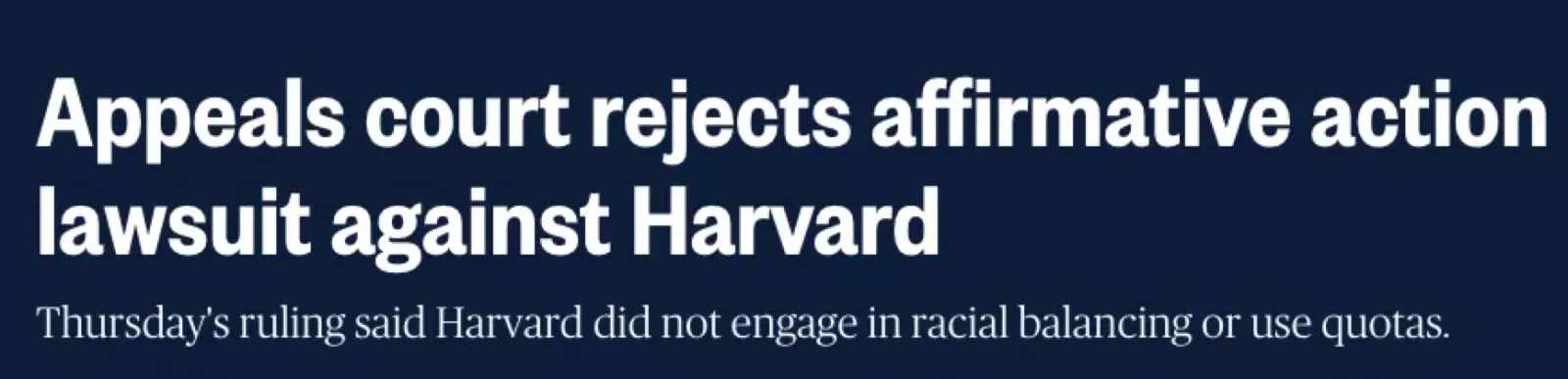
Previously, the plaintiff, Students for Fair Admissions (SFFA), argued that Harvard set higher admissions standards for Asian American applicants compared to other races in pursuit of racial balancing, which constitutes discrimination.
By analyzing over 160,000 application files, they found that Harvard consistently gave Asian applicants lower “personal ratings” than other racial groups.
The rulings by the district court and the First Circuit Court of Appeals have undoubtedly disappointed many. SFFA also stated that the case may ultimately be decided by the Supreme Court.
The path to educational equity remains long and arduous.
Biden takes office, favorable policies for international students being implemented
For international students, from the total suspension of flights from China to the reversal of the flight ban; from barring international students from taking purely online classes in the U.S. to rescinding the online-study ban; from attempting to ban WeChat to having the order repeatedly blocked... the past year has been absurd and tumultuous.
Biden’s inauguration has brought new hope to many international student families. After taking office, Biden has signed 17 executive orders, adopting a more effective and proactive political stance to control the pandemic, protect young immigrants, end travel bans, and promote racial equality. He believes the Trump administration’s series of xenophobic policies caused great harm to the U.S.
In his inaugural address, Biden repeatedly emphasized unity, calling on Americans to come together against enemies such as anger, resentment, hatred, extremism, violence, and disease.
Last year, Biden announced that within his first 100 days in office, he would focus on three main goals: mask-wearing, COVID-19 vaccination, and reopening schools.
These three goals offer new hope for international students currently stuck at home, exhausted from attending classes and taking exams across time zones, to soon return to campus.
The nationwide mask mandate will first take effect on February 1 at 11:59 p.m. Passengers on airplanes, ships, trains, subways, buses, taxis, and ride-sharing vehicles must wear masks. The mandate also covers transit hubs, including airports, bus stations, train stations, subway stations, and ports.
The CDC stated that this rule is consistent with Biden’s executive order, and while they expect voluntary compliance, they reserve the right to impose criminal penalties for non-compliance.

Public opinion is closely watching how Biden will effectively help U.S. colleges and their students within his first 100 days. Measures such as relief agencies, research investments, reversing the previous administration’s unwise visa policies, and raising scholarship caps will have a positive and far-reaching impact on schools, students, and faculty.
It appears that under Biden’s leadership, the U.S. government is adopting a more open and inclusive attitude toward international students and new immigrants. It is believed that more favorable policies will be introduced and implemented in the future.
In this new year, we sincerely wish every overseas student success in their studies and the fulfillment of their academic dreams.