Are you unsatisfied with the college you ended up at due to a low GPA, subpar test scores, or other circumstances? If you've tried to make it work but can't shake the feeling of regret, it might be time to make a change.
Last year, some students applying for undergraduate programs were less than pleased with their results due to the pandemic and have been eager to learn more about transferring. Today, we're here to give you a complete rundown of what you need to know about transferring to a U.S. university.
Ways to Transfer to a U.S. University
Transferring Between U.S. Four-Year Universities
Transferring from one U.S. four-year university to another is a common path.
Some students find that their interests and career goals evolve after they start college, leading them to consider a transfer.
Others choose to attend a safety school first, work hard to raise their GPA, and then transfer to their dream school.
Generally, the acceptance rate for transfers from within the U.S. is higher than for those from Chinese universities, and you can typically transfer more credits.
Additionally, transferring within the same university system—for example, between different UC campuses—tends to be much easier. The policies are more lenient for internal transfers within the UC system, while transferring into the UC system from outside is relatively more difficult.
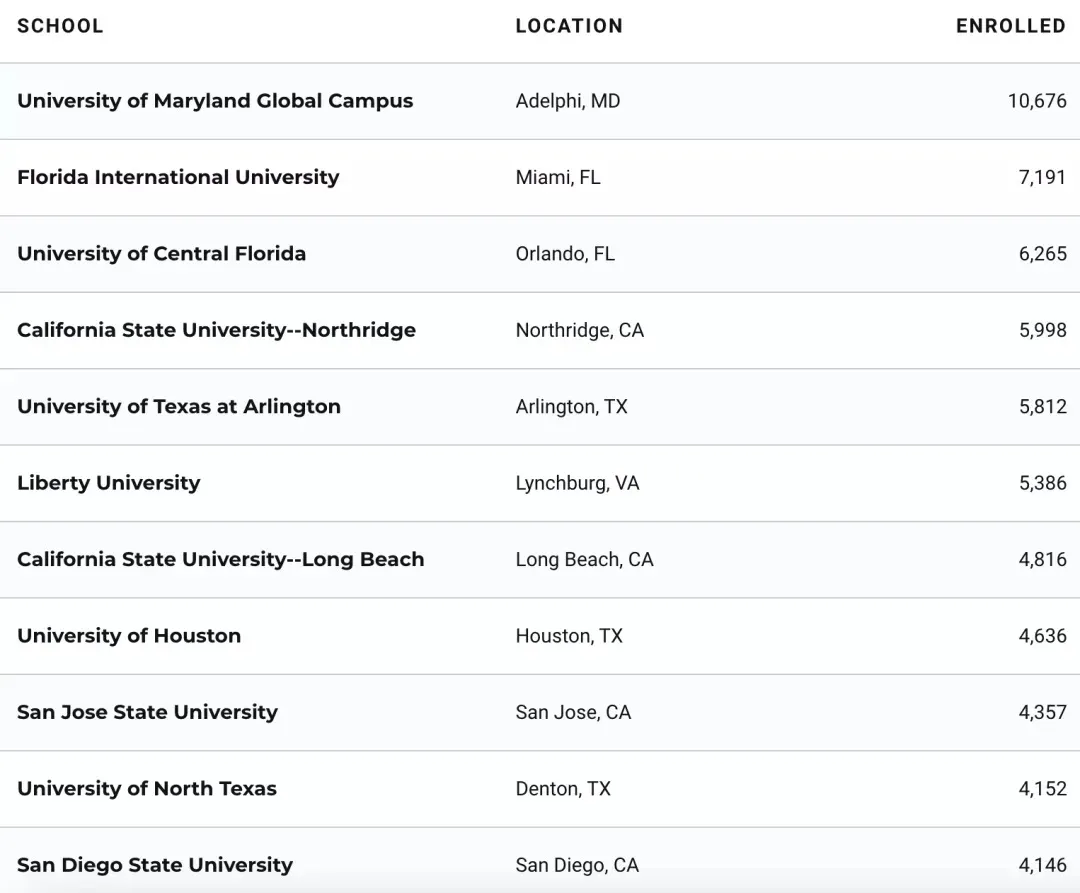
Here is a partial ranking of U.S. universities with the largest number of transfer students as reported by U.S. News for 2021:
Transferring from a Community College to a Four-Year U.S. University
Moving from a two-year community college to a four-year university is another common path for transfer students.
Many people in China have a misconception that community colleges are "diploma mills." In reality, nearly one-third of students in the University of California system started at a community college.
Community colleges also offer distinct advantages: lower tuition and easier transfer to in-state schools. For instance, students at California community colleges have a high chance of transferring into the UC system, and the acceptance rate is often higher than that for freshman applicants or even for transfers within the UC system.

Transferring from a Chinese University to a U.S. University
Many international students use this route to access better higher education opportunities in the U.S.
U.S. universities accept transfer applications from students at Chinese undergraduate institutions, but these applicants face higher requirements than other types of transfer students.
Chinese university students typically need to provide TOEFL scores, SAT scores, and a WES credential evaluation, and they may lose more credits in the transfer process. Other aspects of the application are generally consistent with transfers between U.S. four-year universities.
When to Transfer
Generally, freshman or sophomore year is the recommended time to transfer.
Transferring as a freshman is almost like going through the undergraduate admissions process again; you usually need to submit TOEFL and SAT scores.
If you transfer as a sophomore, it's best to start preparing from the first semester of your sophomore year because fall application deadlines typically fall between February and April.
Many West Coast universities only allow one transfer per year, usually for fall enrollment. Deadlines on the West Coast often fall in early February. For example, USC's deadline for most programs is February 1, with some arts programs having earlier deadlines.

East Coast schools tend to be more flexible; NYU, for example, offers transfer options for spring, summer, and fall.
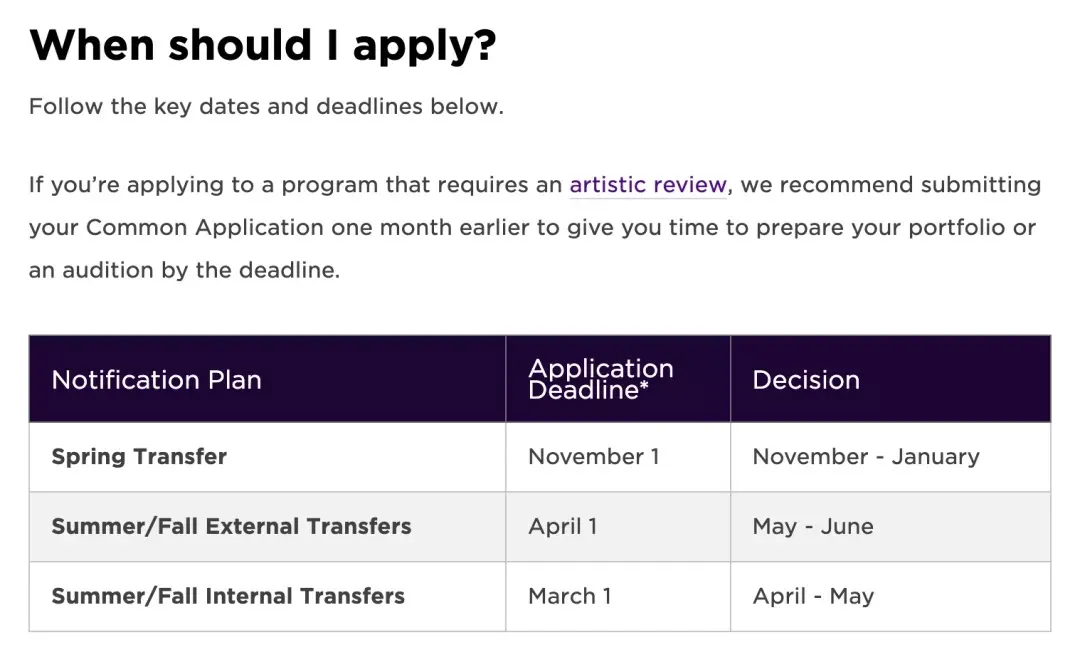
For sophomore transfers, TOEFL and SAT scores are often optional, depending on the university's requirements. The target school will place more weight on your GPA from freshman and the first semester of sophomore year.
Transfer Application Requirements
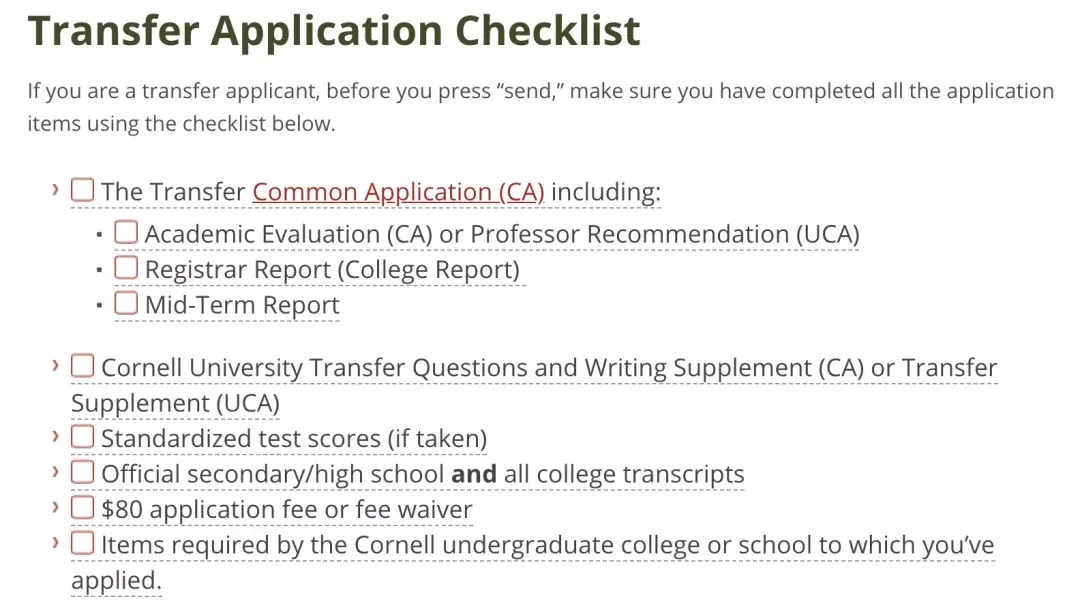
General Transfers (Using Cornell University as an Example)
- Some colleges have prerequisite courses or portfolio requirements
- You can transfer credits, up to a certain limit
- SAT scores (if you've taken the SAT, you may choose to submit them)
- TOEFL minimum 100, IELTS minimum 7.5
Most transfer applications require a "Why Transfer" essay. While it may seem straightforward at first glance, crafting an outstanding transfer essay is very challenging.
A transfer essay needs to be highly detailed, explaining why you are not satisfied with your current school, why you want to transfer to the new school, what the new school can offer you, and what you can contribute to the new school.
Application Deadlines (Cornell University):
Spring: October 15
Fall: March 15
Best For:
Students who meet the GPA requirements but have broader or less defined school preferences. For those aiming for top schools, it's recommended to maintain a GPA above 3.6.
Each year, updated transfer admission policies are typically released after the summer. It's advised to do thorough research in the early stages of your application.
UC TAG Transfers
TAG (Transfer Admission Guarantee) is a guaranteed admission agreement between California community colleges and the UC system.
The six UC campuses that participate in the TAG program are: UC Davis, UC Irvine, UC Santa Barbara, UC Riverside, UC Merced, and UC Santa Cruz.
In other words, as long as you meet the minimum requirements, you are guaranteed admission to one of these UC schools from a community college.

GPA requirements vary slightly by campus but generally require a 3.0 or above. For higher-ranked UC campuses like UCI and UCSB, a higher GPA is expected—it's advisable to keep it above 3.4.
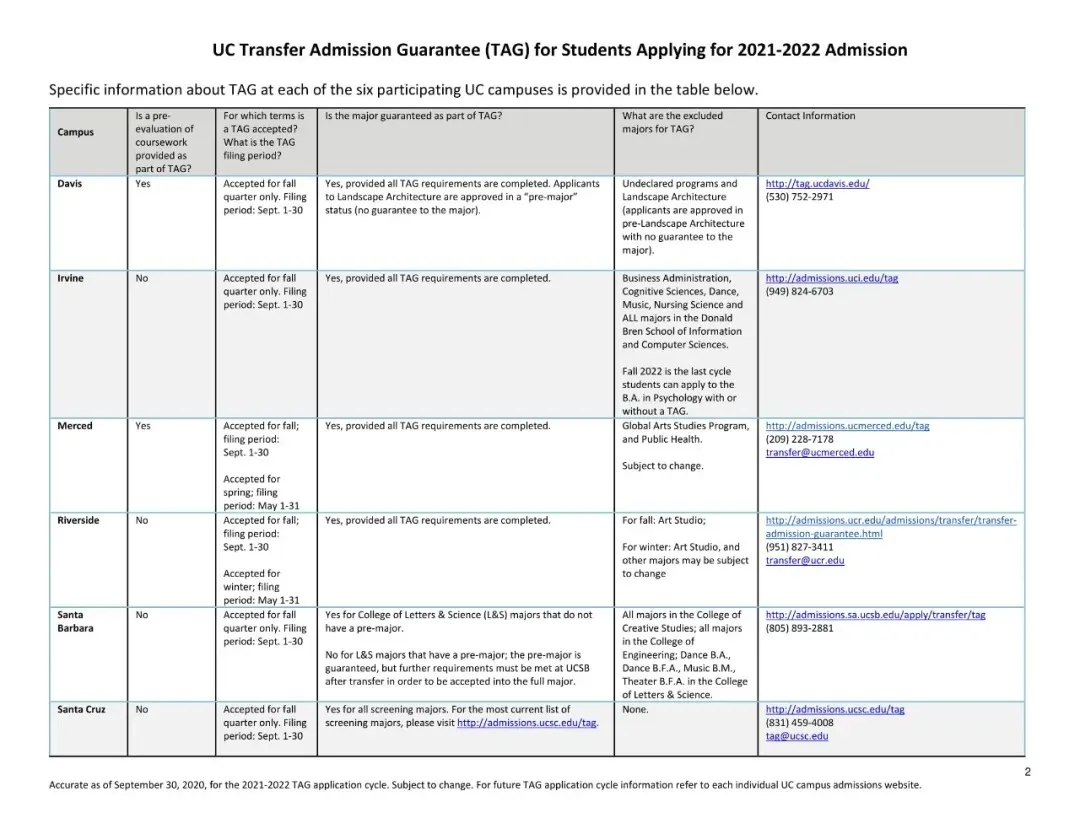
Furthermore, some majors at certain schools are not part of the TAG program, such as Business Administration at UC Irvine and any engineering major at UC Santa Barbara.
Application Deadlines (UC TAG):
Fall: September 30
Winter/Spring: May 31
Best For:
Students who meet the GPA requirements and have a clear goal of entering a UC school.
Application requirements may change each year and are usually updated over the summer. For the most current TAG requirements, check the official websites of each UC campus.
U.S. University Transfer Process
The general transfer process is as follows:
-
Start by thoroughly researching colleges and carefully evaluate your decision to transfer;
-
Discuss your transfer plans and academic goals with your current school's advisor;
-
Check transfer agreements and other useful information to understand application deadlines;
-
Contact the admissions office of your target school to confirm transferable credits, financial aid, and other important details, and begin communicating with advisors there;
-
Collect and compile all required transfer application materials;
-
After weighing the pros and cons, submit your transfer application;
-
Stay in touch with the admissions office to track your application status.
In terms of application platforms, most schools use the Common Application or Coalition Application, except for the UC system and a few schools that use their own platforms.
As the 2022 application cycle unfolds in the post-pandemic recovery, many universities may continue to adjust their transfer admission policies. For example, schools like NYU are still using test-optional policies for transfer applications this year.

Be sure to check the school's official website for the latest information before applying.
Finally, to students considering a transfer: even if your mind is racing with thoughts, nothing will change if you don't take action. So don't let yourself regret it—give it everything you've got!
To those already preparing your transfer applications, we wish you the best of luck in making your way to your dream school!