Overview
When it comes to Rice University, people often use the phrase "drawing on the strengths of many" because it combines the characteristics of "excellent universities" into one.
At its founding, Rice modeled its academic rigor after Princeton University;
Its residential college system mimics Oxford University's "college system";
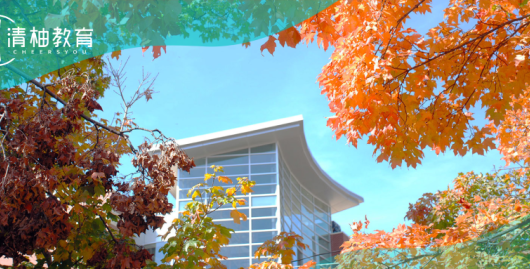
Architecturally, the campus's tall, straight oaks, gravel paths, and Mediterranean-style buildings often remind people of Stanford;
And in terms of tuition, Rice is more like an American public university...
The university has 3,900 undergraduate students and 2,800 graduate students, totaling around 6,700, with a student-faculty ratio of 1:5.7. As a renowned private university in the South, Rice has achieved top-level accomplishments in various academic fields.
Why Rice?
Prime Location
Rice University is located in the Museum District of Houston, the fourth-largest city in the United States, and just across the street from one of Houston's most famous attractions, Hermann Park.
It is also very close to Downtown Houston, just a 5-10 minute light rail ride to the bustling commercial area.
Besides, the campus itself sits at the heart of one of the most vibrant commercial zones, surrounded by the world's largest medical center, the Texas Medical Center, over twenty art galleries and museums, large shopping malls, as well as various parks, zoos, and theaters. The location is simply unbeatable. The school also frequently distributes free tickets to museums and theaters!
Additionally, being in such a prime area means abundant opportunities for internships, volunteering, and employment. After all, many Fortune 500 companies are headquartered in Houston, so there's no shortage of career opportunities.
Small Campus, Big Offerings
Compared to many large public universities, Rice's campus is relatively small, so it never feels overcrowded. You don't have to wait in line for meals, and it usually takes just a dozen minutes to walk from your dorm to class. The overall pace of life is very comfortable.
Moreover, a smaller student body means smaller class sizes. Rice boasts a 1:6 student-faculty ratio, with 67.5% of classes having fewer than 20 students; a class of over 50 is considered a large lecture.
Although the campus is small, the surrounding area is lively, and the campus itself offers comprehensive services. If you're a super homebody or a scholar too busy to go out, staying entirely on campus is no problem. Unlike NYU, where the campus blends seamlessly into the city, Rice's campus is relatively self-contained, which means student events and parties are less affected by the outside world and also safer.
"Harvard of the South"
Rice University has long been ranked alongside Duke and the University of Virginia as the "Harvard of the South," with a strong focus on undergraduate education. The university is divided into eight schools, offering undergraduate studies in architecture, engineering, humanities, music, social sciences, and natural sciences, plus a continuing studies school and a graduate business school. Its most renowned school is engineering, but architecture and music are also exceptionally strong.
Low Cost, High Value
When comparing tuition at American private universities, you'll find that top private institutions typically charge around $50,000. Even good public universities, like the University of California system, charge international students around $40,000. Yet Rice, a private university, has kept its tuition around $40,000.
Rice's relatively low tuition stands out uniquely among America's elite universities. All applicants, including international students, are automatically considered for merit scholarships. In addition, Rice offers a wide variety of 213 athletic scholarships, 60 of which are specifically designated for female students.
Rice admits students for both fall and spring semesters, and the academic year is accordingly divided into two semesters. The first semester runs from August to December, the second from January to May, and June–July is the summer term.
Top Quality of Life
Campus life at Rice is incredibly vibrant, with concerts, art galleries, and museums all nearby, plus parties held on campus every Friday and weekend.
Rice's one-of-a-kind residential system is also one of its biggest highlights. The university has 11 residential colleges, each with its own unique style, culture, organization, and traditions. Each college feels like a warm, big family, and students deeply love their college and uphold its spirit. At Rice, many activities are organized at the college level, such as O-week at the start of the academic year, where each college's members organize activities for new students and share their college culture.
Additionally, Rice's dining halls are widely praised. There are 11 serveries, each residential college having its own dedicated dining hall, offering a rotating menu of various cuisines—burgers, pizza, fries, pasta, stir-fries, and more. New dishes are introduced weekly. The university updates the menus online daily, and you can eat at any of the 11 serveries freely.
The campus is very safe, with RUPD (Rice University Police Department) patrolling 24/7. Overall, Rice has a very high safety rating. A 15-minute walk west from campus takes you to Rice Village, filled with restaurants and shops. Houston's buses are free for Rice students, and you can obtain a free bus pass on campus. Downtown is a 10-minute tram ride away. Rice frequently offers free tickets to concerts, plays, and movies.
Admission Requirements
Admissions Overview
Rice's overall acceptance rate is 15%, with ED at 20% and RD around 15%. Its admission policies are relatively friendly toward Chinese students.
The university places great importance on the fit between a student and the school's ethos, so it's crucial to nail the essays and present your authentic self.
Additionally, strengthen your spoken English; Rice now tries to arrange online interviews for international applicants whenever possible.
Which Majors Are Easier to Get Into?
Rice University has a STEM-heavy inclination, and its students are all super academic. Therefore, comparatively speaking, applying for humanities or social science majors might give you a better chance. Of course, Rice still leans toward admitting somewhat nerdy students—that's undeniable.
Despite its STEM strength, Rice's social sciences and humanities are also strong. The School of Music is ranked in the top 10 nationally for undergraduates. In social sciences, Math Econ, Psychology, and Political Science are all excellent; especially Economics and Psychology, which are the two most popular majors at Rice.
The International Affairs major is also powerful, thanks to its home in the James A. Baker III Institute for Public Policy, whose students are highly competitive nationwide and even globally.
For undergraduate majors: Humanities, Social Sciences, Arts, Music, and related fields tend to have higher acceptance rates. For graduate programs, Accounting, Business Administration, International Business, Philosophy, Economics, Linguistics, and Education present lower application risks.
Score Requirements
TOEFL 100 (undergraduate), 90 (graduate) or IELTS 7.0 for undergraduates; 7.0 for graduates (Jesse H. Jones Graduate School of Business: 7.0)
SAT Math 720-800, Critical Reading 700-790, Writing 700-790, Subject Tests
Among these, Math and Reading scores are the most important, or ACT 32-35, GRE 325