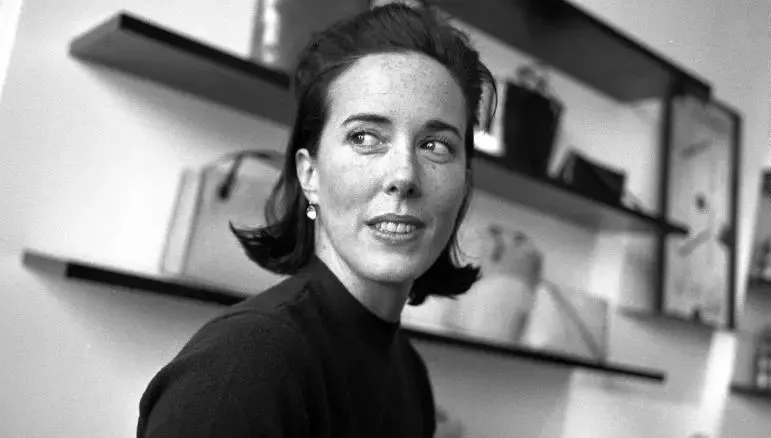
According to the New York Police Department, at 10:20 AM Eastern Time on Tuesday, 55-year-old Kate Brosnahan Spade, founder of Kate Spade, hanged herself in her Manhattan apartment and was confirmed dead.
NYPD Commissioner Dermot Shea revealed that Kate's housekeeper discovered her hanging from a scarf tied to a doorknob while cleaning, and immediately called the police, but unfortunately, the designer's life could not be saved. Police found a suicide note at the scene, in which Kate mentioned her daughter. Kate wanted her daughter to know that her mother loved her very much and that the suicide had nothing to do with her.
Suicide Had Early Warning Signs
Kate's family was devastated upon hearing the news. They all loved Kate very much and miss her deeply, unable to accept the fact that she is gone, saying this is the hardest day for the family. Kate was also the sister-in-law of famous American comedian David Spade. David immediately expressed his condolences on Twitter, still unable to believe it.
"It's a rough world, and people try to hang on."
Kate's friend, former CFDA executive director Fern Mallis, was shocked by the news of her suicide, because Kate's usual personality was as colorful as her designs: "She always dressed interestingly and was always lively and full of life."
According to The New York Times, she always sported 1960s-style bouffant hair, wore nerdy glasses, and had a smile on her face.
But Kate's sister, Reta Saffo, said in a recent interview that Kate's suicide "was not a surprise to her," and described Kate as "so dear, so kind, so funny." Reta revealed that Kate had actually had mental health issues for a long time. She had tried many times to get Kate into mental health treatment, but Kate was very afraid that her treatment would affect the lively, bright, and positive image of the Kate Spade brand, so she always refused treatment.
Reta said that as early as August 2014, Kate may already have had suicidal thoughts. At that time, she repeatedly watched reports of Robin Williams' death. Over the years, she mentioned suicide plans many times, but always denied that she would commit suicide. The last thing Kate said to her sister Reta was, "I know you hate funerals and don't want to attend, but at least come to mine." By then, Reta had realized she might have a plan, but Kate insisted she didn't.
"Sometimes you just can't simply save them from themselves."
"Kate Spade": A Life Marked by Hardship
For girls, Kate Spade is a brand familiar beyond words. But probably not many truly know the woman behind the brand—Kate Spade.
Kate Spade is one of the most renowned fashion designers in America today. Born Katherine Noel Brosnahan (she changed her surname to Spade after marriage), she was born in 1962 in Kansas City, Missouri. In her childhood, Kate had little interest in fashion. Although she often secretly looked through her mother's jewelry box, it was mostly out of a little girl's curiosity. At that time, her dream was to become a television producer.
In the 1980s, Kate Spade studied journalism at Arizona State University and worked part-time at a men's clothing store, where she met Andy Spade, who later became her husband and the brother of comedian David Spade. Kate worked as an editor for the fashion magazine Mademoiselle in New York for seven years and was a regular at Fashion Weeks and major brand events. When Kate realized she couldn't find a stylish classic handbag in all of New York, she decided to design a practical handbag that satisfied her.
Thus, in 1993, a brand with bright, vibrant colors and a girlish heart was born, founded by Kate and her then-boyfriend, now husband, Andy, and named after Kate Spade.
In the following years, the couple's business grew bigger and bigger. By 1998, the Kate Spade brand was valued at $27 million. Although the business seemed to be thriving, the glamorous exterior couldn't hide the problems within the brand, and competition in the affordable luxury market was intensifying. In 1999, Neiman Marcus acquired a 56% stake in the brand. In 2003, Kate Spade faced massive debt and almost closed down. Kate's husband Andy revealed that all this was exhausting for them.
The couple eventually sold the company to Fifth&Pacific in 2007, and Kate left the fashion world to focus on raising their daughter. But the new owner of Kate Spade managed poorly, and the stock price, once over $40, plummeted to $1 at one point.
Kate Spade changed hands several times with a turbulent fate, but Kate and Andy's love for handbags did not end. They entered the fashion industry for a second time, launching the handbag and shoe company Frances Valentine in 2015, named after their daughter Frances. The style still carried on the bright and lively girlish feel of Kate Spade. Kate also changed her name to Kate Valentine.
Kate's love for design, persistence, and effort couldn't save Kate Spade. In the third quarter of fiscal year 2017, Kate Spade's same-store sales fell 2.4%, and excluding e-commerce channels, they plummeted 8.1%, marking the brand's first decline in same-store sales since 2010. On May 8, 2017, Kate Spade was acquired by Coach (now renamed Tapestry) for a total transaction amount of $2.4 billion.
In a magazine interview, Kate once said, "I hope people remember me not just as a good businesswoman, but also a good friend—and fun."
"Wall Street Journal" fashion reporter Christina Binkley commented in 2016, "Handbags have become a form of handshake. When two women meet and see each other carrying Kate Spade bags, they nod and know they share the same taste."
"You Don't Know Me, But I Know You"
Kate Spade New York has over 315 stores worldwide, including more than 140 in the United States.
No matter what bag you carry now, you must have had a Kate Spade during your girlhood.
As one of the three major affordable luxury giants, Kate Spade can be said to have dominated American girls' adolescent years. Unlike MK and Coach, Kate Spade never hides its age positioning. It always uses very cute designs and bold, flamboyant colors to attract girls' eyes, and it led a generation's brand fashion.
In addition to handbags, Kate Spade also encompasses clothing, shoes, accessories, fragrances, and home goods.
Upon the news of Kate's suicide, a spontaneous memorial campaign themed "You don't know me but I know you" emerged on social media, with people posting their first Kate Spade bag to remember the designer who accompanied their growth and gave them a princess dream.
Someone wrote in the caption of an Instagram high school photo, "This may seem trivial and even silly, but Kate Spade was a very important part of my underage years. It was my security blanket during my most unsettling times. I still have a pencil case. Hearing the news of her tragic death today shocks me; she clearly couldn't bear the pain anymore."
"You don't know me, but I know you," another Instagram user said. "Through clean lines and high contrasts, you brought simplicity and peace to my life. Your polka dots and floral patterns always helped me clear my mind amidst chaos. That is your stance, and it helped me find myself. I hope the world over there is as beautiful as the one you decorated here. I will never forget you."