
Today, we will provide a detailed explanation of the course selection system and tips at US universities. Although each university's course selection system varies, the general principles remain similar.
US Academic Calendar Systems
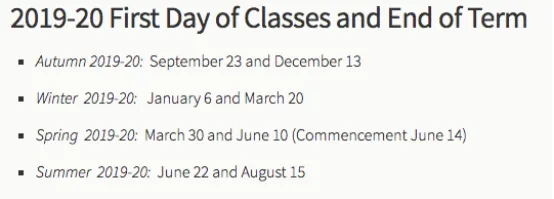
There are two main academic calendar systems in the US: the Semester system and the Quarter system. When converting credits between the two, one Quarter credit is equivalent to two-thirds of a Semester credit.
Semester System
The Semester system is the most widely adopted, consisting of spring and fall semesters. Under the traditional semester system, the nine-month academic year is divided into two 16-week semesters, though some schools offer semesters as long as 18 weeks.
Typically, each semester includes about 15 weeks of instruction and one week of final exams. The first semester begins in late August, usually with an orientation week for new students, and ends in mid-to-late December. The second semester starts in early January and ends in late May. After the formal semesters, students can freely choose summer session courses.
Some institutions use a Trimester system, which is essentially a variation of the Semester system, treating the summer session as an independent term.
Credits in the Semester system are calculated as Semester credits, where one hour of class per week equals one Semester credit (or one Semester hour). Generally, a course with three hours of class per week yields three credits. At semester-system schools, students typically need 120–128 semester credits to graduate.
Quarter System
Most universities in the western US use the Quarter system. The academic year is divided into four quarters: spring, summer, fall, and winter, with four start dates (March for spring, June for summer, September for fall, January for winter). Each quarter lasts about two and a half months, making the curriculum highly intensive.
In the Quarter system, one hour of class per week equals one Quarter credit (or one Quarter hour). Students typically take 14–18 quarter credits per quarter and generally need 180–192 quarter credits to graduate.
Because each quarter is short and exams are frequent (midterms after one month, finals after another month), students must hit the ground running and adapt to continuous stress and pressure.
Stanford University, which ranked seventh in the US News National University rankings this year, uses the Quarter system. The university requires students to attend spring, fall, and winter quarters, with summer being optional.
Credits and Course Selection
One of the most obvious differences from domestic universities is that even required courses at US universities offer choices. It is not mandated that all students in a particular year must take the same course. Course selection can be tailored to individual abilities.
Consequently, US universities do not have the concept of a fixed "class". Even students from the same cohort and major may choose entirely different courses each semester, and some may only meet for the first time at graduation. Though unlikely, this can happen.
Credits
Credits for different courses are generally based on class hours. Typically, one credit corresponds to 16 hours per semester of face-to-face time with the professor. For example, a 3-credit course involves 48 hours of instruction. With a 16-week semester, that means one 3-hour class or two 1.5-hour classes per week.
Depending on the program length, schools set requirements for both maximum and minimum credits a student can take per term.
Generally, a four-year bachelor's degree requires 120 to 128 credits. In general, a US bachelor's degree takes four years and requires 120–180 credits; a master's degree takes about two years and requires around 40 credits; many schools offer five-year combined bachelor's and master's programs.
Courses typically carry 1–4 credits, and students usually take 3–5 courses per semester, totaling 9–15 credits. Full-time undergraduates must take at least 12 credits per semester, while graduate students must take at least 9 credits. US regulations require at least two semesters of enrollment per year, meaning a minimum of 24 credits per year for undergraduates and 18 for graduate students. As long as the required credits are completed and exams passed, students can graduate. However, because tuition is charged per credit, early graduation does not save on tuition costs.
Course Numbers
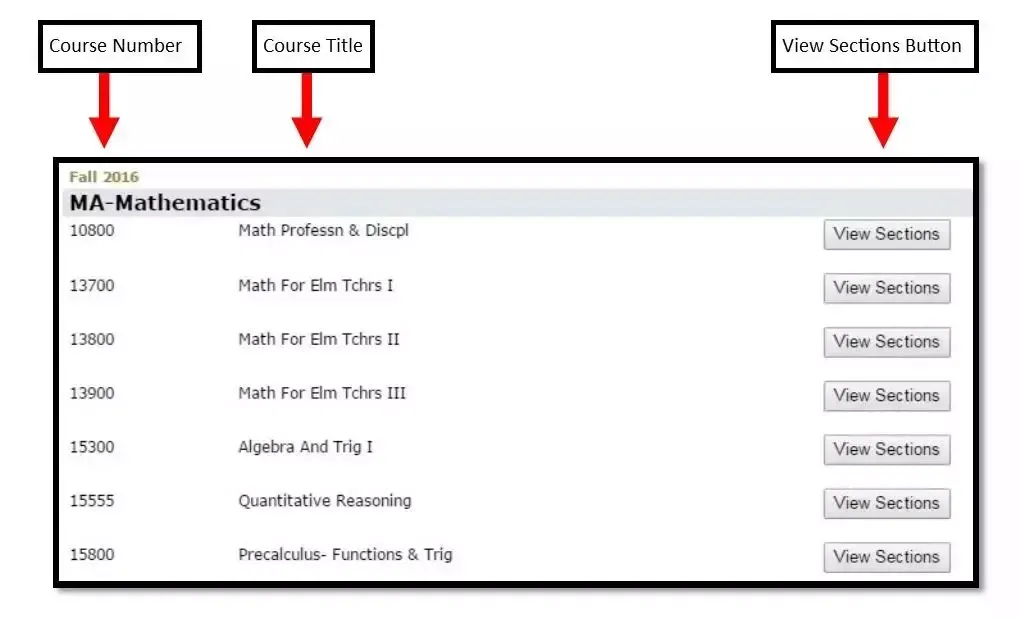
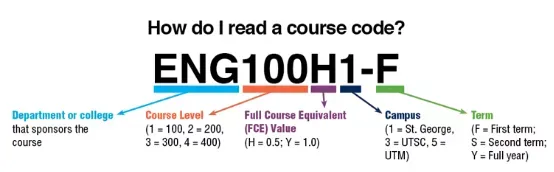
Course numbers are codes used for US university courses, generally consisting of up to four letters followed by three or four digits.
-
The letter part indicates the department or broad subject area, e.g., MATH for mathematics, CS for computer science, PSYC for psychology, etc.
-
The first digit indicates the student level for which the course is suitable, e.g., 1 for freshmen, 3 for juniors, 5 and above for graduate students.
-
The second and optional third digits indicate subcategories; they are smaller for general education courses and larger for specialized courses.
-
From a pedagogical sequencing perspective, some courses can only be taken after students have met certain prerequisites (i.e., passed foundational courses).
US University Course Selection Rules
For course selection, most schools provide incoming students with a course selection handbook that details the total credits required for graduation, requirements for required and elective courses, and course descriptions.
Each semester, the academic department provides a list of available courses and recommended courses from which students can choose.
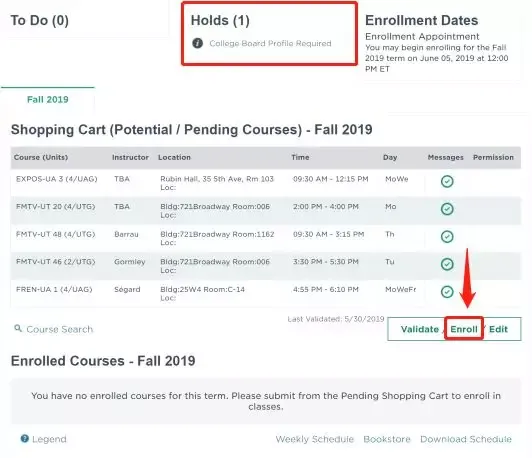
(Image: NYU undergraduate course selection interface)
Holds: Generally refer to course selection restrictions. For example, if required university materials (such as vaccination records) are not submitted, course selection may be blocked. Some schools have an international student hold, which requires enrolling in at least 9 credits to lift the hold.
Enroll: Currently, most schools use an "online shopping" approach for course selection: first add desired courses to your shopping cart, and then, very importantly, remember to enroll! Only then is the course officially registered. Enrollment usually does not require immediate tuition payment; tuition can be paid together with insurance and other fees once the bill is issued.
CheersYou(清柚教育) Tip: What if the course I want is already full?
For first-year students, this is relatively rare because first-semester courses are mostly required or other assigned courses, and sufficient seats are reserved based on the number of admitted students.
If a course is full, you can still add it to your shopping cart, which places you on the waitlist. Your position on the waitlist indicates how many people are ahead of you waiting to enroll. If a student drops it, you have a chance to enroll. If you don’t get in through the waitlist, you might also try to audit the course. Auditing requires contacting the academic advisor and the course instructor to ask about availability.
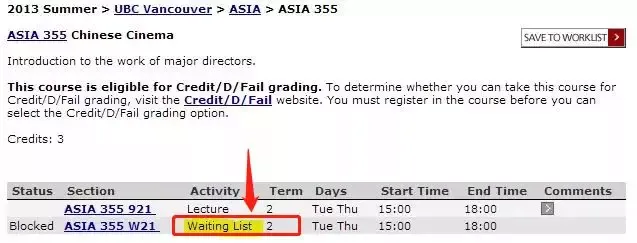
Additionally, every student must discuss their course plan with an Academic Advisor before finalizing their schedule. If you have courses you are particularly interested in, or if you want to take courses outside your major, you can contact the advisor in advance via email or phone; they are very willing to help.
About Dropping Courses (Drop/Withdrawal)
There are two ways to drop a course: "Drop" and "Withdrawal". Drop is generally used during the trial period at the start of the semester, while withdrawal is used closer to the end of the semester.
US universities typically have a one-week course adjustment period. That means if you find a course isn’t working out due to teaching style, workload, or other issues, you can drop it and choose another. This is quite flexible; as long as you do it within the school’s specified time frame (usually the first two weeks of the semester), you can freely select or drop courses.
Withdrawal, on the other hand, is an opportunity provided by the school to drop a course before the semester ends for various reasons. Usually, you can only withdraw during a specific window, and it will not appear on your final transcript.
Typically, the window is one or two weeks before final exams week. Once that deadline passes, you have no choice but to take the exam. Also, the prerequisite for withdrawing is that you still maintain the minimum required credits for the semester. Some departments/schools do not allow course withdrawals. Be sure to clarify this with your advisor beforehand and complete the withdrawal under their guidance.
How to Choose Courses That Suit You
Make Sure You Have Enough Credits
Before selecting any courses that interest you, ensure you have enough credits for the semester. This is the first thing you should do. As an international student, you must register for at least 12 credits per semester to maintain your visa status.
Prioritize Required Major Courses
The courses required for your degree should be your primary focus, as completing them is the foundation of earning your degree. Required major courses are often a significant portion of your overall curriculum, and the exact number varies considerably by school and college. Therefore, it is crucial to consult your advisor or faculty member and plan your courses and schedule with their guidance.
If you cannot reach your advisor, you can look up your major’s curriculum in the university catalog, which usually contains most of your future major courses and their schedules. If you have questions while reading the catalog, be sure to email the relevant school officials to clarify your doubts.
One important thing to note: many major courses are sequential, meaning if you do not meet the prerequisites, you cannot take subsequent courses.
At US universities, some courses may not be offered every year. For example, a first-level math course might only be available in the fall. If you don’t take it, you may be unable to enroll in the second-level course. You might even have to wait an entire year before the first-level course is offered again, which could delay your graduation.
Consider Elective Courses
Elective courses are generally chosen based on personal interest. Typically, electives have no specific departmental background requirements and can be any course outside your major. These courses are designed to allow students to explore what interests them, giving them more opportunities to learn about different fields.
Moreover, electives can help you discover the right path. Many international students are unsure what they truly want to study before choosing a major; electives offer a chance to explore areas that genuinely suit and interest them.
Therefore, it is recommended that international students avoid pure major courses and try some courses that may be challenging for international students.
Is the Course/Professor Right for Me?
Many courses don’t live up to their appealing names. Before choosing a course, be sure to understand its content, what you’ll need to complete to earn credit, and then realistically assess whether you can handle it based on your own abilities. Unfamiliarity with course content can lead to two major issues: redundant coursework and excessive workload.
Take advantage of the school’s shopping week to try out courses. So, definitely don’t skip classes during the first week of the semester; attend every class you’ve chosen to avoid discovering later that a course isn’t right for you.
Is the course right for me?
Since general course descriptions are usually quite brief, if you want more details about a course, proactively visit the department office and ask the instructor, their TA, or the secretary. Also, request the syllabus, which includes detailed course objectives, weekly schedules, grading criteria, reading lists, and more—it is the most practical reference when selecting courses.
Pay close attention to the grading policy. If you notice that a course requires many essays or group presentations and your English expression and writing skills are currently not strong, avoid those courses and consider ones that evaluate students through exams and problem sets instead.
Is the professor right for me?
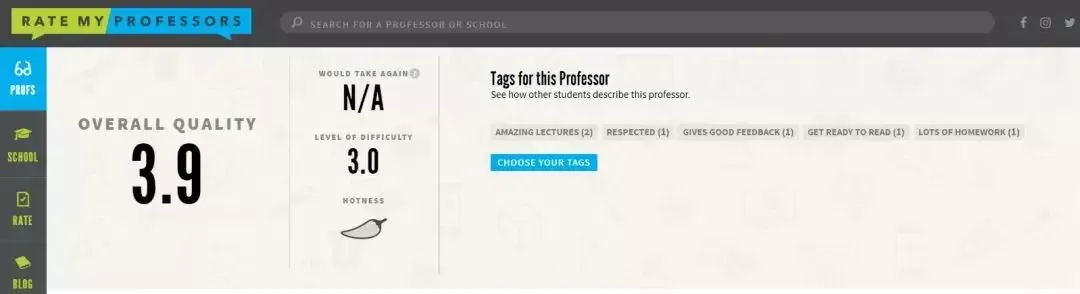
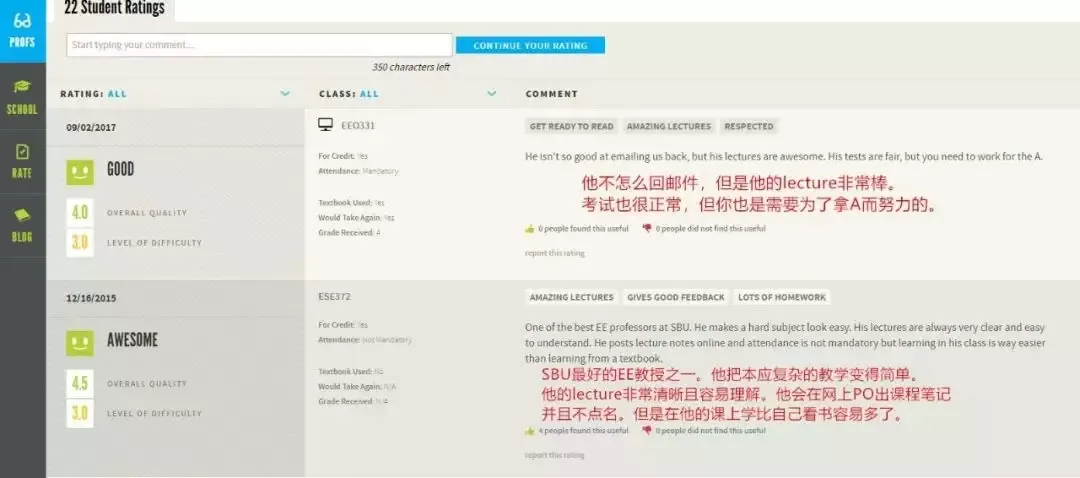
We suggest students check Ratemyprofessor.com to look up the instructor and learn about their teaching style, assignments, and grading methods. Sometimes a course name and content may seem appealing, but if you hear that the professor is a "killer", you might consider dropping it.
A so-called "killer" professor typically gives many exams and assignments and is not generous with grades, and they are generally unpopular among students. Of course, students who are academically ambitious may want to focus on the professor’s academic expertise and perspectives.
Below is a rating for a professor at SBU. Student evaluations are anonymous, so they are generally honest. A score of 3.9 is considered high—indicating that this professor is very popular with students.
Research "Honor Courses"
Many schools offer "honors programs" that usually require students to take specific courses. So if you are interested in an honors program, be sure to research its course requirements in advance to avoid missing out.
TIPS
Course selection is truly a crucial part of completing your university curriculum. If you don't plan your courses well or choose ones that aren't suitable for you, you may only realize it at the end of the semester, and by then it's too late for regrets.
Here are some course selection tips:
■ If you have questions, ask the department promptly. In Chinese universities, students rarely visit the department office for course selection advice. This is very different from US universities. Here, department office hours are limited, and you’ll often find long lines of students waiting to see an advisor for course selection help. You can receive very professional guidance and planning, so don’t feel embarrassed—course selection is vital for graduation.
■ Senior students (both in your major and from other majors, the latter being especially helpful when choosing electives outside your field) are also invaluable resources. From them, you can gain first-hand key information, such as the professor’s teaching style, course difficulty, workload, and how well the course connects to subsequent courses. For humanities and social science courses, the quality of the professor matters more than the course content. Teaching methods are more important than grading criteria, and clear grading policies are more important than easy grading.
■ When you first start, choose foundational courses to build a solid base. The first semester of your first year, even for American students, is an adjustment period, let alone for international students from completely different cultural and educational systems. US universities place great emphasis on grades; every course grade affects your GPA. If you unwittingly take a course that’s too demanding and receive a poor grade, your GPA could drop significantly, seriously impacting your academic confidence. If you can’t raise your GPA later, it could also hurt your chances for graduate school.
■ Balance your humanities and STEM courses. Many private universities don’t require students to declare a major in the first year or two, so even if you plan to major in STEM, it’s advisable to mix humanities and sciences when choosing courses early on. On the one hand, if your schedule is overloaded with math, science, and biology courses, the workload becomes too heavy (lots of lab time and assignments). On the other hand, humanities courses help improve your reading and writing skills, which is especially important for international students.
■ Choose courses as early as possible. While course selection at US universities isn’t as competitive as in China, popular or interesting courses can still fill up quickly, and getting a spot may depend on luck. The schedule for course selection varies by class standing; the higher your standing (i.e., the more credits you’ve earned and the closer you are to graduation), the earlier you can select courses, ensuring you get the courses you need.
That concludes our introduction to US university course selection. CheersYou(清柚教育) has also compiled a set of Pre-Departure Preparation Guide for Studying in the US. We wish all students success in attending their dream schools!