
Recently, the University of Rochester announced on its official website that it would lower standardized test requirements for freshmen admission: starting from applications for Fall 2020 entry, freshmen will no longer need to submit any standardized test scores.
This is also further weakening of standardized testing by the University of Rochester since it proposed the Test Flexible policy in 2011, now implementing a Test Optional policy.
.png)
In fact, this is not the first time a US university has made such an official announcement. Over the past few years, more than 300 universities have dropped SAT/ACT requirements, and among the top 100 universities, half have issued similar notices.
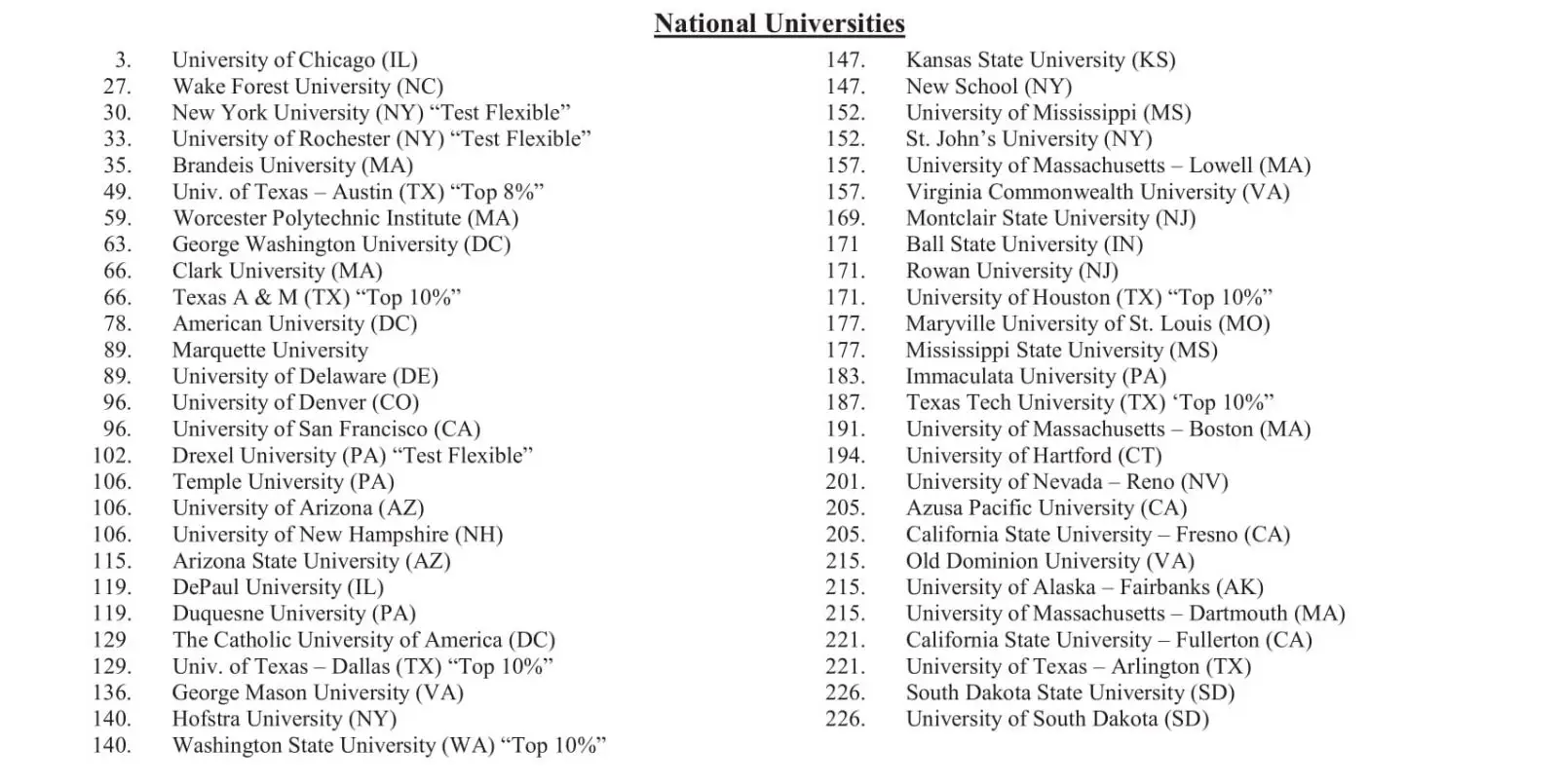
Among these are many well-known institutions, such as: University of Chicago, Wake Forest University, Brandeis University, George Washington University, New York University, etc.
Although both do not mandate SAT/ACT scores, the newly proposed Test Optional Policy differs significantly from the previous Test Flexible Policy.
.jpeg)
The previous Test Flexible Policy did not require applicants to take the SAT or ACT, but required submission of at least one form of standardized test score, typically national or international entrance exams such as AP, IB, and A-Levels.
For the currently proposed Test Optional Policy, the official response is: applicants can choose for themselves whether or not to submit standardized test scores.
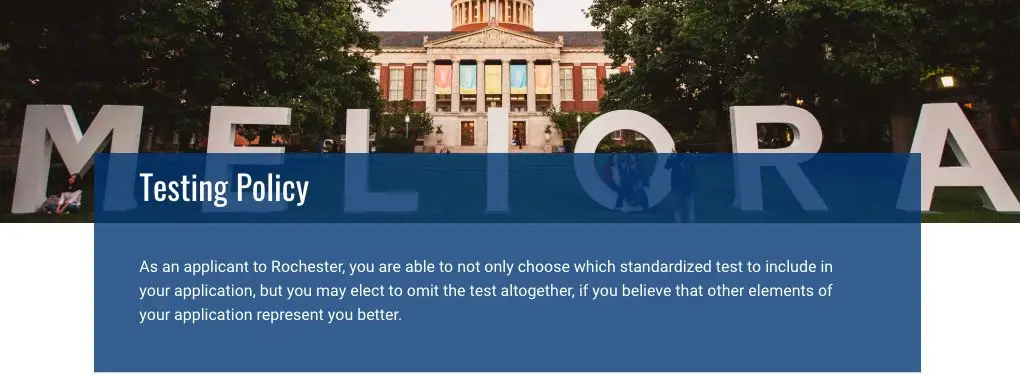
Applicants who choose to submit can decide for themselves which test (if any) accurately reflects their current abilities and potential for future success. The university will continue to review and consider those applicants who decide to submit test scores.
Choosing not to submit standardized test scores will not affect the application evaluation, nor will it negatively impact the review of their application.
Regarding the introduction of this policy, the University of Rochester's official explanation is as follows:

"Standardized test scores have not added much value to our review process. Even well-structured exams cannot provide us with good decision-making references. The opportunity cost of the time and effort students invest in these exams far outweighs the benefits they bring to us."
"Especially for applicants from low-income families and first-generation college students, who may have lower standardized test scores but excellent high school grades, we hope to give them an equal opportunity to attend university."
So, what does the introduction of this new policy mean for international students? Is it a blessing or a curse?
CheersYou(清柚教育) advisors have analyzed the following points for everyone:
1. Not requiring SAT/ACT scores does not mean easier applications or reduced competition; on the contrary, it means increased competitive pressure.
Because more applicants will be attracted to such universities, a large increase in applicant numbers means the bar will be raised, resulting in stricter review and a higher rejection rate.
2. The university has also stated that while standardized test scores are no longer required, they will place greater emphasis on GPA, essays, and interview performance.
This is not advantageous for many international students, because universities will increase the quantity and difficulty of other application materials.
3. Although standardized test scores are waived, language proficiency exam scores are not eliminated.
It is expected that universities will also place more weight on international students' performance in language tests.
4. Additionally, universities like the University of Rochester will place more importance on trustworthy high school transcripts and GPA levels.
Advantages become more pronounced for those from American high schools, IB, A-Level curricula, as well as renowned international classes and international schools in China.
In summary, eliminating standardized test scores does not entirely mean an easier application process; instead, it raises the bar for international students' language proficiency and essays, and places greater emphasis on applicants' other core strengths.
Most US universities still require standardized test scores as a mandatory material. If you have already spent time on standardized tests, there is no need to feel it was wasted.
Moreover, for international students whose other aspects such as school background and activity experience may not be as strong as local students, choosing not to take or submit a SAT exam in which you excel to compete in applications is actually losing more than you gain.
Therefore, students still in the 2020 undergraduate application stage must not let down their guard. The harder you work, the luckier you will be!
If you want to obtain a detailed list of schools that do not require SAT/ACT scores, you can click the customer service button at the bottom right to contact CheersYou(清柚教育) advisors to get it. If you have other undergraduate application questions, you can also consult with them at the same time.