Recently, the University of California system released its latest admission data for fall 2020.
This year, out of 172,099 applicants, 119,054 students were admitted, bringing the overall admission rate to 69%, an increase of 8 percentage points over last year.
Meanwhile, total applications to UC decreased by 3% compared to last year, while the number of admitted students increased by 10%.
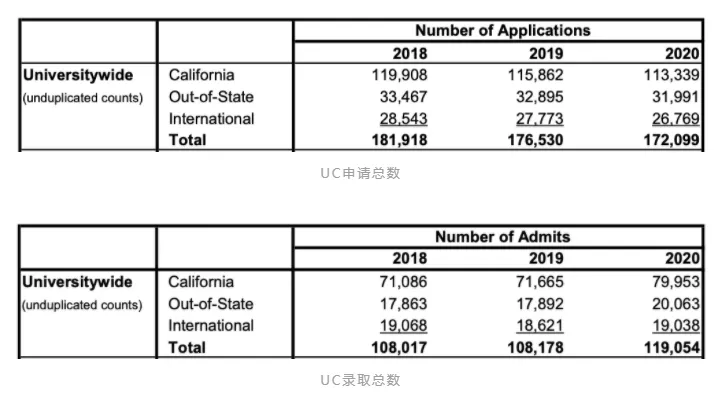
Whether California residents, out-of-state residents, or international students, admission rates all rose. The biggest increase was among out-of-state residents, with the rate jumping from 54% to 67%.
International student admission rates have risen for three consecutive years, from 67% last year to 71% this year.
Comparing UC campuses, UCLA remains the most competitive, followed by Berkeley. Some campuses also increased the proportion of international students admitted.
Below, let's dive into the latest data for each UC campus~
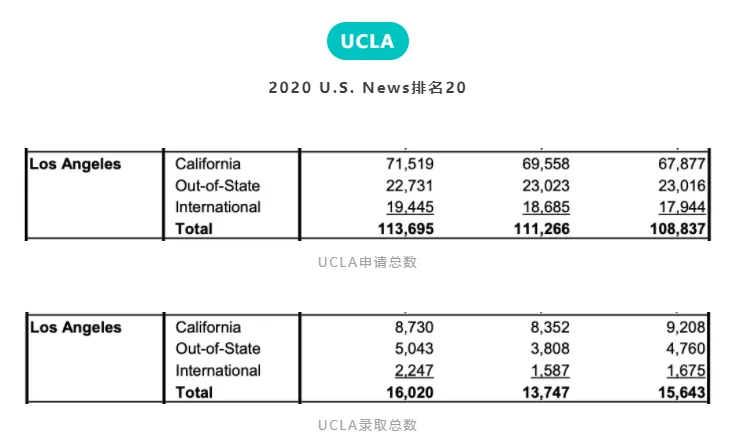
For the 2019-2020 application cycle, UCLA received a total of 108,837 freshman applications. As in previous years, UCLA still had the most applicants within the UC system. However, this was a 2% decrease from last year, and also lower than peak years in the past.
Although the number of applicants dropped, UCLA's freshman admission count increased to 14%, raising the total admission rate from 12.4% to 14.4%. Among them, the international student admission rate rose from 8.2% to 9.3%.
Looking at UCLA's historical admission trends, it's clear that grades are critical. Applicants with outstanding academic ability and self-directed learning are more likely to receive UCLA offers. With the removal of SAT/ACT requirements this year, UCLA admissions officers will place even greater emphasis on GPA.

UC Berkeley, another "Public Ivy," saw its total admission number increase by 8% this year, and its admission rate rose slightly from 16.8% last year to 17.5%.
This year, UC Berkeley received 88,026 applications, ranking behind UCLA, UCSD, UCI, and UCSB. The number of admitted students was 15,433.
International student competition remained fierce. Out of 17,144 international applicants, only 1,489 received offers, for an admission rate of only 8.7%. UC Berkeley is the campus that admits the fewest international students.
Beyond academic ability, UC Berkeley places great importance on how well applicants fit the campus culture. It favors students with rich practical experience and diverse cultural backgrounds.
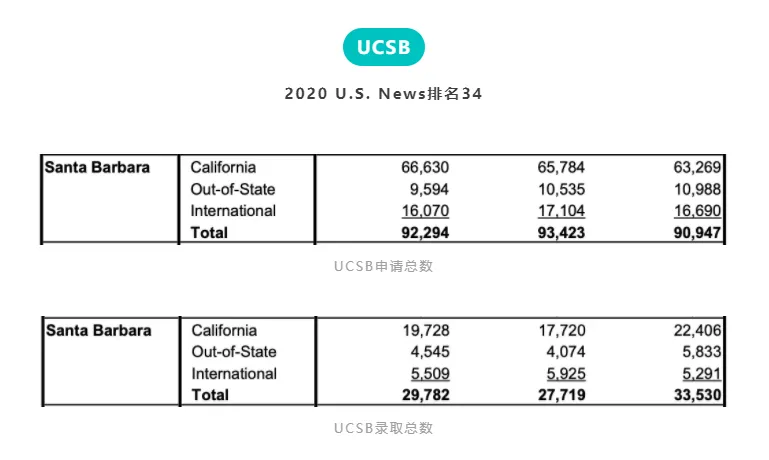
UCSB received 90,947 freshman applications this year, nearly 3,000 fewer than last year. However, total freshman admits were 33,530, nearly 6,000 more than last year.
UCSB's overall admission rate rose from 29.7% last year to 36.9%. While growth was significant, it was mainly driven by expanded admission of in-state residents. In contrast, international student admission rate dropped from 34.6% last year to 31.7%.
Like UCLA, UCSB has high GPA expectations for students. Additionally, applicants who have participated in UCSB summer programs often have higher chances of admission.
If conditions permit, applicants may also consider attending UCSB's summer programs during grades 10 through 12. Recommended programs include the Research Mentorship Program (RMP) and Summer Research Academies (SRA).
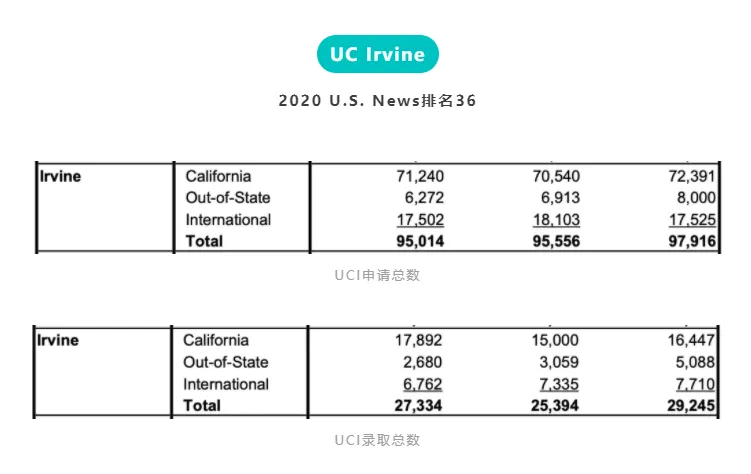
UCI was one of the UC campuses with a notable increase in applicants this year.
This application season, UCI received 97,916 freshman applications, over 2,000 more than last year. The overall admission rate was 29.9%. The international student admission rate was 44%, higher than last year's 40.5%, standing out among UC campuses.
Looking at recent years' admission trends, UCI values how well applicants match its campus culture. Computer science and related STEM majors are UCI's competitive strengths. The city of Irvine, where UCI is located, is also known as the "Silicon Valley of Southern California," offering rich internship resources.
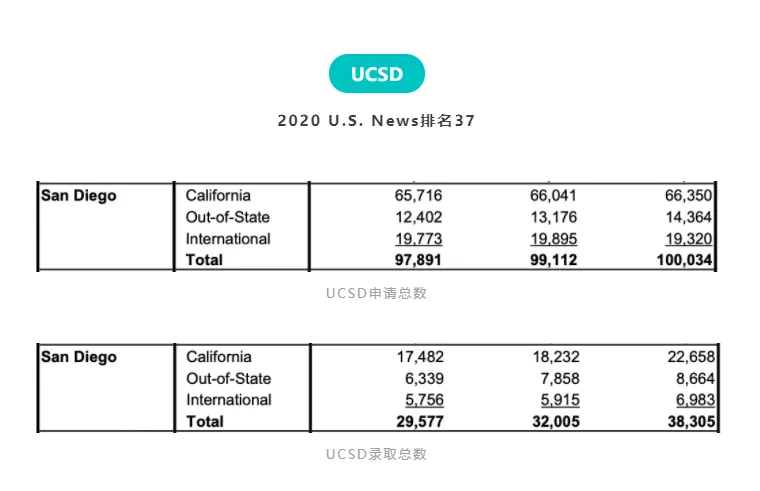
UCSD's applicants number second only to UCLA, and it is also the campus with the most international applicants, topping 100,000 this year.
This year, UCSD's number of admitted students surged by 20%, and the total admission rate rose to 38.3%. Among them, 6,983 international students were admitted, with the admission rate rising from 29.7% to 36.1%.
UCSD has a unique college system, composed of seven independent colleges. Since each college's curriculum differs, admission preferences vary. It is recommended that students research the characteristics and overview of these seven colleges before applying.
UCSD is known for academic rigor. Admissions officers not only scrutinize academic performance but also hold high expectations for applicants' practical background and social responsibility.
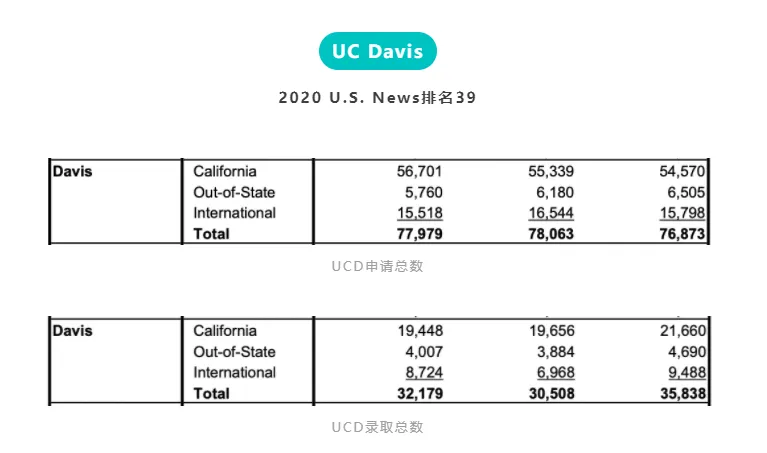
This year, UC Davis' admission rate was 46.6%, up nearly 8 percentage points from 39.1% last year. The international student admission rate at UC Davis was 60.1%, a sharp 18-point increase from 42.1% last year.
Behind this was a drop in application volume and a surge in admissions. This cycle, UC Davis received 76,873 freshman applications, about 2,000 fewer than last year and the year before. Conversely, admission spots increased by about 5,000 compared to last year. International student admissions were the highest in the past three years.
While UC Davis is quite welcoming in terms of admission, popular majors such as business, engineering, and environmental studies still have high academic requirements.
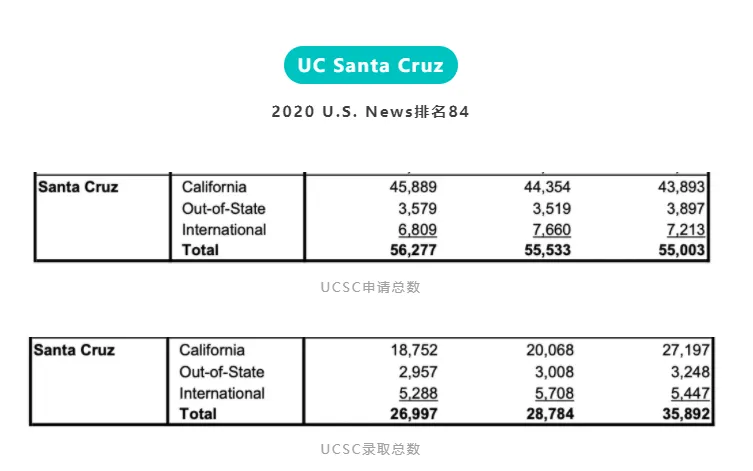
From 2018 to 2020, UCSC's annual application numbers changed little, staying around 55,000–57,000. Admitted student numbers have been steadily rising.
This year, UCSC's admission rate was 65%, up 14 percentage points from last year.
In terms of location advantage, the nearby Silicon Valley's strong IT industry provides academic resources and internship opportunities for UCSC.
UCSC emphasizes cultivating practical skills, making it a decent choice for applicants with rich practical experience.

Similar to UCSC, UCR's application numbers in the past three years have barely changed, while admitted numbers have been rising every year.
This year, UCR's overall freshman admission rate was 66%. The international student admission rate was 71.7%, up 12.2% from last year.
UCR operates a personalized education system and has respectable research strength. UCR admissions officers also favor applicants with diverse extracurricular activities and outstanding leadership.
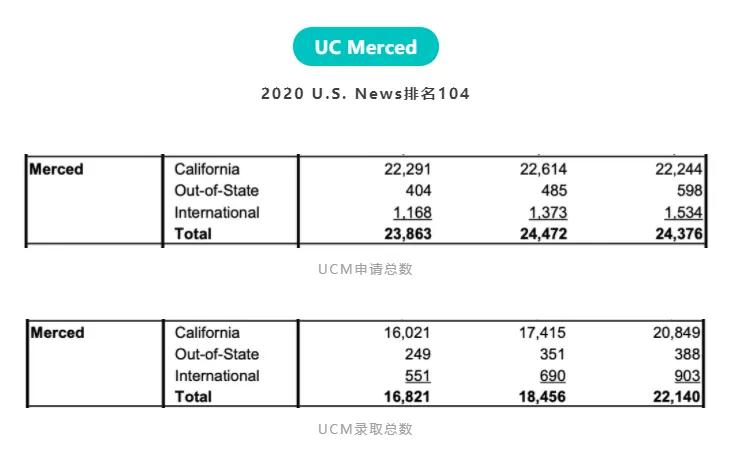
UC Merced, the youngest campus in the UC system, is still building its brand recognition. Over the past three years, total applications have hovered around 24,000. Admitted student numbers have also been steadily climbing.
Due to a small application base and large admission numbers, UC Merced is the UC campus with the highest admission rate. This year's rate reached 90.8%, with international student admission rate at 58.9%.
Although UC Merced is often used as a safety choice by applicants, the school still rigorously reviews materials. If an applicant's qualifications significantly exceed the university's average, the school may reject them for being overqualified.
Below is a visual comparison of the nine undergraduate UC campuses based on fall 2020 admissions.
Total Freshman Applicants:
UCLA > UCSD > UCI > UCSB > UCB > UCD > UCSC > UCR > UCM
International Freshman Applicants:
UCSD > UCLA > UCI > UCB > UCSB > UCD > UCSC > UCR > UCM
Overall Admission Rate:
UCM > UCR > UCSC > UCD > UCSD > UCSB > UCI > UCB > UCLA
International Student Admission Rate:
UCSC > UCR > UCD > UCM > UCI > UCSD > UCSB > UCLA > UCB
From this, it is evident that UCLA and UCSD remain top choices for freshman applications, and UCI continues to be a focus for many international students.
In terms of international student admission rates, UCSC is the most welcoming campus for international students, while UC Berkeley ranks at the bottom with an 8.7% international admission rate.
UCR, UCSC, and UC Merced have higher admission rates and are easier to get into compared to other campuses. Students typically use these three as safety schools.
2020-2021 Application Season
In August, the UC online application system opened, officially kicking off the 2020-2021 UC application season.
Last year, the UC application system was revamped. Not only was the interface optimized and usability improved, but the previous two-sentence experience summary was upgraded to 40 short essays. This requires students to continuously mine past experiences and connect them with their intended major and background.
Students are advised to plan their time wisely and, against the backdrop of the pandemic and global health efforts, seek out social practice activities that can benefit their applications.
Moreover, affected by the pandemic and uncertain policies, many students worry that the next application season will be more difficult and passive.
However, looking at the UC system's released application and admission data, freshman admission rates at various UC campuses have been rising year over year. This can, to some extent, ease international students' anxiety and concerns.
We hope students adjust their mindset, prepare application materials thoroughly and rigorously according to plan, keep up with updates on target schools' official websites, and manage every application timeline node.
Although the 2020-2021 application season is full of difficulties and challenges, we also see hope and opportunities. Let us embrace the challenges and seize the opportunities—maybe a pleasant surprise is waiting ahead!
Source: https://www.ucop.edu/institutional-research-academic-planning/content-an...
Precise positioning to win admission to top schools!
Scan the QR code below now to start a one-on-one study abroad consultation~
.png?x-oss-process=style/opt-webp)