Biden has been in office as U.S. President for nearly a month, and the H-1B work visa situation, which many are watching, is becoming clearer.
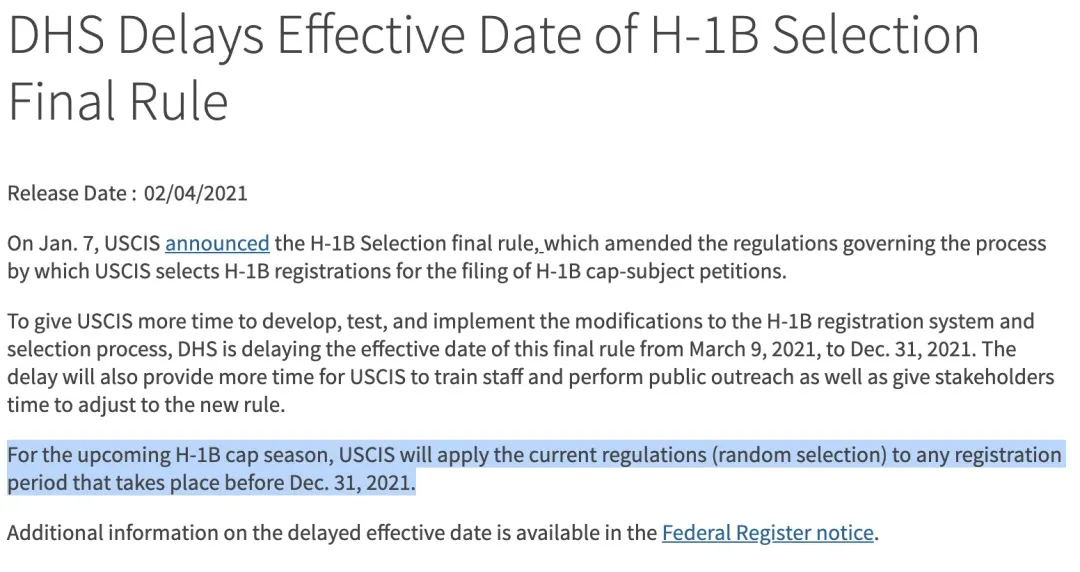
USCIS officially announced on February 4 that the 2021 H-1B cap-subject lottery rules will remain the same as in 2020. The new rule, which would have allocated H-1B slots based on wage levels and was scheduled to take effect on March 9, 2021, has been delayed.
2021 H-1B Policy Breakdown
This year’s lottery will again use the newly adjusted multiple-round format, just like last year:
-
First round (65,000 slots)
Open to all applicants holding a bachelor’s degree or higher
-
Second round (20,000 slots)
Reserved for master’s degree or higher holders who were not selected in the first round
Once again this year, graduate degree holders are eligible for a second, separate lottery!
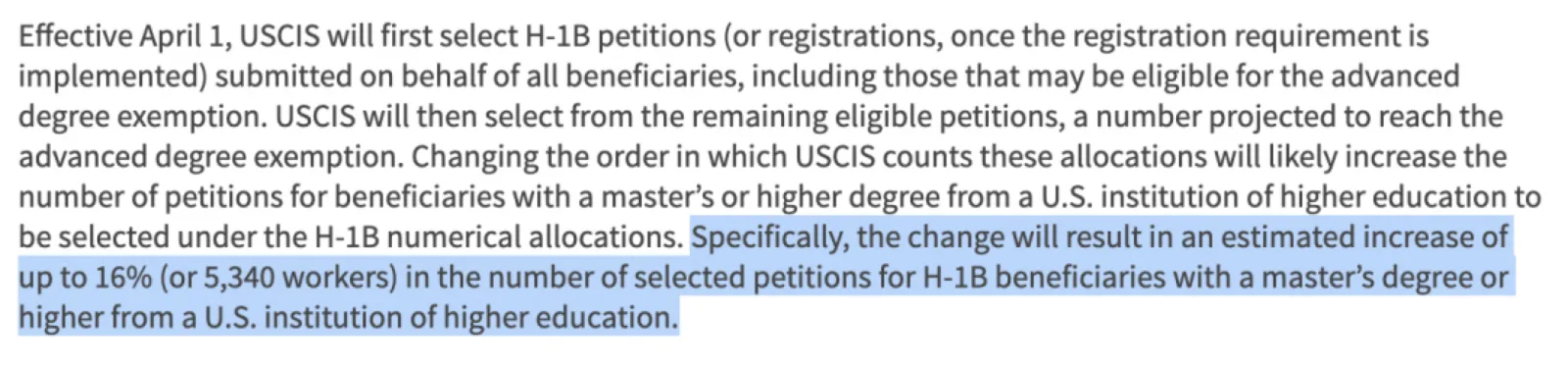
The adjusted lottery format, which continues in 2021, was previously highlighted by USCIS: applicants with a master’s degree or higher see an increased selection rate, with 16% more slots (5,340 additional) allocated to them.
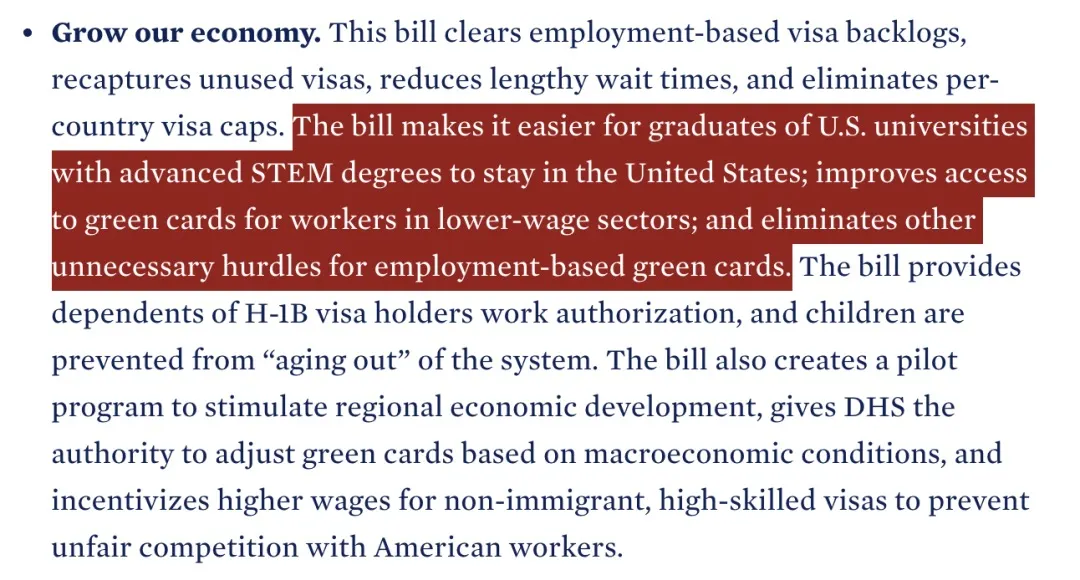
The Biden administration’s immigration reform outline, published on the White House website on January 20, has now been formally submitted to Congress and entered the discussion and voting stage. Among its provisions is the beneficial clause to “make it easier for U.S. college graduates with advanced STEM degrees to stay in the United States.”
U.S. Master’s Graduates Remain the Biggest Winners
The continuation of this year’s H-1B rules is good news for international graduates, offering reassurance to those who were worried about whether the Trump-era proposal to allocate H-1B slots by wage level would be implemented.
Due to the pandemic last year, the 2020 H-1B lottery saw a rare “second round.” Normally, all 85,000 H-1B slots should have been exhausted early, but they were not. This led USCIS to conduct an additional lottery in August 2020, drawing from registrations that were completed but not initially selected.

Considering that many international graduates have already returned to their home countries, and that many employers are not publicly recruiting for the new year, we can expect the number of H-1B applicants to decline in 2021. This means that this year’s H-1B candidates, especially U.S. master’s graduates, will have a significantly higher chance of being selected.
With President Biden’s bill now submitted to Congress, it not only brings hope that STEM PhD holders may eventually be exempt from immigration visa caps, but also means fewer H-1B lottery entrants and a stronger possibility that more U.S. master’s graduates will win the lottery. For current graduate students, there is reason to believe that more stable and supportive policies lie ahead.
At the same time, with such favorable conditions for graduate-level lottery winners, applying to a U.S. graduate program has become almost a necessity for non-STEM bachelor’s graduates who want to stay and work in the U.S.
Students considering U.S. graduate school applications should not miss this golden opportunity.
More Favorable Policies Are Being Implemented
Since taking office, Biden has issued a series of executive orders aimed at controlling the pandemic, protecting young immigrants, ending travel bans, and promoting racial equity, signaling a more proactive and effective approach.
The latest update on H-1B policy shows the Biden administration is embracing a more open and inclusive attitude toward international students and new immigrants.
At the end of last year, Biden announced three key goals for his first 100 days: mask-wearing, COVID-19 vaccinations, and reopening schools.
These three objectives bring new hope to international students, especially those still in their home countries juggling online classes and exams across time zones, that they will soon be able to return to campus.
We expect that more favorable policies related to F-1 student visas, OPT, and other matters will be announced and implemented in the near future.
In this new year, we sincerely wish every international student success in completing their studies and realizing their academic dreams.