According to CDC vaccine statistics as of March 1, 2021, more than 50 million people in the United States have received their first dose, and over 25 million have received their second dose of the COVID-19 vaccine.
Latest vaccination data link:
https://covid.cdc.gov/covid-data-tracker/#vaccinations
.jpg?x-oss-process=style/opt-webp)
At the current vaccination pace, it will take another 7 months to ensure that 75% of the U.S. population is vaccinated, achieving the goal of herd immunity. Vaccination speed is continuing to accelerate, and it is believed that the final completion time will be even faster.
What do you need to know about the COVID-19 vaccines in the United States? Today, we will explain everything in one article.
Vaccine Type Comparison
Currently, the most widely available vaccines in the U.S. market are Pfizer and Moderna, both of which use messenger RNA (mRNA) technology.
Technically, mRNA has three major advantages:
1) Higher safety
2) Easy to rapidly scale up production capacity
3) Low transportation costs, facilitating mass vaccination campaigns
-
Pfizer, with an efficacy rate of 95%, protects individuals aged 16 and older; second dose after 21 days.
.jpg?x-oss-process=style/opt-webp)
-
Moderna, with an efficacy rate of 94.1%, protects individuals aged 18 and older; second dose after 28 days.
.jpg?x-oss-process=style/opt-webp)
However, mRNA is difficult to preserve; it degrades easily at high temperatures, so it must be stored at -4°F (Moderna) and -94°F (Pfizer), respectively.
The Johnson & Johnson vaccine, which uses adenovirus vector technology, was also approved by the U.S. Food and Drug Administration's vote on February 27.
This is a recombinant vaccine that uses an adenovirus as a vector by transferring the protective S protein of the novel coronavirus into the adenovirus. Since the transmissibility of adenoviruses is well understood, this technology offers high safety and low pathogenicity.
-
Johnson & Johnson (Janssen), with an efficacy rate of up to 72%, protects individuals aged 18 and older; one-dose; no one in clinical trials required medical attention or died due to the vaccine; expected to be widely available by March or April.
.jpg?x-oss-process=style/opt-webp)
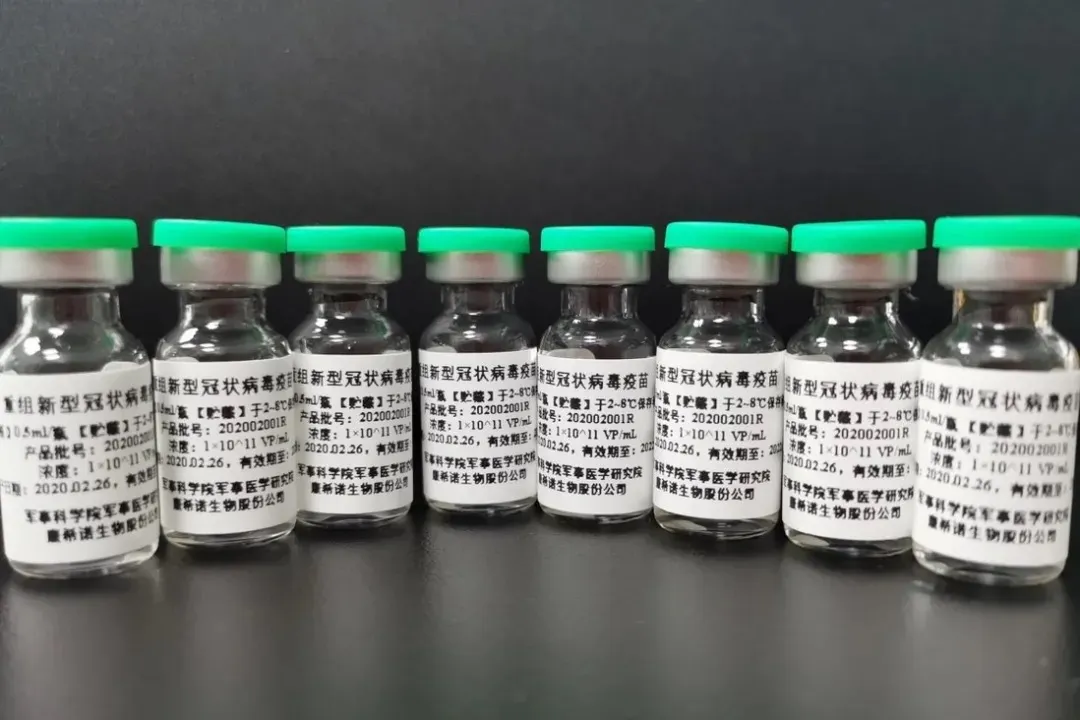
The single-dose COVID-19 vaccine developed by the Chinese biotech company CanSino was also officially approved on February 25.
-
CanSino, with an efficacy rate of 74.8%; one-dose.
Below is a comparison of various vaccines currently in use internationally:
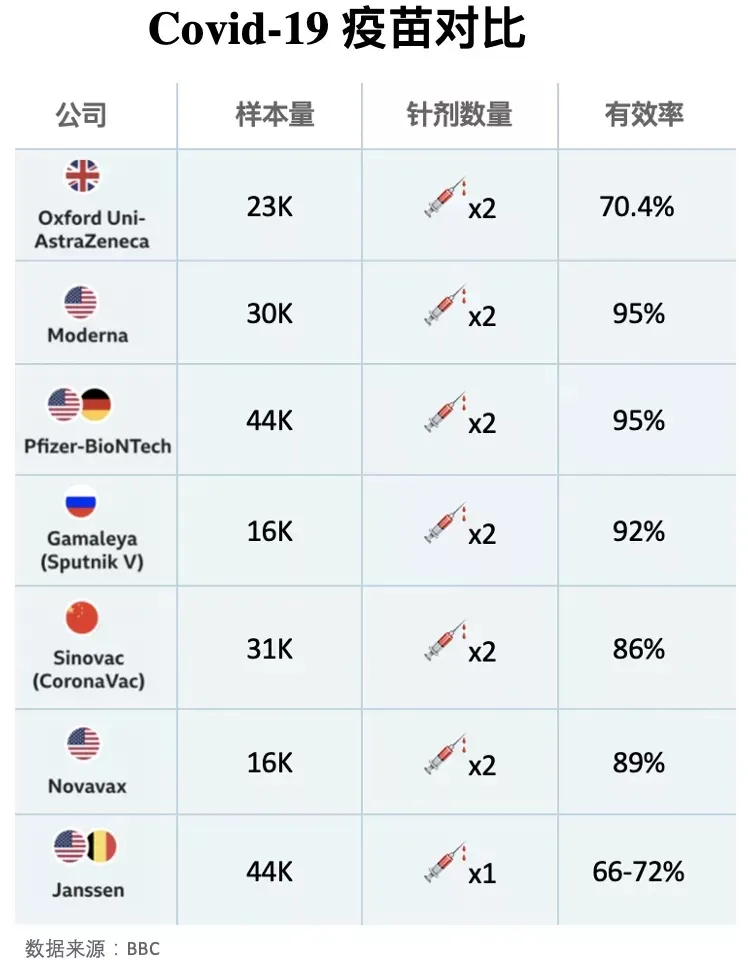
Vaccines are in high demand right now; take whatever the hospital offers to minimize your chance of infection.
Vaccine Appointment Guide
New York
➡️ Currently eligible individuals:
-
Healthcare workers;
-
People aged 65 and older;
-
Residents and staff of nursing homes, homeless shelters, and other congregate living facilities;
-
Certain frontline essential workers, such as first responders, teachers and school staff, public transit workers, and supermarket workers. For the full list of eligible groups, visit https://nyc.gov/covidvaccinedistribution
➡️ Scheduling a Vaccination
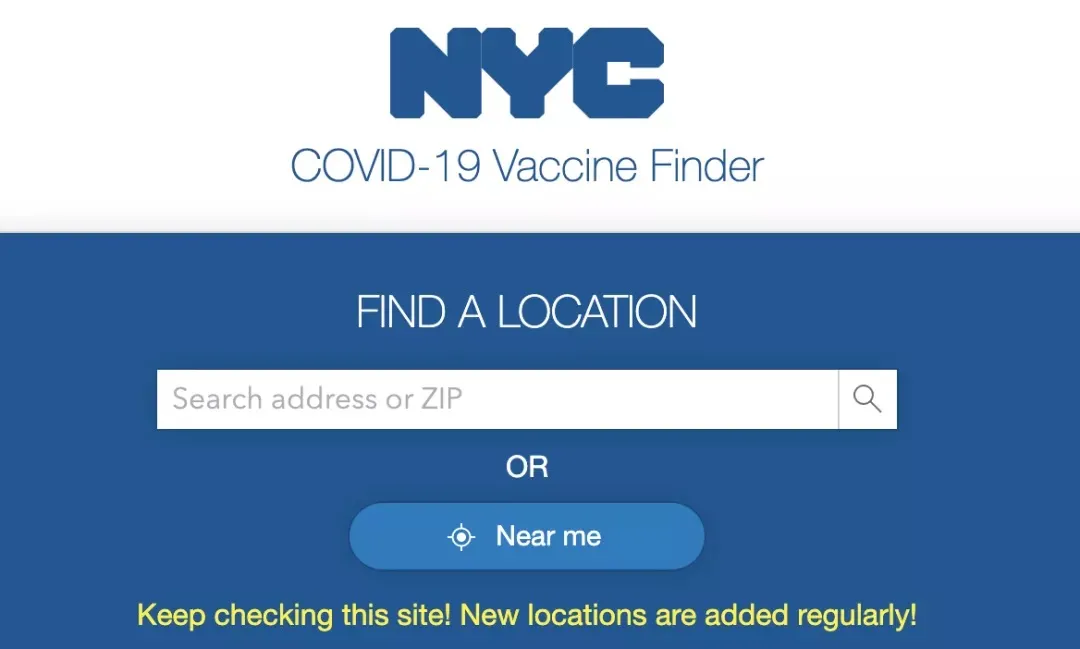
Visit nyc.gov/vaccinefinder to see where you can get vaccinated. In NYC, many sites allow appointment scheduling. All appointments must be made in advance. You can also call 877-829-4692 to book an appointment at any NYC vaccination site.
➡️ Preparing for Your Appointment
To get vaccinated, you need to complete the "New York State (NYS) COVID-19 Vaccine Form." Form link:
https://vaccineform.health.ny.gov
-
If you are eligible based on your occupation, you must bring proof of employment in New York, such as an employee ID, a letter from your employer or organization, or a recent pay stub.
-
If you are eligible based on age, you must bring proof of age (e.g., passport or birth certificate) and proof of New York residency (e.g., utility bill, other mail, rent or mortgage statement). An NYS driver's license or IDNYC can serve as both proof of age and residency. Contact the vaccination site for specific requirements.
➡️ Keep the following tips in mind:
-
If you feel unwell on the day of your appointment, reschedule.
-
Wear a mask when you go for vaccination.
For more information on vaccine safety and efficacy, visit
Los Angeles
➡️ Appointment website:
http://publichealth.lacounty.gov/acd/ncorona2019/vaccine/hcwsignup/
➡️ Groups currently eligible for vaccination
-
Healthcare workers
-
Long-term care patients
-
People aged 65 and older
➡️ Materials to bring to your vaccination appointment
-
First dose: photo ID
-
Second dose: vaccination card + photo ID
➡️ Appointment Steps
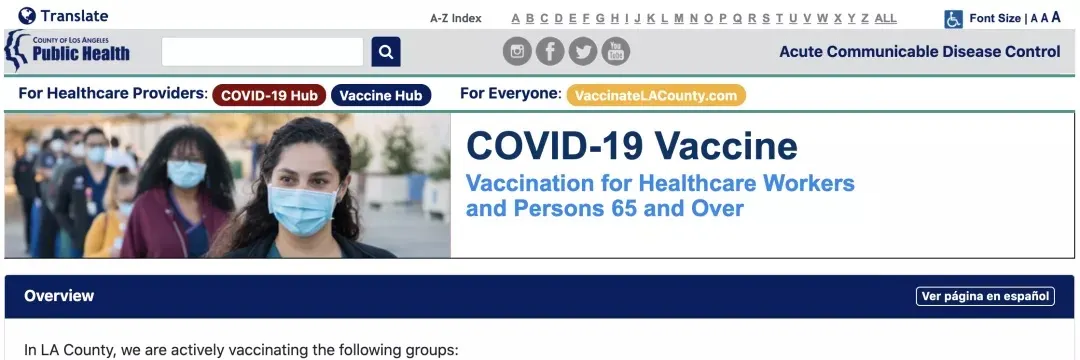
1. Open the LA Public Health vaccine appointment website:
http://publichealth.lacounty.gov/acd/ncorona2019/vaccine/hcwsignup/
2. Scroll down and click the green button
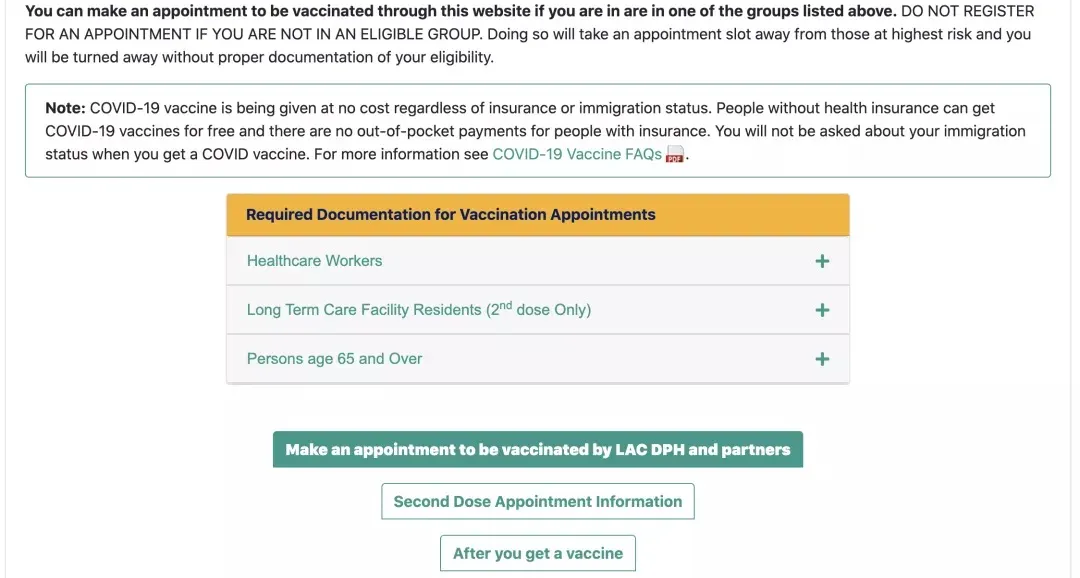
3. Choose a vaccination location; you can select: public distribution site, fire station, local clinic or hospital, pharmacy, or use the map to find the nearest site
.jpg?x-oss-process=style/opt-webp)
4. Currently, major public distribution sites in Los Angeles are fully booked; you need to fill in your personal information to make a reservation. As vaccine production increases and the Johnson & Johnson vaccine becomes more widely available, the situation is expected to improve.
Frequently Asked Questions About Vaccination
Q: Are COVID-19 vaccines safe?
A: According to the CDC, tens of millions of people in the U.S. have already received a COVID-19 vaccine. These vaccines have undergone rigorous research and review, meeting safety and efficacy standards. The CDC recommends that once you become eligible, you should get vaccinated as soon as possible.
Q: What are the side effects of the COVID-19 vaccine?
A: Side effects of the COVID-19 vaccine may include redness/swelling or pain at the injection site, fever, headache, muscle aches, nausea/vomiting, chills, fatigue, joint pain, and swollen lymph nodes.
These side effects are usually mild, and it is normal to experience them after vaccination. This is because the vaccine works by tricking the body into thinking the virus has invaded, triggering the immune system's protective mechanisms. Symptoms like fever are a sign that your immune system is working, thereby reducing the risk of infection.
Q: Can I get COVID-19 from the vaccine?
A: No. The Pfizer and Moderna vaccines, which are used in large quantities in the U.S., are both mRNA vaccines. They do not contain the live coronavirus and cannot cause COVID-19 infection.
Q: Once vaccinated, am I completely protected from COVID-19?
A: While the risk of infection is greatly reduced after vaccination, there is still a chance of getting infected. For example, the Pfizer vaccine has an efficacy rate of 95%. How should we interpret this 95% figure?
-
Incorrect interpretation: 95 out of 100 people will not be infected.
-
Correct interpretation: The risk of infection is reduced by 95%.
Therefore, the higher the vaccine's efficacy, the lower the risk of infection.
Q: Can I get the COVID-19 vaccine together with other vaccines?
A: It is not recommended to take the COVID-19 vaccine at the same time as other vaccines.
Q: When will international students be able to get vaccinated?
A: According to the CDC, vaccine supply is still very limited and is currently available only to frontline workers, high-risk groups, and those in frequent contact with the public. As the variety of vaccines and the supply increase, more people will be added to the recommended vaccination list. Each state has its own regulations; check back for updates as the vaccine rollout progresses.
Many colleges and universities are strictly following state policies and CDC recommendations, and are opening vaccine appointment services to those most in need.
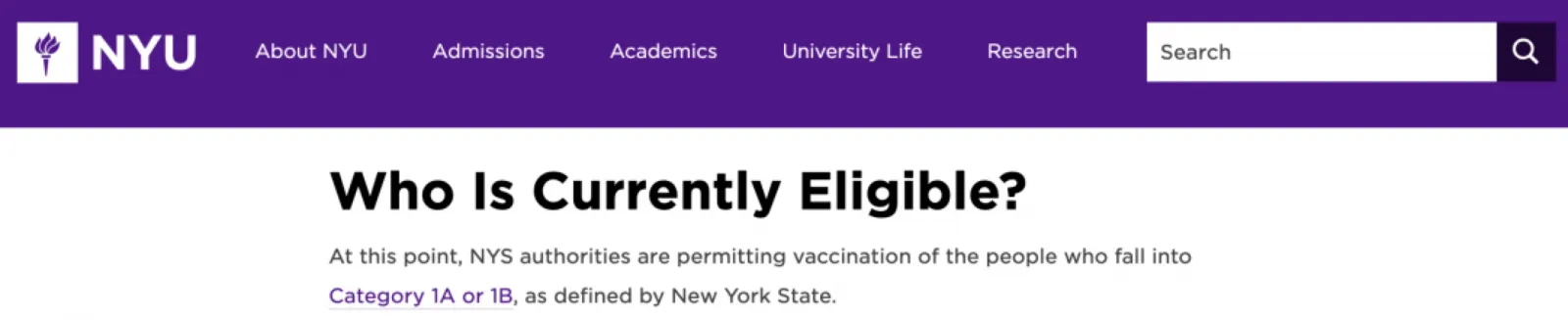
CDC recommended vaccination groups:
https://www.cdc.gov/coronavirus/2019-ncov/vaccines/recommendations.html
New York State vaccination phases:
https://covid19vaccine.health.ny.gov/phased-distribution-vaccine#phase-1a
Q: Should international students get vaccinated in their home country or in the U.S.?
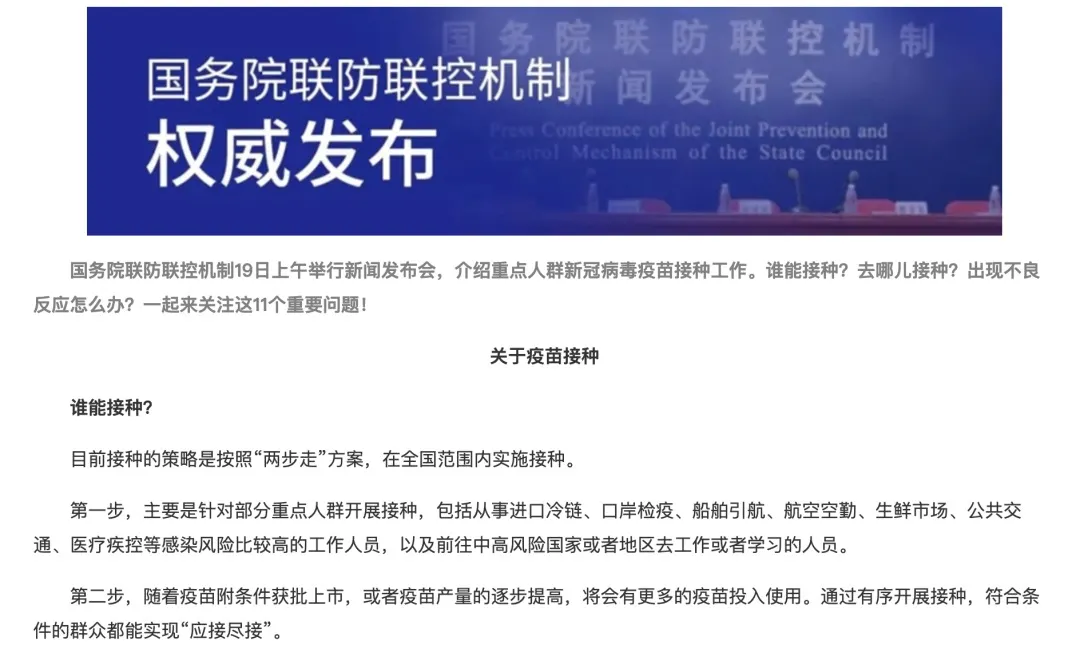
A: Currently, vaccine policies are similar both domestically and internationally: frontline workers and high-risk individuals are vaccinated first, and as production increases, universal vaccination will follow. For those who are eligible, schedule and get vaccinated as soon as possible based on your own timeline.
Finally, CheersYou(清柚教育) wishes all students studying abroad good health. During this pandemic, protective measures remain essential. Patiently await wider vaccine distribution, and stay updated on government and university policies. If you are eligible, you can book an appointment through local healthcare websites.
We also hope that everything returns to normal soon, allowing students to go back to campus and resume the learning and social life they've long missed.