Recently
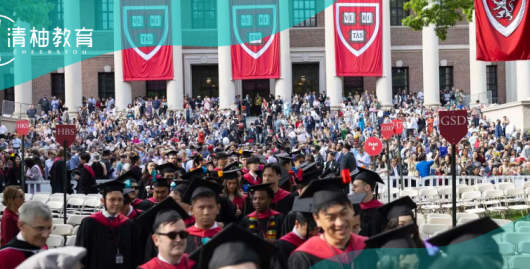
Stanford University held the opening ceremony for the class of 2021,
President Marc Tessier-Lavigne delivered a keynote speech to the new students.
He repeatedly emphasized, "You belong here."
He encouraged the new students to seize the various opportunities provided by Stanford and contribute to the progress of the world.
Stay true to your original aspirations and forge ahead in a complex world.
He offered three expectations for the new students:
Stay curious and open-minded, be sensitive to opportunities;
Be enthusiastic about public service and engage with the world;
Explore yourself, be true to yourself, be reliable, and be the best version of yourself.
Excerpts from the President's Speech
We look forward to helping you spread your wings and fly, and we believe your arrival will add brilliance to our campus. Thank you to the parents and family members present today, for entrusting your loved ones to us. We promise to do our utmost to treat them as our own family and children.
We are so looking forward to helping you spread your wings and fly… and to how your presence will enrich our campus.To all of the parents and family members who are here, thank you so much for entrusting your loved ones to us. We pledge to do our best by them as though they are our own.
Students, you will participate in a series of academic exchanges or extracurricular activities, embarking on a wonderful journey of self-discovery and world exploration. On this occasion, I am very pleased to share some thoughts with you.
Students, as you begin an incredible odyssey of self-discovery and world discovery through academic and extracurricular activities, I am thrilled by the opportunity to share a few thoughts.
First, I want to build on what Alexis (Stanford senior student representative) just said and reaffirm that you belong here. Then, I hope you will strive to do three things: be sensitive to opportunities, be enthusiastic about public service, and be true to yourself. The most important point is: you belong here.
First, I want to build on what Alexis just said and to reaffirm that you belong here. And, then I want to challenge you to do three things:
To be curious amidst opportunity.
To be of service to the world; and
To be true to the best you know.
Again, the foremost thing I want you all to know is: you belong here.
Know that at every step here, we are by your side to provide guidance and support. Your friends, your RAs, professors, and the many support systems on campus are always on standby to help you.
So, actively participate and strive to explore your own life. Be confident! You belong here.
With this sense of belonging comes a responsibility: you will also do your best to contribute to the Stanford family.
Know that we are here for you every step of the way. Ask for guidance and support. Your peers, your RAs, your professors, and the myriad support services around the university stand ready to help.
So,explore and participate in your experiences with confidence, knowing you belong here.
But with this belonging comes a responsibility: that you too will do your part to make Stanford a community that fosters belonging for all its members.
We know that Stanford's brilliance stems from its diversity, embracing cultures of all backgrounds, nationalities, races, genders, identities, religions, political views, and ways of thinking.
The prosperity of a school depends on whether students can engage in free and open exchange of ideas in a culture of mutual tolerance and respect, especially when others' views differ from their own.
Throughout the university, we know that our strength comes from the diversity of our community and our culture of inclusion of people of all backgrounds, nationalities, races, genders, identities, religions, political views and ways of thinking.
A thriving academic community depends on the free and open exchange of ideas in a culture of mutual respect, even – and especially – if the ideas and perspectives of others don’t square with our own.
So, take full advantage of our university's diversity. Get to know faculty and students from different backgrounds, countries, regions, perspectives, and religious beliefs. They will enrich your worldview and help you build lifelong friendships and bonds. The broadening of your horizons and the accumulation of networks are among the most important gifts you will receive during your time at Stanford.
So, draw on our diversity. Get to know your peers and members of the faculty from different backgrounds and perspectives, from different regions and countries. They will profoundly enrich your world-view, and you will develop relationships that last a lifetime. The broadening of your horizons, and the web of relationships you will develop, will be among the most important gifts you will take away from your time here at Stanford.
Now, I want to put forward my first challenge for you. I hope you will seize opportunities, stay curious, and explore actively.
Now, I want to offer my first challenge. I challenge you to be curious amidst opportunity.
During your four years at Stanford, you will have access to outstanding scholars at the forefront of various fields and disciplines: including arts, humanities, social sciences, science and engineering, law, medicine, business, education, as well as public service and entrepreneurship. I hope you will fully utilize these opportunities and not choose a field of study too narrowly.
In your own four years here at Stanford, you will have access to extraordinary scholars on the leading edge of every field and discipline: in the arts, humanities, social sciences, sciences and engineering; in law, medicine, business, and education; in public service, and in entrepreneurship. I urge you to take advantage of this breadth, not to focus too narrowly as you choose a field of study.
Now, some of you may already be considering whether to choose something more practical and conducive to employment after graduation. I can certainly understand that kind of thinking. In fact, this is also why I ask you to be brave in taking risks, follow your passions, stretch yourselves, and remain open. This is a broad education, because you need to be best prepared for this rapidly developing, globalized world.
Now, some of you may already be thinking about choosing something that will be practical and employable after graduation. I can certainly understand that kind of thinking. In fact, perhaps paradoxically, it is part of why I want to challenge you to embrace adventure, to follow passions, to stretch yourself, and to stay open. That’s because your best preparation for a rapidly evolving and more globalized world is, in fact, a broad education.
Now, I actually wish someone had told me on my first day: Life has different chapters. So even if you plan ahead, remain open.
Here is what I wish someone had told me on my first day: Life is lived in chapters. So even as you plan ahead, always keep an open mind.
When you decide to focus on a certain field, open your heart to falling in love with something else, embrace new areas of knowledge, and embark on new paths of exploration. Ideas, inspirations, experiments, passions, synergies, questions, connections, challenges – or these can lead you to new discoveries.
So, stay curious, seize opportunities, and pursue what you love.
As you decide what to focus on, be open to falling in love with the unexpected – new areas of knowledge and paths to discovery.
Ideas, inspirations, experiments, passions, synergies, questions, connections, challenges – these invaluable flecks are the units of discovery.
So, be curious, and go after the opportunities that make your heart sing.
Finally, I hope you will be enthusiastic about public service. Since Stanford's founding, we have pursued excellence, but not for the sake of excellence. We pursue excellence to change the world and make it a better place.
During your studies, the school will do its utmost to support you, help you grow, and work to make the world a better place.
Next, I challenge you to be of service to the world.Since the founding of Stanford, we have pursued and celebrated excellence, but not for the sake of excellence. We pursue excellence as a means to make the world a better place. In your years here, we will seek to support you and to help you nurture within you this higher purpose – the betterment of the world.
I hope you will challenge yourselves. Be true to yourself, strive to be the best. With your integrity and courage, study hard, explore bravely, and make your family and school proud! This means taking care of yourself and the people around you; respecting yourself and others; respecting your body and respecting the bodies of others; holding yourself and others accountable for preventing sexual violence.
I invite you to rise to her challenge.Being true to the best you know means making yourself, your family and our university proud – through your integrity and your courage in personal and academic choices. Being true to the best you know means taking care of yourself and taking care of others; respecting yourself and respecting others; respecting your body and respecting the bodies of others; holding yourself and one another accountable for preventing sexual violence.
Stanford University
Located in Palo Alto, in the southern part of the San Francisco Bay Area, California, adjacent to the world-famous high-tech hub Silicon Valley, it is a world-renowned private research university.
Academically, Stanford and the University of California, Berkeley, across the Bay, form the academic center of the western United States.
Stanford has laid a solid foundation for the formation and rise of Silicon Valley, cultivating numerous leaders in high-tech companies, including the founders of HP, Google, Yahoo, Nike, Logitech, Snapchat, etc., the most famous being Bill Gates and Steve Jobs.
Furthermore, Stanford's alumni include 30 wealthy entrepreneurs and 17 astronauts, and it is one of the institutions that has produced the most members of the U.S. Congress. According to Forbes' 2010 list of universities with the most billionaires, Stanford ranks second with 28 billionaires, second only to Harvard.
After learning so much, are you even more attracted to Stanford University?
So let's summarize the admission requirements:
1. Basic Application Requirements for Stanford University
Degree requirement: Graduation from a four-year regular undergraduate program with a bachelor's degree.
Language requirement: Except for some master's programs in the School of Engineering, all other programs (master's and doctoral) require TOEFL not lower than 100, with no sub-score requirement; Master of Engineering requires TOEFL not lower than 89, also with no sub-score requirement; TOEFL validity period is 18 months; IELTS requirements refer to specific program applications.
GPA requirement: No minimum GPA requirement is set.
GRE requirement: All programs require GRE scores, except for the Law School, Medical School, and Business School, which require LSAT, MCAT, and GMAT respectively.
2. Stanford University Application Materials
Stanford University had 8,897 graduate students (Fall 2013), with international students accounting for 33%. Applications are processed through the Apply Web system, and only one program can be applied for per academic year. The required application materials are as follows:
Complete the online application: Apply via Apply Web system Application fee: $125.
Transcripts: When applying, only need to upload scanned copies of transcripts online; after admission, two official paper copies must be submitted.
GRE/GMAT scores
TOEFL scores
Letters of recommendation: 3
Personal statement
Other materials: Resume is required only for some programs; art programs generally require submission of a portfolio; humanities programs generally require a writing sample.
Financial proof: No financial proof is required when applying; it is only needed when applying for a visa after being admitted to Stanford, so do not submit it in advance.
3. Stanford University Undergraduate Admission Requirements
TOEFL: 105
SAT I: 2040 - 2330 (can be replaced by ACT) SAT II: Not required
IELTS: 7.5
Note: SAT/ACT scores deadline January 15.
Application fee: $ 90
Deadline: Jan. 3 (Regular Decision)
Admission rate: 5.1%
4. Stanford University Graduate Admission Requirements
Language requirement: Except for some master's programs in the School of Engineering, all other programs require TOEFL not lower than 100, with no sub-score requirement, and do not accept IELTS scores. Master of Engineering requires TOEFL not lower than 89, also with no sub-score requirement, and also does not accept IELTS scores.
GPA requirement: No minimum GPA requirement is set.
GRE requirement: All programs require GRE scores, except for the Law School, Medical School, and Business School, which require LSAT, MCAT, and GMAT respectively.
Application deadline: January 1
Early Action (EA): November 1
Admission notification date: February 15